


Football is often called the world’s game, bringing together people from different countries, cultures, and backgrounds. But sometimes the sport becomes about much more than goals, trophies, and results.
Over the years, players, coaches, supporters, and even football organizations have used football’s massive global stage to honor victims, support humanitarian causes, and make statements.
From silent national anthems to public displays of solidarity, these moments remind us that football doesn’t exist in isolation from the world around it.
Iran’s Team Honors Children Killed in a School Strike
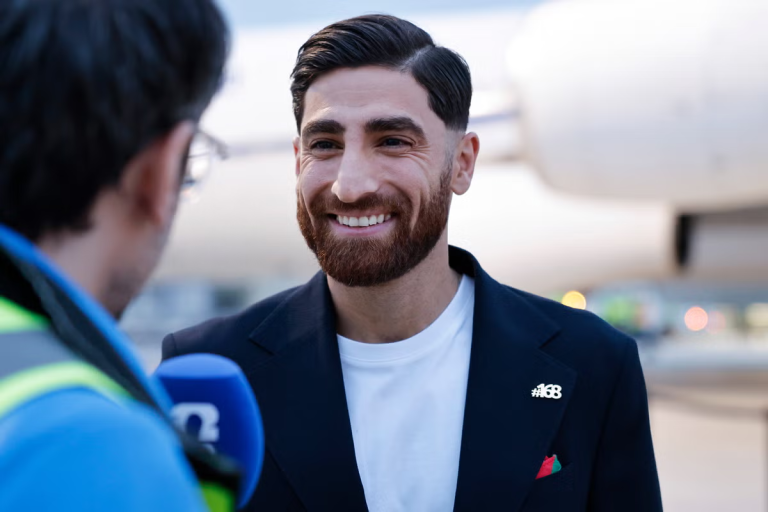
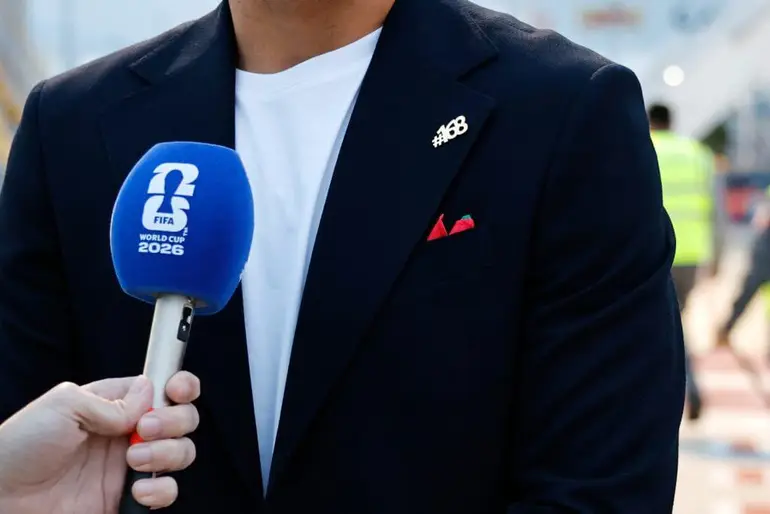
When Iran’s national team arrived in Mexico for the 2026 World Cup, many people noticed the small pins attached to the players’ jackets.
The badges displayed the hashtag “#168,” a reference to the children killed in a strike on an elementary school on the first day of the war on Iran, according to Iranian officials.
It was a simple gesture, but one that carried a powerful message. As the players stepped off the plane and into the spotlight of football’s biggest tournament, they ensured that the victims were part of the conversation.
Black Armbands and Schoolbags: Iran’s Tribute Before Facing Nigeria
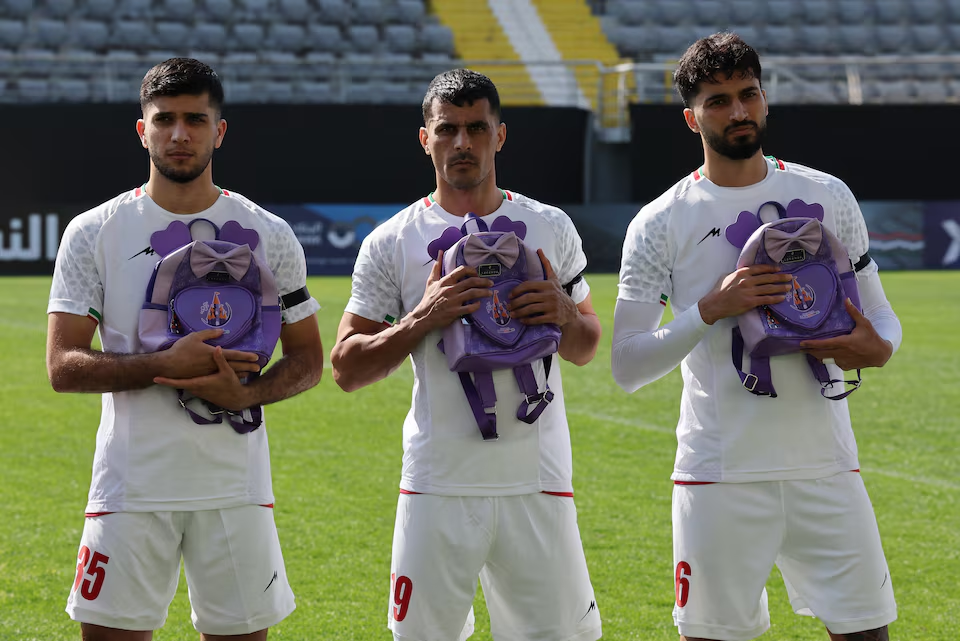
Iran’s players delivered another emotional tribute before a match against Nigeria.
As the national anthem played, the team stood wearing black armbands while holding schoolbags close to their chests. Team officials said the bags represented the children killed in the strike on Shajareh Tayyebeh School.
For a few moments, attention shifted away from the football itself. The image of international players standing in silence with children’s schoolbags in their hands became one of the most striking pre-match displays of remembrance in recent memory.
Algeria’s Arab Cup Dedication to Palestine
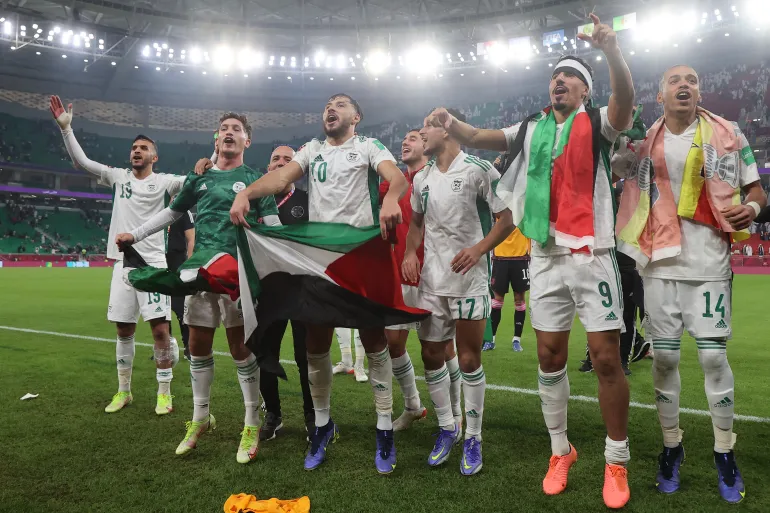
When Algeria lifted the Arab Cup, coach Madjid Bougherra used the moment to send a message beyond football.
Instead of focusing only on the victory, he dedicated the triumph to the Palestinian people and to those in Gaza. “We dedicate the Arab Cup to the Palestinian people and our people in Gaza.”
The comments showed how some of football’s biggest celebrations can also become moments of solidarity with people facing hardship elsewhere.
A UEFA Super Cup Banner Calling for Civilians’ Protection
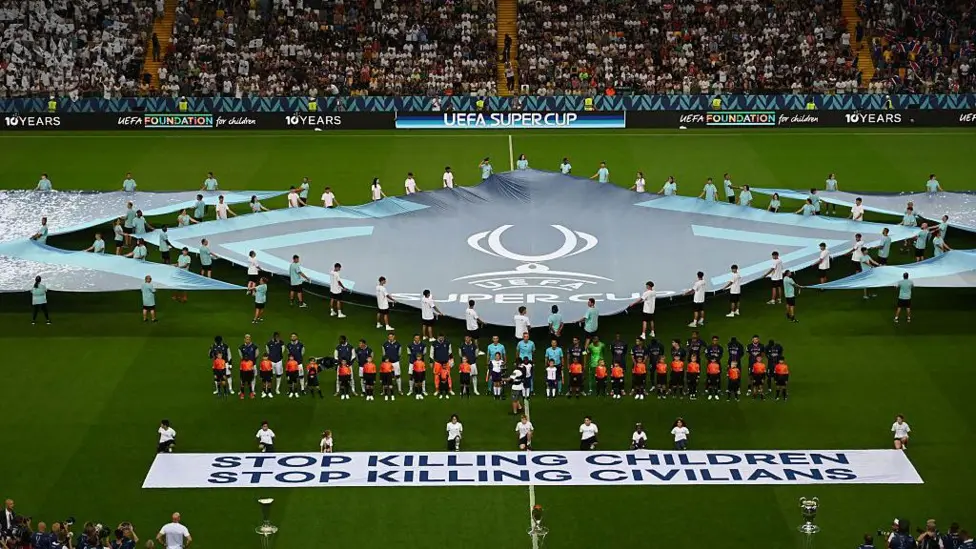
Before the UEFA Super Cup final between Tottenham and Paris Saint-Germain, players lined up behind a banner carrying a simple message: “Stop killing children – Stop killing civilians.”
The banner was displayed in front of a global audience before kick-off, while two children from Gaza later took part in the medal ceremony.
The display sparked debate, but it also ensured that a humanitarian message reached one of football’s biggest stages.
Iranian Players Refuse to Sing the National Anthem
Sometimes silence can speak louder than words.
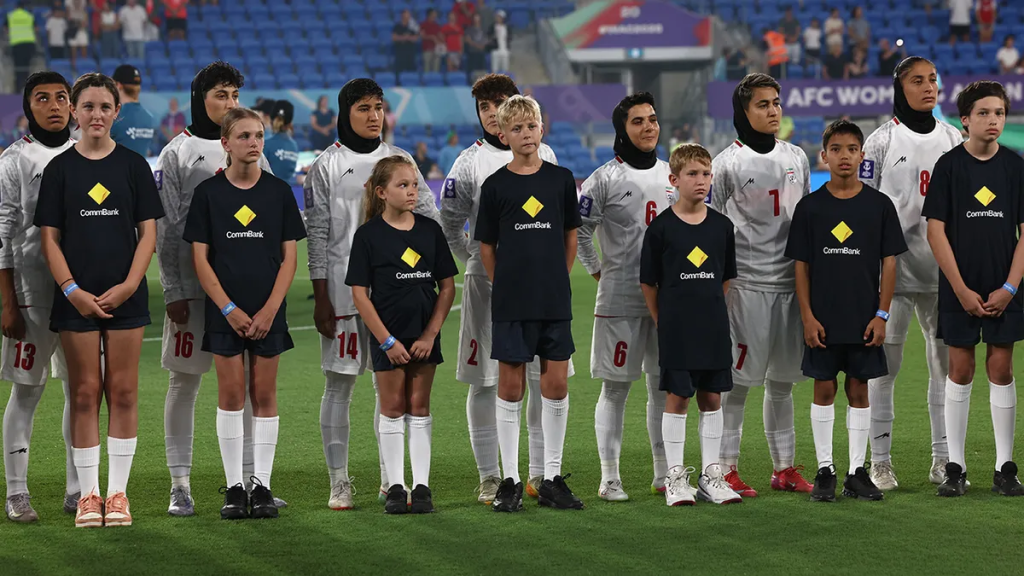
Iran’s women’s national team drew international attention when they remained silent during the national anthem before an Asian Cup match. The gesture came as war continued to affect their country.
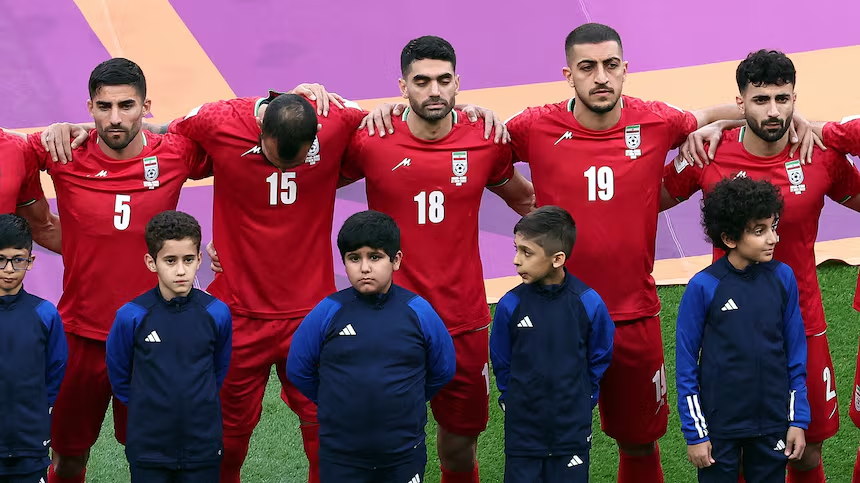
It echoed an earlier moment at the World Cup in Qatar, when Iran’s men’s team also declined to sing the anthem before facing England in support of protesters back home.
Without banners, speeches, or interviews, the players delivered a message that was understood around the world.
Mohamed Salah Challenges UEFA’s Tribute to Suleiman Al-Obeid
When UEFA paid tribute to former Palestinian international Suleiman Al-Obeid, known as the “Palestinian Pele,” the post quickly drew attention for what it left out.
Mohamed Salah publicly questioned why UEFA had not mentioned the circumstances surrounding Al-Obeid’s death, asking how, where, and why he had died.
His response sparked widespread discussion online and turned a tribute into a broader conversation about how stories are told and remembered.
Diego Maradona Jr. Shows Solidarity with Palestine
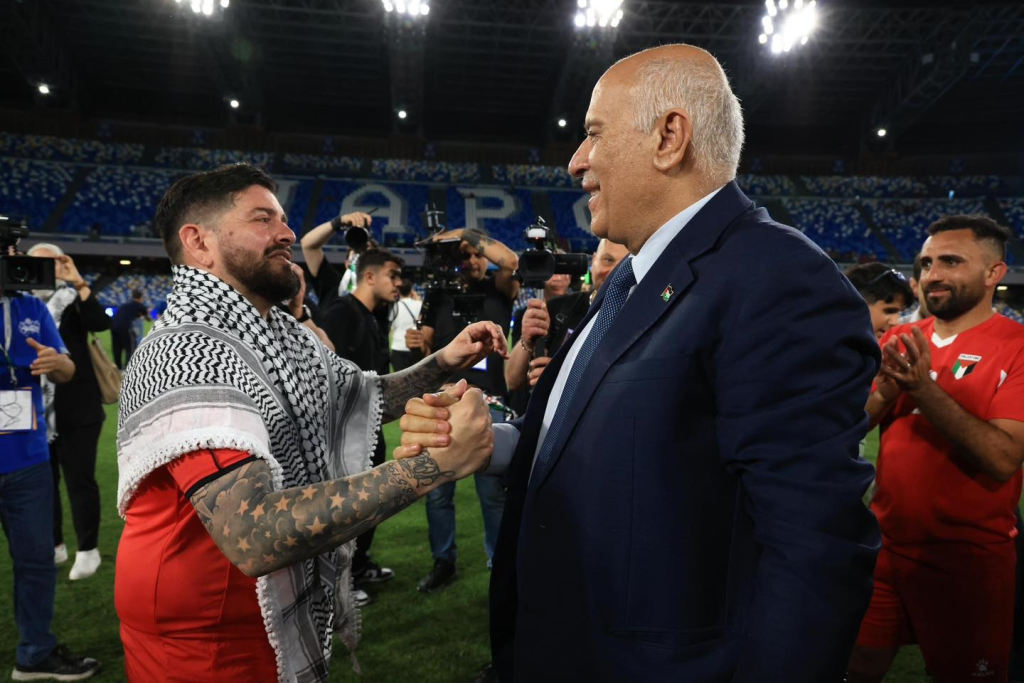
At a solidarity match in Naples featuring former Palestinian and Italian players, Diego Maradona Jr. openly expressed support for Palestine.
Palestinian flags filled the stands, messages of solidarity echoed around the stadium, and Maradona Jr. wore a Palestinian keffiyeh during the event.
The match served as a reminder that football is often used as a platform not only for competition but also for raising awareness and bringing people together around shared causes.
Lamine Yamal’s Palestinian Flag Celebration
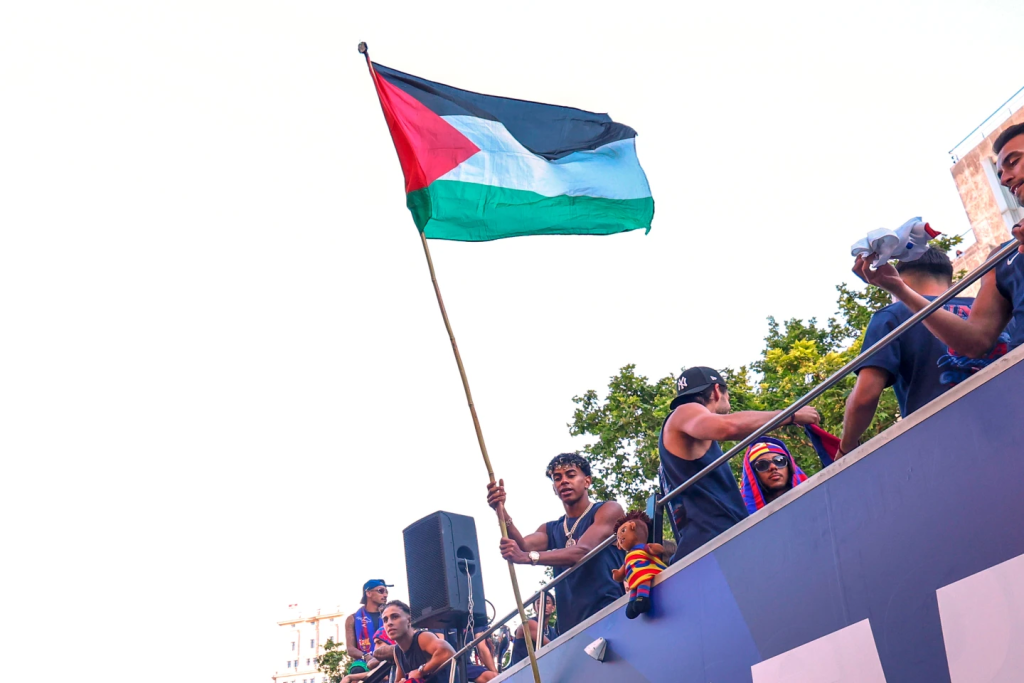
As Barcelona celebrated its 2026 La Liga title, one image stood out above almost everything else.
Teenage star Lamine Yamal raised a Palestinian flag during the club’s open-top bus parade as thousands of supporters lined the streets.
The moment quickly spread across social media and became one of the defining images of the celebrations. For many supporters, it was proof that athletes are often remembered not only for what they win, but also for what they choose to stand for.
Jordan’s Players Connect Sporting Success with Gaza
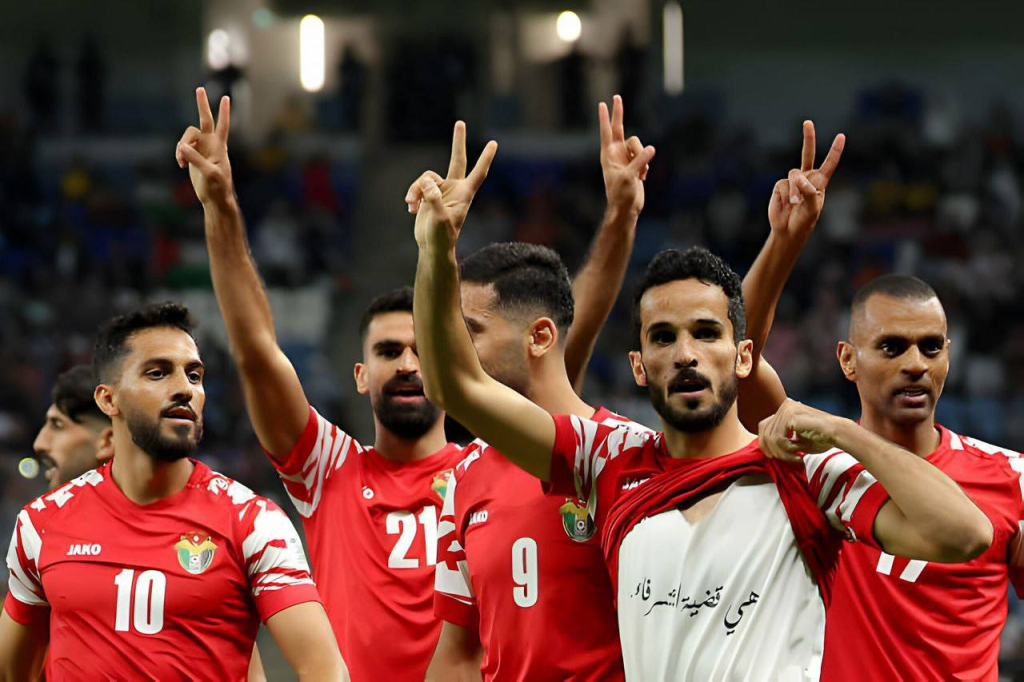
Jordan’s run to the AFC Asian Cup final was one of the greatest achievements in the country’s football history.
Yet even in the middle of those celebrations, midfielder Mahmoud Al-Mardi spoke about Gaza. After helping Jordan defeat South Korea, he told reporters that the team’s happiness would be even greater if there were news of a ceasefire.
Earlier in the tournament, he had also revealed a pro-Palestinian message on his shirt while celebrating a goal.
For Al-Mardi, football success and solidarity with a cause he cared about were never separate things.
Conclusion
These moments happened in different countries, involved different causes, and came from different generations of players and supporters.
What they all have in common is the belief that football is about more than what happens during 90 minutes on the pitch.
For better or worse, football remains one of the most powerful cultural platforms in the world. And time and again, players, fans, and teams have used that platform to express grief, solidarity, and remembrance far beyond the game itself.
We Said This: Don’t Miss…11 Times MENA Nations Made World Cup