


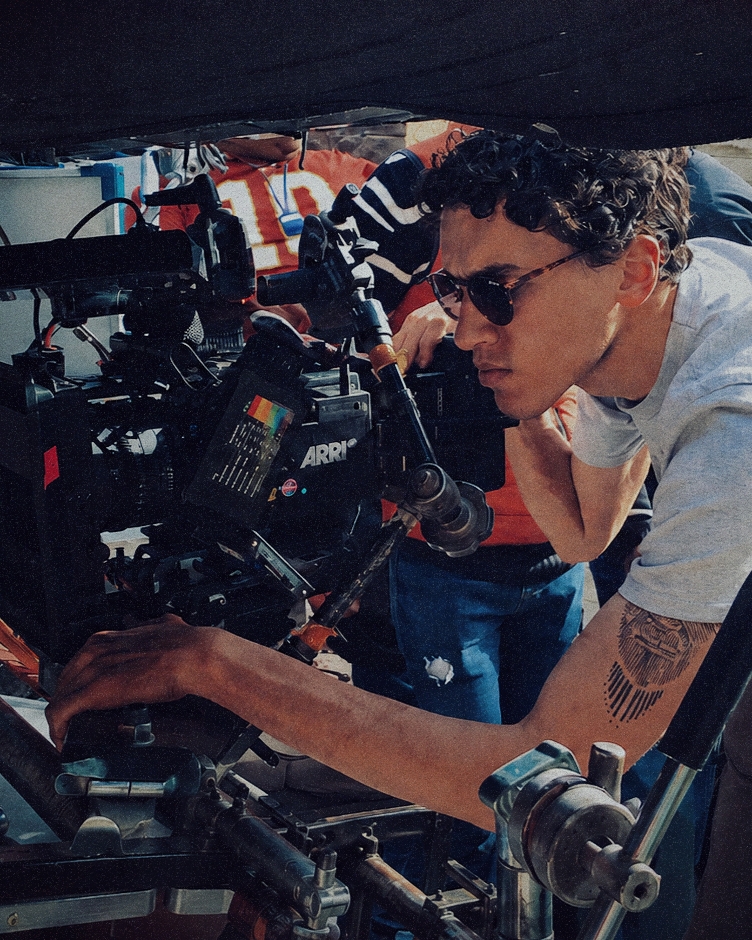
For some people, art isn’t a conscious decision, it quietly creeps into you. This is what determined the fate of Omar Abou Doma, the young Egyptian cinematographer behind works like ‘Menawara Be Ahlaha’, ‘My Father’s Scent’ and most recently, ‘The Frenchman.’
The Early Fascination
Cinematographer, musician and photographer, it’s no coincidence that art is at his core. Growing up in Alexandria, his father’s darkroom at home felt like a magical time capsule, a space where images sought no one’s permission to exist. They simply emerged from darkness, or so he thought.
“I still remember that mysterious space. Although I drifted away from photography as I grew older, something about that process remained quietly lodged in me.”
Some could say it’s genetic, others could say he built this love for photography one film roll at a time, but the charm was inevitable either way.
His love for art was multi-dimensional, as he sought refuge in the guitar and simultaneously called the stage his home, while his fascination for photography kept returning.
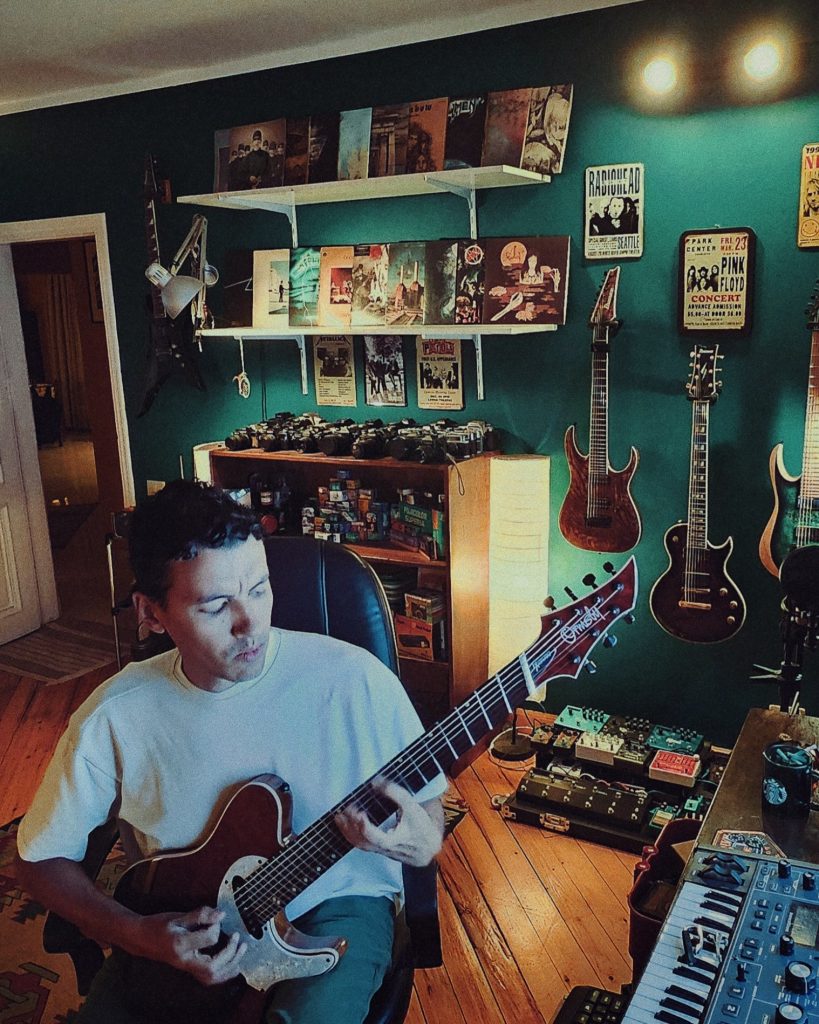
Soon enough, his father handed him the very same equipment that surrounded his childhood, and the two mediums dominated his youth.
The pairing made perfect sense with their tendency to encapsulate emotions. Music captures it through rhythm and sound, while photography does the same through light and composition.
His university years were spent coding and learning the ins and outs of computer science, but, to no one’s surprise, his heart longed for more.
“Searching for something I had not yet found” was how the young artist described that exploration journey, which went to include coding and advertising, to name a few.
The spark for photography was ignited once more in 2011, when he was invited to the set of the series ‘Abwab El Khof’ to capture the behind-the-scenes magic.
It was an opportunity that appeared on the whim, but when director Ahmed Khaled came across the pictures, he could tell this was more than a mere hobby for Abou Doma.
Praised for his cinematic frames, Abou Doma started to feel a calling for the Higher Institute of Cinema, but the feeling wasn’t initially reciprocated.
Rejections followed one after the other, and Abou Doma got accepted at the institute on his fourth try, right after completing his computer science degree.
“In a way, the path demanded that I prove—to myself more than anyone—that this was not a passing fascination,” he recalled.
The First Steps Into The Industry
His hunger for art finally crystallized into collaborations with icons from every corner of the industry, which slowly shaped his artistic persona.
He referred to the likes of Yousry Nasrallah, Hani Khalifa, Amr Salama, Amr Moussa, and most recently Adam Abdelghaffar, who generously passed on their knowledge and shaped his novice years in the field.
“I worked with people from every corner of the industry: veterans whose work helped shape it, renowned directors, inspiring contemporaries of my own generation, and first-time filmmakers carrying the same hunger and passion that I once brought to my earliest sets,”
His lens was a witness to Adam Abdelghaffar’s debut short film ‘Fork and Knife,’ where he was the designated photographer. It became the lucky charm that paved the way for his cinematography career.
This is why when the time came to bring ‘The Frenchman’ to life, Abou Doma jumped right in.
Every cinematography move was calculated, with Abou Doma using high angles, overhead frames and unbalanced compositions to build the story.
“The visual language grew from the script’s central idea that truth is not necessarily what happened, but what can be proven,”
That mentality gives a glimpse into his philosophy, where each element carefully contributes to the storytelling.
Generous headroom to isolate the actors. Negative space to hide their secrets. Lighting that conceals rather than reveals the full truth. It’s subtle, but this is what makes it work.
“The aim was to make the image itself an unreliable witness: beautifully composed, yet never entirely telling the truth,” he commented.
The Breakthrough
While he had already marked his throne on the local arts scene, he marked his international debut with ‘My Father’s Scent’ in 2025.
Directed by Mohamed Siam, who also co-wrote it alongside Ahmed Amer, the film takes place in Alexandria, Abou Doma’s hometown, making it all the more personal.
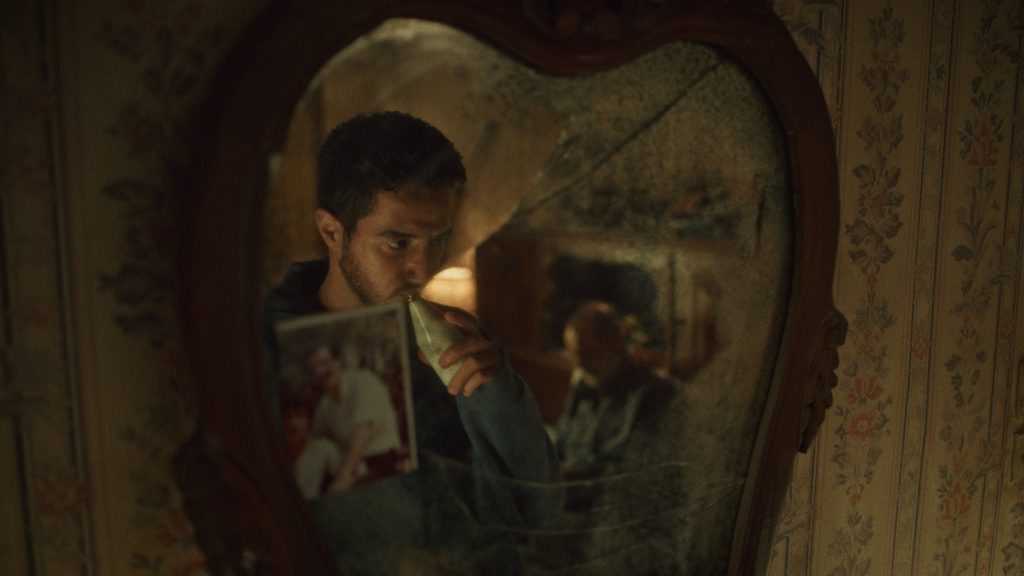
Unlike his earlier projects, the film is mostly set inside a single apartment constructed by Egyptian production designer Asem Ali.
Furniture became the composition, Alexandria’s sun carried the lighting, and the entire dynamic was formed through how the house operates.
The exterior shots carried the same artistic motifs, where instead of fabricating the weather, the team perfectly aligned shooting times with weather forecasts.
“When those elements aligned, Alexandria stopped being merely a setting and became part of the emotional fabric of the film,” he said.
Among many recognitions, the film received the ‘Best Film’ and ‘Prix Cineuropa’ awards in the Brussels Mediterranean Film Festival, as well as getting nominated for the ‘Golden Star’ in El Gouna Film Festival’s ‘Feature Narrative Competition’ category.
Looking Back & Looking Ahead
If you try to trace his portfolio and find a pattern, you probably won’t find one. Inside his creative world, experimentation and staying true to a distinct style go hand-in-hand.
Many artists could prioritize visibility at the cost of quality, but he embraces being selective. Perhaps this is why he has mostly been drawn to films rather than shows.
“A series asks you to inhabit a world for a long time, so I rarely step into one unless the material truly calls to me, or I’m fortunate enough to be invited into the world of a filmmaker whose vision reveals new depths in mine,” he explained.
He attributed this learning process to filmmaking legends like Yousry Nasrallah, Hani Khalifa, Amr Salama, Amr Moussa, and most recently Adam Abdelghaffar.
When asked about the project closest to his heart, ‘Menawara Be Ahlaha’ struck a chord.
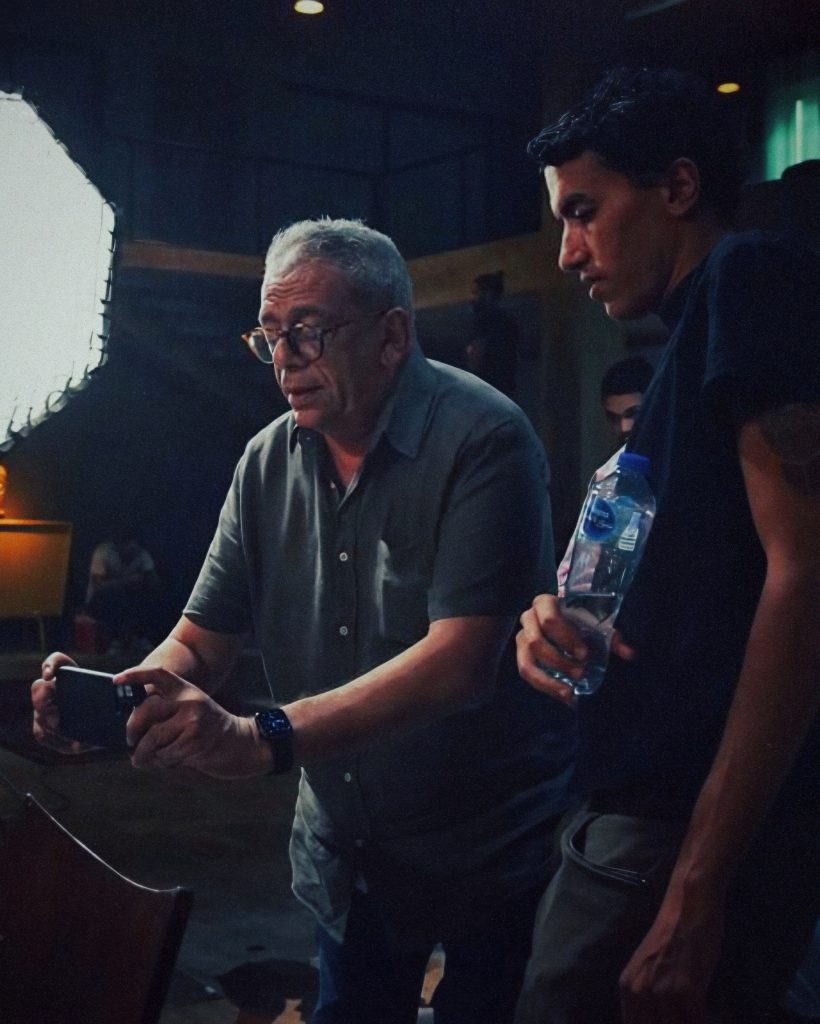
He observed how director Yousry Nasrallah approaches people, ideas, and the artistic process itself.
The lessons went on beyond the world of filmmaking and onto who he is as a human being.
“That experience opened new depths in the way I think about art and encouraged me to question instinct, convention, and the reasons behind every creative decision,” he explained.
But as Abou Doma reminisced on his earlier projects, we couldn’t help but feel like he’s just getting started.
“Every project I have worked on is dear to me in a different way. Each one belongs to a particular chapter of my life, taught me something, and carries its own memories and value,” explained Abou Doma.
No matter what kind of visual universe is on his radar, we can’t wait to see where his lens will land next.
WE SAID THIS: Don’t Miss… One Artist, Many Mediums: Egypt’s Nada Abadir is Making Moves