


More than a century ago, the land east of Cairo was little more than open desert. Then came the Belgian Baron Édouard Empain, carrying an ambitious dream: to build a modern suburb unlike anything Egypt had seen before. Wide boulevards, elegant arcades, lush gardens, European-inspired villas, and a spirit that blended East and West together — this was how Heliopolis, or Masr El Gedida, was born, even taking its name from the Greek words for “City of the Sun.”
And somehow, 121 years later, the neighborhood still feels cinematic. Maybe because it always has been.
This year, as we celebrate Heliopolis Week for its 121 anniversary (May 15–23, 2026), it feels only right to look at Masr El Gedida not just through its architecture or history, but through the stories told on its streets. Because few Cairo neighborhoods have appeared on screen as lovingly — or as often — as Heliopolis.
Cinema never treated Masr El Gedida as just a backdrop. It became a character of its own.
“Heliopolis”
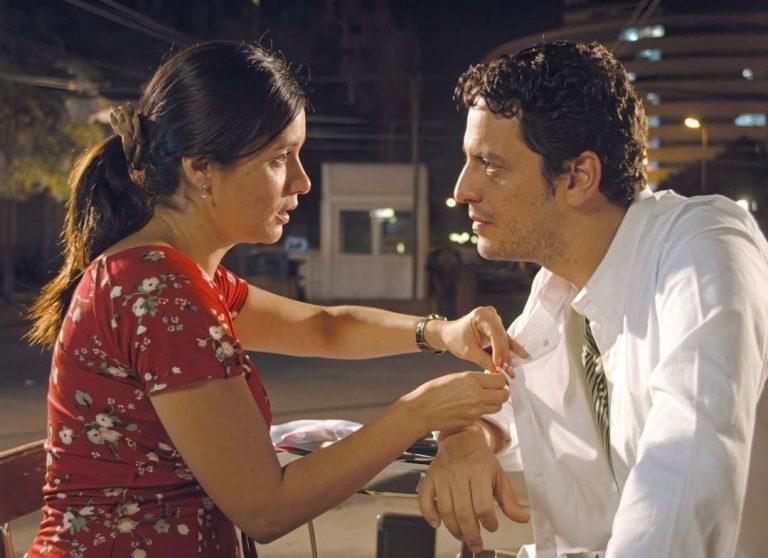
Take Heliopolis for example. In one memorable scene, Khaled Abol Naga and Aida Abdel Aziz casually wander through conversations about Korba, Al-Ahram Street, the old Heliopolis Palace, and the neighborhood’s little details that only residents truly notice.
The film follows eight characters over 24 stagnant hours, their lives constantly brushing against one another without ever fully connecting. And somehow, that quiet stillness mirrors Heliopolis itself — beautiful, nostalgic, slightly suspended in time.
“Fi Sha’et Masr El Gedida”
Then there is Fi Sha’et Masr El Gedida, where Masr El Gedida becomes mysterious, intimate, and almost ghostly. Yehia, played again by Khaled Abol Naga, rents an apartment in Heliopolis hoping for independence and quiet, only to find himself chasing the memory — or perhaps the ghost — of a woman named Tahany.
Through old apartments, balconies, streets, and hidden corners, the film turns Heliopolis into a maze of memory and longing. The neighborhood feels less like Cairo and more like a city within a city.
data-instgrm-version=12 style=”background:#fff;border:0;border-radius:3px;box-shadow:0 0 1px 0 rgba(0,0,0,.5),0 1px 10px 0 rgba(0,0,0,.15);margin:1px;max-width:min(540px, 100%);min-width:326px;padding:0;width:99.375%;width:undefinedpx;height:undefinedpx;max-height:100%;width:undefinedpx”>
style=”background:#fff;line-height:0;padding:0 0;text-align:center;text-decoration:none;width:100%”target=_blank id=main_link>
View this post on Instagram
“Losos Lakin Zorafa”
Of course, Heliopolis also knows how to do comedy. In Losos Lakin Zorafa, two thieves attempt to rob a jewelry store by digging through the floor of an apartment above it — because naturally, chaos in Egyptian cinema always somehow finds its way into a Heliopolis building.
Between old apartments, tense neighbors, and the everyday absurdity of urban life, the film captures another side of the district: crowded, lively, and wonderfully unpredictable.
“El Wesada El Khalya”
Classic Egyptian cinema, meanwhile, preserved a softer version of the neighborhood. El Wesada El Khalya used a building on Al-Ahram Street near Roxy as the emotional setting for a story about love, heartbreak, ambition, and regret.
Watching it today feels like opening a time capsule: the balconies, the streets, the elegance of old Heliopolis quietly stealing scenes in black and white.
“Abu Al Arosa”
And then there are the homes we all somehow feel we know personally. In Abu Al Arosa, that famously cozy family house with its warm garden became instantly familiar to Egyptian audiences.
Fittingly, it sits right in Masr El Gedida — because nowhere else in Cairo quite captures that feeling of comfort, family, and old neighborhood warmth the same way.
“Bent Esmaha Zaat”
Even Bent Esmaha Zaat used Heliopolis as more than scenery. Much of the story unfolds inside That’s apartment building and home in Masr El Gedida, reflecting decades of Egyptian social and political change through the intimate details of everyday life.
The neighborhood becomes a witness to history itself — evolving with every generation while somehow holding onto its identity.
More Than Just a Filming Location
That may be the secret of Heliopolis. Every film captures a different version of it. One director sees nostalgia. Another sees mystery. Someone else sees romance, comedy, family, or loneliness. Yet all of them arrive at the same conclusion: Masr El Gedida is never just a location.
A neighborhood where arcades still echo with footsteps, where balconies hold decades of stories, where cafés remember old conversations, and where cinema continues to find inspiration 121 years after Baron Empain first imagined a city in the desert.
And maybe that is why Heliopolis still feels timeless: because no matter how much Cairo changes, Masr El Gedida still knows how to play itself perfectly on screen.
WE SAID THIS: Don’t forget…From The Baron Palace To El Korba: The Ultimate Guide To Heliopolis