


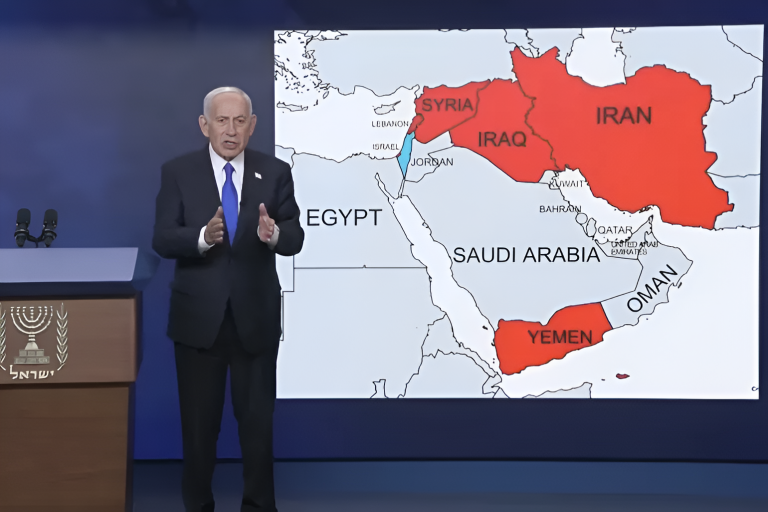
When Benjamin Netanyahu stood in front of a map in April 2026 and declared, “We strangled them… and we have more to do,” he wasn’t just making a rhetorical point. The image behind him—and the language alongside it—fit into a much longer pattern. The idea often referred to as “Greater Israel” has existed for decades, but what feels different now is how directly it’s being expressed, and how closely it aligns with realities on the ground.
This isn’t just about symbolism. It’s about a political vision that draws on history, has already reshaped territory, and is now being articulated with increasing clarity.
Prime Minister Benjamin Netanyahu, this evening:
“Dear citizens of Israel, my brothers and sisters, the campaign is not yet over, but even now it can be clearly stated – we have achieved historic accomplishments.
Full remarks >>https://t.co/0zrbb3NuwG pic.twitter.com/7djWB8Fx0P— Prime Minister of Israel (@IsraeliPM) April 11, 2026
What Does “Greater Israel” Actually Mean?
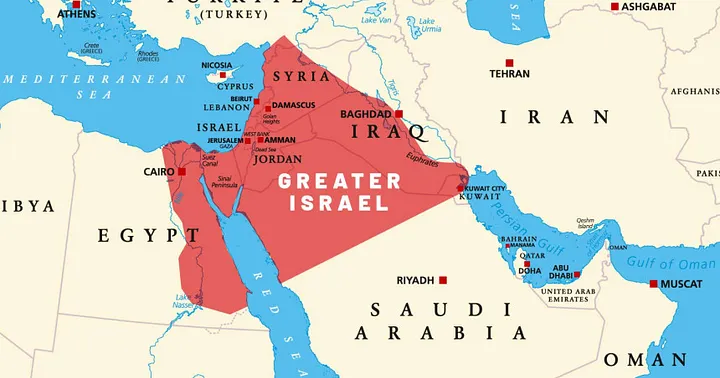
At its broadest, “Greater Israel” refers to an expanded vision of the Israeli state that goes beyond its internationally recognized borders. In some interpretations, this means consolidating control over territories captured in 1967, including the West Bank, East Jerusalem, and the Golan Heights. In others—especially within more ideological or religious frameworks—it stretches much further, from the Nile to the Euphrates River.
Maps circulated by figures like settler leader and the “godmother” of the settler movement Daniela Weiss have illustrated this more expansive vision, showing a state that includes parts of Jordan, Lebanon, Egypt, Iraq, Syria, and Saudi Arabia, far beyond the 1949 armistice line, known as the Green Line. As she described it, the territory spans roughly 3,000 kilometers—an area she compared in scale to the Sahara. While this maximalist version is not official policy, it continues to shape the discourse in certain political circles.
This Isn’t New: The Historical Precedent
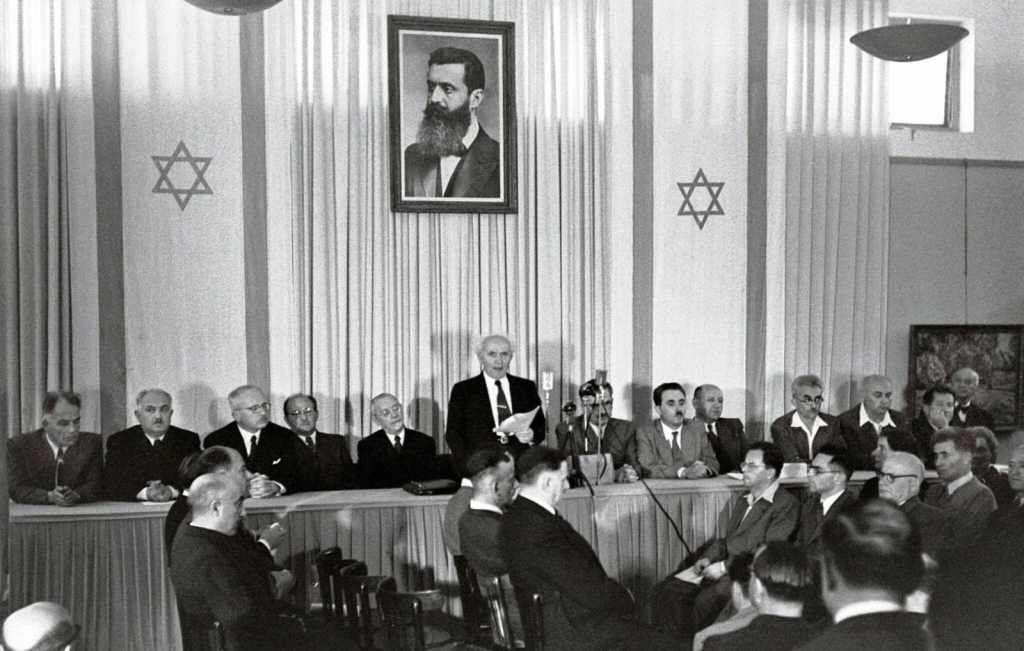
The roots of this idea go back to the earliest years of Israel. David Ben-Gurion, primary national founder and first prime minister of Israel, signaled that borders were not necessarily final. In a 1937 statement, he remarked: “We shall accept a state in the boundaries fixed today, but the boundaries of Zionist aspirations are the concern of the Jewish people and no external factor will be able to limit them.” That ambiguity would later prove significant.
Expansion, in practice, followed quickly. After the 1948 Arab-Israeli War, Israel controlled about 77 percent of Palestine. A second major shift came after the Six-Day War, when Israel occupied East Jerusalem, the West Bank, Gaza, and the Golan Heights.
Today, that is still visible. Israel effectively controls nearly all of Palestine in different ways, in addition to holding the Golan Heights. More than 700,000 Israeli settlers now live in the West Bank and East Jerusalem, according to the United Nations, while estimates for the Golan Heights range between 23,000 and 31,000 settlers.
The Role of Maps: Messaging as Strategy
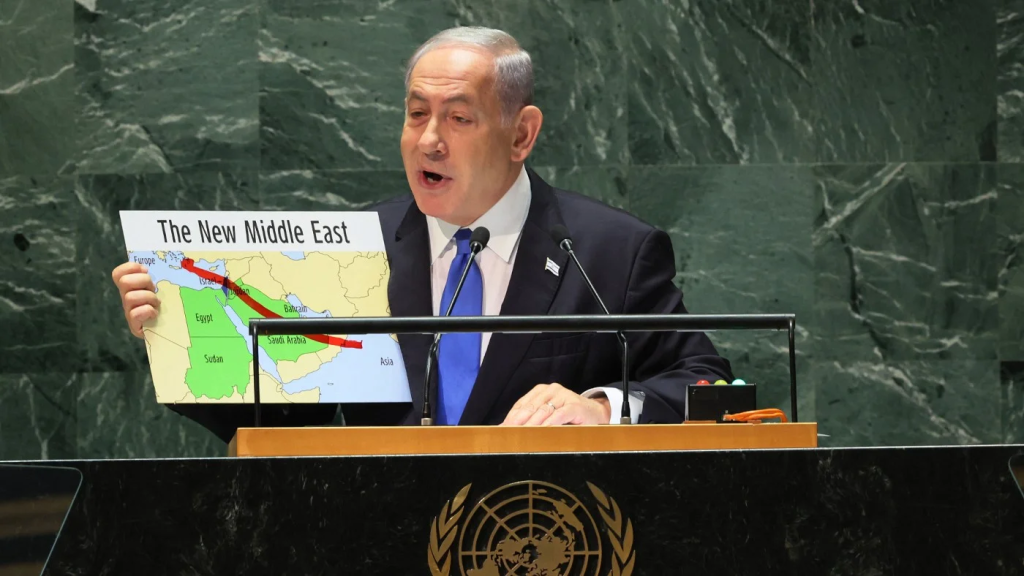
Maps have long been central to how Netanyahu communicates this vision. For decades, he has used them to present different versions of Israel’s place in the region—sometimes as a state under threat, and at other times as the center of a reimagined Middle East.
Every few years, these visuals spark controversy. In 2023, Israeli Minister of Finance Bezalel Smotrich stood at a podium in Paris featuring a “Greater Israel” map that included Jordan, causing diplomatic backlash. He also openly called for expansion toward Damascus.
In September 2024, Netanyahu presented a map outlining his plans for “the day after” the Gaza war, one that effectively showed the full annexation of the West Bank.
And in more recent appearances, maps behind him have depicted Israel in blue, absorbing the West Bank entirely—an image that commentators interpreted as signaling that annexation is no longer hypothetical but treated as complete in practice.
These aren’t isolated incidents. They form a pattern, where maps are used not just to reflect reality, but to shape and normalize a particular political vision.
Expansion as Ongoing Reality
What makes these maps especially significant is that they don’t exist in a vacuum. They align with ongoing developments on the ground. Over the past two and a half years, Gaza has been devastated by sustained military operations, with tens of thousands killed and much of its civilian infrastructure destroyed. Large portions of its population have been compressed into a fraction of the territory, estimated at 12% of land.
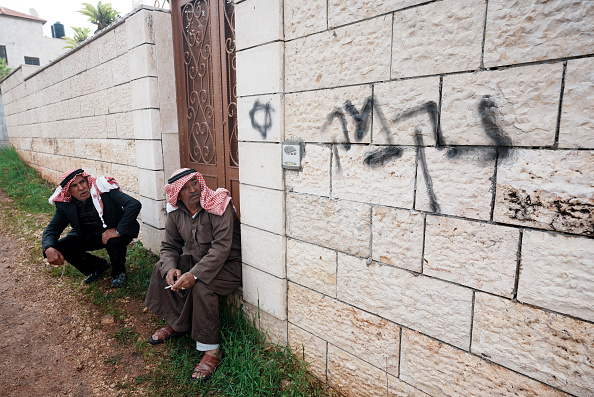
In the West Bank, settlement expansion and displacement have accelerated in ways not seen since 1967, deepening Israeli control across the territory. Beyond Palestine, regional shifts have also played a role. Following the fall of Bashar al-Assad in 2024, Israel moved into additional areas in Syria beyond the already annexed Golan Heights, and presence in southern Lebanon has intensified.
It’s Not Just About Territory Anymore
At the same time, “Greater Israel” is increasingly framed as more than a question of borders. It also reflects a broader strategic ambition. The goal is not only to control land, but to position Israel as the dominant power in the region—militarily, economically, and politically—by reshaping alliances and weakening rival states.
In that sense, territory is just one layer of a larger project. Influence, dependency, and regional order become just as important as where borders are drawn.
Conclusion: Old Vision, Sharper Edges
The idea of “Greater Israel” has existed for generations, but it is now being expressed with a new level of clarity and urgency. Historical precedent, current military realities, and political rhetoric are increasingly aligning, making the concept feel less abstract and more immediate.
So when Netanyahu stands beside a map and talks about what has been done—and what remains to be done—it’s not just a performance. It reflects an ongoing attempt to reshape both the geography of the region and the power structures that define it.
We Said This: Don’t Miss…Global Reactions to Israel’s Death Penalty Law Targeting Palestinians