


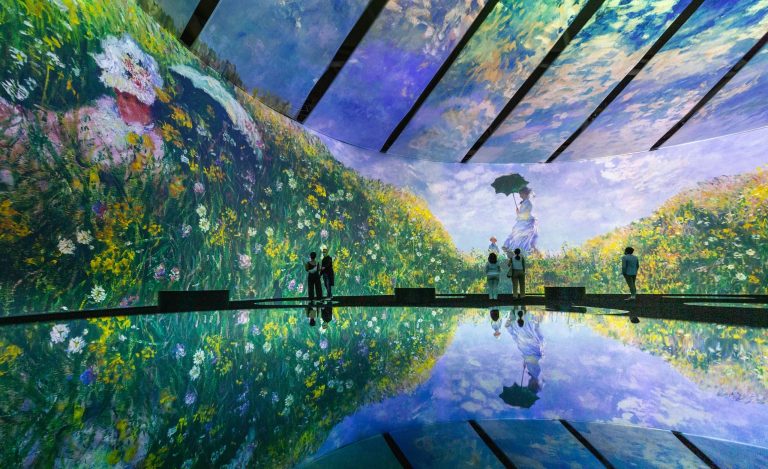
Following the massive success of Beyond Van Gogh, another immersive art experience is set to take over New Cairo. Starting today, May 11, Beyond Monet is transforming District 5 into a vibrant world inspired by the legendary French painter Claude Monet. Featuring larger-than-life projections that stretch across walls, floors, and every corner of the room, the exhibition brings Monet’s most celebrated masterpieces to life in a fully immersive experience. So before stepping into the dreamlike universe of colors, gardens, and water lilies, here are some of the iconic paintings you should know beforehand.
Impression, Sunrise
Dubbed the “Father of Impressionism,” Claude Monet helped inspire the very name of the movement through his iconic painting Impression, Sunrise.
The artwork, which captures the port of Le Havre, Monet’s hometown, is believed to have been intentionally titled “Impression” to deflect criticism that the piece looked unfinished, a common reaction to the loose brushstrokes and softer details that later became signatures of Impressionist art. The legendary painting is usually displayed at Musée Marmottan Monet.

Woman with a Parasol
Woman with a Parasol (or Madame Monet and Her Son) is one of Claude Monet’s most recognizable works, capturing a lighthearted glimpse of everyday family life rather than a formal portrait. Monet often painted his first wife, Camille, and in this beloved Impressionist piece, she appears alongside their son Jean during the years the family lived in Argenteuil between 1871 and 1877.
Set against a breezy summer sky, the painting beautifully freezes a fleeting moment of the pair out on a windy stroll, with the movement of the grass, clouds, and Camille’s flowing dress bringing the scene to life.

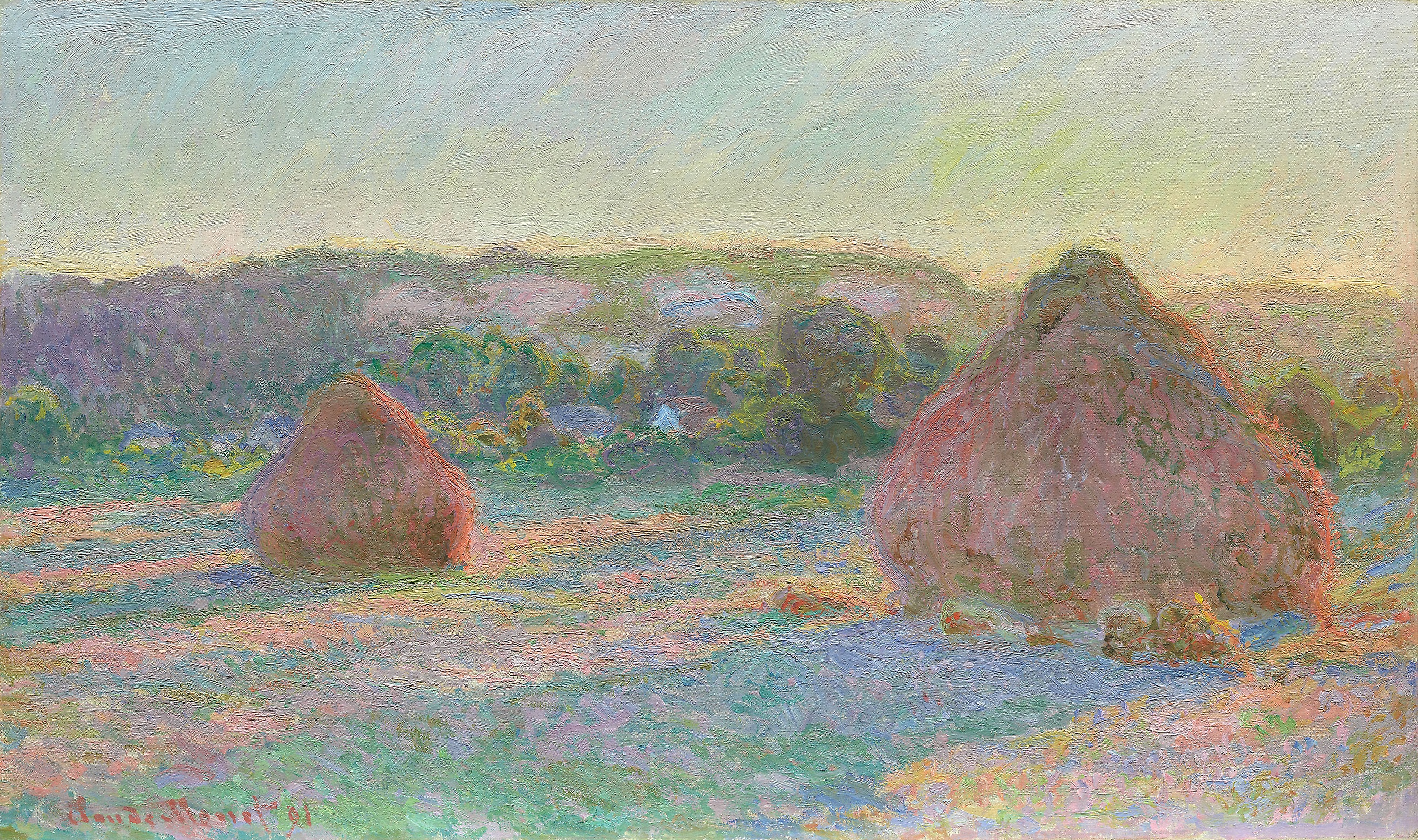
Haystacks (series)
Haystacks (Monet series) is one of Claude Monet’s most celebrated explorations, comprising around 25 paintings that transform a simple rural subject into something almost magical. Instead of treating the haystacks as a single scene, Monet repeatedly painted them at different times of day, across shifting seasons and weather conditions, proving that nothing in nature ever looks the same twice.
The haystacks themselves, located near his home and belonging to a neighboring farm, became the perfect canvas for his fascination with light and atmosphere. Begun in the late summer of 1890 and continued into the following spring, the series (along with a few earlier versions of the same subject) captures how sunrise, snow, fog, and golden sunset completely reshape the mood of the same landscape.
Water Lilies (series)
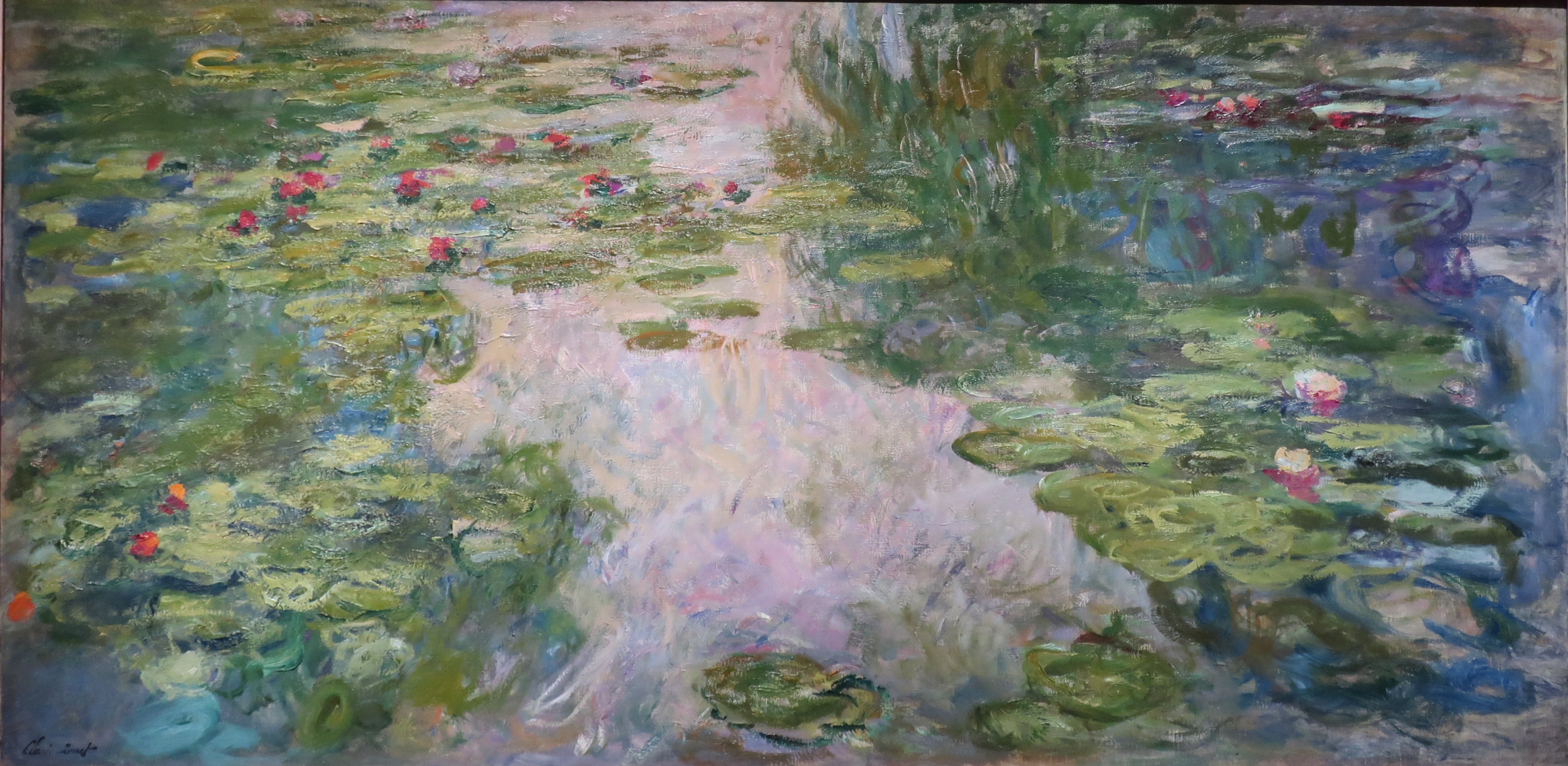
Water Lilies is one of the most iconic and instantly recognizable bodies of work by Claude Monet, consisting of roughly 250 paintings created in the final decades of his life.
Inspired by his own flower garden at his home in Giverny, the series became the central focus of Monet’s artistic world for nearly 31 years. Rather than traditional landscapes, these works drift into something more immersive: floating reflections, shifting light, and endless variations of color that dissolve the boundary between water, sky, and garden.
The Magpie
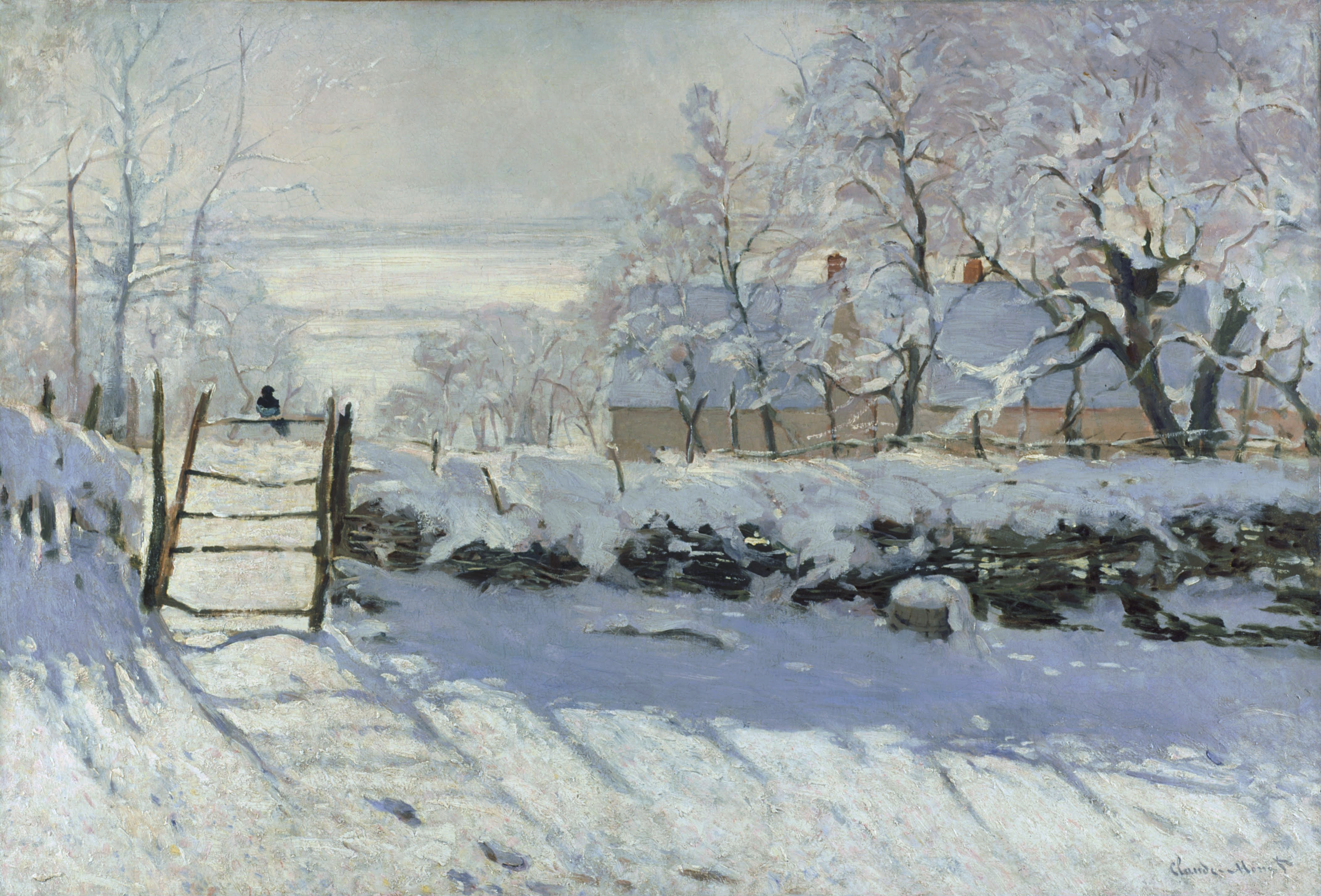
In the second half of the 1860s, Claude Monet began experimenting with snowy landscapes, drawn to the way winter light disappears almost as quickly as it arrives. Unlike more static scenes, snow offered something fleeting — a surface that constantly shifts with sunlight, shadow, and melting edges.
Over his career, Monet created more than 100 snowscapes, turning winter into one of his most poetic subjects. Among them, The Magpie stands out as the most famous and one of the largest winter scenes he ever painted. Set in a quiet, snow-covered countryside, the work captures a simple black magpie perched on a gate, yet what makes it remarkable is the atmosphere around it: soft blues, warm light, and delicate shadows that show Monet’s masterful ability to translate sunlight onto snow.
The Poppy Field near Argenteuil
Poppy Field near Argenteuil is a luminous example of the early Impressionist vision of Claude Monet, created during the period when he was living in Argenteuil with his family. The painting captures a radiant summer day where fields of bright red poppies stretch across the landscape, contrasting beautifully with the soft blues and greens of the surrounding scenery and sky.
Rather than focusing on strict detail, Monet uses light, color, and atmosphere to guide the eye through the scene, creating a sense of movement and openness. In the foreground, a mother and child walk through the field, while another pair appears in the distance, a compositional choice that creates a subtle diagonal rhythm across the canvas.

Beyond Monet isn’t just another art exhibition; it’s a full-on dive into the dreamy, light-soaked world of Claude Monet, where nature, color, and emotion blur together into something almost cinematic.
It’s a rare chance to step inside the brushstrokes themselves, to feel the glow of water lilies, the shift of seasons in a single field, and the way light can completely transform a simple moment into art. So before you book your ticket, take a little time with these masterpieces first; it’ll make walking into the experience feel less like visiting an exhibition and more like stepping straight into Monet’s imagination.
We Said This: Don’t Miss… Inside Cairo’s Beyond Van Gogh: The Paintings You Know, Now in Motion