


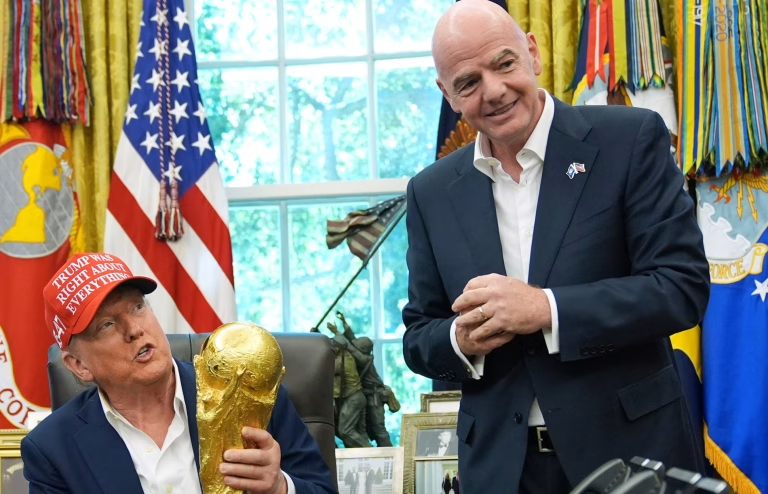
Every World Cup produces controversy. A missed penalty, an offside measured in millimetres, a referee who becomes the story instead of the football. Those moments are part of the tournament’s history.
The difference in 2026 is that the controversies have stopped feeling isolated. One by one, they have piled on top of each other: a VAR intervention that stunned even former referees, questionable officiating appointments, visa restrictions affecting one team but not others, political lobbying over suspensions, inconsistent responses to racism, and commercial incentives that are impossible to ignore.
The issue is no longer simply whether FIFA got a decision wrong. It is whether the governing body still commands the trust required to run the world’s biggest sporting event.
Egypt’s Disallowed Goal Against Argentine
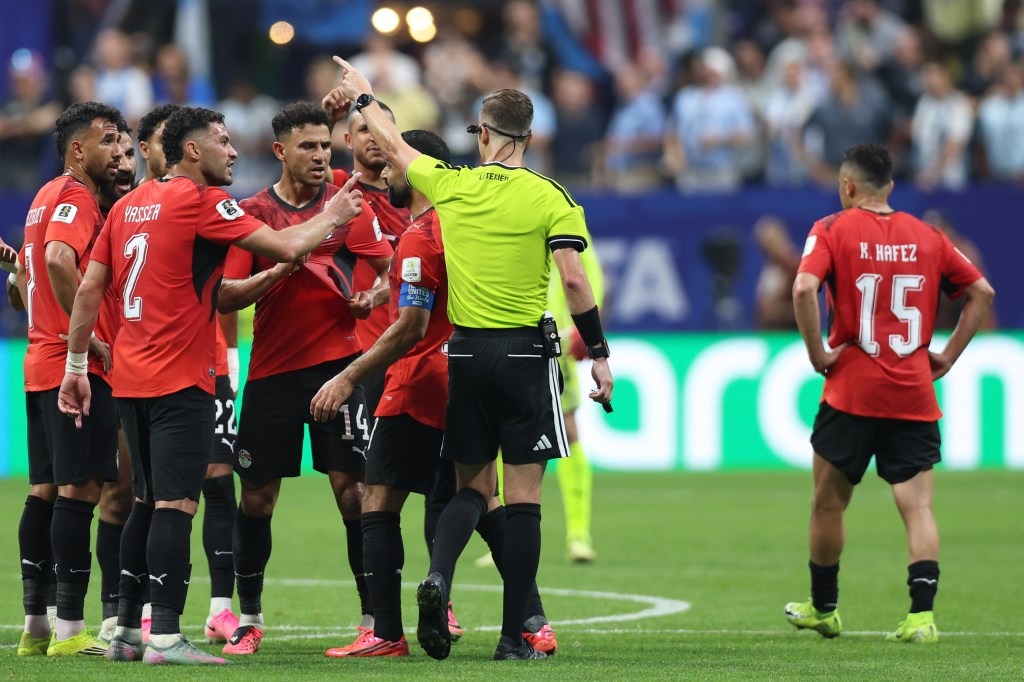
If there was one moment that came to define the tournament, it was Egypt’s disallowed goal against Argentina.
When Zizo found the net in the 67th minute, Egypt looked set to produce one of the biggest upsets in World Cup history. Instead, VAR travelled all the way back to a challenge involving Hamdy Fathy and Lisandro Martínez near the halfway line, almost 100 yards from goal, eventually ruling that Egypt had committed a foul in the build-up.
The reaction was immediate.
Former Premier League referee Graham Scott described the intervention as an “astonishing overreach” of VAR’s purpose, arguing that the contact amounted to nothing more than normal football and fell nowhere near the “clear and obvious” threshold required to overturn a goal. ESPN commentator Ian Darke was equally scathing, joking that VAR would soon be reviewing incidents “back to kick-off.”
Neither criticism came from partisan Egyptian supporters. It came from experienced observers who understood exactly how VAR is supposed to operate.
More damaging than the decision itself was what happened afterwards.
Just minutes before Argentina’s stoppage-time winner, Mohamed Salah appeared to be caught by an Argentine defender in the build-up. The contact looked strikingly similar to the incident that had erased Egypt’s goal. This time, play continued.
Ian Wright summed up what millions of viewers were thinking.
“If you’re going to pull it back for Argentina… you have to pull it back for this one with Mo Salah.”
Whether one believes both incidents were fouls or neither were fouls is almost beside the point. The frustration came from watching the threshold appear to move within the same match.
Football supporters can accept difficult decisions. What they struggle to accept is inconsistency.
FIFA’s Referee Appointment Complicated Matters More
If the Egypt–Argentina controversy wasn’t enough, FIFA’s next refereeing appointment only intensified the scrutiny.
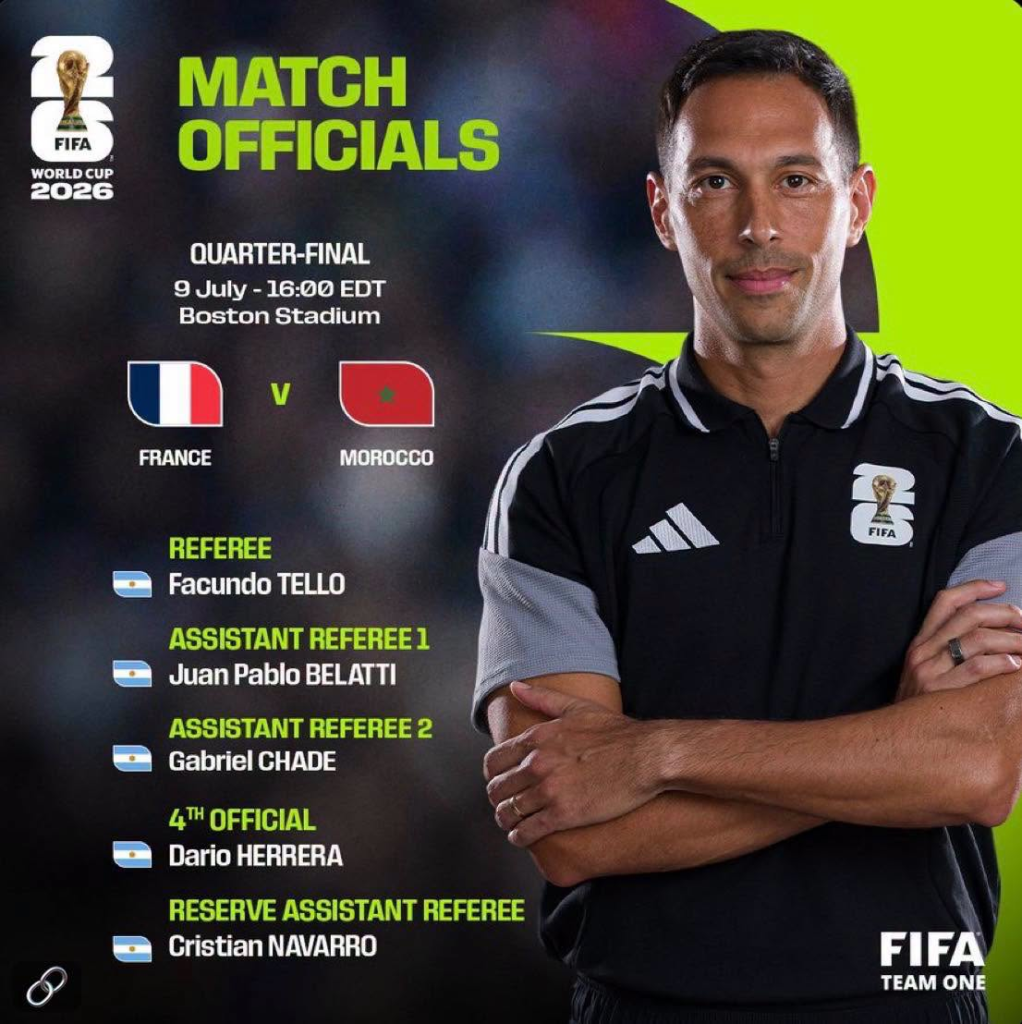
For France’s quarter-final against Morocco, the governing body appointed an entirely Argentine officiating team. Every match official came from the same country, a move unprecedented in the world cup 2026.
On paper, FIFA could point to the regulations. Argentina and France could only meet in the final, meaning there was no direct competitive conflict.
But with French referee François Letexier having overseen Argentina’s hugely controversial victory over Egypt, the decision raises many questions.
Supporters quickly drew comparisons: a French referee officiated Argentina’s most controversial victory, only for an all-Argentine crew to be appointed to France’s quarter-final days later. It was exactly the kind of narrative FIFA should have anticipated—and exactly the kind of appointment a governing body concerned with protecting public confidence would ordinarily avoid.
Instead, it handed critics another question that did not need to be asked.
Messi’s Presence Isn’t Just Sporting, It’s Financial
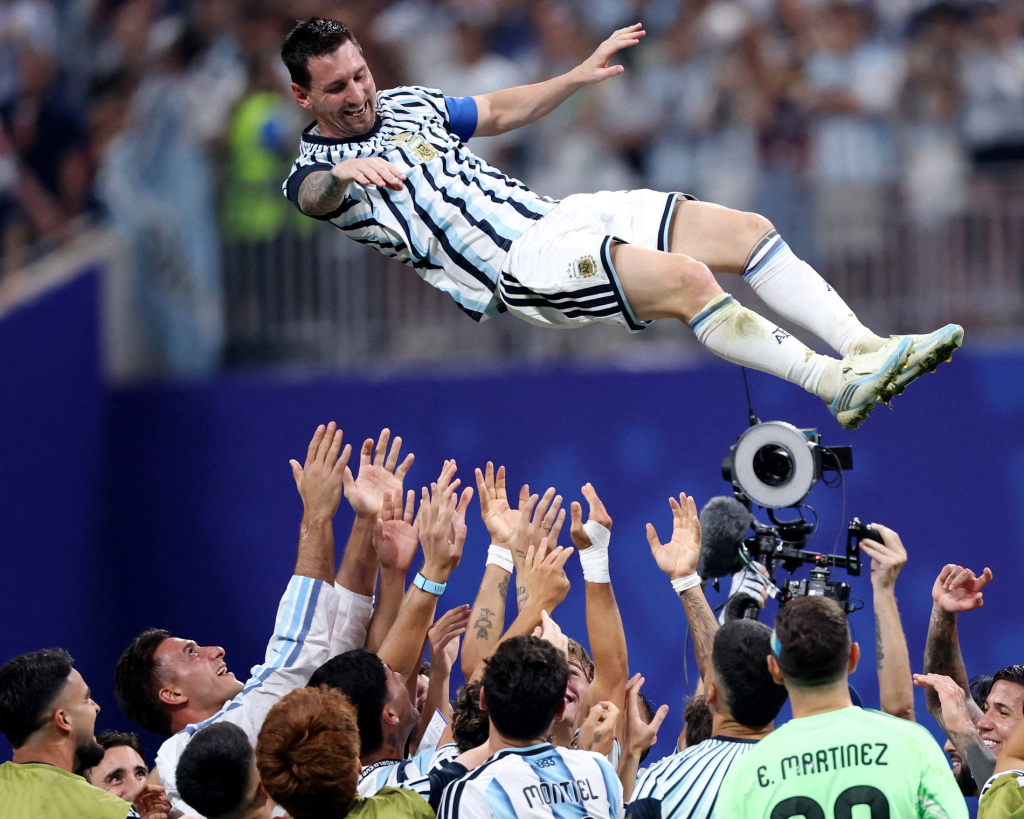
Football’s biggest star is also football’s biggest business.
According to GiveMeSport, quarter-final ticket prices offered a glimpse into just how valuable Lionel Messi remains to the tournament. While Argentina trailed Egypt 2-0, tickets for the quarter-finals reportedly fell from around $1,900 to below $1,000 as the prospect of an early Argentine exit became increasingly likely.
Within minutes of Argentina’s comeback victory, prices reportedly climbed back to around $2,000.
The market could not have delivered a clearer message.
Messi remaining in the World Cup isn’t simply good for Argentina. It is good for broadcasters chasing record audiences, sponsors paying billions for global exposure, hospitality companies, ticket resellers and, ultimately, FIFA itself. Every extra match involving Messi is another global event.
Egypt manager Hossam Hassan was blunt in his assessment after the match.
“There is support from every side for the world champions — marketing support. They want the previous World Cup champions to remain in the tournament. They want Messi to stay.”
Hossam Hassan’s comments captured a feeling shared by many supporters after the controversy. When one player represents hundreds of millions of dollars in commercial value, every contentious refereeing decision involving his team is viewed through a different lens.
That commercial reality doesn’t disappear when controversial decisions enter the picture. If anything, it magnifies them. The economics surrounding Messi are so obvious that they inevitably become part of the conversation.
Politics Put Iran at a Competitive Disadvantage
The World Cup is sold as football’s great equaliser—a tournament where every nation competes on level ground.
Iran’s experience suggested otherwise.
Rather than remaining in the United States throughout the tournament, Iran were required to base themselves in Tijuana, Mexico, travelling across the border for matches before returning almost immediately afterwards. Several members of the delegation—including technical staff and media officials—were reportedly denied visas altogether.
Coach Amir Ghalenoei described Iran as the tournament’s most “oppressed” team.
While other teams recovered, trained and prepared from permanent bases, Iran repeatedly dealt with border crossings, disrupted schedules and the logistical strain of international travel during the most demanding competition in football.
FIFA has long argued that politics should remain outside the game.
Yet tournaments do not exist in a vacuum. When governments decide who can enter a country, who can stay, and under what conditions, politics inevitably shapes the competition itself.
The ideal of equal conditions becomes increasingly difficult to defend when not every team is allowed to prepare under equal circumstances.
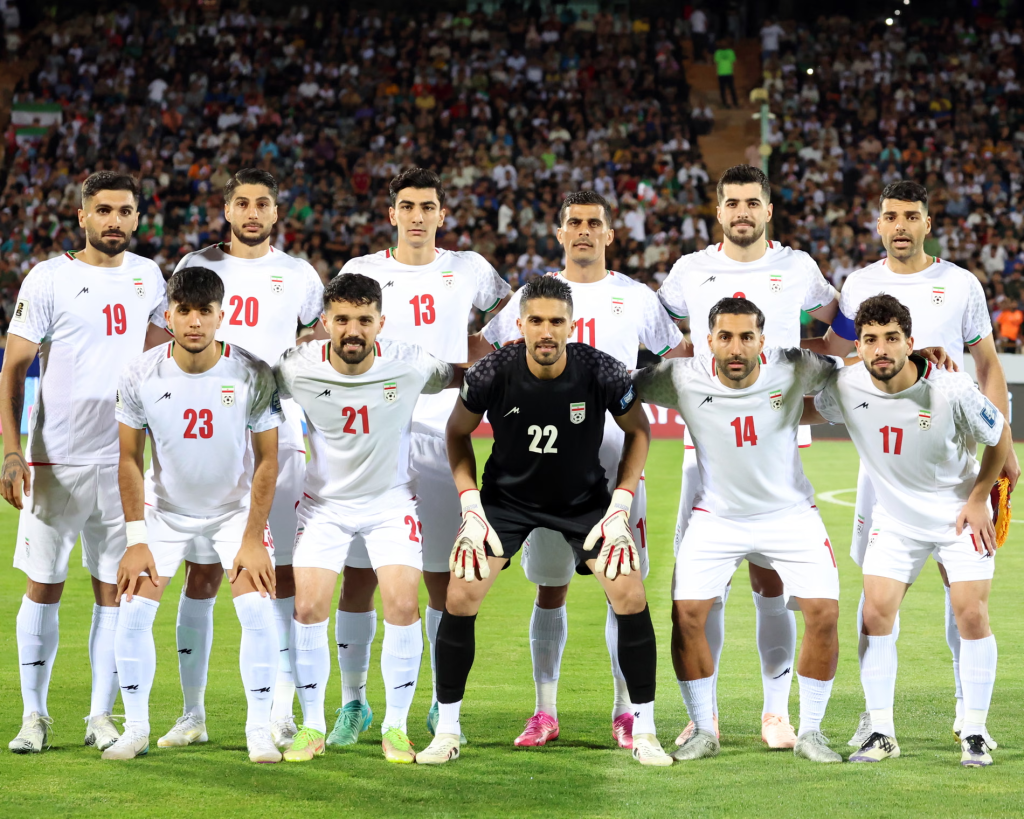
One referee couldn’t even enter the host country
Iran were not the only ones affected by politics.
Somali referee Omar Abdulkadir Artan—one of Africa’s most respected officials—was unable to enter the United States because of visa restrictions, ruling him out of the tournament entirely.
For a competition marketed as the world’s game, the absence of a qualified FIFA referee because of immigration barriers was another reminder that football’s biggest stage remains subject to decisions made far beyond the pitch.
The referee never had the opportunity to officiate.
Politics had already made the decision.
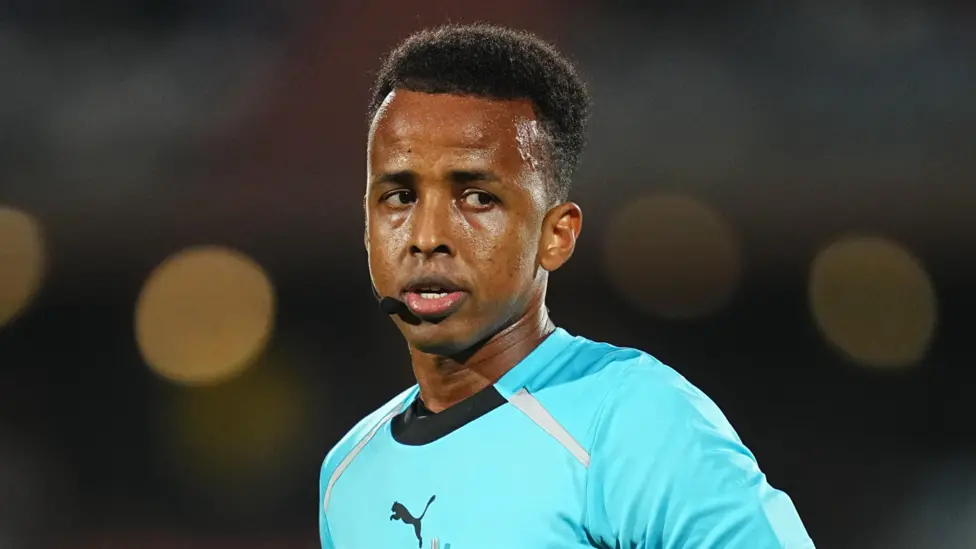
Why Trump’s Balogun Intervention Was So Controversial
Politics and football have always mixed. The Balogun controversy showed just how blurred that line can become.
After Folarin Balogun received a controversial straight red card against Bosnia and Herzegovina, few disputed what the regulations required: a one-match suspension.
That is how the law works.
US Soccer appealed the decision, but what followed was far more unusual.
President Donald Trump personally acknowledged that he had spoken to FIFA president Gianni Infantino, explaining his reasoning in strikingly simple terms.
“He is our best player, or one of our best players… They gave him a red card… I started hearing that means he can’t play in the next game. I said, that’s very unfair.”
Trump continued:
“It’s one thing to penalise somebody for the game, but how do you penalise them for a game that hasn’t been played yet?… So yes, I asked for a review by FIFA.”
The argument itself raised eyebrows.
Automatic suspensions for straight red cards are hardly a novel concept. They apply equally across football, regardless of nationality or reputation. Calling the rule “unfair” because it affected the host nation inevitably raised a bigger question: since when does the president of a country decide what is fair in the Laws of the Game?
Soon afterwards, Balogun’s suspension was postponed until after the tournament.
The sequence inevitably drew comparisons with one of football’s oldest controversies.
In 1962, Brazilian icon Garrincha was sent off in the World Cup semi-final. According to one of football’s most enduring stories, political pressure—including intervention from Chile’s president—helped ensure he remained eligible for the final. And ultimetly Brazil won their second World Cup.
More than six decades later, the same controversy makes it to another World Cup.
Added context only makes this more uncomfortable. Just months earlier, FIFA president Gianni Infantino had presented Trump with a “FIFA Peace Prize”—an award announced without any published nomination process or clear selection criteria.
The incident plainly paints a picture of an organisation whose relationship with political power appears increasingly difficult to separate from the competition itself.
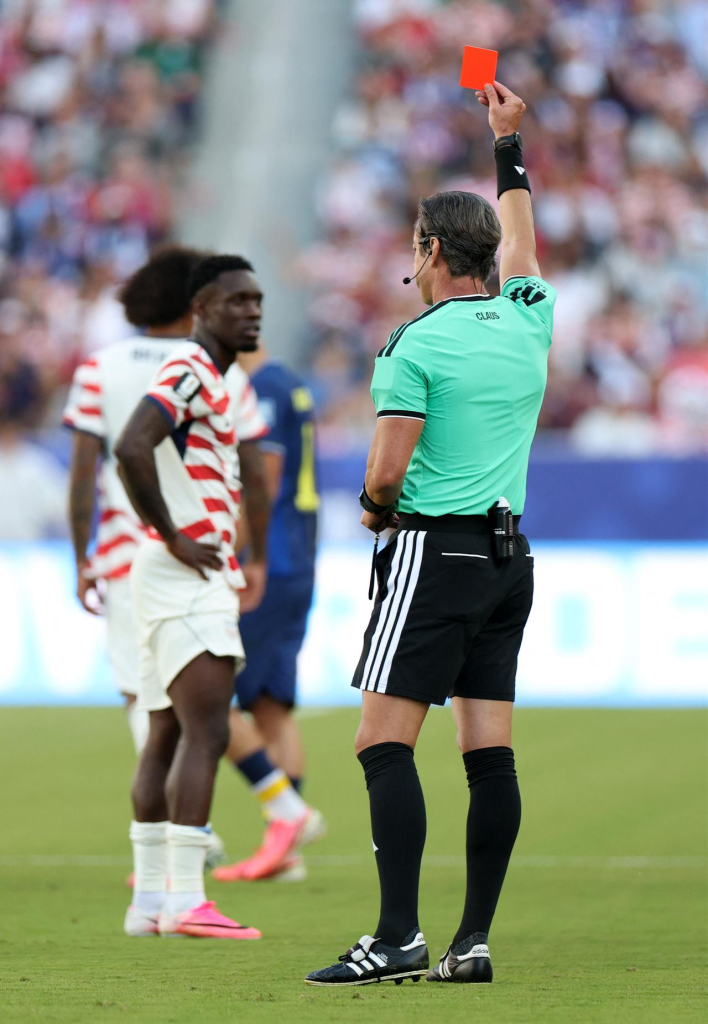
FIFA’s Response to Racism Has Not Been Consistent
There should be no ambiguity about what Paraguayan senator Celeste Amarilla wrote about Kylian Mbappé.
After France defeated Paraguay, Amarilla described Mbappé as a “colonised Cameroonian” who had merely “pretended to be French,” before calling him arrogant, ugly and accusing him of being frightened during the match.
The remarks were openly racist.
Gianni Infantino responded swiftly, condemning the abuse and declaring that football must “fight racism and defeat it all together.”
He was right to do so.
The criticism was never about whether FIFA should defend Mbappé. It absolutely should.
The criticism was about consistency.
Supporters have repeatedly questioned why some racist incidents dominate headlines and receive immediate intervention while others appear to attract far less urgency. FIFA insists every allegation is treated equally. Public confidence has not always reflected that assurance.
Those questions resurfaced during Egypt’s defeat to Argentina.
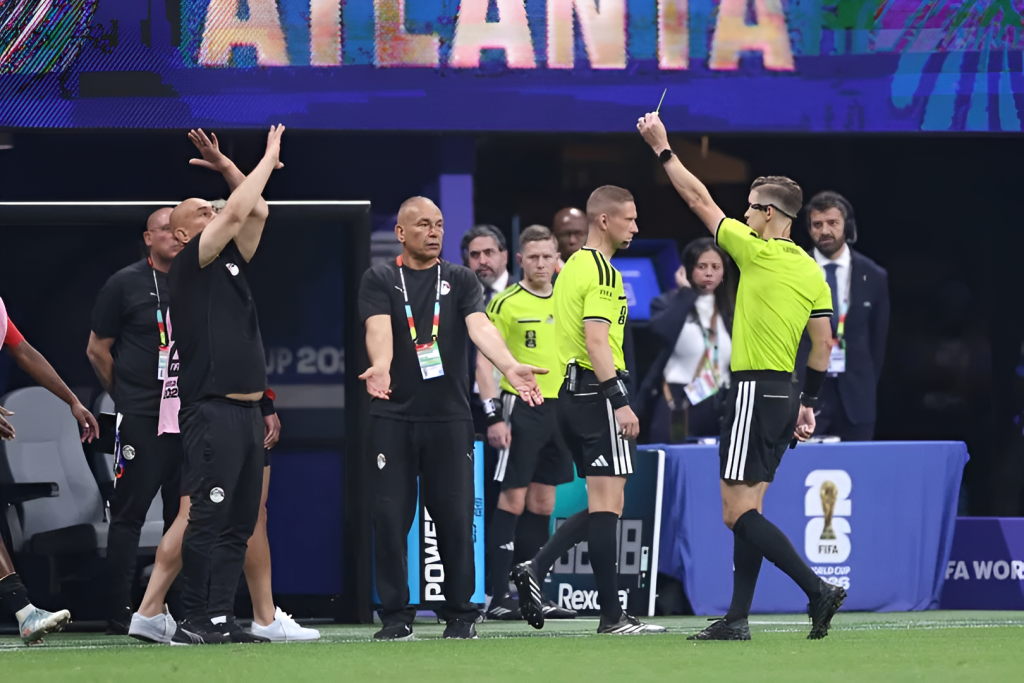
As tensions boiled over after the VAR decision, Egypt manager Hossam Hassan appeared to make FIFA’s recognised anti-racism “X” gesture by crossing his forearms—a signal specifically introduced to alert referees to racist abuse and trigger FIFA’s three-step anti-racism protocol.
Instead of any visible acknowledgement of the signal, Hassan was booked.
Anti-racism campaigns derive their authority from consistency. They cannot depend on who the victim is, how famous they are, or which nation they represent.
That, more than any slogan or campaign, is where FIFA’s credibility continues to be tested.
FIFA’s Credibility Problems Didn’t Start in 2026
The 2026 World Cup is not uniquely controversial.
The corruption allegations that engulfed Sepp Blatter’s presidency, the arrests of senior FIFA officials in 2015, criminal indictments involving football executives, repeated allegations surrounding World Cup bidding, and the image of comedian Simon Brodkin showering Blatter with fake banknotes in Zurich all became symbols of an institution whose credibility had already been severely questioned.
That history matters because every modern controversy is judged against decades of institutional distrust.
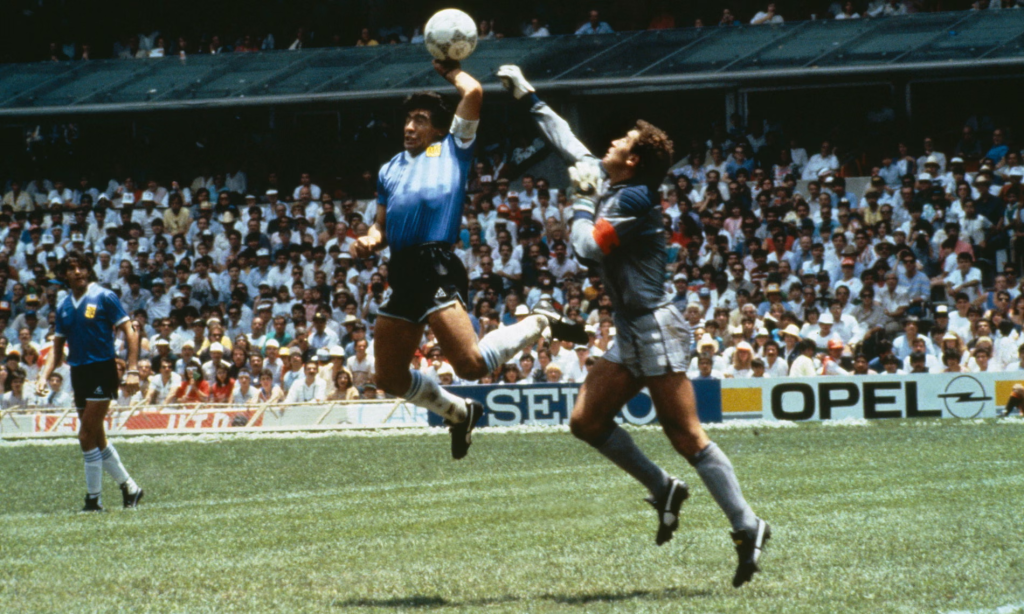
How the ‘Hand of God’ Became Football’s Most Famous Controversy
Long before VAR transformed refereeing and every decision could be replayed from a dozen different angles, the World Cup had already produced one of the most iconic—and controversial—moments in football history.
In the quarter-final of the 1986 World Cup, Argentina’s Diego Maradona challenged England goalkeeper Peter Shilton for a high ball inside the penalty area. Instead of heading it, Maradona deliberately punched it into the net with his left hand. The officials failed to spot the infringement, the goal was awarded, and Argentina ultimately defeated England 2–1 before going on to win the tournament.
The incident became immortalised after the final whistle when Maradona was asked about the goal. With characteristic mischief, he replied that it had been scored “a little with the head of Maradona and a little with the hand of God.”
That offhand remark gave the incident its legendary name.
Nearly four decades later, the “Hand of God” remains one of football’s defining controversies—a reminder that debates over refereeing, fairness and the fine margins that shape World Cups did not begin in the modern era.
The real issue isn’t one decision. It’s the pattern.
The defining feature of the 2026 World Cup is not that any one of those things happened. It is that they kept happening.
A VAR intervention that many former referees believed exceeded its remit.
An all-Argentine refereeing crew appointed days after France officiated Argentina’s most controversial victory.
The commercial reality that ticket prices doubled once Messi’s place in the tournament was secured.
Iran competing under travel restrictions few other teams faced.
Political lobbying over disciplinary decisions.
Questions over the consistency of FIFA’s anti-racism response.
None of these controversies exists entirely in isolation.
Together, they have left FIFA facing a challenge greater than any refereeing debate or disciplinary decision.
Trust.
Football ultimately depends on one simple belief—that every team begins under the same rules, judged by the same standards, with no nation, player or commercial interest standing above the game itself.
The longer that belief is questioned, the more difficult it becomes for FIFA to convince supporters that football—and football alone—remains the deciding factor.
We Said This: Don’t Miss… Egypt Files Official Complaint Against FIFA Referee: What Happens Now?