



As a Palestinian creative director and game designer, Rasheed Abueideh is determined to bring the stories of Palestinian families during the 1948 Nakba to global audiences in a way that feels deeply personal and impossible to ignore: through video games.
Growing up in Palestine, Abueideh was surrounded by stories of loss, resilience, survival, and life under occupation: stories that would later shape not only who he became, but also the kind of narratives he chose to tell. For him, gaming was never just entertainment. It became a medium through which audiences could emotionally experience a story rather than simply witness it from afar.
Growing Up With Palestinian Stories
Growing up in Palestine played a defining role in shaping both Abueideh’s worldview and creative voice. The stories passed down through generations, filled with grief, perseverance, and memory, stayed with him and eventually became central to his work.
Rather than telling stories through film or traditional media, he saw gaming as a more immersive way to build empathy and emotional understanding.

Why Video Games?
For Abueideh, video games offer something unique: engagement. Instead of passively observing events, players actively move through experiences, make decisions, and emotionally inhabit unfamiliar realities.
That belief became the foundation of his work, even as the path toward becoming a game developer came with challenges. Throughout his career, he faced limited resources, a lack of industry support, and the difficulty of telling Palestinian stories in spaces that often avoided or overlooked them.
Still, those challenges only reinforced his determination to create.

From Liyla to a Larger Vision
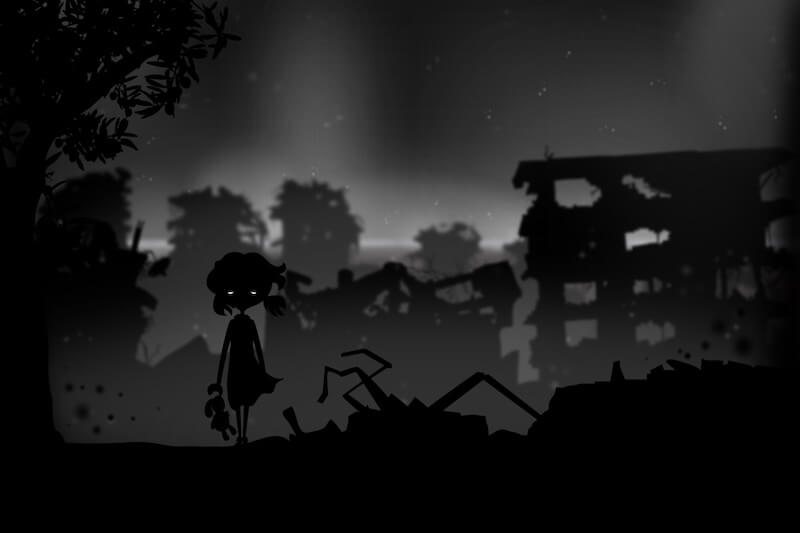
Abueideh first gained international recognition through Liyla and The Shadows of War, his multi-award-winning debut game centered on the experiences of children during the 2014 attacks on Gaza. The project highlighted the devastating realities of war through a deeply human lens and became a turning point in his career.
More importantly, it showed him just how powerful games could be when it came to delivering a message to audiences around the world. At the same time, it also revealed how difficult it could be to openly share Palestinian narratives.
Inside Dreams on a Pillow
Now, he is working on his latest and most ambitious project yet: Dreams on a Pillow, a narrative-driven video game inspired by stories from the Nakba.
The game takes players on a journey through everyday Palestinian life before the events of 1948 and the devastating aftermath that followed. At the center of the story is Khadra, a woman living in Al Tantura who is forced to flee after the massacre that erased her town from history.
The Nakba is not just history to us; it is something that still lives through generations, and I wanted to tell it through a deeply human perspective.
Rather than simply revisiting historical events, the game attempts to humanize them, placing players inside the emotional experience of displacement, survival, and memory.
The Challenge of Telling a Hidden History
One of the most difficult aspects of developing Dreams on a Pillow has been the research process itself. Determined to challenge misinformation surrounding the root causes of Palestinian suffering and displacement, Abueideh encountered a major obstacle: the scarcity and loss of Palestinian historical records.
Many facts are kept hidden because if they surface, they will show the true face of the occupation and the real narrative that was always hidden.
For Abueideh, building the game has therefore become not only a creative process but also an act of recovering lost history.

Bringing the Game to Life
The project has now moved beyond pre-production. The foundational systems, tools, and development pipelines needed to build the game are complete, and full production is officially underway.
The project is supported through crowdfunding, and you can contribute to the story by donating via LaunchGood, a Muslim-focused crowdfunding platform that has provided significant support throughout the process.

A Hope Beyond the Screen
At its core, Dreams on a Pillow is about more than gameplay. Abueideh hopes players leave the experience with empathy, understanding, and a deeper emotional connection to Palestinian stories and humanity, and perhaps even a greater willingness to stand for justice.
I hope this project helps me see a free Palestine.

With a determination to bring Palestinian stories to life, Rasheed Abueideh’s project goes far beyond gameplay, becoming an interactive way of sharing narratives that are often unheard. His projects transform history and memory into something you can step into and feel, rather than observe from a distance.
We Said This: Don’t Miss… This Palestinian Video Game Is Bringing Folk Tales Into the World of Gaming