


Football in the MENA region has never been just a game. It is escape, rebellion, survival, class mobility, nationalism, and sometimes the only thing capable of making divided people feel united for ninety minutes. Across the region, football becomes tangled with politics, identity, and everyday struggle. These films capture that beautifully. Some are funny, some heartbreaking, and others deeply inspiring, but all of them show how football lives inside the region’s collective memory and emotional landscape.
Voy! Voy! Voy! (2023) — Egypt
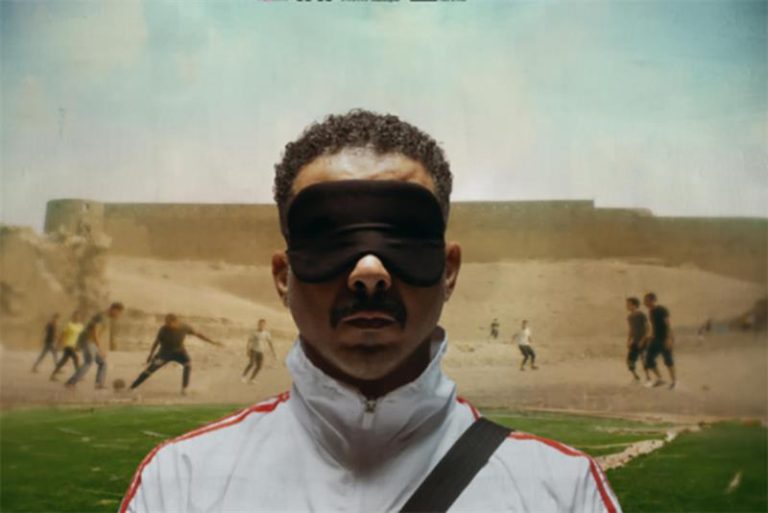
This Egyptian dark comedy takes an absurd real-life premise and turns it into a sharp commentary on migration, desperation, and the lengths people go to for a better future. Hassan, stuck in a stagnant life in Egypt, pretends to be blind so he can join a blind football team traveling to Europe for a tournament in Poland. What begins as a scam slowly becomes something more complicated as he forms relationships with the team and gets pulled deeper into the deception.
The film works because it balances humor with sadness. You laugh at the ridiculous situations, but underneath is a painful truth about how suffocating economic and social realities can push people toward impossible choices. Football here is not really about sport; it becomes a passport, an escape route, and a fantasy of mobility.

Offside (2006)
Set during Iran’s World Cup qualifier against Bahrain, this brilliant Iranian film follows a group of young women arrested for disguising themselves as men to enter the stadium. Since women were banned from attending men’s football matches at the time, the girls end up trapped in a holding area outside the game while soldiers guard them.
What makes the movie so powerful is its simplicity. Most of the action is just conversations between the girls and the young soldiers, but through those exchanges the film exposes the absurdity of the restrictions placed on women. The football match itself stays mostly offscreen, yet you feel its energy constantly through the chants, cheers, and tension from the crowd.
The movie turns football into a symbol of exclusion and resistance. These girls are not trying to start a revolution; they just want to watch a match. That ordinary desire becomes political by default.

Lions of Mesopotamia (2024)
This documentary tells one of the most emotional football stories in modern Middle Eastern history. During the height of Iraq’s civil war in 2007, when bombings and sectarian violence dominated everyday life, the Iraqi national team somehow made an improbable run to win the Asian Cup.
The players came from communities that were literally at war with one another: Sunni, Shia, and Kurdish athletes carrying the weight of a fractured country on their shoulders. Yet for a brief moment, their success united Iraqis across political and sectarian lines.
What gives the film its emotional punch is the retrospective storytelling. Years later, the players revisit the fear, uncertainty, and trauma surrounding that tournament. Football here becomes something almost sacred: proof that a shared identity could still exist even while the country was being torn apart.

El Harreef (1983)
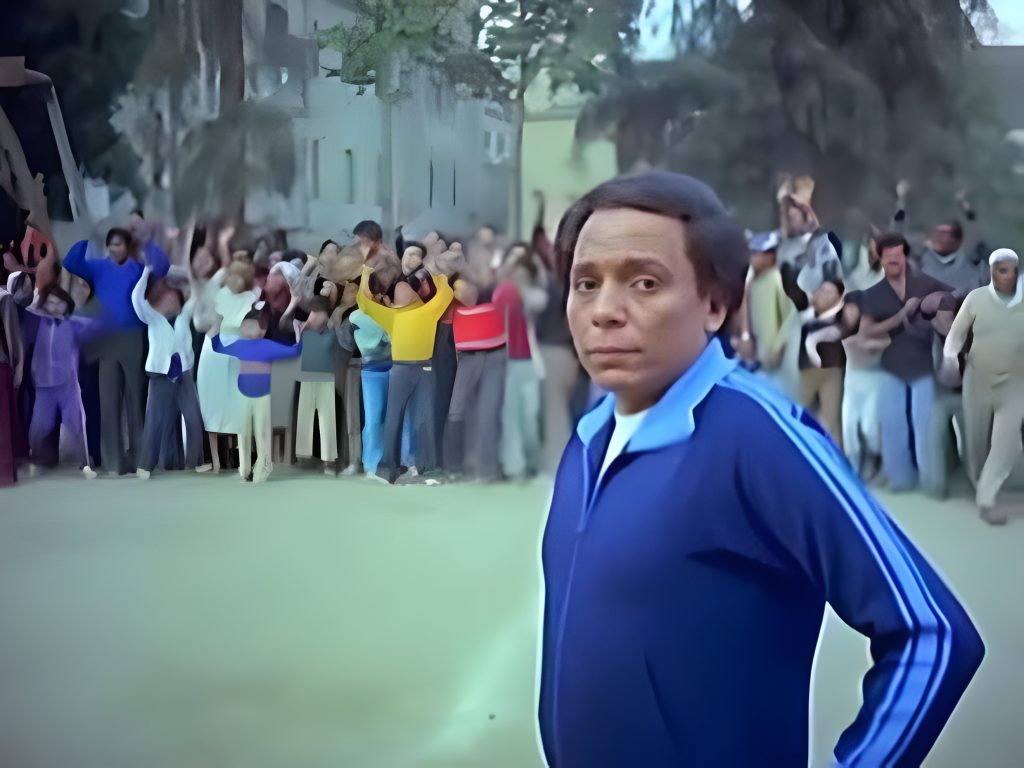
Few films capture working-class football culture as vividly as this Egyptian classic. Fares, played by Adel Imam, is a talented street footballer drifting through life with very little discipline. His marriage collapses, his work life becomes unstable, and he keeps sabotaging himself, yet football remains the one place where he feels alive.
The film is messy in the best way possible because Fares himself is messy. He is flawed, impulsive, selfish, charming, and deeply human. The football scenes feel sweaty and raw, rooted in neighborhood pitches and informal games where pride and money are always on the line.
More than anything, the film understands football as survival for Egypt’s urban poor. It is recreation, hustle, escape, and social currency all at once.
Captains of Za’atari (2021)
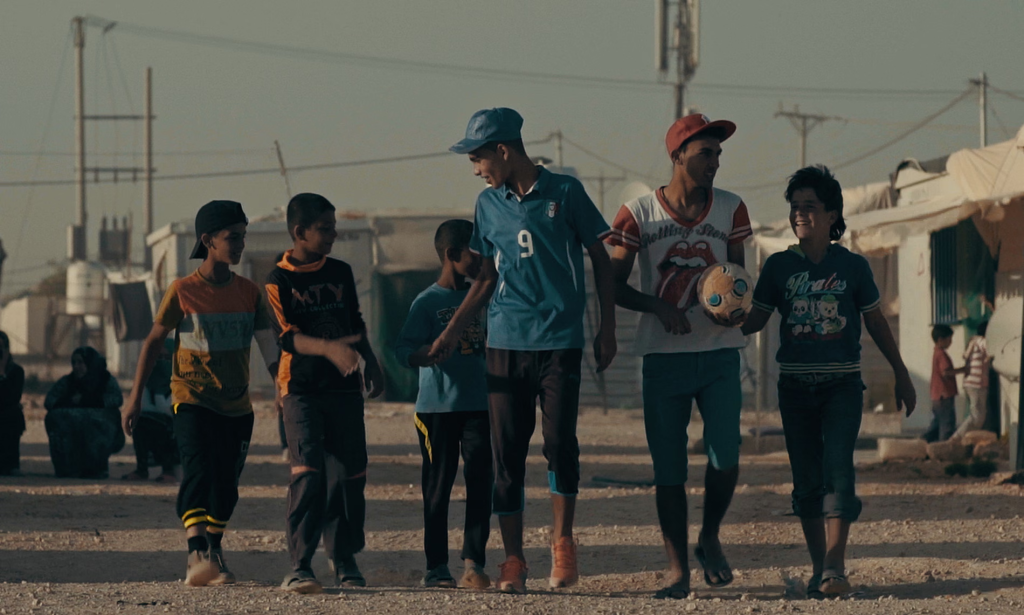
This moving documentary follows two Syrian teenagers living in Jordan’s Za’atari refugee camp who dream of becoming professional football players. For them, football is not simply entertainment; it represents dignity, identity, and the possibility of a future beyond displacement.
The boys train relentlessly despite the harsh conditions of camp life, and when a famous football academy visits the camp, their dream suddenly feels within reach. But the film wisely avoids turning into a simplistic underdog story. It constantly reminds viewers how fragile hope can be for refugees whose lives remain controlled by borders, politics, and uncertainty.
The emotional core of the documentary lies in the friendship between the boys. Football keeps their ambitions alive in a place designed around waiting.
Maradona’s Legs (2019)
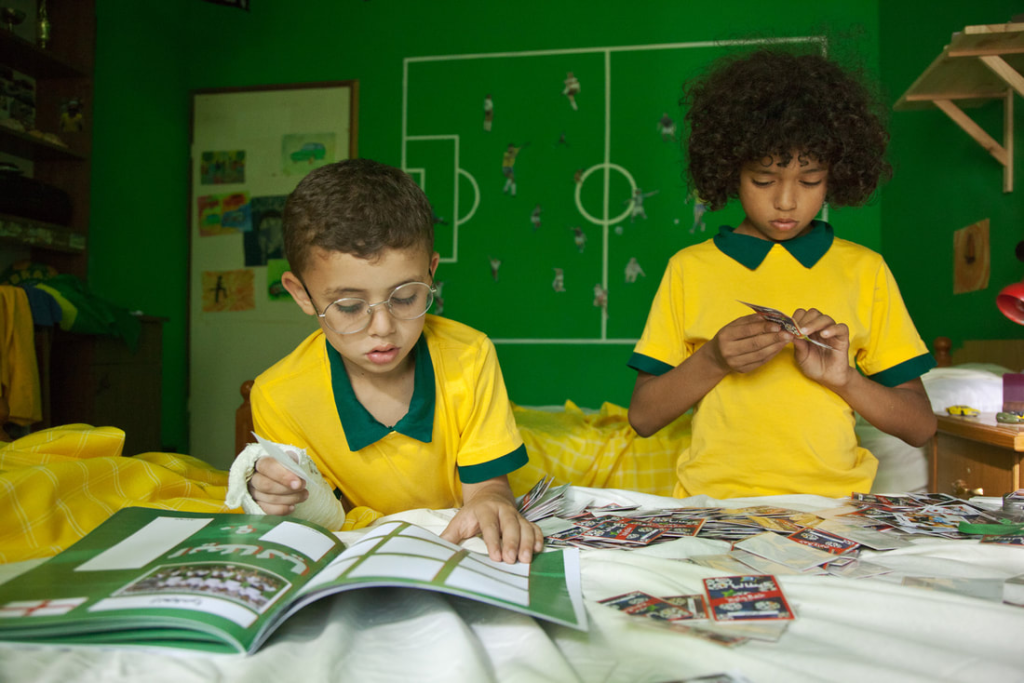
This Palestinian coming-of-age film is small in scale but huge in heart. Set during the 1990 World Cup, it follows two boys searching for the final missing sticker in their football album: Maradona’s legs. Completing the album could win them a free Atari, which instantly raises the stakes to life-or-death levels in the minds of children.
The beauty of the film lies in how it captures childhood obsession against the backdrop of occupation and restriction. Even amid political hardship, the boys remain consumed by football stickers, playground dreams, and World Cup fever.
The title itself is brilliant because Maradona becomes almost mythical. To these kids, football offers imagination and joy powerful enough to temporarily overpower the reality surrounding them.
El Hareefa 1 &2 (2024)
This recent Egyptian hit takes a more commercial and youthful approach to football culture while still touching on class divisions inside Egyptian society. Majed is forced to leave his wealthy private-school environment and transfer to a public school, where football becomes the bridge connecting him to his new classmates.
The film leans into humor, school rivalries, and energetic football sequences, but underneath is a familiar Egyptian theme: football as social equalizer. Skill on the pitch matters more than status or money, and Majed slowly earns respect through talent rather than privilege.
Compared to some of the heavier films on this list, this one feels lighter and more crowd-pleasing, but that accessibility is part of its charm.

Khartoum Offside (2019)
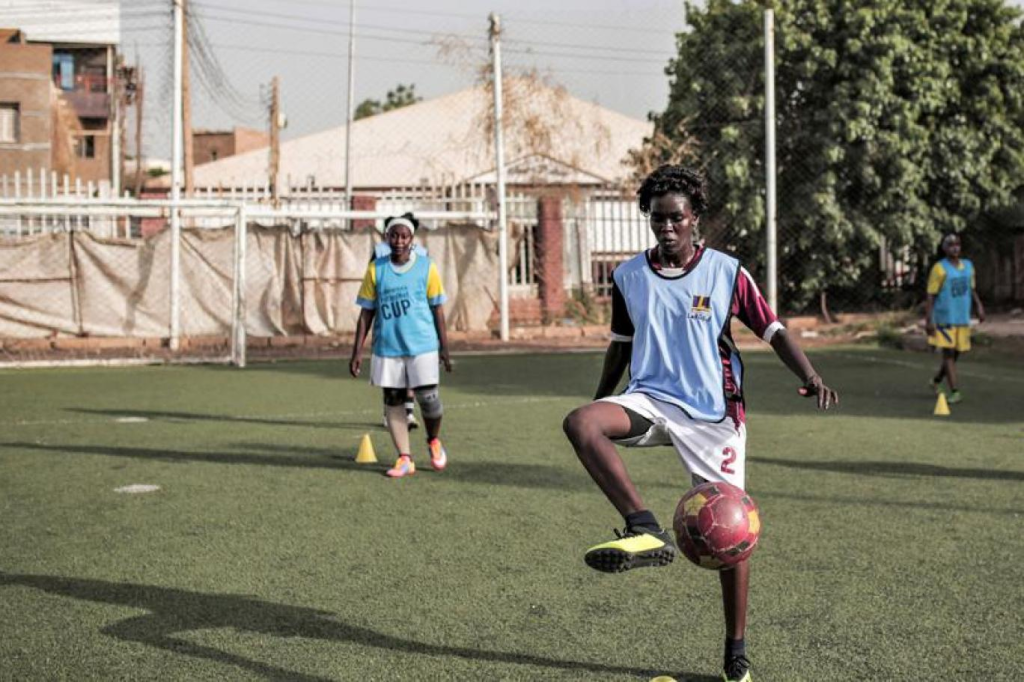
This Sudanese documentary follows young women fighting for the right to play football professionally under an oppressive political system that marginalizes women’s sports. The players train, organize, argue with officials, and refuse to disappear despite endless bureaucratic obstacles.
What makes the documentary so compelling is the personalities of the women themselves. They are funny, stubborn, charismatic, and incredibly resilient. The film captures both the absurdity and cruelty of systems that fear women occupying public space so freely.
Football becomes an act of defiance. Every practice session feels political because these women are insisting on visibility in a society trying to deny it to them.
Conclusion
Together, these films reveal how football in the MENA region operates far beyond the boundaries of sport. Stadiums become political arenas, refugee camps become training grounds for hope, and neighborhood pitches become spaces where class and identity are negotiated daily. Whether through comedy, documentary realism, or intimate personal drama, each story shows football functioning as a language people use to dream, resist, survive, and connect.
That is why football in the region feels so emotionally charged. It carries history, memory, frustration, and longing all at once. These films understand that perfectly.
WE SAID THIS: Don’t Miss…Winning, Losing & Everything in Between: Ambition in Egyptian Film and TV