


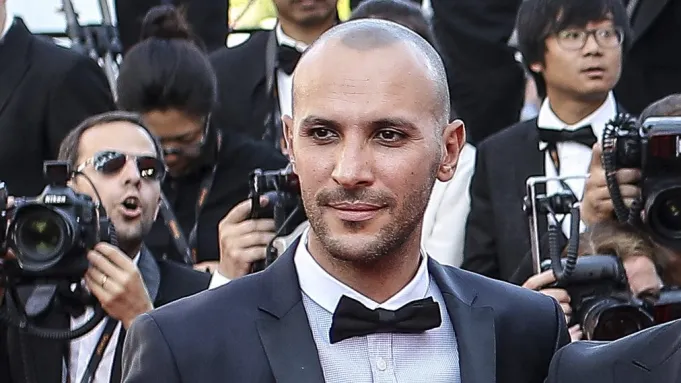
Mohamed Diab entered the industry through writing, contributing to popular Egyptian films like Alf Mabrouk and El-Gezirah. And it was behind the camera that his voice further took shape, one drawn to tension, confined spaces, and characters navigating systems larger than themselves. And now his name became closely associated with bold, socially grounded works.
Across his films and series, whether set in the streets of Cairo, inside a police truck, or within deeply personal family dynamics, there’s a consistent pull toward human stories under pressure. That now continues with The Note, his upcoming project with Netflix—making this a fitting moment to look back at the work that led here.
The Note (Upcoming) – Director
With The Note, Mohamed Diab shifts his focus to the United States, drawing on his own experiences there. The film is described as deeply personal and rooted in the idea of disillusionment—particularly with the promise of the American dream.
It carries the same kind of intimate, human-centered storytelling seen in his earlier work, but placed in a new cultural and social landscape. Rather than spectacle, the emphasis remains on character, conflict, and the quiet unraveling of expectations.
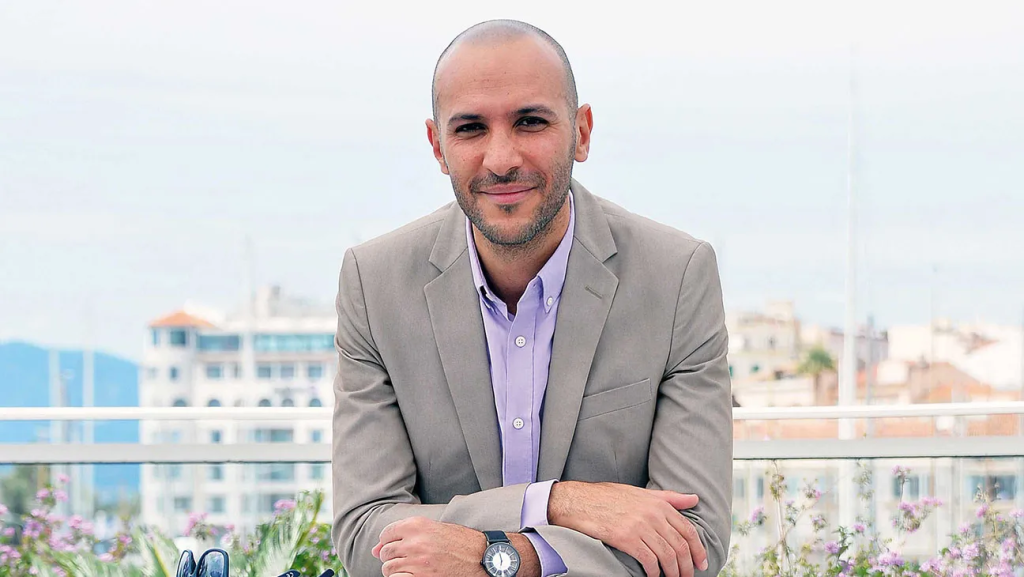
Asad (2026) – Writer & Director
With Asad, Diab goes big—really big.
Set in 19th-century Egypt, the film follows a slave whose personal loss transforms into rebellion. It’s been years in the making, written with Sherine and Khaled Diab, and shot across multiple locations over 67 days.
What’s interesting is that even with all that scale, it still feels like his kind of story: a person pushed into impossible circumstances, forced to fight back against a system stacked against him.
Happy Birthday (2025) – Writer
Directed by Sarah Goher in her feature debut, the film tells the story of Toha, an eight-year-old maid determined to make sure her wealthy best friend Nelly has the perfect birthday party.
The film quietly explores classism in modern Cairo through a child’s perspective, which somehow makes every moment hit harder. And the reception was massive.
Premiering at the Tribeca Festival in New York City, Happy Birthday became the first Egyptian film ever to win three major awards there:
— Best International Narrative Feature
— Best International Screenplay (Mohamed Diab & Sarah Goher)
— The Nora Ephron Award for Best International Female Director
Moon Knight (2022) – Director
Then there’s the unexpected turn: Moon Knight.
Working with Marvel Studios, Diab became the first Arab director on a Marvel series. The show, starring Oscar Isaac, blends superhero action with Egyptian mythology and psychological depth.
And somehow, even here, you can still feel his signature—questions of identity, internal conflict, and fractured realities.
It also racked up eight Emmy nominations, the most for any Marvel series that year.
Amira (2021) – Writer & Director
With Amira, Diab shifts into something more intimate again.
The story of a Palestinian girl born through smuggled sperm from her imprisoned father sounds almost unbelievable—but the film grounds it in raw emotion. When her identity is shaken, everything unravels.
Premiering at the Venice International Film Festival, it received a standing ovation and major acclaim.
Diab himself said this was a space where he could take risks he wouldn’t even attempt in bigger productions—and you can feel that freedom in every scene.
Tayea (2018) – Writer
The series follows Tayea, a doctor from Upper Egypt who refuses the cycle of revenge after his father’s death. Instead of fighting back, he intentionally lands himself in prison to survive. Which is already wild.
But then the story spirals into artifact smuggling, undercover police work, tribal conflict, and double identities as Tayea infiltrates the operation of a notorious smuggler named Harby.
What makes the show hit is that it never turns Tayea into a traditional hero. He’s constantly cornered, conflicted, and emotionally exhausted — classic Diab territory.
Talq Senai (2018) – Writer
Then Diab casually swerves into comedy with Talq Senai — because apparently political tension and emotional trauma weren’t enough.
The setup is absurd in the best way possible: a couple desperate to secure an American visa discovers the wife is trying to speed up childbirth so their baby can be born on U.S. soil and instantly get citizenship.
It’s chaotic, satirical, and very Egyptian in the way it turns bureaucracy into full-blown panic. But beneath all the jokes, the film pokes at something real: how far people are willing to go chasing the idea of a “better life” somewhere else. Which, interestingly, connects pretty directly to themes Diab would later explore in The Note.
Eshtebak(2016) – Writer & Director
Before that came Eshtebak—arguably one of his boldest ideas.
Set entirely inside a police truck during the political unrest of 2013, the film traps characters from opposing sides together in one suffocating space. Diab rewrote the script 13 times to get it just right.
It premiered at the Cannes Film Festival and even caught the attention of Tom Hanks, who encouraged audiences to watch it.
It’s intense, claustrophobic, and somehow still deeply human.
Cairo 678 (2010) – Writer & Director
And finally, we arrive at Cairo 678—the film that started it all.
Released just before the Egyptian Revolution of 2011, it tackled sexual harassment through the stories of three women navigating it in completely different ways.
It didn’t just resonate—it ignited conversation. The film became a cultural landmark and picked up major recognition, including awards at festivals like the Chicago International Film Festival.
More than anything, it introduced Diab as a filmmaker willing to confront reality head-on.
Alf Mabrook (2009) -Writer
Then came Alf Mabrook — and honestly, this one surprises people when they look back at Diab’s filmography. Because yes… Mohamed Diab helped write an Egyptian time-loop comedy years before “multiverse fatigue” became a thing.
Starring Ahmed Helmy at peak charm, the film follows a man forced to relive the same day again and again, watching his life unravel in repetitive chaos until he slowly begins questioning who he really is.
Underneath the comedy, there’s something unexpectedly emotional about it: regret, selfishness, routine, and the terrifying feeling of sleepwalking through life.
It’s lighter and more playful than Diab’s later work, but the obsession with identity and self-confrontation? Very much still there. And honestly… it remains a fan favorite for a reason.
El Gezira (2007) -Writer
Before Mohamed Diab became known as a director, he was already shaping some of Egypt’s biggest cinematic worlds as a writer — and El Gezira was one of the earliest signs of that.
Set in Upper Egypt, the film drops us into a brutal, isolated community that operates almost like its own nation: weapons, drug trade, tribal loyalty, and power struggles all wrapped into one sprawling epic.
After the death of the island’s ruler, Mansour inherits control and quickly finds himself caught between rival gangs and a government finally deciding to intervene.
What makes it interesting in hindsight is how many “Diab themes” are already there: systems of power, morally trapped characters, and ordinary people crushed between violence and authority.
It’s political drama disguised as an action blockbuster — and you can already feel the seeds of the filmmaker he’d later become.
Coming Full Circle
When you look at the journey in reverse, The Note doesn’t feel like a new direction—it feels like a return.
Different country, different context—but the same core question running through everything he’s made:
How do people hold on to themselves when the world around them pushes back?
And somehow, whether it’s Cairo, a prison, a police truck, or even a Marvel universe… he keeps finding new ways to ask it.
Here’s to Everyone Who Doubted the Authenticity of Tom Hanks’ Letter to ‘Eshtebak’ Director