


Climate change can sometimes feel like one of those topics that’s easier to scroll past than sit with. It’s often wrapped up in statistics and scientific reports that make it seem distant—even though its effects are becoming impossible to ignore.
That’s exactly why “Down to Earth: Climate Change and Climate Futures” feels different.
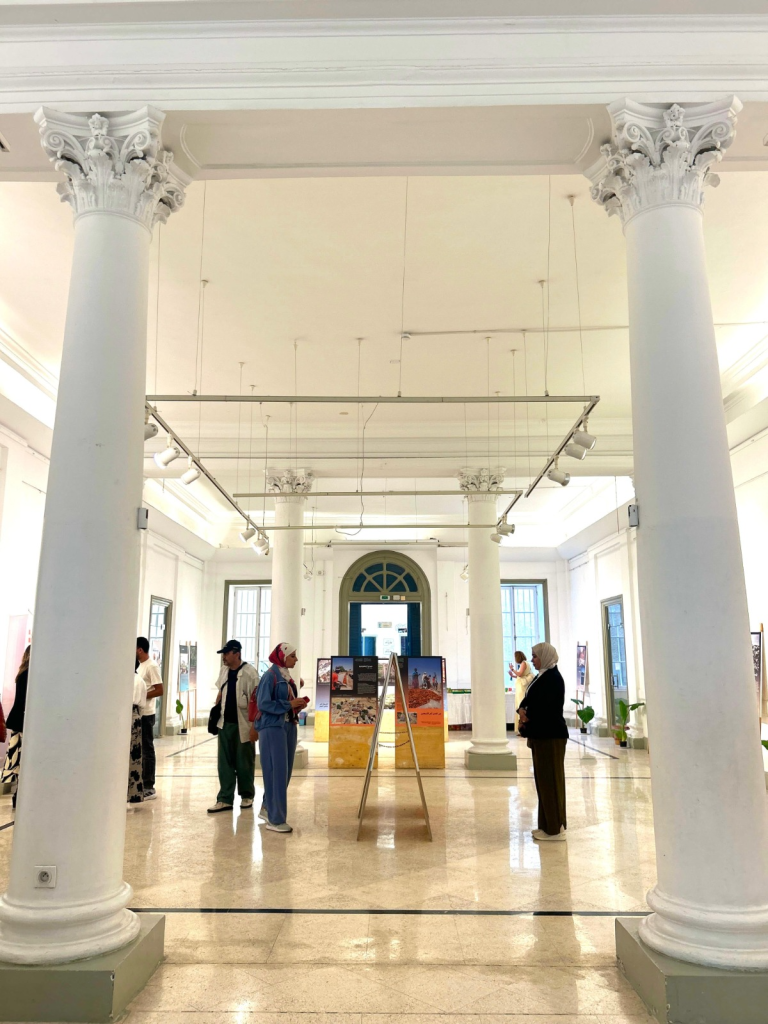
Now open at the Institut français d’Egypte à Alexandrie until August 1, the exhibition—organized by Photopia in collaboration with World Press Photo and the Embassy of the Netherlands in Egypt—uses photography instead of numbers to tell the story of our changing planet.
After successful stops in Brazil and Port Said, Alexandria becomes the exhibition’s third destination, and not by coincidence.
What Was Once Predicted Is Now Reality
The exhibition opens with a simple but powerful message: what was once predicted is now reality.
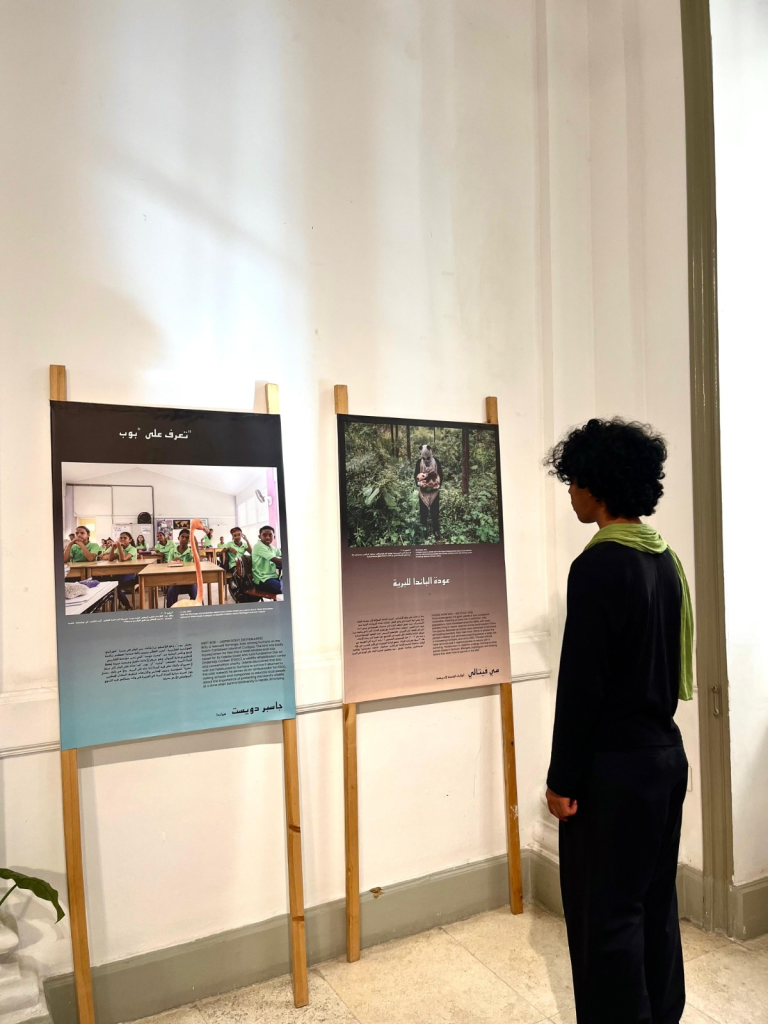
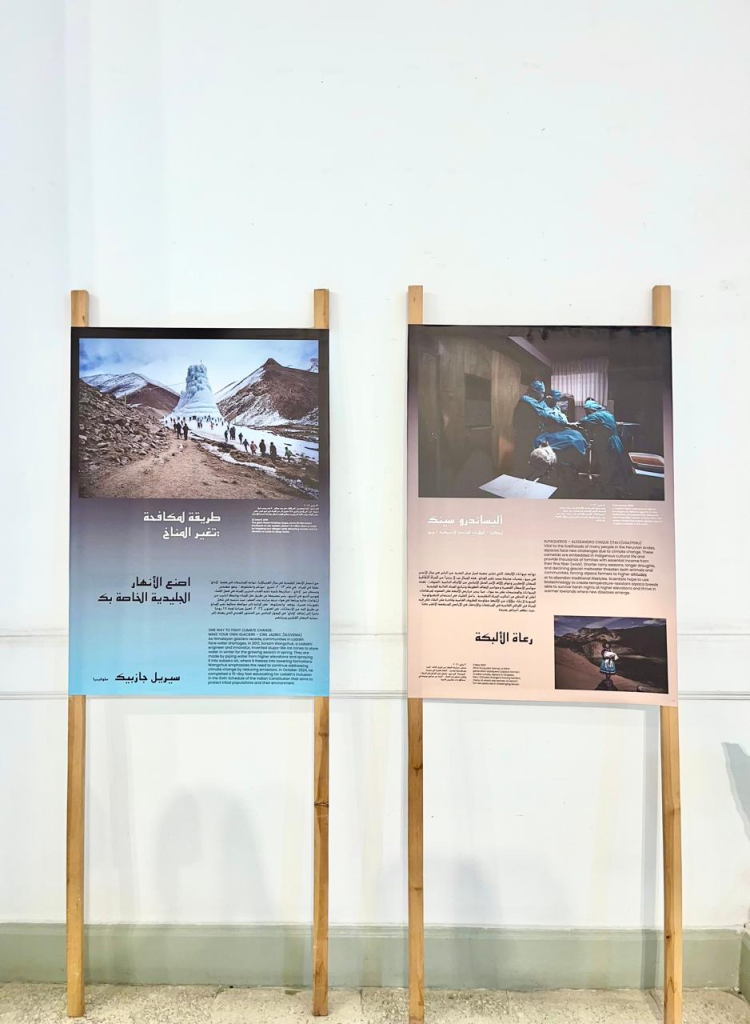
Using 21 award-winning World Press Photo projects, Down to Earth takes visitors through two connected stories. One captures the growing environmental challenges communities are facing across the world, while the other focuses on the people responding with resilience, innovation, and hope. It’s a reminder that while the climate crisis is global, so are the efforts to build a more sustainable future.
Why Alexandria? Because Climate Change Is Already Here
Standing at the opening night, Eva Witteman, Deputy Ambassador of the Embassy of the Netherlands in Egypt, pointed out that Alexandria is already witnessing the effects of climate change.
“Alexandria is a beautiful city,” she said, “but you can already see how climate change is affecting it—from rising water levels to changing weather patterns.”
Marwa Abou Leila, Co-Founder and Managing Partner of Photopia, shared the same sentiment during our interview.
“One of the biggest misconceptions is that climate change is still far away from us. It’s actually very present and visible all around us.”
She reflected on how Alexandria’s winters have changed dramatically over the years, noting that the number of storms the city experiences has very notably changed from the past. She had also just returned from France, where temperatures were even hotter than Alexandria, a reminder that climate change is touching every corner of the world.
The decision to bring the exhibition to Alexandria was intentional. Photopia is focusing on coastal cities because they are among those most vulnerable to climate change, with Ras El Bar expected to be the exhibition’s next stop.
A Journey From Crisis to Hope
The exhibition unfolds almost like a film, taking visitors through stories from around the world.
The first half documents the environmental destruction intensified by climate change, from rising sea levels and droughts to wildfires, pollution, and fossil fuel extraction. The photographs reveal not only damaged landscapes but also the communities whose lives are being reshaped by these crises.
The second half shifts the focus toward resilience. Through stories of renewable energy, scientific food solutions, Indigenous knowledge, and environmental activism, it shows that while the challenges are immense, so is human creativity.
“It’s like going to the cinema,” Marwa said, explaining that the exhibition was designed for everyone, not just climate experts, but families, students, and anyone curious enough to walk through the doors.
Eva echoed that thought, saying photography makes complex issues much easier to connect with.
“Sometimes climate change is hard to write about or read about, but through pictures and art it becomes much more tangible to people.”
She added that if she could invite anyone to the exhibition, it would simply be the people of Alexandria.
The Stories That Stayed With Them
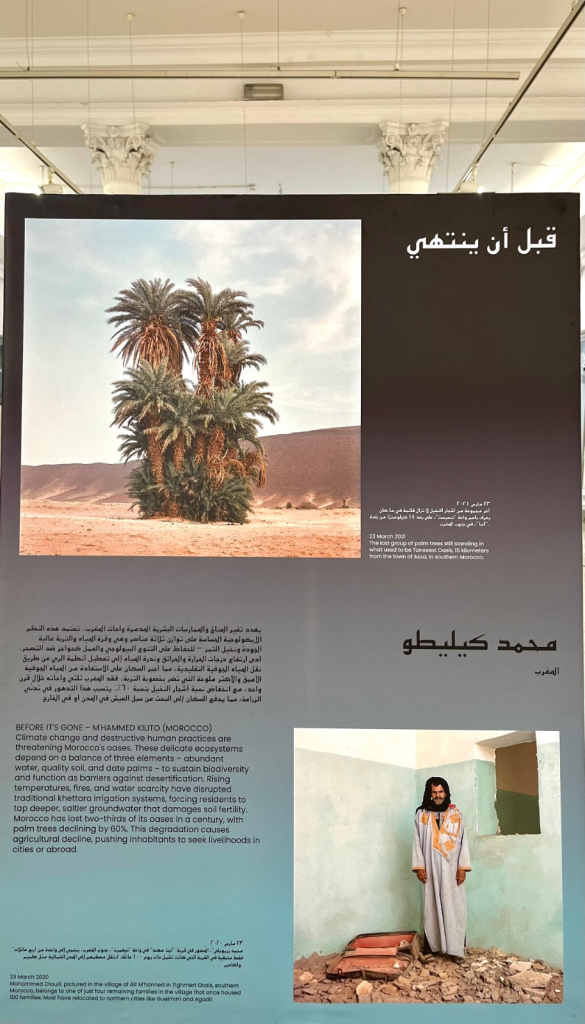
When asked which photograph stayed with her the most, Marwa chose M’hammed Kilito‘s project documenting Morocco’s disappearing oases.
It follows one of the country’s last surviving oasis communities, where rising temperatures, drought, fires, and unsustainable human practices have devastated an ecosystem that once sustained generations. Morocco has already lost two-thirds of its oases over the past century, while palm tree populations have declined by around 60%. One image follows Mohammed Zriouili, one of only four families remaining in a village that was once home to nearly 100.
For Eva, one favorite looked toward the future while the other served as a stark warning.
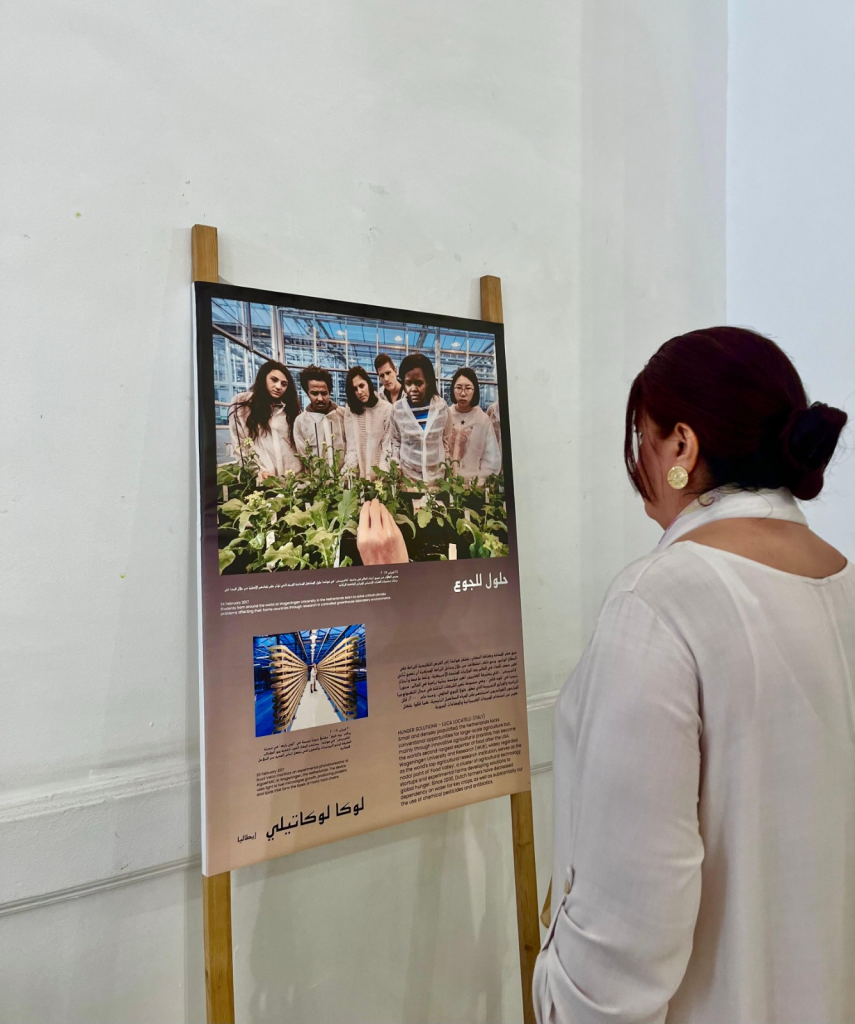
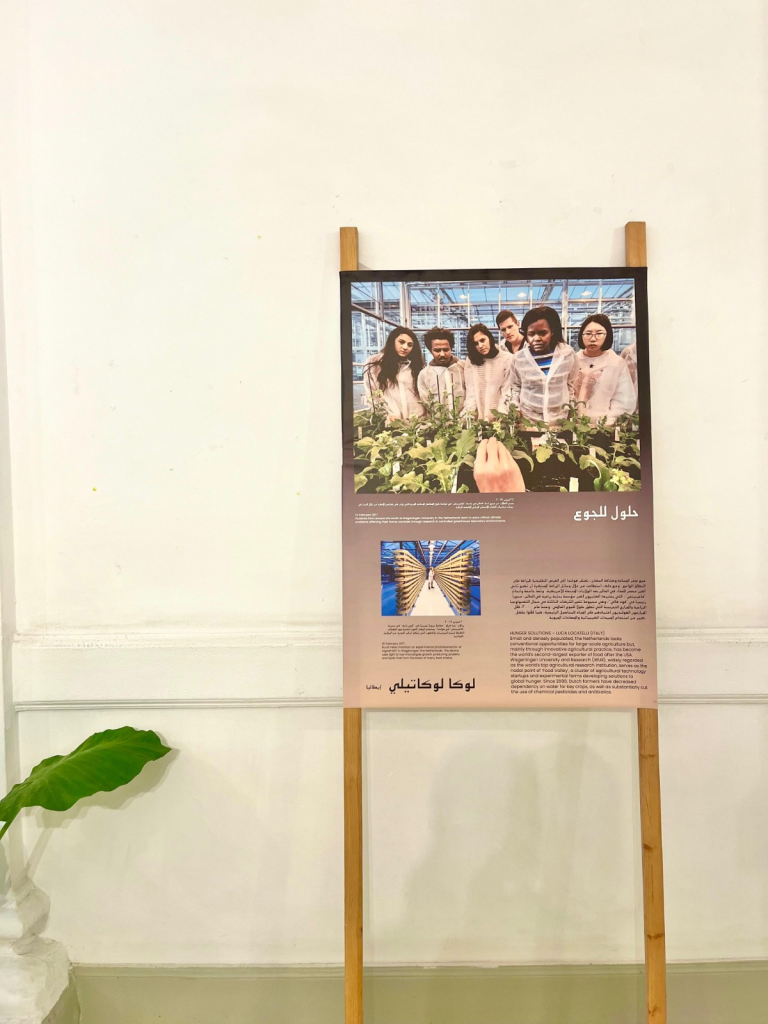
She highlighted Luca Locatelli’s “Hunger Solutions,” which explores how Dutch researchers are developing more sustainable ways to produce food through agricultural innovation, greenhouse technologies, and algae-based research.
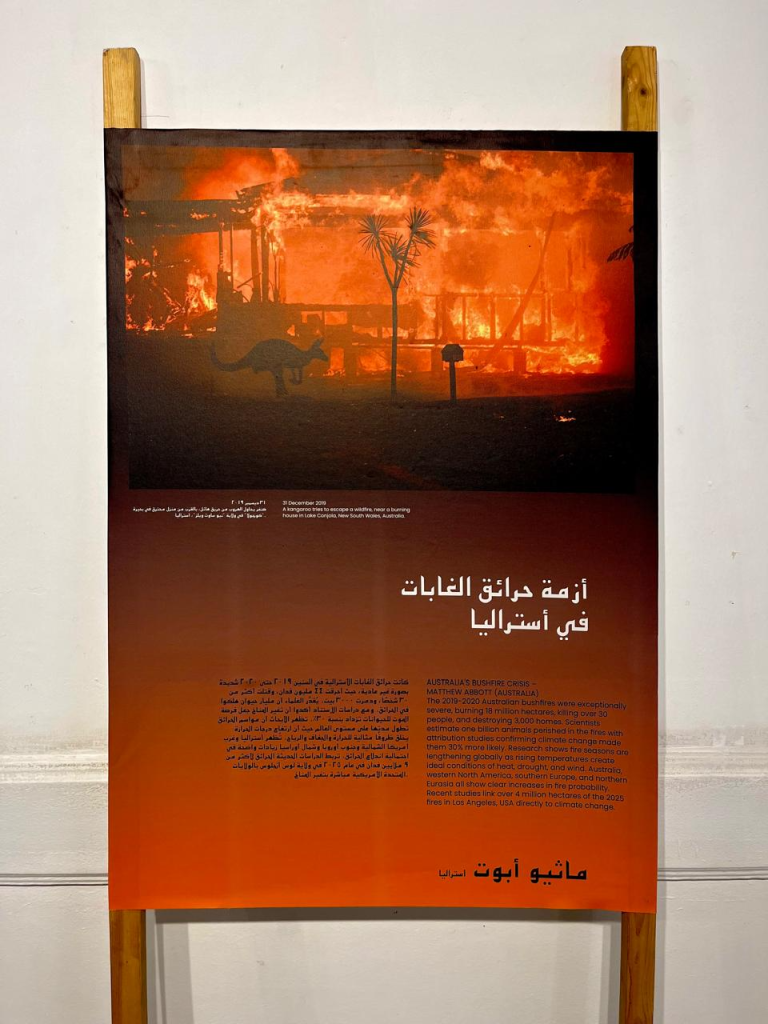
Her second pick, Matthew Abbott’s “Australia’s Bushfire Crisis,” captures the devastating 2019–2020 bushfires, including a striking image of a kangaroo fleeing flames near a burning home. Together, the two projects perfectly reflect the exhibition’s balance between warning and hope.
A Collaboration That’s Been “Down to Earth” for 50 Years
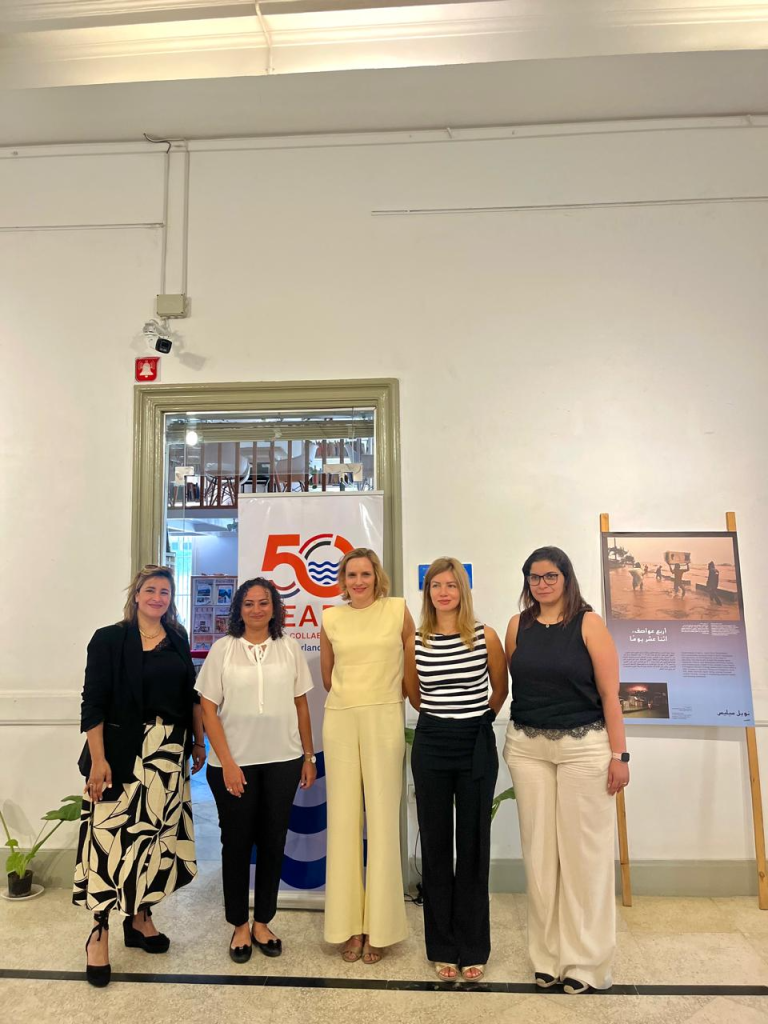
During her opening remarks, Eva also highlighted the long-standing partnership between Egypt and the Netherlands, which has worked together for nearly five decades on water management, irrigation, sanitation, and coastal protection.
She described it as “a collaboration that’s very Down to Earth,” fittingly connecting the exhibition’s title to a partnership that has become increasingly relevant as climate challenges continue to grow.
More Than an Exhibition
By the end of the exhibition, one message becomes hard to ignore: climate change isn’t a distant story happening somewhere else.
These photographs travel across continents, from Morocco and Australia to the Netherlands, but they ultimately lead visitors back to Alexandria, reminding us that the conversation is already unfolding here. Rather than asking people to become climate experts overnight, Down to Earth simply asks us to pause, look, and realize that protecting the planet starts with seeing what’s already happening around us.
WE SAID THIS: Don’t Miss…Photopia: A Haven for Cairo’s Photographers