

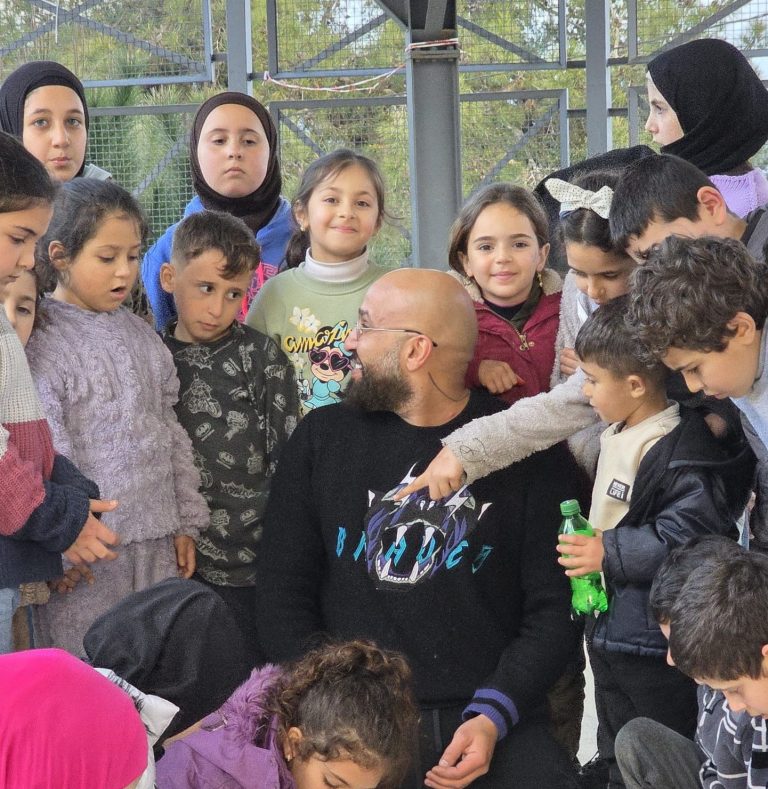
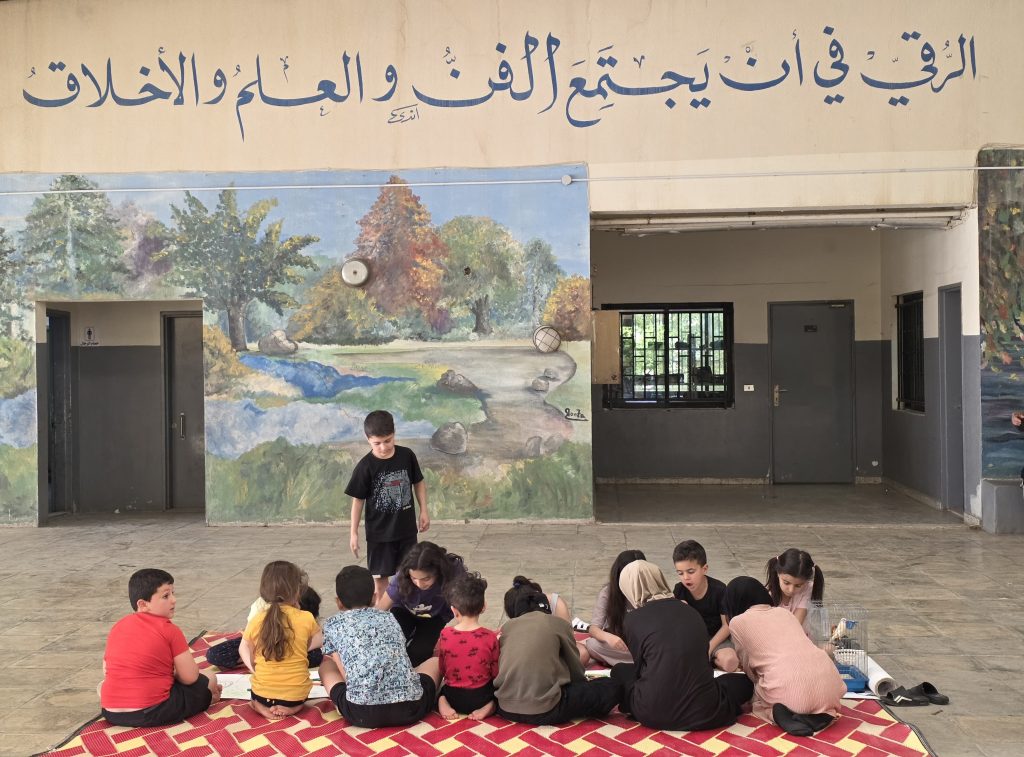
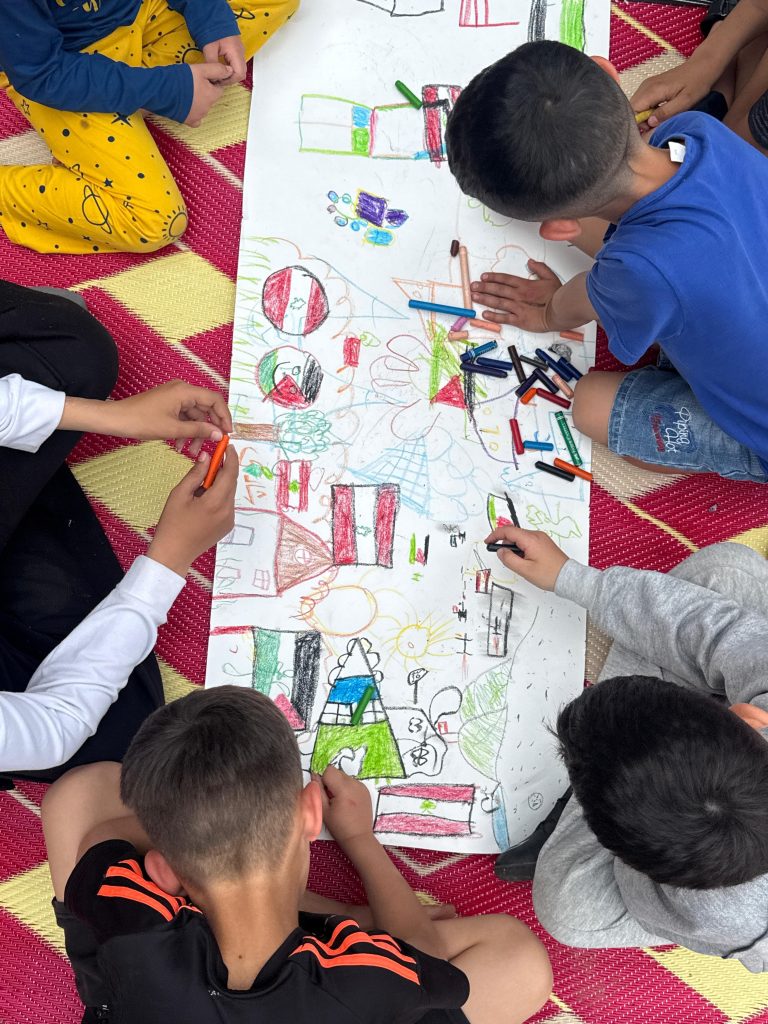
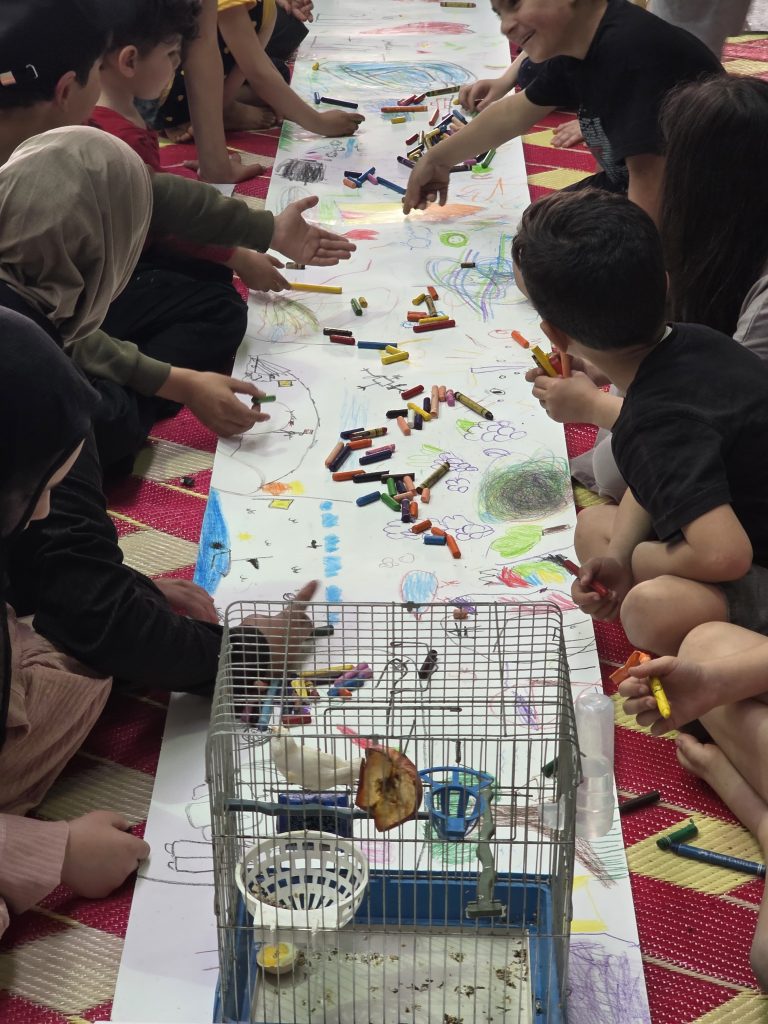
For over 15 years, Beirut-born artist Abed Al Kadiri has used art not just as a form of expression, but as a way to create dialogue, preserve memory, and explore humanity in times of crisis. But amid the ongoing bombardment in Lebanon, his work took on an even more urgent role. As thousands of families were forced to flee their homes, Al Kadiri transformed shelters and institutions into creative safe havens, inviting displaced children to draw freely across long rolls of white paper. What emerged were colorful worlds filled with homes, flags, nature, and emotion, turning fear and uncertainty into moments of release, imagination, and collective hope.
Art as a Reflection of Humanity
For Al Kadiri, being an artist goes far beyond creating objects or exhibitions. His practice is rooted in protecting and questioning humanity itself, especially during moments when it feels most fragile. Working across painting, sculpture, publishing, and socially engaged projects, his work often explores themes of injustice, survival, memory, and emotional fragility.
Identity, too, remains a recurring thread throughout his work. Coming from Beirut, Al Kadiri describes identity not as something fixed, but as something constantly reshaped by memory, migration, geography, language, and lived experience.
Coming from Beirut, identity for me has always carried layers of contradiction, fragmentation, resilience, and adaptation. It is deeply connected to the idea of belonging, but also to the feeling of existing between multiple realities.
How Beirut Shaped His Understanding of Crisis
Being born and raised in Beirut deeply informed the way Al Kadiri responds to violence and instability today. At the same time, Beirut also taught resilience. The ability to adapt, endure uncertainty, and continue forward despite collapse became embedded in his perspective and eventually his art.
That emotional tension between destruction and survival often appears in his work through traces, repetition, gestures, and vulnerable materials like charcoal, which he sees as symbolic of impermanence and fragile memory.
Growing up through cycles of war, destruction, and reconstruction made me more sensitive to themes of fragility, loss, and interrupted histories, both personally and artistically.
Turning Grief Into Collective Expression
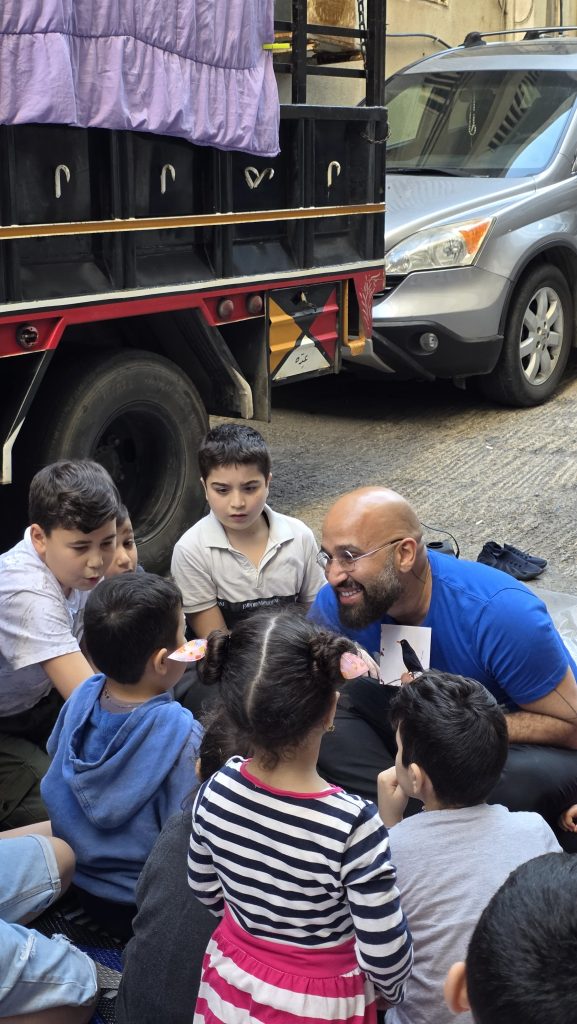
The idea behind the children’s drawing sessions emerged during what Al Kadiri describes as days of collective panic. Watching families carry mattresses, blankets, and fragments of their lives through the streets left a lasting emotional impact on him, especially the children.
He recalls struggling with insomnia as memories from his own childhood resurfaced through their faces and silence. In response, he felt compelled to create spaces that felt open, calm, and emotionally freeing.
The white space became symbolic for me: a space of possibility, freedom, imagination, and temporary relief from the violence and instability surrounding these children.
Across the drawings, recurring symbols began to emerge: Lebanese flags, homes, trees, and natural landscapes. Even amid displacement, the children continued to express belonging, memory, and hope.
Redefining Identity, Freedom, and Belonging
Over the years, Al Kadiri’s understanding of identity and migration has evolved far beyond physical movement. Today, he sees migration as emotional and psychological as well: moving between memories, realities, and different versions of the self.
Freedom has also become a central question within his work. Rather than viewing it politically alone, he speaks about freedom from rigid structures, imposed identities, and inherited systems. His practice increasingly embraces fluidity, openness, and reinvention.
Even during immense loss, creating art remains essential to him. He describes making work during difficult times as a refusal of emotional numbness; a way to transform fear and grief into something collective, communicative, and deeply human.
Building Spaces Beyond the Canvas
Al Kadiri’s vision extends beyond creating artworks alone. Through curating exhibitions, founding creative spaces, and establishing publishing initiatives like Dongola Limited Editions, he has focused on building ecosystems that support artistic dialogue and visibility across the region.
For him, publishing and curating are not separate from his artistic practice, but extensions of it; ways of preserving voices, encouraging experimentation, and giving space to underrepresented forms of storytelling, particularly artist books and independent publishing practices.
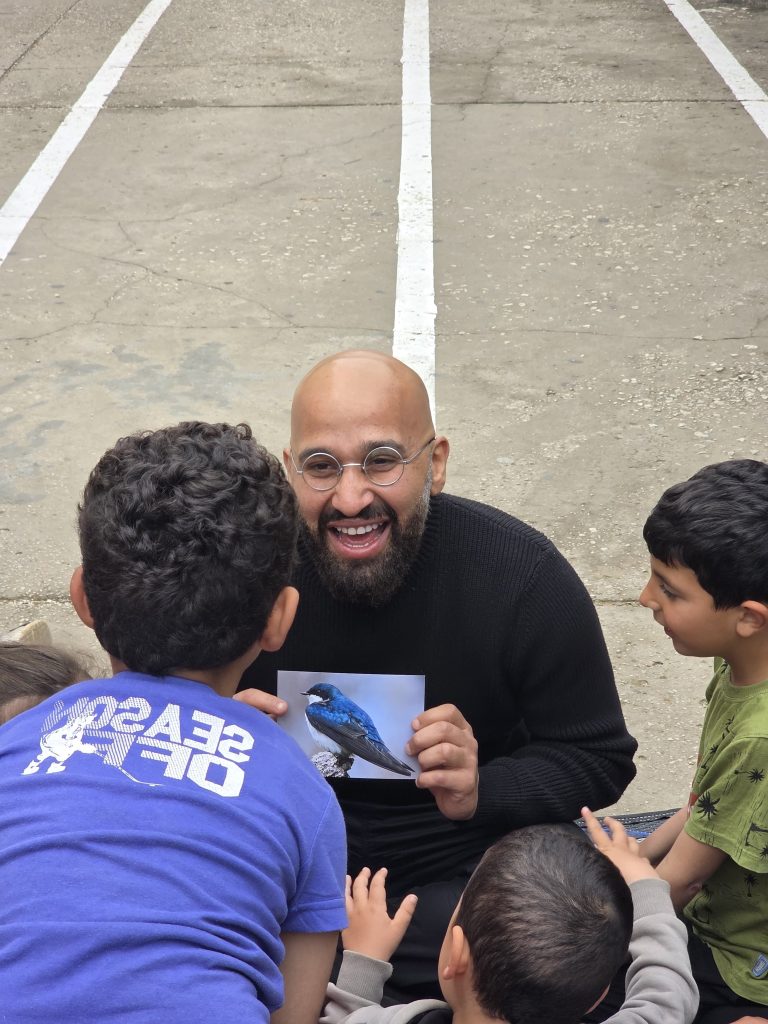
At a time when displacement and uncertainty continue to reshape daily life in Lebanon, Abed Al Kadiri’s work offers something increasingly rare: spaces for softness, imagination, and emotional release. Through simple acts of drawing together, children are reminded that even amid destruction, creativity, memory, and hope can still survive.
We Said This: Don’t Miss… Macron Sends a Message of Solidarity to Lebanon by Opening a Byblos Exhibition in Paris