



While promoting The Odyssey, Zendaya has looked like she walked straight out of Greek mythology. Every appearance has been meticulously styled, every outfit dissected online, and every look has somehow managed to top the last.
But among all the goddess-worthy gowns and golden glam, two particular looks caught the attention of the MENA region for very different reasons.
One had people celebrating.
The other had historians, archaeologists, and cultural critics asking uncomfortable questions.
So… where exactly is the line between appreciation and appropriation?

First Came The Controversy
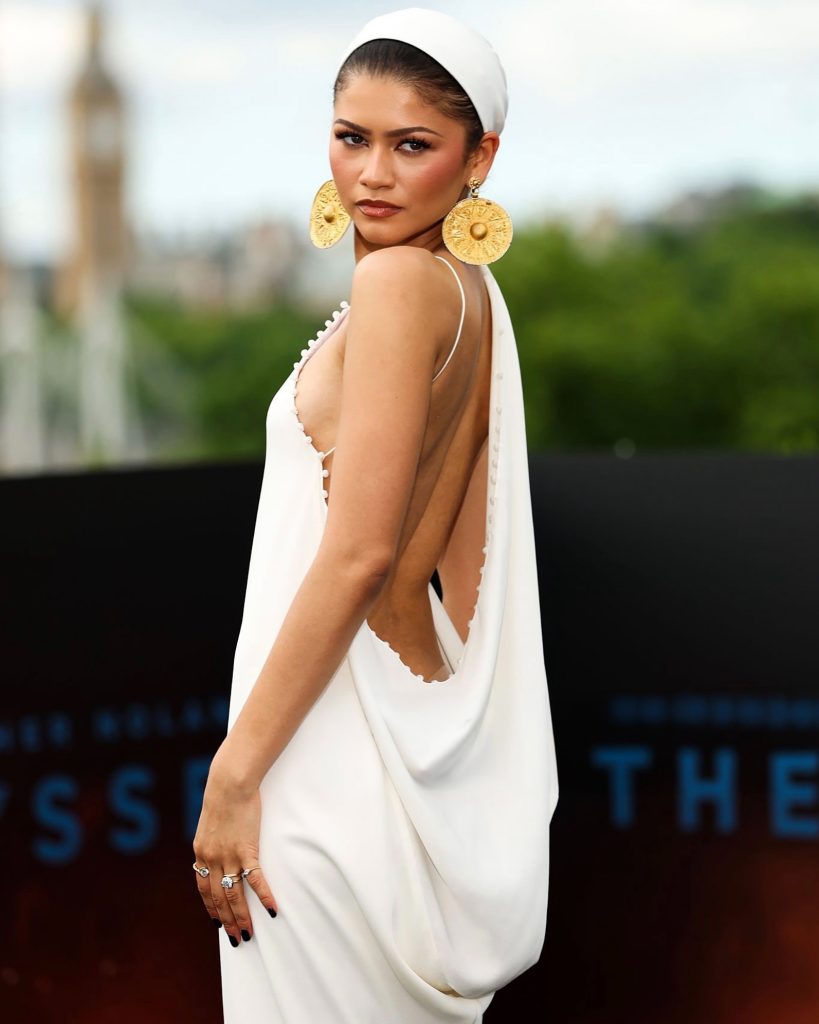
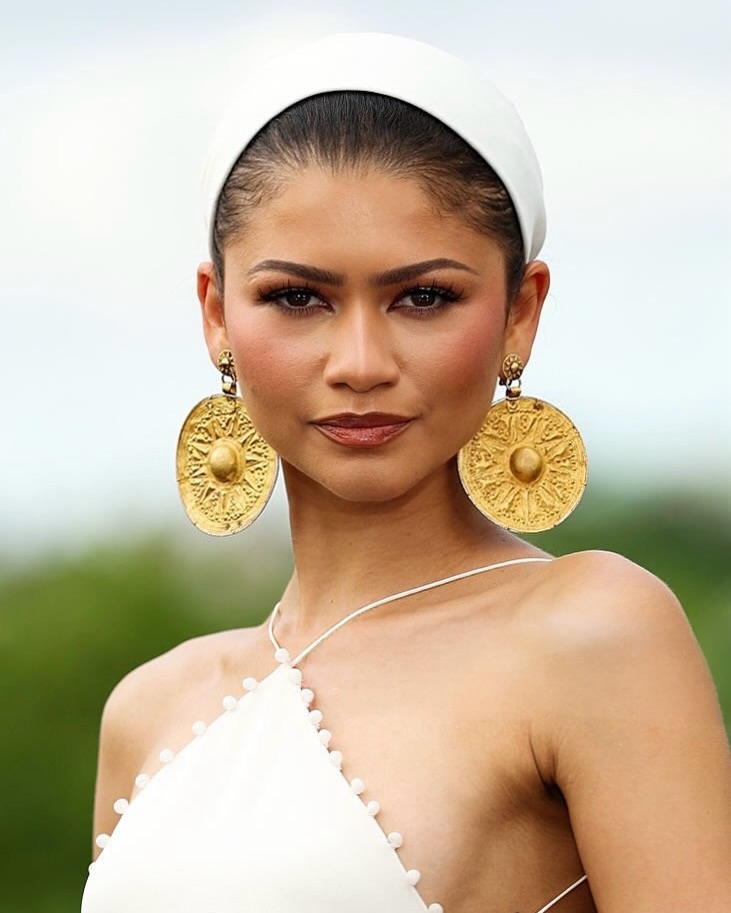
While promoting The Odyssey in London, Zendaya stepped out in a custom white Jacquemus gown paired with statement earrings featuring authentic Iranian gold plaques believed to date back between 2,000 and 3,000 years.
Almost immediately, the conversation moved away from the dress and onto the jewelry.
Historians, archaeologists, and heritage experts were debating whether the earrings should have been worn at all.
It’s Not Inspired By History—It Is History
One of the biggest distinctions critics make is that these aren’t modern earrings inspired by ancient Persia.
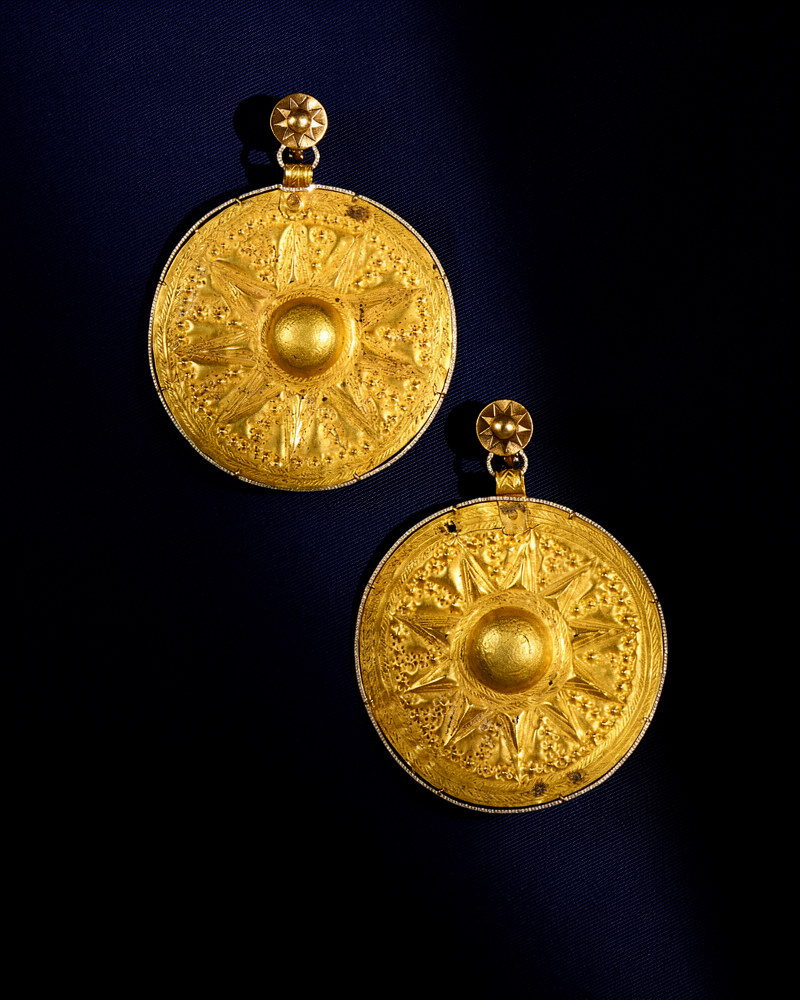
They contain genuine archaeological artifacts dating back to the first millennium BCE.
To many archaeologists, that changes everything.
Ancient objects aren’t viewed as ordinary accessories or collector’s items—they’re considered part of a civilization’s cultural heritage. Critics argue that once they’re worn as fashion pieces on a red carpet, they risk being treated as luxury accessories rather than historical artifacts with cultural and archaeological significance.
Their Journey Is Part Of The Debate
Another major concern is where the artifacts came from.
The gold plaques are believed to be connected to the Ziwiye Hoard, a collection reportedly discovered in Iran in the 1940s before being dispersed across private collections and museums.
Critics say that when an artifact’s provenance is unclear or connected to looting, displaying it publicly can normalize the antiquities trade.
While Barron London has said the earrings remain part of its personal collection and that the ancient plaques were mounted without damaging them, some experts argue that the larger issue is how and why artifacts with disputed or uncertain provenance continue circulating outside their countries of origin.
For archaeologists, every high-profile appearance of such objects raises bigger questions about the antiquities trade, historical looting, and who ultimately benefits from these pieces.
A Symbol Of Power
For some historians and cultural commentators, the debate goes beyond archaeology altogether.
They argue that when Western celebrities wear ancient artifacts from the Global South, it can reinforce old power dynamics rooted in colonial history. And so it can be read as a symbol of who has access to and control over another culture’s heritage.
That is why some critics described the look as “Orientalist.”
They question what message it sends when cultural heritage from regions like Iran is transformed into a luxury fashion moment, particularly while many countries are still fighting for the preservation and, in some cases, the return of their historical artifacts.
Some critics also pointed to the timing, arguing that wearing ancient Iranian heritage while Iran remains at war with the U.S. made the choice feel especially tone-deaf.

But Not Everyone Agrees
Others see the situation very differently.
Supporters argue that fashion has always borrowed from history and that showcasing ancient craftsmanship on one of the world’s biggest stages can also introduce new audiences to civilizations they might never otherwise learn about.
Others point out that Zendaya likely wasn’t making decisions about the provenance of every accessory she wore. Stylists, antique dealers, collectors, and jewelers all play a role in assembling these looks, leading some to question whether the criticism is better directed at the antiquities market itself rather than the actress wearing the earrings.

Then Came A Very Different Conversation
Just days later, Zendaya’s next major press tour look shifted the conversation in an entirely different direction.
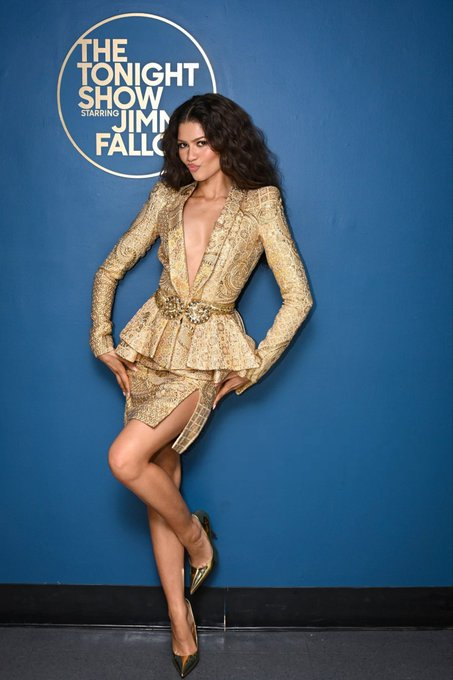
For her appearance on The Tonight Show Starring Jimmy Fallon in New York, she wore an archival gold skirt suit from Lebanese designer Zuhair Murad‘s Spring/Summer 2013 Haute Couture collection.
With its intricate gold embroidery, sculpted shoulders, plunging neckline, and dramatic thigh-high slit, the look quickly became one of the standout fashion moments of the press tour.
Unlike the debate surrounding the earrings, this look was widely celebrated across the MENA region.
For many, it represented what cultural appreciation looks like in fashion: collaborating with a living Arab designer, giving proper credit, and introducing a global audience to Middle Eastern craftsmanship. The designer wasn’t an anonymous inspiration—he was front and center, with his work and legacy receiving the recognition they deserved.

So… Where Is The Line?
That’s what makes these two looks so interesting.
Within the span of just a few days, Zendaya found herself at the center of two very different conversations involving the MENA region. One sparked questions about cultural heritage, ownership, and the ethics of wearing ancient artifacts. The other was praised for shining a spotlight on a living Arab designer and the region’s thriving fashion industry.
Neither conversation is entirely black and white.
And maybe that’s why this debate has resonated far beyond fashion.
Because it asks a much bigger question:
When does celebrating another culture become honoring it… and when does it start feeling like ownership instead?
We Said This: Don’t Miss…Unpopular Opinion: Sabrina Carpenter’s Reaction to “Zaghrouta” at Coachella