


What if your next hotel stay came with a little more baggage than the usual minibar and fluffy bathrobe? Across the Middle East, some of the most fascinating hotels are hiding extraordinary past lives behind their polished doors. Palaces became hotels, prisons became luxury stays, monasteries became cave retreats, and even a humble clinic and grocery store found themselves transformed into a desert escape.
These places don’t just offer somewhere to sleep. They offer a front-row seat to their own history — and sometimes, the contrast between what they were and what they are now is almost unbelievable.
Four Seasons Hotel Istanbul at Sultanahmet: Originally a Prison
Istanbul, Türkiye
Perhaps the most dramatic transformation on this list? A prison becoming a luxury hotel.
The Four Seasons Hotel Istanbul at Sultanahmet occupies a building originally designed in the early 20th century by architect Mimar Kemaleddin Bey. Built as a Turkish prison, the structure was designed in the neoclassical style, complete with pointed arches, ornate tiles, domes and towers.
Today, those same architectural features frame a very different kind of experience.
Instead of prisoners occupying the cells, the building now welcomes travelers into elegant rooms and suites in the heart of Istanbul’s historic district. The original architectural character has been carefully preserved, allowing guests to sleep inside a building whose walls were never intended for hospitality.
And that’s what makes the transformation so fascinating. The hotel doesn’t pretend the building was always a luxury destination. Its history is sitting right there in the arches, stonework and layout.
It went from a place associated with confinement to one associated with escape — only this time, the escape comes with room service.
Al Faya Lodge: Originally a 1960s Clinic and Grocery Store
Sharjah, United Arab Emirates
Long before Al Faya Lodge was serving up luxury stays beneath the stars, its buildings had a much more practical job: one was a clinic, the other a grocery store.
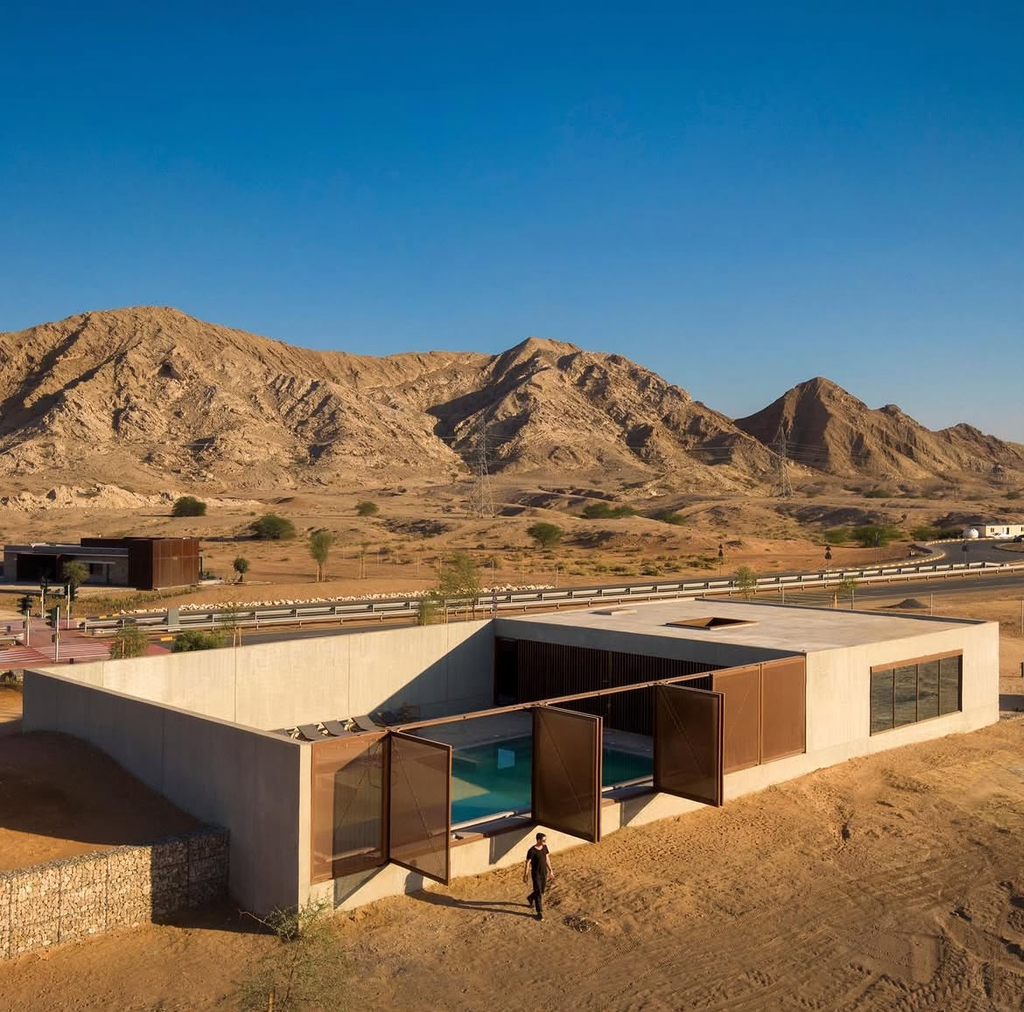
The two modest stone buildings were constructed in the 1960s at the foot of Mount Alvaah, surrounded by the crimson landscape of the UAE’s prehistoric desert. They also sit near one of the country’s earliest petroleum pumps — a rather unlikely collection of neighbors for what is now a high-end desert retreat.
Architect Jonathan Ashmore and his practice, ANARCHITECT, didn’t simply erase the buildings’ past. Instead, they turned the contrast into the whole point. The original stone structures remain, while striking CorTen steel additions cut through them, making the old and new deliberately collide.
Today, the former clinic and shop have become a five-bedroom lodge complete with a restaurant, library and roof terrace. Each room even has its own skylight for stargazing. There’s also a purpose-built spa with a saltwater pool and salt-based treatments.
So, essentially: you could once have walked in looking for medicine or groceries. Now you can walk in looking for a salt spa, dinner and a spectacular view of the Milky Way.
Mena House: Originally a Khedive’s Hunting Lodge and Later a Wartime Hospital
Giza, Egypt
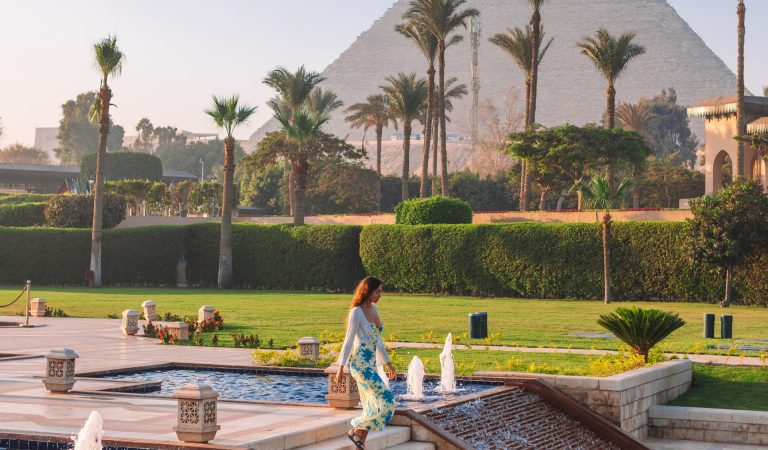
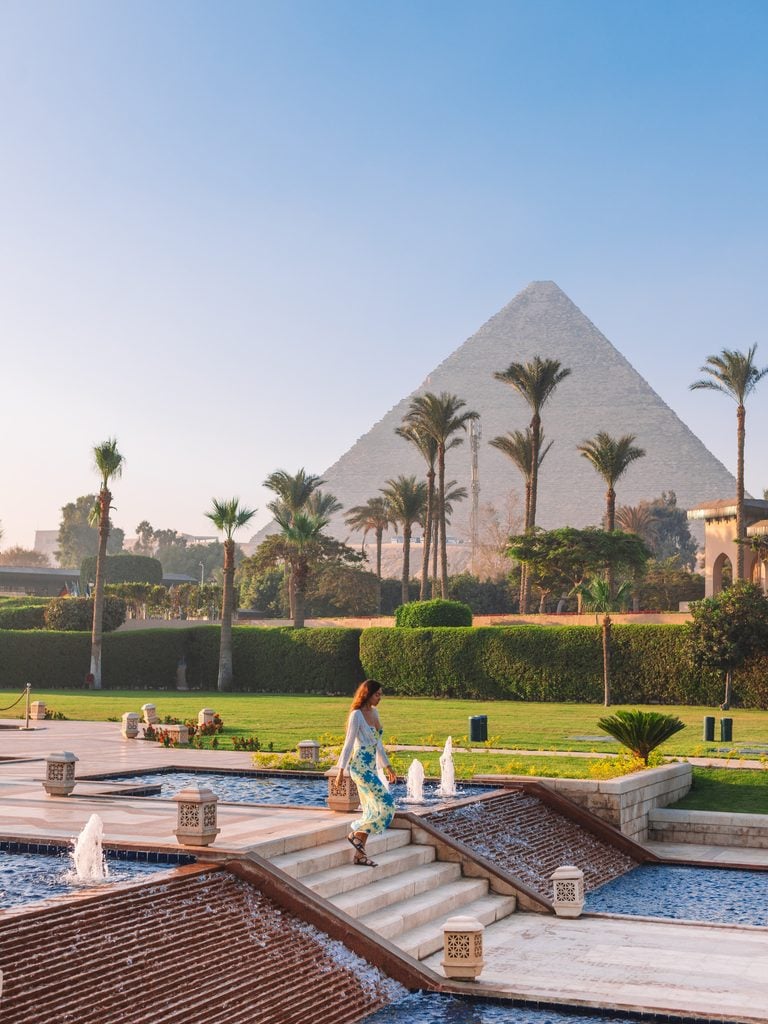
Before Mena House became one of Cairo’s most famous hotels, it was, quite literally, a place for a ruler to take a break.
In 1869, Khedive Ismail built the original residence in front of the Pyramids of Giza as a private retreat where he could relax after long fishing trips and entertain his guests. But the building’s ambitions quickly grew. Ismail expanded the property and prepared the road leading to it, eventually turning it into a palace for guests attending the opening of the Suez Canal.
Then came a revolving door of owners, residents and identities. Financial troubles eventually forced the Khedive’s family to sell the palace. It became a private residence, was later sold again, and in 1885 was transformed into the Mena House Hotel, opening to the public in 1886.
And its history didn’t exactly calm down after check-in began. The hotel later served as a military headquarters and a hospital during the World Wars before eventually returning to its life as a hotel.
Over the decades, Mena House expanded dramatically, adding rooms, wings and gardens while attracting a guest list that reads like a history textbook: Winston Churchill, King Farouk, Queen Nazli and royals from across Europe and North Africa all passed through its doors.
What started as one ruler’s personal escape eventually became a grand hotel overlooking one of the world’s oldest wonders. Not a bad career change.
The Ned Doha: Originally the Ministry of Interior
Doha, Qatar
Government paperwork isn’t exactly the first thing that comes to mind when you picture a luxury hotel. But that is precisely what once filled the walls of The Ned Doha.
The hotel occupies the former Ministry of Interior building, giving its glamorous present a surprisingly bureaucratic past. Instead of government officials moving through its corridors, today’s guests find themselves surrounded by restaurants, bedrooms, wellness facilities and Ned’s Club.
The transformation is particularly striking because the building hasn’t simply been hidden beneath a shiny new façade. Its institutional history remains part of its identity, while the interiors have been reimagined into a distinctly contemporary hospitality destination.
The former government building now houses 90 bedrooms, a health club, spa, gym, 30-metre outdoor pool and members’ club, including a rooftop terrace.
In other words, the building went from paperwork and public administration to cocktails, poolside lounging and private members’ spaces. Bureaucracy has rarely had such a glamorous second act.
Gamirasu Cave Hotel: Originally a Monastic Retreat
Cappadocia, Türkiye
Some hotels have a history that is a few decades old. Gamirasu’s goes back centuries.
Hidden in Ayvalı Village in Cappadocia, Gamirasu Cave Hotel was once part of a Byzantine monastic retreat. Its rooms aren’t simply designed to look ancient — they are carved directly into the region’s soft volcanic rock, preserving the architecture that shaped the site long before luxury travel existed.
The property still contains traces of that former monastic life, including a Byzantine church and the old monastery kitchen. The church, with its historic frescoes, is a particularly striking reminder that this was once a place of religious retreat rather than romantic getaways and cave suites.
Today, those same spaces have been woven into an intimate luxury hotel. Guests can choose between cave rooms and elaborate suites, including the Byzantine and Roman King Suites. Some come with private saunas, minibars and all the modern comforts that medieval monks probably weren’t exactly requesting.
It is an almost surreal collision: a place once dedicated to prayer and monastic life is now a destination for travelers looking to experience Cappadocia in style.
And somehow, the caves haven’t lost their soul in the process.
A Second Life, Not a Clean Slate
What makes these hotels so compelling isn’t simply that their buildings are old. It’s that their stories refuse to disappear.
A clinic becomes a desert lodge. A ruler’s private retreat becomes a landmark hotel. A government building becomes a members’ club. A monastery becomes a cave retreat. A prison becomes a luxury escape.
Their transformations work because they don’t necessarily erase what came before. Instead, the old identities become part of what makes the new ones so memorable.
After all, anyone can build a beautiful hotel. But there is something far more intriguing about checking into a place that has already lived an entire life before you arrived.
WE SAID THIS: Don’t Miss…Ring in 2026 at These MICHELIN Key Hotels Across MENA