


The Middle East’s influence on the United States goes far beyond food, fashion, and cultural spaces; it is also deeply etched into the country’s architecture. Across cities and towns, several buildings reflect Islamic and Middle Eastern design traditions, from sweeping domes and intricate geometric patterns to arches and ornate detailing.
These structures stand as quiet yet powerful reminders of cultural exchange and artistic inspiration, where East meets West in stone, marble, and glass. Here’s a look at some architectural marvels that tell the story of how cultures merge and influence one another through design.
Altria Theater
Richmond, Virginia
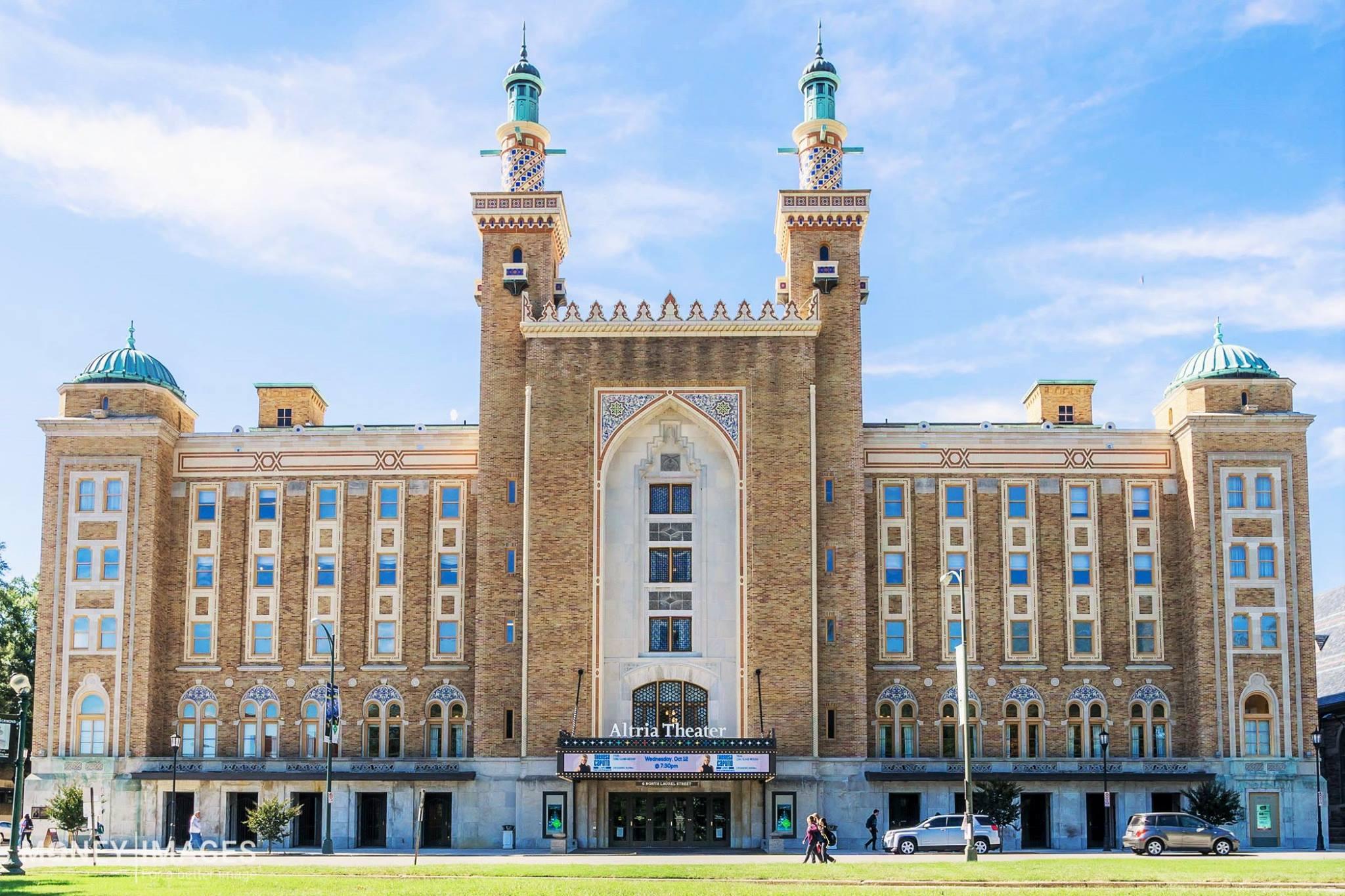
Built in the 1920s, the Altria Theater was originally known as “The Mosque”, a name reflecting its bold, Middle Eastern–inspired design rather than its function. With its striking Persian-style iwan and twin minaret-like towers, the building instantly stood out as a piece of architectural fantasy in the heart of Richmond.
Over the decades, the structure changed hands and identities, eventually becoming the performance hall it is today. Inside, it continues to impress with an eclectic blend of Middle Eastern and North African design influences, spanning different eras and regions. Painted geometric and vegetal motifs cover the walls, while intricate tilework adds layers of color and detail, creating a richly atmospheric interior.
Beyond its architecture, the venue also carries a legendary cultural legacy, having hosted icons like Elvis Presley, Frank Sinatra, The Supremes, and Jimi Hendrix, cementing its place as both an architectural gem and a stage for music history.
Fox Theater
Atlanta, Georgia
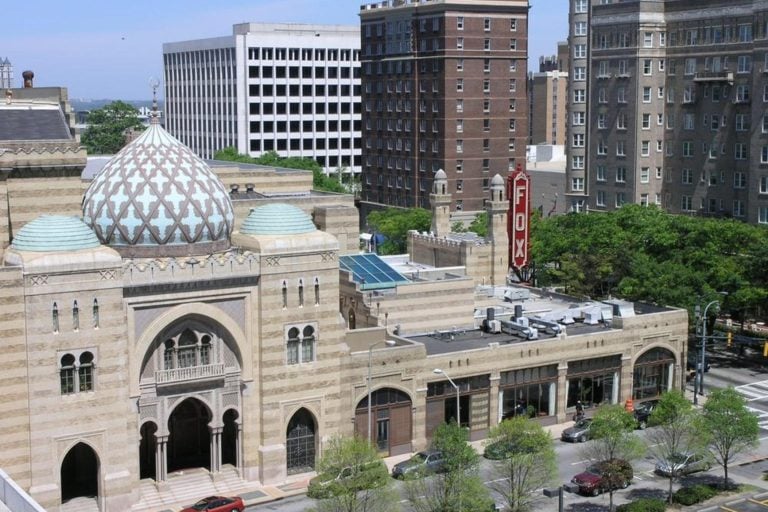
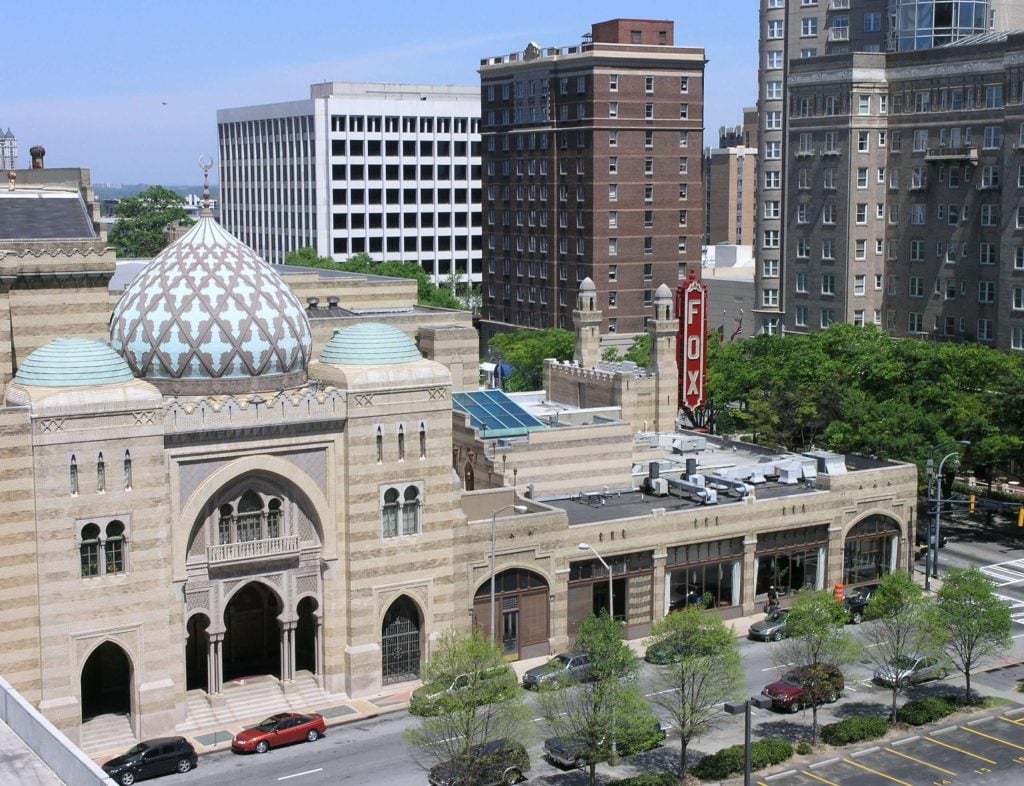
The Fox Theatre in Atlanta, built in 1929, is a designated National Historic Landmark and one of the most spectacular examples of Middle Eastern Revival architecture in the United States. Designed by Marye, Alger, and Vinour, it was originally conceived as a Shriners Temple before being transformed into a lavish 4,600-seat “movie palace” that feels more like a fantasy palace than a cinema.
Its design draws heavily from Islamic, Egyptian, and Moorish influences, blending them into a dramatic architectural experience. Inside, visitors are greeted by a glittering star-studded “night sky” ceiling, soaring minaret-inspired towers, and richly detailed plasterwork that covers nearly every surface in intricate, ornamental patterns.
Today, the Fox Theatre continues to thrive under the stewardship of Fox Theatre, Inc., a nonprofit organization. It remains a beloved cultural landmark, hosting more than 250 performances each year while preserving its extraordinary architectural legacy.


Olana State Historic Site
Greenport, New York
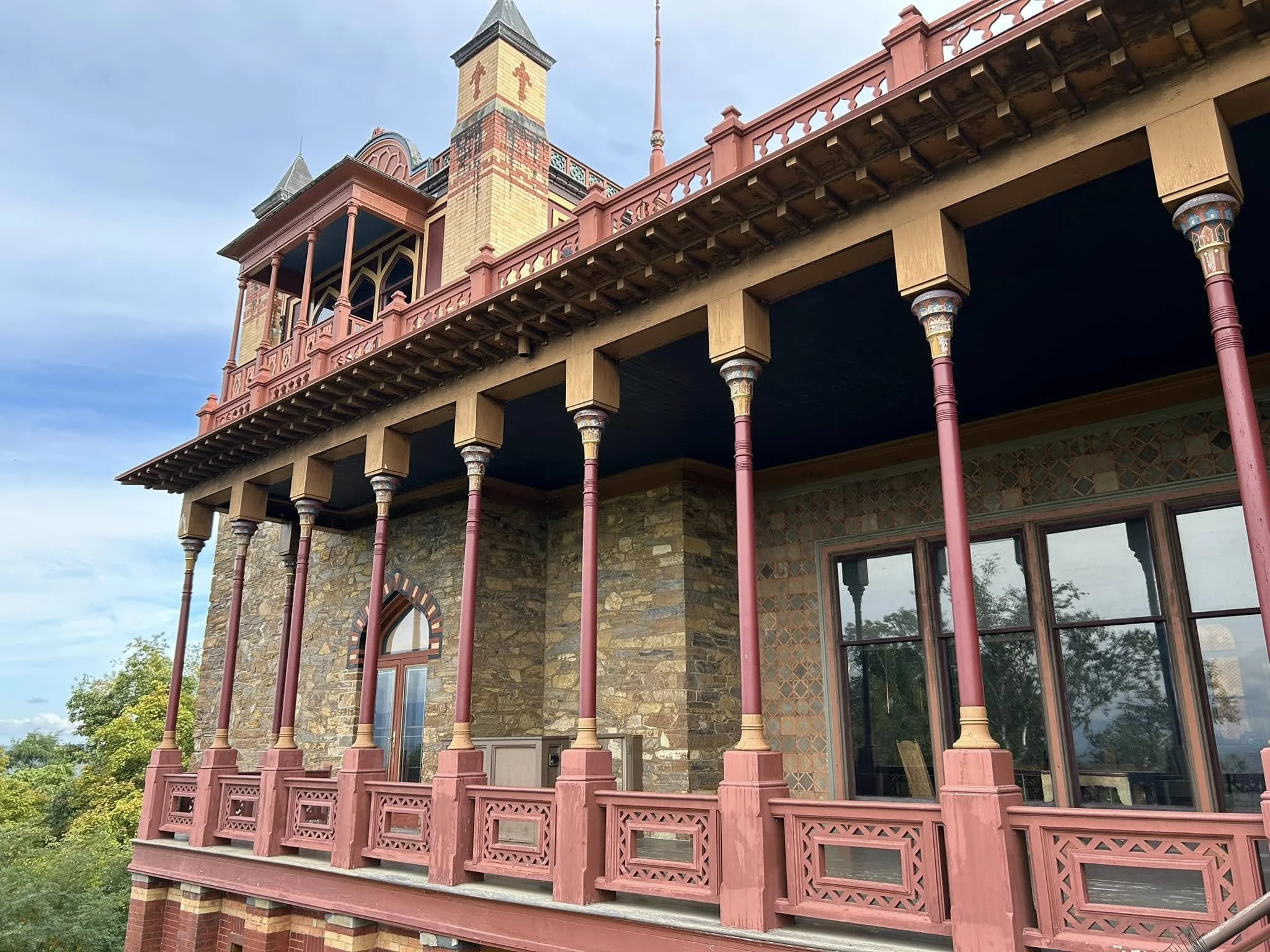
Olana State Historic Site, located near Hudson in Greenport, New York, is far more than a historic house; it is a carefully composed work of art in its own right. Once the home of celebrated painter Frederic Edwin Church, the estate was designed in collaboration with architect Calvert Vaux, resulting in a truly unique fusion of architecture, landscape, and artistic vision.
Inspired by Church’s travels across the Middle East and his fascination with Persian and Islamic design, Olana blends Moorish, Persian, and broader Middle Eastern influences with a distinctly American sensibility. The result is a home that feels both worldly and rooted, dramatic yet harmoniously integrated into its Hudson Valley surroundings.
The structure itself is rich in detail and imagination, featuring Moorish-style loggias, vibrant tiled interiors, and sweeping terraces that open onto expansive views of the Hudson River. Every element was intentionally designed, turning the residence into a lived-in artwork that reflects both cultural inspiration and personal expression.

Shrine Auditorium and Expo Hall
Los Angeles, California
The Shrine Auditorium and its adjoining Shrine Expo Center in Los Angeles were designed by architects John C. Austin and Abram M. Edelman, with interiors by renowned theater architect G. Albert Lansburgh, all brought together in a dramatic Moorish Revival style.
Serving as the home of the Al Malaikah Temple of the Ancient Arabic Order of the Nobles of the Mystic Shrine, a Masonic fraternal organization, the structure reflects a fascination with Islamic and North African design traditions reinterpreted through early 20th-century American architecture.
Over the decades, the Shrine has become one of Los Angeles’ most iconic event spaces. Its stage has hosted some of the entertainment industry’s biggest moments, including the Academy Awards, the Grammys, and the Emmys, as well as countless concerts, ballets, film premieres, conventions, and cultural events.

New York City Center
Manhattan, New York
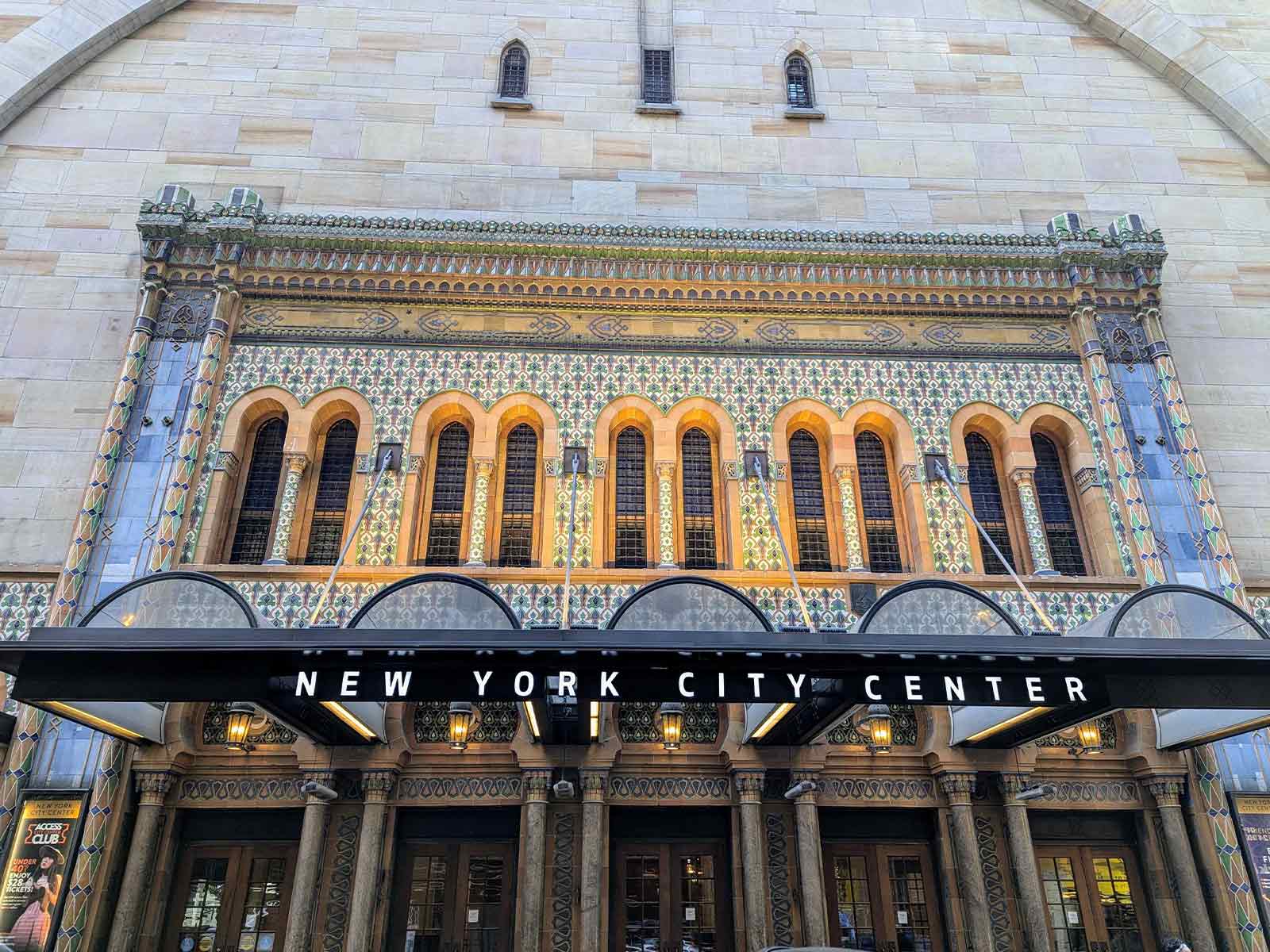
Originally known as the Mecca Temple, New York City Center stands in the heart of Midtown Manhattan as a striking example of Moorish-inspired design reimagined for the American stage. Designed by architect Harry Percy Knowles, the building brings together bold architectural flair and theatrical grandeur, with its façade and interiors echoing the intricate beauty of Middle Eastern design traditions.
Step inside, and the influence becomes even more apparent. Islamic geometric patterns, ornate detailing, and rich decorative elements create a space that feels both historic and vibrant. A major renovation in 2011 by Ennead Architects carefully restored these Neo-Moorish features while modernizing the venue, improving sightlines, acoustics, and overall comfort without losing its original character.
Today, New York City Center is one of the city’s most dynamic cultural hubs, hosting an ever-evolving lineup of dance, music, and theater. It’s a place where architectural history and artistic energy meet, perfectly reflecting the eclectic spirit and constant reinvention of New York City.
Medinah Temple
Chicago, Illinois
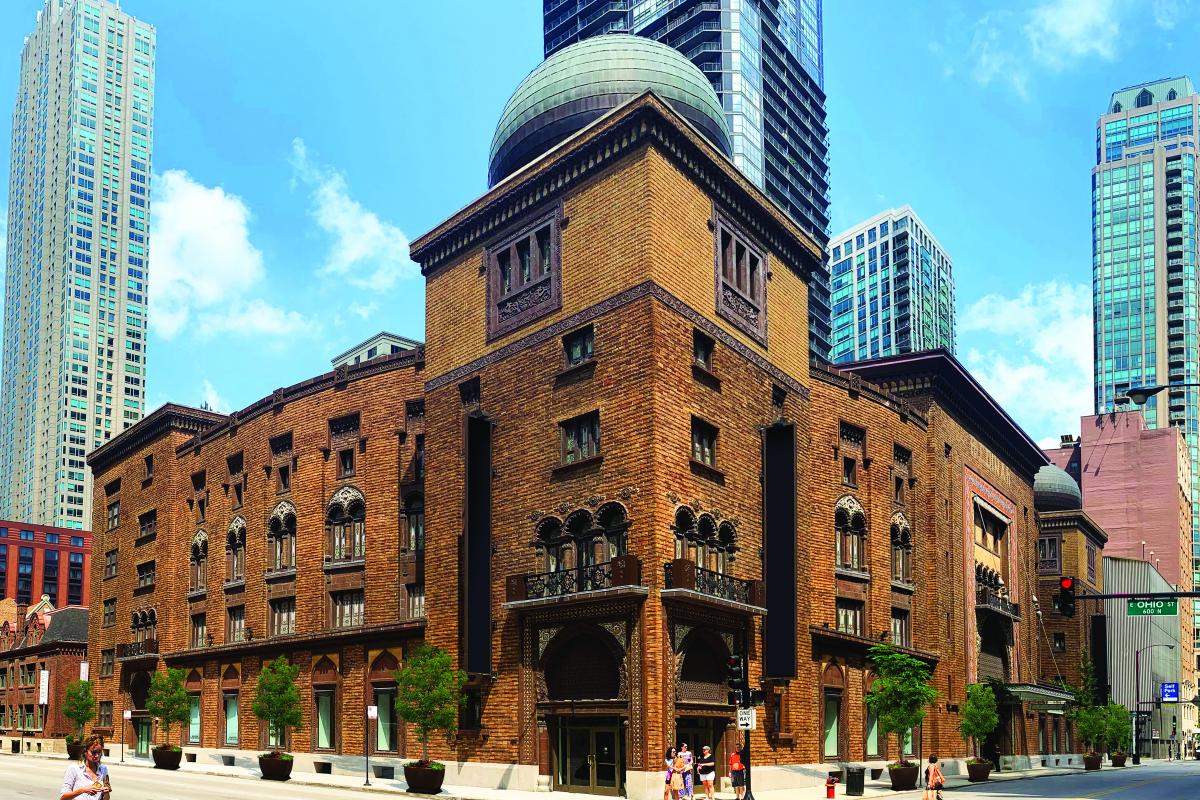
The Medinah Temple in Chicago is one of those buildings that makes you stop mid-walk and do a double-take. Designed in the Moorish Revival style, it was originally built for the Masonic order of the Mystic Shrine, and somehow, despite drawing on architectural traditions far removed from 20th-century America, it feels completely at home in the city.
The design doesn’t overwhelm; instead, it carefully weaves in Arabic-inspired elements, ornate detailing, arches, and decorative motifs, so seamlessly that they feel like a natural extension of the structure rather than an added layer. It’s modern at its core, but dressed in a rich, Middle Eastern-inspired visual language that gives it a distinct personality.
After decades as a hub for the Shriners, the building entered a new chapter in the early 2000s. By 2003, it reopened with a surprising twist as a Bloomingdale’s Home Store, proving that even the most historic, style-heavy landmarks can reinvent themselves while keeping their character intact.
From grand theaters to unexpected landmarks, these buildings show that Middle Eastern and Islamic design has left a lasting imprint far beyond its geographic origins. Woven into the fabric of American cities, these structures are more than just visually striking; they tell stories of cultural curiosity, exchange, and reinterpretation.
Together, they stand as bold reminders that architecture has no borders and that some of the most beautiful spaces are born when different worlds come together.
We Said This: Don’t Miss… A Look at 6 of the Middle East’s Most Beautiful Mosques