


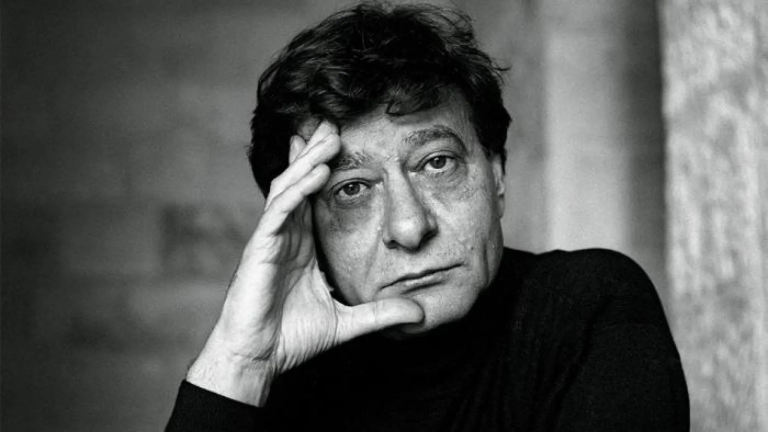
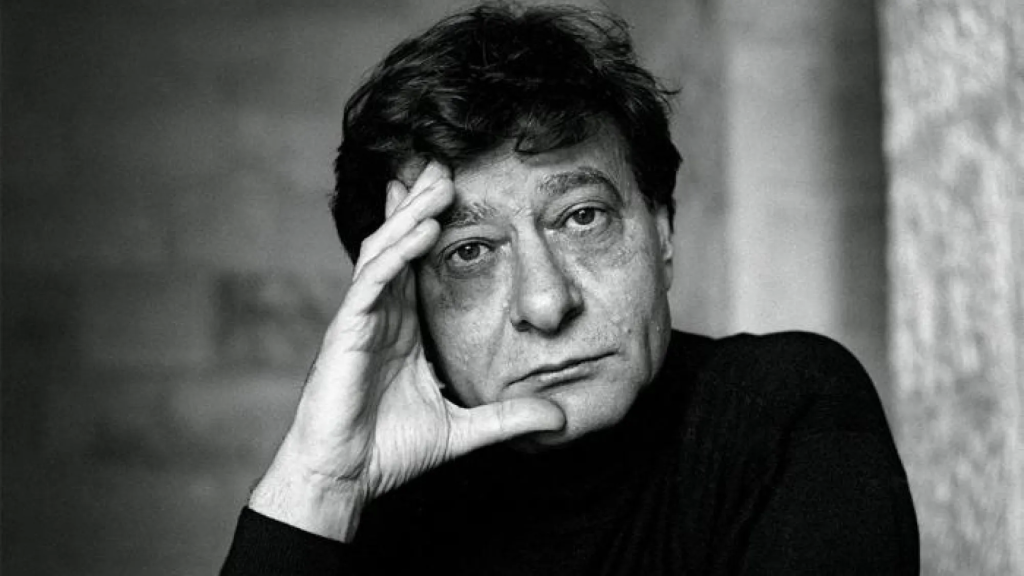
There are poets you read, and then there are poets whose words seem to follow you around. Mahmoud Darwish was the latter. His poetry gave language to Palestine, exile, loss, love, and the complicated business of holding on to home when home has been taken from you.
Born in 1941 in al-Birwa, a Palestinian village in Galilee that was occupied and later destroyed in 1948, Darwish experienced displacement from childhood. After his family missed the Israeli census, they were classified as “present-absent” Palestinians. He later spent years in exile in Beirut and Paris and was imprisoned several times from the age of 16 for reciting poetry and travelling between villages without a permit.
Darwish passed away on August 9, 2008, in Houston. In his memory, we’re revisiting some of his poems through his own voice — pieces that show exactly why his words have stayed with generations of readers.
And We Love Life
“And We Love Life” is probably one of Darwish’s most recognisable lines, repeated everywhere from walls and invitations to protests and social media.
But behind those simple words is a much heavier question: why do we sometimes value some lives more than others? For Darwish, loving life was never separate from living through occupation, displacement and death. It was an insistence on life despite all of it.
A Small Sunset Over an Abandoned Village
An abandoned village is more than a setting here. It echoes al-Birwa, Darwish’s childhood village, which was destroyed in 1948.
The landscape becomes a memory — a place that exists physically in the past but continues to live inside the person who was forced to leave it. And singing becomes an act of resistance.
The singer is questioned and searched for something incriminating, but there is nothing to find except his heart, his sorrow, and his people. The message is simple: sometimes the act of creating, speaking, and refusing to be silenced is resistance enough.
Darwish understood the power of poetry early. At just 12, he was reprimanded after reading a poem during Israel Independence Day that reflected on the irony of Palestinians being expected to celebrate it. The incident made him realise just how much power a poem could hold.
Think of Others
Darwish doesn’t let us stay inside our own little worlds for long.
In Think of Others, he asks us to remember those living in camps, those without homes and those who have lost their right to speak — even while we are busy returning home, sleeping or imagining our own freedom.
It’s a small poem with a very big reminder: whatever we’re going through, someone else is carrying something too.
If You Are Not Rain
What if you can’t change everything? Darwish’s answer is: be something that still gives.
In If You Are Not Rain, rain becomes a metaphor for love, presence and care. If you cannot be rain, be a tree; if not a tree, then something that can still endure.
It’s a gentle reminder that you don’t have to save the world to matter. Sometimes simply choosing not to add to its emptiness is enough.
On This Land
“On this land” is where Darwish brings everything back to Palestine.
The poem lists the things that make life worth living before naming the land itself: the mother, beginnings, endings and the feeling of belonging.
For Darwish, Palestine was never just a political cause. It was home, memory, family and identity — which is exactly why his words resonated so deeply with Palestinians and readers across the Arab world.
Tibaq / Antithesis: For Edward Said
Darwish and Palestinian-American intellectual Edward Said shared a friendship that lasted around three decades, shaped by exile, Palestine and a shared belief in cultural freedom.
After Said died in 2003, Darwish wrote Tibaq / Antithesis in his memory. The poem imagines the two friends speaking about exile, identity, death and the future they both wanted but never got to see.
At its heart is Said’s line: “My will is the impossible.” For Darwish, the impossible was not something to give up on. It was something the next generation could still make real.
To My Mother
Written while Darwish was in an Israeli prison, To My Mother is one of his most personal poems.
His mother becomes intertwined with Palestine, while bread, coffee and touch become symbols of home. They are ordinary things, but in exile, ordinary things can become everything.
Coffee especially carries ideas of family, hospitality, belonging and solidarity, making the poem feel less like a grand statement about homeland and more like a longing for the little things that make somewhere home.
You’ll Be Forgotten, As If You Never Were
Darwish also wrote about something bigger than borders and politics: what happens when we are gone.
You’ll Be Forgotten, As If You Never Were reflects on mortality, memory and how even a life that once felt permanent can eventually fade.
There’s something almost ironic about that coming from Darwish. He wrote about being forgotten, yet nearly two decades after his death, people are still listening to him recite his words.
Why Darwish Still Matters
Darwish published more than 30 books of poetry and eight books of prose, with his work translated into more than 20 languages. His poetry helped reshape modern Arabic poetry, bringing together political resistance, symbolism and deeply personal questions about love, memory and belonging.
He became one of the most celebrated poets of the Arab world and a defining voice of Palestinian exile.
But perhaps his biggest legacy is that his poems never stayed in the past. They keep finding new readers, new voices and new moments to belong to.
Darwish may have passed away in 2008, but his voice never really left.
WE SAID THIS: Don’t Miss…20th Century Arab Poets Who Reshaped & Revolutionized The Literary Art Form