



There’s something special about shopping in an old-school bazaar. Between the colourful displays, the smell of spices, traditional handicrafts, and shopkeepers calling out to passersby, you get to do a little shopping while stepping straight into a destination’s history and culture.
Across the Middle East, some of these markets have been around for centuries, serving generations of merchants, locals, and curious travellers. And the best part? Many are still very much alive today, so you can browse everything from handmade souvenirs and traditional textiles to fragrant perfumes and local treats.
Al-Qaisariya Souq, Al-Hofuf, Saudi Arabia
Dating back to 1822, Al-Qaisariya Souq is one of the Arabian Gulf’s oldest traditional markets and a major part of Al-Ahsa’s heritage. With more than 400 shops spread across its traditional covered walkways, it’s the kind of place where you can easily lose track of time.
You’ll find everything from traditional Saudi clothing, abayas, and beautifully embroidered bishts to handmade crafts, copperware, spices, and the region’s famous dates. Don’t forget to admire the market’s carved wooden doors and traditional architecture while browsing.

Souk Al Arsah, Sharjah, UAE
If you want a glimpse into what trade looked like in the UAE before the skyscrapers took over, Souk Al Arsah is a lovely place to start. Considered one of the oldest marketplaces in the country, it was once a meeting point for Bedouin traders arriving on camels, as well as merchants from India and Persia.
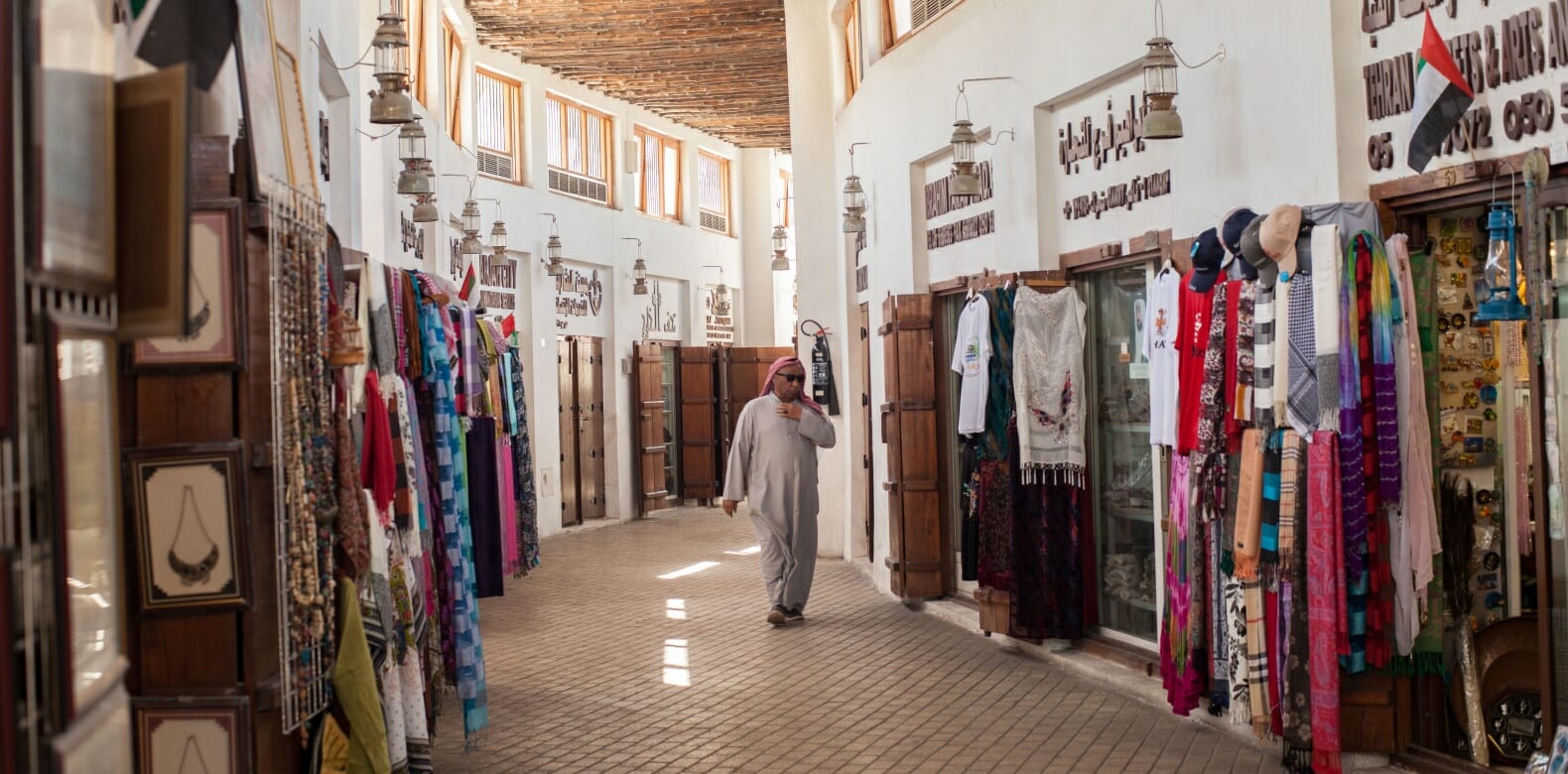
Today, its charming covered alleyways, coral-brick walls, wooden doors, and hanging lanterns make it a lovely spot to explore. You’ll find traditional Emirati handicrafts, antique pieces, copper coffee pots, jewellery, incense, and even pearl-adorned wooden chests.
Muttrah Souq, Muscat, Oman
With a history stretching back more than two centuries, Muttrah Souq is one of Oman’s most beloved historic markets. Sitting close to the old trading port, it was once an important commercial hub where goods arriving by sea made their way into the rest of the country.
Walking through its maze of narrow alleyways is an experience in itself, especially with the smell of frankincense and perfumes filling the air. The shops are packed with Omani silver jewellery, traditional khanjars, embroidered fabrics, pottery, colourful rugs, antiques, and plenty of souvenirs. It’s also a great place to pick up some Omani luban (frankincense) to take home.

Manama Souk, Manama, Bahrain
Established in the early 19th century, Manama Souk has long been part of Bahrain’s commercial life, particularly during the island’s flourishing trading and pearling days. Located near the iconic Bab Al Bahrain, the market offers a lively mix of old-school charm and everyday shopping.
Take your time wandering through its streets, where you’ll come across shops selling gold jewellery, textiles, spices, perfumes, traditional handicrafts, and Bahraini sweets. There are also plenty of traditional cafés where you can take a break and enjoy a cup of tea or Arabic coffee between shopping stops.

Souk Waqif, Doha, Qatar
One of Doha’s most recognisable landmarks, Souk Waqif has been a trading destination for generations. Originally a marketplace where Bedouin traders came to exchange goods, it has retained much of its traditional atmosphere despite being surrounded by the city’s modern skyline. The market underwent a major restoration in 2006–2008 to preserve its heritage-inspired architecture.
Today, its winding alleyways are filled with shops selling spices, perfumes, traditional garments, jewellery, handicrafts, and souvenirs. You can also explore its famous falcon market, browse local art, or stop at one of its many restaurants for a taste of Qatari and Middle Eastern cuisine. Basically, you can easily spend an entire afternoon here.

Khan el-Khalili, Cairo, Egypt
No list of historic Middle Eastern bazaars would be complete without Cairo’s iconic Khan el-Khalili. Dating back to the 14th century, this legendary market was established during the Mamluk era and has remained one of the city’s most famous shopping destinations for more than 600 years.
Located in the heart of Islamic Cairo, the bazaar is a maze of narrow streets lined with shops selling everything from colourful lanterns and handmade copperware to silver jewellery, traditional fabrics, perfumes, spices, and souvenirs. And, of course, no visit is complete without stopping for a drink at one of its traditional cafés and soaking up the atmosphere.
Souk Al-Mubarakiya, Kuwait
One of Kuwait’s oldest traditional markets, Souk Al-Mubarakiya has been at the centre of local trading life since the late 19th century. Named after Sheikh Mubarak Al-Sabah, the market grew around the old commercial area where merchants, sailors, and traders exchanged goods arriving from India, East Africa, and beyond.
Today, it’s still a favourite shopping spot for locals and visitors alike. You can browse shops selling traditional clothing, perfumes, spices, dates, nuts, sweets, and handmade souvenirs, or head to its food stalls and restaurants to try some local Kuwaiti favourites. It’s also a great place to experience a more everyday side of Kuwait beyond its modern shopping malls.

Whether you’re hunting for a special souvenir, sampling traditional sweets, or simply wandering around and taking in the sights and smells, these historic bazaars offer so much more than a regular shopping trip. They’re living reminders of the Middle East’s trading past, where old traditions continue to find their place in everyday life.
So, next time you’re visiting one of these cities, skip the mall for an afternoon and let yourself get a little lost in its souk.
We Said This: Don’t Miss... MENA Destinations Where You Might Experience Snowfall This Winter