


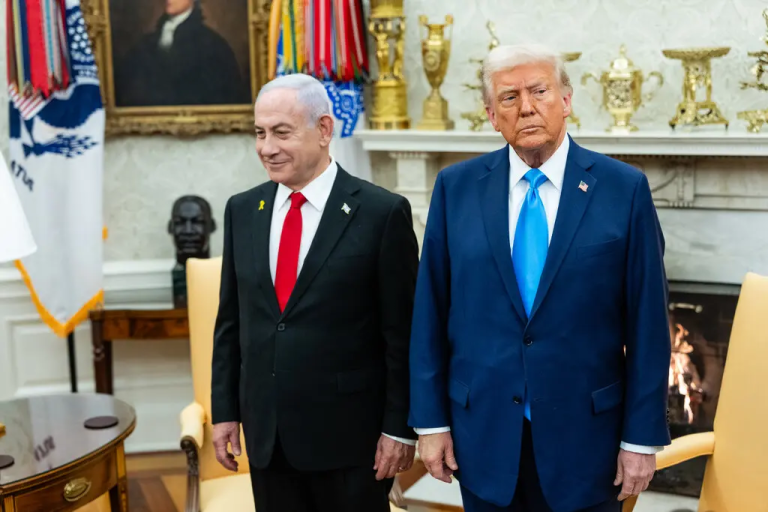
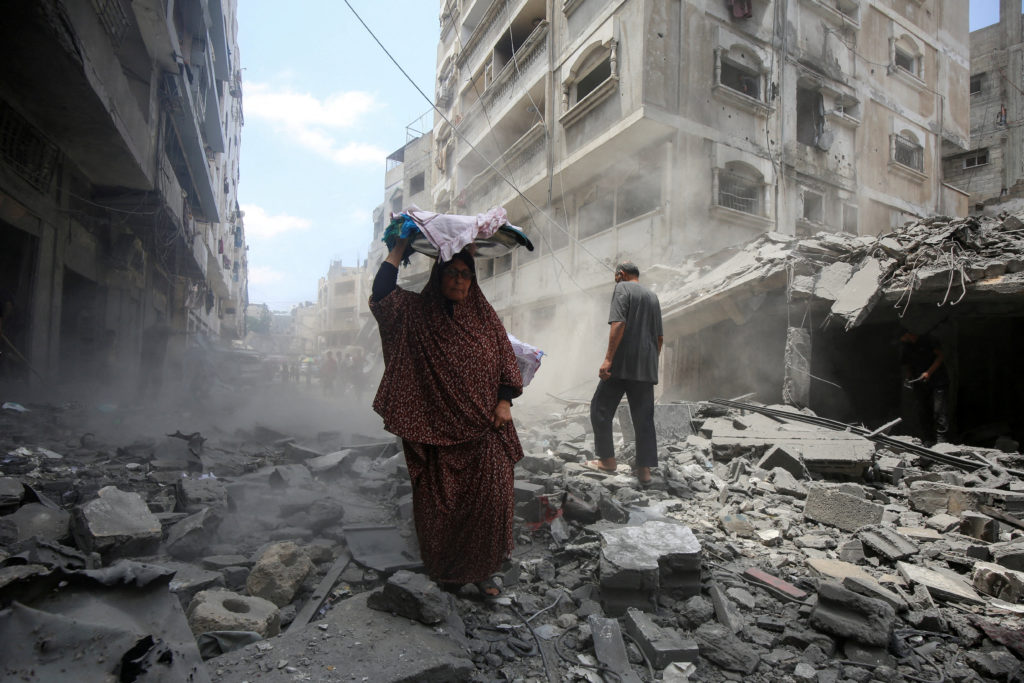
Eight countries are pushing back after Israel rejected the latest US-backed roadmap for Gaza, warning that the move could derail efforts to end the war and begin rebuilding the territory after years of Israeli violence and genocide.
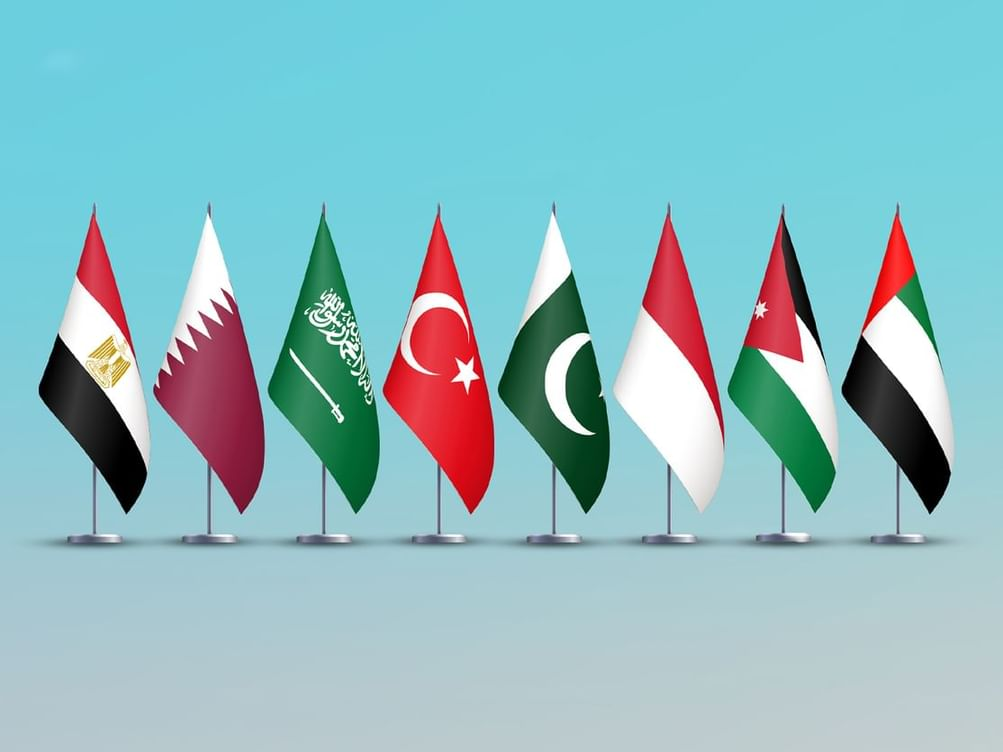
Egypt, Qatar, Jordan, the UAE, Indonesia, Pakistan, Türkiye and Saudi Arabia issued a joint statement on Sunday condemning Israel’s rejection of the 15-point roadmap, as well as Prime Minister Benjamin Netanyahu’s rejection of Palestinian statehood.
The ministers said both positions undermine the wider US-backed plan and put efforts toward a lasting peace at risk.
What The Countries Are Condemning
The foreign ministers said Israel’s rejection amounts to a “direct repudiation” of the broader Comprehensive Plan to End the Gaza Conflict, which was endorsed by UN Security Council Resolution 2803.
They also argued that Israel now bears responsibility for blocking efforts to bring peace to Gaza and the wider Occupied Palestinian Territory.
“Such rejection confirms that Israel now bears responsibility for obstructing the efforts to bring peace in Gaza and the rest of the Occupied Palestinian Territory,” the statement read.
The ministers also called for continued US involvement to ensure Israel follows through on the commitments laid out in the plan.
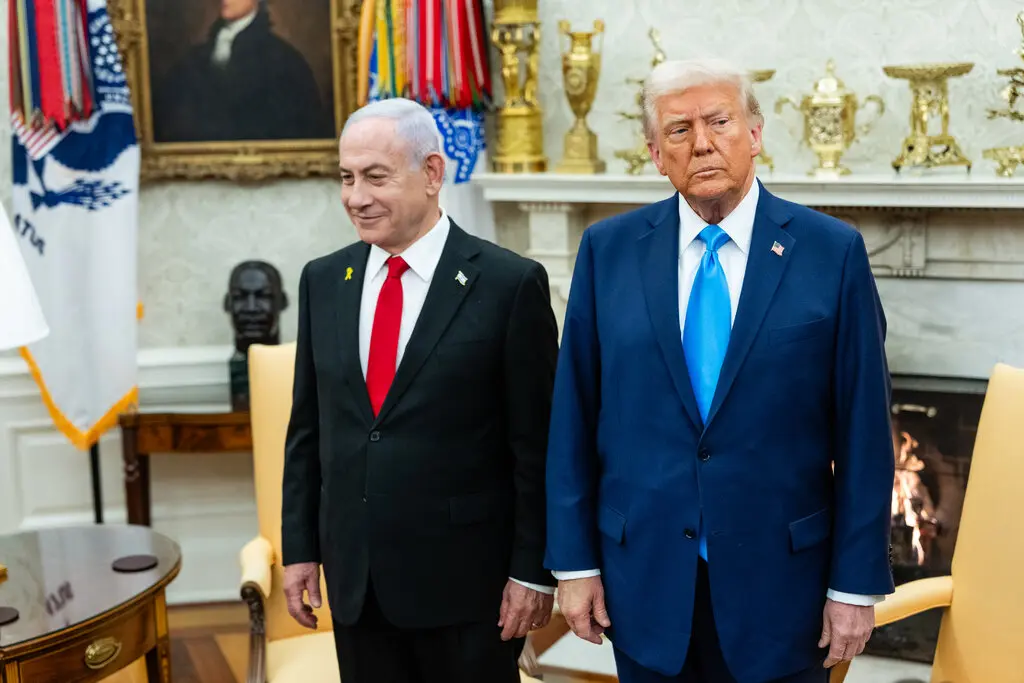
Their statement comes after Netanyahu rejected the roadmap on August 9, saying Israel would not withdraw its forces from Gaza until Hamas is fully disarmed. He also reiterated that, as long as he is prime minister, there would be no Palestinian state in Gaza or the occupied West Bank.
So, What Is The 15-Point Roadmap?
Announced by the US on July 30, the roadmap is essentially the next step for implementing Trump’s broader Gaza peace plan.
The idea is a phased process: Hamas and other armed groups would give up their weapons while Israeli forces gradually withdraw from Gaza. An International Stabilization Force would then be deployed, civilian authority would be transferred to an independent Palestinian National Committee for the Administration of Gaza, and reconstruction would begin.
The roadmap was developed through negotiations involving Egypt, Qatar, Türkiye, the US, the High Representative for Gaza and the Board of Peace, and was accepted by Hamas and other Palestinian factions.
The key issue, however, is how and when these steps happen.
The plan links Hamas’s disarmament to an Israeli withdrawal rather than requiring one side to complete its obligations entirely before the other moves. The process is supposed to be phased, reciprocal and internationally verified.
Why Is Israel Rejecting It?
Netanyahu’s objection comes down largely to that sequencing.
Israel says Hamas must be completely disarmed before Israeli forces withdraw. Netanyahu made that position clear when he said:
“Israel rejects the 15-point document.”
He added that the Israeli military “will not carry out any withdrawal until Hamas is genuinely disarmed and will continue to thwart threats against our forces and our citizens.”
He later stressed that Israel was looking for “real disarmament, not fictitious disarmament.”
Hamas, meanwhile, has said its implementation of the agreement depends on Israel fulfilling its own commitments, including ending its military operations and withdrawing from Gaza.
That leaves the two sides stuck over who moves first — exactly the problem the roadmap was designed to solve.
Then There’s The Question Of Palestinian Statehood
Netanyahu’s rejection of Palestinian statehood is another major point of contention.
The eight countries said there can be no lasting peace without a political future for Palestinians, rejecting any attempt to permanently rule out Palestinian statehood.
“A just, lasting, and comprehensive peace will only be achieved through the implementation of the two-State solution, by realizing an independent and sovereign Palestinian State based on the 1967 lines, with East Jerusalem as its capital, in accordance with international law and relevant United Nations resolutions.”
For the ministers, Palestinian statehood is not separate from the Gaza plan. They argue that denying it directly undermines the possibility of long-term peace and stability across the region.
So, What Happens Now?
The eight countries are calling on Trump’s Board of Peace, with active US support, to take “immediate and concrete measures” to keep the roadmap on track and move toward its second phase.
The Board of Peace has defended the plan as the only viable way forward.
And until the gap is resolved, Gaza remains caught between a roadmap for ending the genocide and the political disagreements standing in its way.
Pope Leo XIV Is Also Calling For An End To The Violence
The diplomatic pressure comes as Pope Leo XIV continues to call for an end to violence against Palestinians.
In a recent statement, he renewed his appeal for an end to violence against Palestinian civilians in the West Bank and called on the international community to advance a two-state solution.
His position echoes the same broader argument made by the eight countries: that ending the immediate violence is not enough without addressing Palestinian rights and creating a political path toward statehood.
The Bigger Picture
The latest dispute is ultimately about what comes after the genocide in Gaza — and whether there is actually a workable path to get there.
The roadmap lays out a sequence involving Hamas disarmament, Israeli withdrawal, Palestinian administration, international security and reconstruction. Israel’s rejection threatens that sequence, while its rejection of Palestinian statehood raises an even bigger question about what kind of political future the plan is supposed to lead to.
For the eight countries, the answer is straightforward: the roadmap needs to be implemented, Palestinian statehood cannot simply be ruled out, and the US needs to use its influence to keep the process from falling apart.
We Said This: Don’t Miss…“We Have More to Do”: The Politics Behind Netanyahu’s “Greater Israel”