


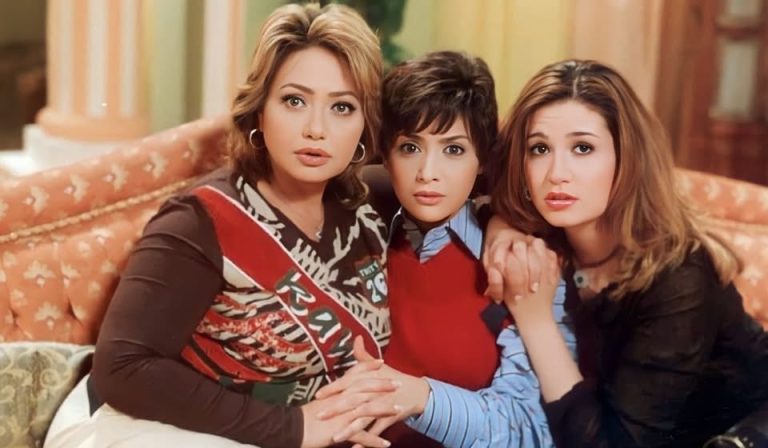
Today is basically unofficial Middle Child Day, so naturally, we had to give some attention to the siblings who spent their childhood wondering why the eldest got the praise, the youngest got away with everything, and somehow they were the ones expected to keep the peace.
Middle-child syndrome, of course, isn’t an actual diagnosis. It’s the long-running stereotype that the sibling stuck in the middle grows up feeling overlooked, becomes fiercely independent, learns to negotiate their way through family drama, and occasionally develops a talent for making questionable decisions just to remind everyone they exist. But if Egyptian movies and series have taught us anything, it’s that the middle child may be overlooked by the family — but never by us.
From the sibling who gets volunteered for the dangerous part of the plan to the one who quietly becomes everyone’s emotional support system, these characters know the struggle.
Keda Reda — Semsem: The Neglected Child
If triplets technically don’t have a middle child, Semsem is about as close as you can get to one. Of the three brothers, he’s the one who feels most like he got caught between the other two — lonely, alienated and constantly dragged into trouble because of them.
He’s the sibling who seems to be paying for everyone else’s nonsense while never quite getting the attention or understanding he deserves. And honestly, that’s classic middle-child territory: not necessarily the least loved, just the one everyone assumes will be fine.
Semsem is the forgotten one, the misunderstood one, the one whose problems somehow become his problems even when they started with somebody else.
Welad Rizk — Ragab: The One Who Always Gets Sacrificed
Every family has the sibling everyone turns to when a plan needs a volunteer. In Welad Rizk, that sibling is Ragab.
He has that very particular middle-child quality of being useful enough to be needed but expendable enough to be volunteered. If someone has to take the fall, distract the enemy or play the idiot so everyone else’s plan can work, well… why not Ragab?
And that’s the middle-child stereotype in its purest form: the one who’ll sacrifice themselves for the group because they’re so used to putting everyone else’s needs before their own.
Of course, Ragab tried his mightiest to get out of playing Atef, but let’s not ruin the metaphor.
Hob El Banat — Ghada: The Dramatic One Who Just Wants to Be Understood
Ghada is the middle-child prototype. She’s sandwiched between Nada, the eldest, and Roqaya, the youngest, and somehow manages to be both fiercely independent and deeply attached to her sisters.
She’s kind, she’s dramatic, she’s emotional, and she has absolutely no problem making sure everyone knows when she’s been wronged. But underneath all that is someone who cares deeply about her siblings and would do just about anything for them.
That’s the thing about the middle-child stereotype: they’re often painted as the forgotten sibling, but being overlooked can also make them incredibly observant. They know how everyone works. They know who’s upset, who’s lying and who needs help — even if nobody thinks to ask how they’re doing.
Ghada doesn’t just want attention. She wants to be understood. And there is a difference.
Samir w Shahir w Bahir — Shahir: The One Always Playing Peacemaker
Even though they’re technically half-brothers rather than traditional triplets, Shahir has the most middle-child energy of the three. He’s literally sandwiched between Samir and Bahir, and even his name always seems to arrive right in the middle.
More importantly, he’s the peacemaker.
When things fall apart with his brothers, Shahir is the one most likely to start apologising, smoothing things over and trying to get everyone back on speaking terms. He has that classic middle-sibling instinct to negotiate because, at some point, you learn that life is considerably easier when the siblings rivalry ends.
The middle child doesn’t always want to win the argument. Sometimes they just want everyone to shut up and make up already.
W Teqabel Habib — Fares: The One Who Goes Against the Family
If the eldest sibling is traditionally the responsible one and the youngest is the one everyone protects, the middle child gets to be the one who asks, “Okay, but is this actually right?”
Enter Fares.
His family is hardly a model of moral clarity, but Fares is the one who refuses to simply follow along. He’s the brother who supports Leil when the rest of his family turns against her, eventually falling in love with her and standing up to his own family for her.
There’s something very middle-child about being the sibling who develops their own moral compass instead of simply inheriting the family’s one. Fares isn’t interested in being the good son for the sake of appearances. He does what he thinks is right, even when it puts him against his own family.
Middle children: overlooked at breakfast, accidental rebels by dinner.
Tareeqi — Mahmoud: The One Everyone Can Count On
And finally, there’s Mahmoud, who might be the most wholesome version of middle-child energy on this list.
Throughout Tareeqi, he’s consistently in Dalila’s corner, standing up for her against their mother and her husband and refusing to let her face everything alone. He’s the sibling she can turn to when things get ugly.
That’s another thing the middle-child stereotype gets right: middle children often become incredibly loyal siblings. They’ve spent their lives learning how to exist between personalities, so they become good at reading people, understanding where everyone is coming from and quietly showing up when someone needs them.
They might not always be the loudest person in the room. They might not get the biggest role in the family.
But when the youngest calls?
They’re picking up.
So, Happy Unofficial Middle Child Day
Maybe middle children aren’t actually forgotten. Maybe they’re just less loudly celebrated.
They’re the negotiators, the troublemakers, the family therapists, the sacrificial lambs, the dreamers and the ones quietly standing beside their siblings when everyone else has walked away. They may spend their childhood asking, “What about me?” but somewhere along the way, they become the people everyone else asks for help.
So here’s to the middle children: the siblings who somehow got skipped in the family photo but ended up holding the whole damn thing together.
We Said This: Don’t Miss…6 Egyptian Films Underscoring Sibling Relationships