


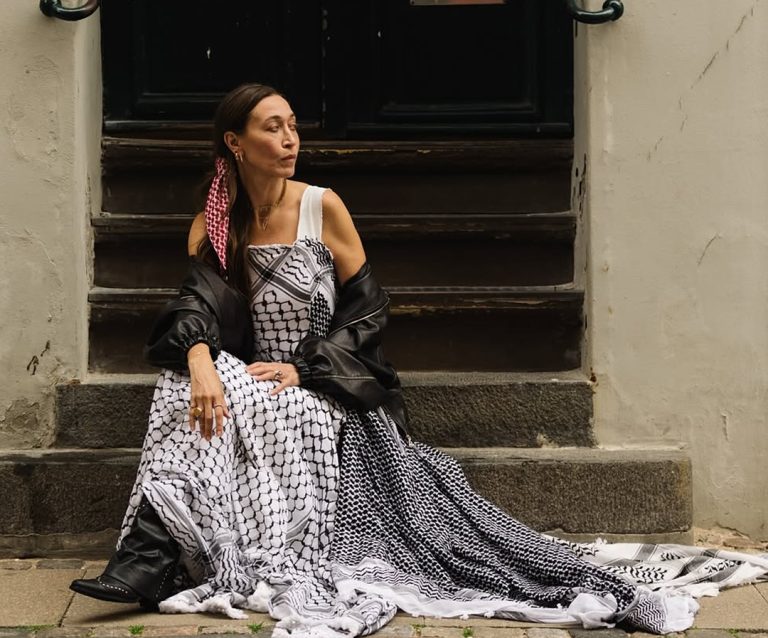
As Copenhagen Fashion Week celebrates its 20th anniversary after kicking off on August 3, the Danish capital is once again spotlighting the trends shaping global fashion. Known for blending Scandinavian minimalism with bold street style, the event has also become a space where fashion meets culture, identity, and activism.
One garment that has made a lasting impression over the years is the Palestinian keffiyeh. Far more than a traditional scarf, the iconic black-and-white pattern has been reimagined into dresses, skirts, tops, bags, and accessories, appearing everywhere from runway collections to street-style photography.
With this year’s edition underway, here’s a look at how the Palestinian keffiyeh has become one of fashion’s most meaningful statements both in Copenhagen and beyond.
Copenhagen Fashion Week’s Most Powerful Street Style Statement
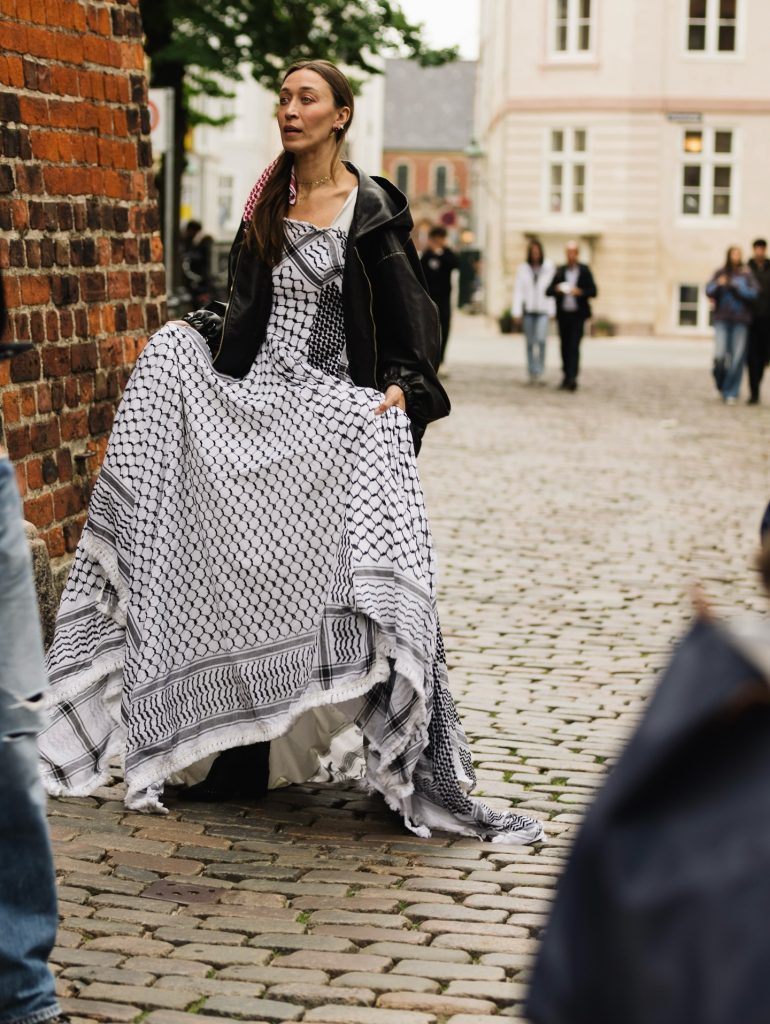
Over the past few seasons, the keffiyeh has become a recurring feature of Copenhagen Fashion Week, appearing not only on attendees but also in editorials and designer collections. The fabric has evolved into a powerful form of visual activism, with fashion lovers incorporating it into their looks as dresses, skirts, scarves, bag accents, and headpieces.

One of the standout moments came in 2025 when model and activist Alana Hadid stepped out in a black-and-white keffiyeh gown by Mailliw by William. Her look reflected a broader movement seen throughout the week, where the keffiyeh was styled in creative ways while remaining closely tied to its cultural significance.
Beyond Copenhagen: A Global Fashion Symbol
The keffiyeh’s influence extends well beyond Denmark.
At the 2024 Cannes Film Festival, Bella Hadid paid tribute to her Palestinian heritage by wearing a custom dress inspired by the keffiyeh pattern, bringing the symbol to one of the world’s most prestigious red carpets.

A year later, at the 2025 Emmy Awards, Spanish actor Javier Bardem wore a traditional Palestinian keffiyeh on the red carpet as a gesture of solidarity, further highlighting the scarf’s growing visibility at major international events.

Together, these moments show how the keffiyeh has moved beyond its traditional form to become a globally recognized symbol of identity, heritage, and support.
More Than a Pattern
The keffiyeh is much more than a distinctive black-and-white design. Traditionally worn across Palestine, every element of its pattern carries meaning. The olive leaf motifs symbolize resilience and a deep connection to the land, while the intersecting lines are often said to represent fishing nets, reflecting Palestinian livelihoods and history.
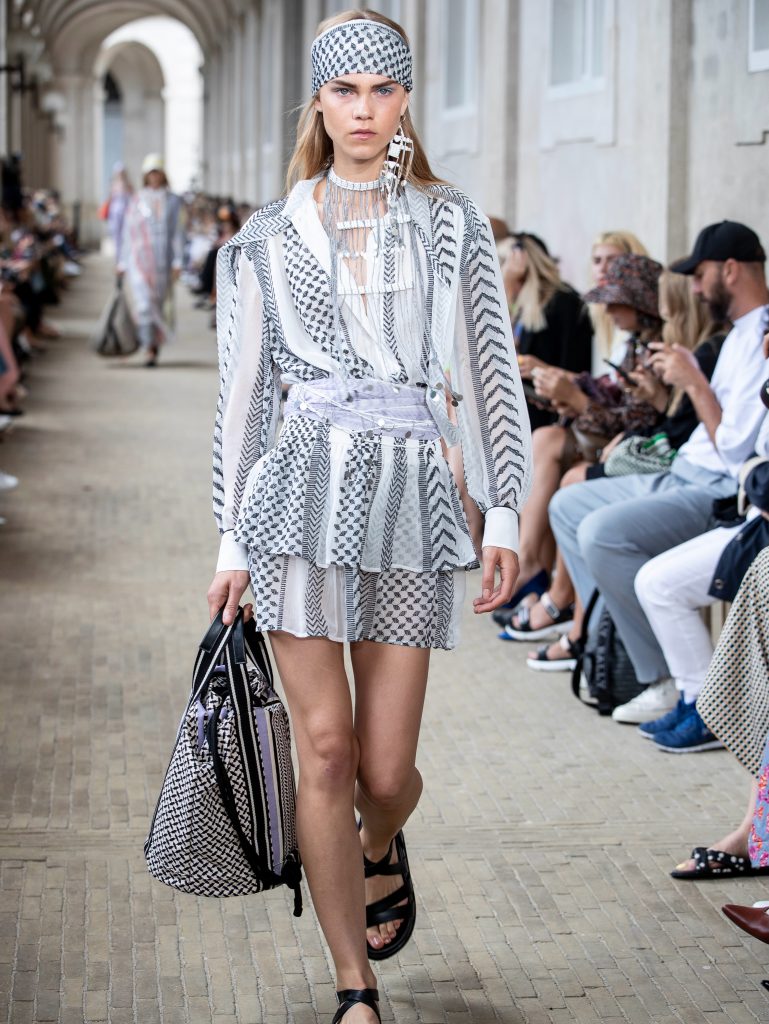
For generations, the keffiyeh has stood as a symbol of Palestinian identity, pride, and resistance. Today, as it continues to appear on runways, red carpets, and city streets around the world, it remains a cultural emblem whose significance extends far beyond fashion.
We Said This: Don’t Miss… All the Times Bella Hadid Used Fashion to Celebrate Her Palestinian Heritage