


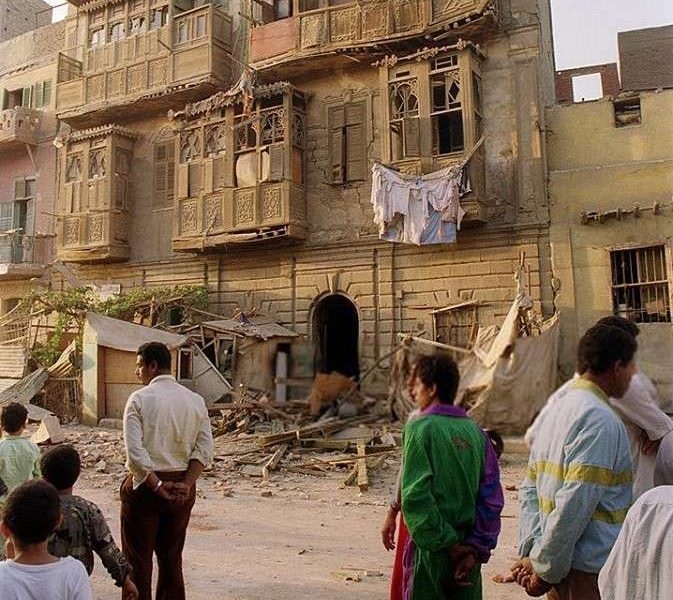
A 5.6-magnitude earthquake struck around 38 kilometers north of Suez at approximately 3:00 a.m. today, jolting many Egyptians awake as tremors were felt across Cairo and several other governorates. Fortunately, authorities reported no casualties or significant damage, but the early-morning shake was enough to remind many of Egypt’s seismic history.
While earthquakes aren’t an everyday occurrence in Egypt, the country sits within a region shaped by active tectonic fault lines. The Middle East lies at the meeting point of the African, Arabian, and Eurasian plates, making it one of the world’s most seismically active regions. Over the centuries, the region has experienced devastating earthquakes that leveled cities, claimed thousands of lives, and reshaped communities. Here are some of the biggest earthquakes the Middle East has witnessed over the years.
1759 Near East Earthquakes (Magnitude 6.6 & 7.4)
The 1759 Near East earthquakes were a devastating pair of earthquakes that struck present-day Lebanon and Syria just months apart. The first, estimated at magnitude 6.6, hit on October 30, followed by a stronger 7.4-magnitude quake on November 25.
The earthquakes destroyed villages throughout the Bekaa Valley, severely damaged Baalbek, Damascus, and Safed, and triggered landslides and widespread structural collapse. Thousands of people were killed, making it one of the most destructive seismic events ever recorded in the Levant. Historians also note that the earthquakes permanently altered parts of the landscape along the Dead Sea Transform Fault.

1927 Jericho Earthquake (Magnitude 6.2)
On July 11, 1927, a magnitude 6.2 earthquake struck near Jericho along the Dead Sea Transform Fault. It remains one of the most significant modern earthquakes to affect the Levant.
The quake caused severe damage across Jerusalem, Jericho, Nablus, Salt, and Amman. Historic buildings, churches, mosques, and homes collapsed, while landslides occurred around the Jordan Valley. Between 285 and 400 people lost their lives, and hundreds more were injured. The earthquake also generated seiches (standing waves) in the Dead Sea, making it one of the best-documented earthquakes in the region during the 20th century.

1992 Cairo earthquake (Magnitude 5.8)
Although relatively moderate in magnitude at 5.8, the 1992 Cairo earthquake became one of Egypt’s deadliest modern natural disasters because its epicenter was close to densely populated areas.
The earthquake struck on October 12, 1992, with its epicenter near Dahshur, southwest of Cairo. It killed more than 540 people, injured over 12,000. Hundreds of schools, homes, and historical monuments suffered damage, including parts of Old Cairo. The disaster exposed the vulnerability of many older buildings and prompted Egypt to strengthen seismic building standards and emergency response planning.
1995 Gulf of Aqaba Earthquake (Magnitude 7.3)
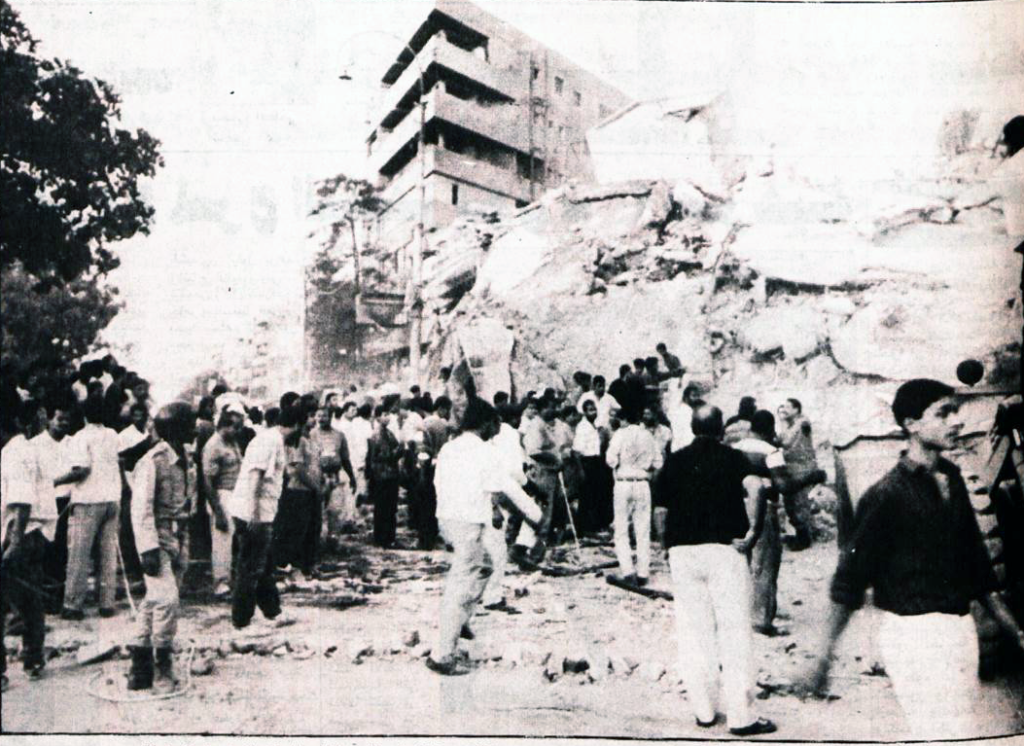
On November 22, 1995, a powerful magnitude 7.3 earthquake struck beneath the Gulf of Aqaba, where the borders of Egypt, Saudi Arabia, Jordan, and Israel meet.
The quake was felt across much of the Middle East, from Cairo to Riyadh. While the epicenter was offshore, towns such as Nuweiba in Egypt experienced considerable damage, with buildings collapsing and roads cracking. Several people were killed and dozens injured across the region. The earthquake also generated small tsunami waves in the Gulf of Aqaba and highlighted the seismic risk associated with the Red Sea Rift and Dead Sea fault system.
2023 Turkey–Syria Earthquakes (Magnitude 7.8 & 7.5)
The Turkey–Syria earthquakes on February 6, 2023, rank among the deadliest disasters of the 21st century. The first earthquake measured 7.8, followed hours later by another 7.5-magnitude quake, along with thousands of aftershocks.
The earthquakes devastated southern Türkiye and northern Syria, collapsing hundreds of thousands of buildings and claiming more than 59,000 lives. Millions of people were displaced, while entire neighborhoods, hospitals, schools, and cultural landmarks were destroyed. Tremors were felt across Lebanon, Jordan, Iraq, Cyprus, Egypt, and Israel, making it one of the most far-reaching seismic events in recent Middle Eastern history.

While today’s earthquake caused little impact in Egypt, it serves as another reminder that earthquakes are an unavoidable part of life across the Middle East. From the Levant to the Gulf of Aqaba and beyond, the region’s complex network of active fault lines has produced some of history’s most destructive earthquakes. As cities continue to grow, investment in resilient infrastructure, modern building codes, and emergency preparedness remains essential to reducing the impact of future seismic events.
We Said This: Don’t Miss… After the 6.4 Quake: A Look Back at Egypt’s Biggest Earthquakes