


By: Amr Hussein
FIFA gave me a badge. A good one, the laminated kind, the kind that lets you stand somewhere you’re not supposed to stand and watch things you’re not supposed to watch. You see a player go quiet and tense in the tunnel, jaw doing something his face didn’t sign up for. You see a coach mouth a number to himself like it’s a phone number he’s about to lose. You see a steward eating a sandwich with the seriousness of a man defusing a bomb.
None of that made the broadcast. Here’s what did make it into my notes.
1. Fox Soccer Made Koshari
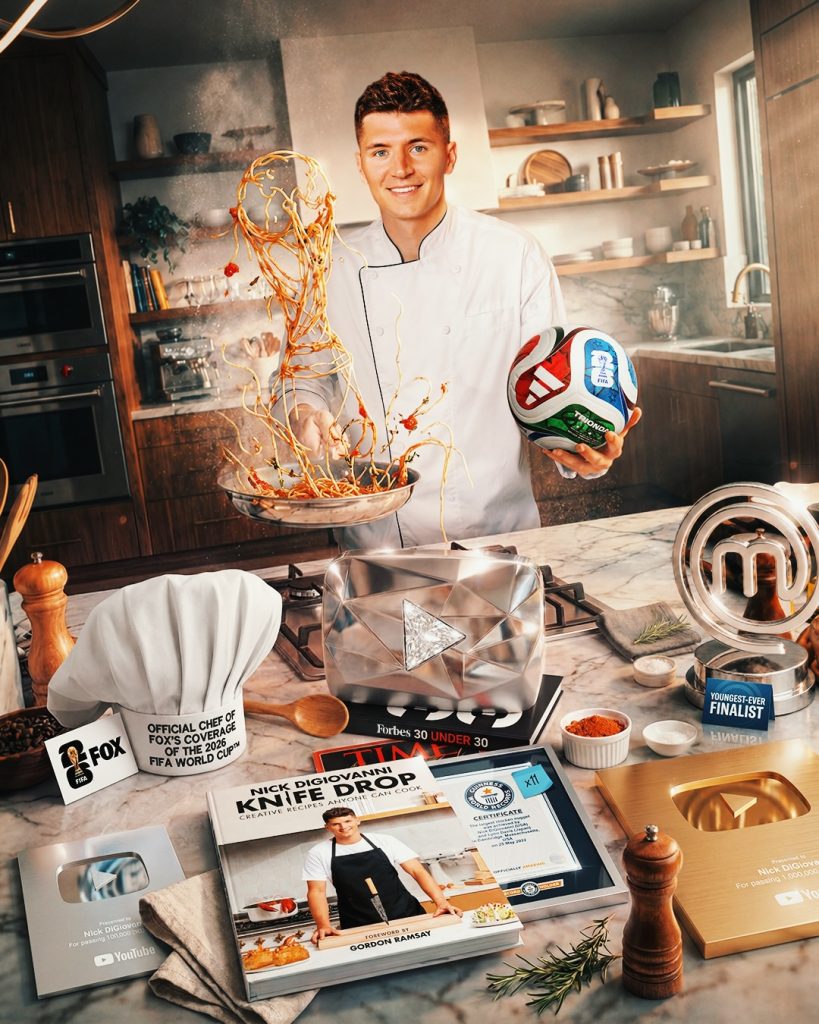
Fox had the World Cup. The whole thing, from main broadcaster to wall-to-wall coverage, meant Fox also had airtime to fill and a producer somewhere with an idea.
The idea became a cooking show. A chef, live, fusing the cuisines of whichever two nations were playing that day. Football unites. Food unites. Somewhere in a meeting room, this made perfect sense.
For Egypt vs. Iran, it worked. Hawawshi, reworked with Iranian flavor folded in, actually thoughtful, actually fused.
For Egypt vs. Argentina, they made koshari. Not koshari-with-beef. Not koshari-with-chimichurri. Koshari. Rice, pasta, lentils, chickpeas, tomato sauce, and not one single Argentine molecule, not even a decorative one, not even for the photo. The fixture said Egypt vs. Argentina. The bowl, quietly, magnificently, said no, it didn’t.
2. Alabama Is Good, Actually
“We’re from Alabama. We love Shikabala.”
That sentence has no business existing. It sounds like two separate conversations, overheard in two separate airports, stitched together by accident. Somewhere between college football Saturdays and church parking lots, these guys found the Egyptian league and just… stayed.
Four years in. Full kits. Flags. A bit of Arabic, said slowly, the way people say things they practiced in the car.
And they had chosen Shikabala.
Not Salah, who seems to have been specifically engineered by the Premier League to make Egyptian football accessible to foreigners. Salah is easy. He scores goals, smiles politely and appears in adverts. You can explain Salah to an American during one elevator ride.
This is not football fandom. This is casework.
Maybe Alabama prepared them for this without realizing — a place where high-school football recruiting already demands you memorize a teenager’s forty-yard dash time. Next to that, Egyptian club politics probably felt like a rest day.
Still, the whole national team was right there. They chose Shikabala. Someone owes them an explanation, or maybe they owe everyone else one.
3. Argentina’s World Cup Gig Economy
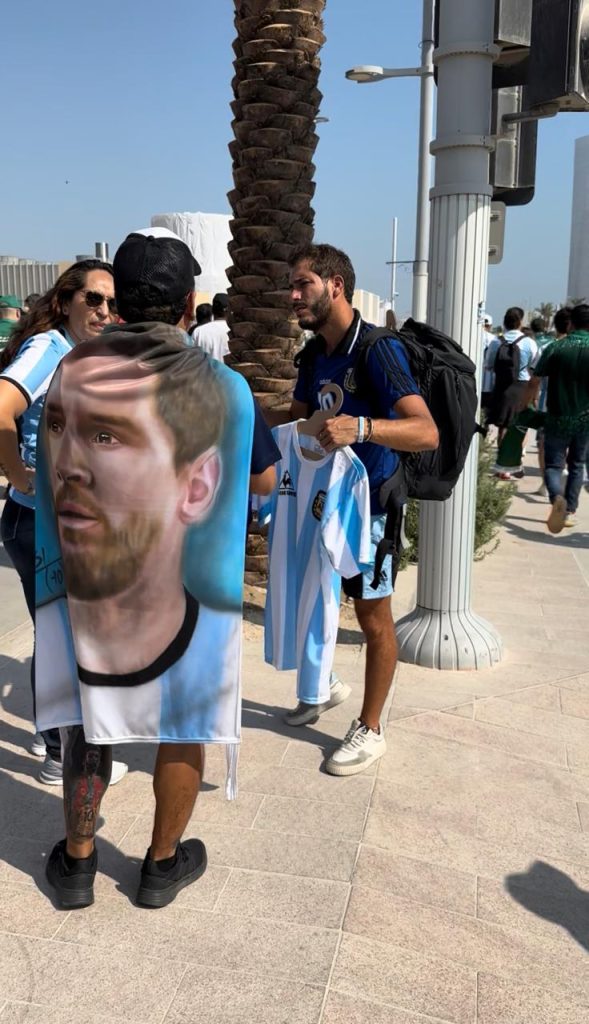
Following Argentina to a World Cup abroad is less a holiday than a financial event nobody quite budgeted for.
I ordered food delivery three times in three different cities during the tournament, and got an Argentinian driver each time. Same story every time, told in the couple of minutes it takes to hand over a bag: flight booked, nothing else arranged, the rest figured out on landing. Ask around the away end and it’s not the exception. It’s the plan.
Some financed it with loans, real ones, interest attached — the kind of debt that gets a phone call from your dad.
Most just got a job within days of arriving. Waiting tables, driving, delivering — a lot of them delivering, going by how many Argentina shirts showed up at my door this month. Shifts got built around the fixture list, whatever hours the tournament left free.
A shift covers food for a few days. A week of shifts covers a ticket, ticket bought off a man whose profile picture is a sports car and whose payment method nobody asks too many questions about.
Every win landed twice: the joy first, then, almost immediately, the arithmetic. Won again. Brilliant. Now find another week’s rent, in another city, before the next match.
The football was priceless. Everything around it came with a receipt.
4. Egypt Chose the Streets

Egypt turns up at a tournament and gets boxed before it’s even played a match. The Pharaohs. Always the Pharaohs. I was in the same hotels the squad stayed in, and every single one had gone with gold pharaoh decorations in the lobby, on the walls, on the welcome banner — the same five-thousand-year-old branding wheeled out regardless of who’s actually walking through the door in 2026.
This time the squad exported something else entirely. Shaabi music. The actual music of this generation, our current pop culture— dancing in the street after every single game, every player doing it the real way, the way Egyptians actually celebrate, not the version somebody’s marketing department signs off on.
Around them, every time, the same circle: fans who’d camped outside the hotel for days, finally let in close, patience rewarded like a very specific, very sweaty lottery.
And there’s Salah. Not brand-Salah, not sponsorship-deal Salah, not the man who has to think about flashing his Richard Mille watch before he waves at a camera. Just Salah, holding the speaker, dancing exactly like any other Egyptian at any other wedding — same shoulders, same footwork, same total lack of self-consciousness. A version of him nobody had ever been allowed to see. The gold lobby didn’t get a mention.
5. MetLife and the Art of Tailgating
The stadium never gets closer. You walk toward it for forty-five minutes. It stays exactly as far away the entire time.
Parking: $200. Train: $90. Walking: free, the one mercy in the whole operation.
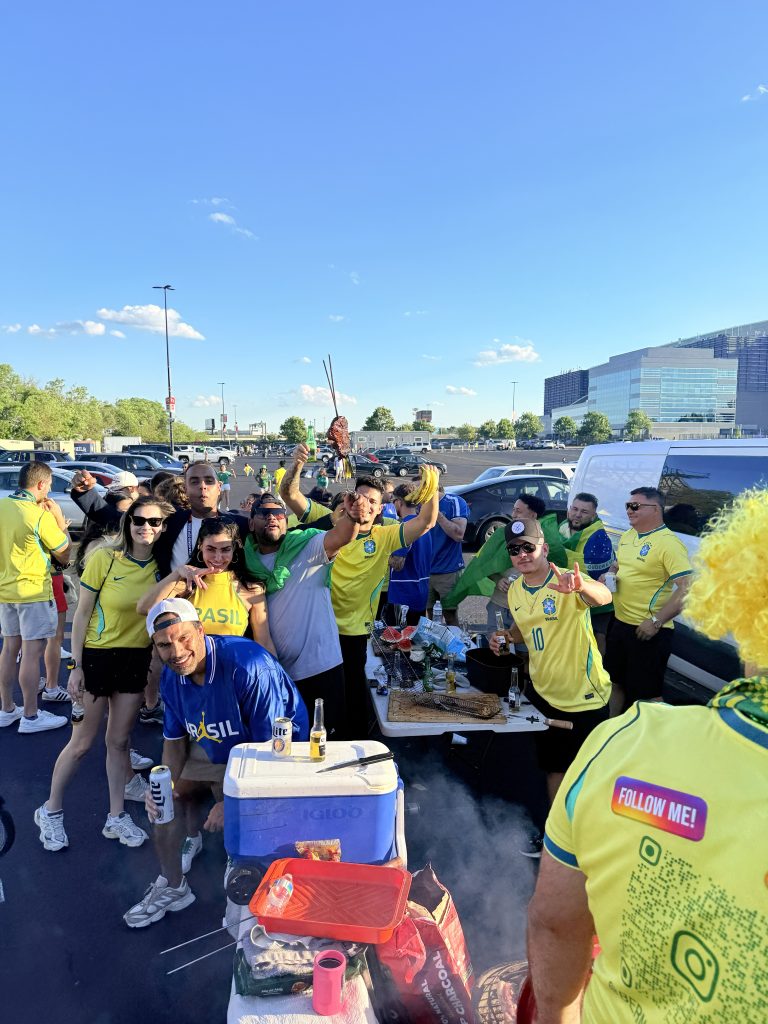
But the car parks are tailgating country, and tailgating is correct. Coolers. Chairs. Grills. A man in an apron, self-appointed, Minister of Fire, unelected, unopposed.
Brazil and Mexico fans clocked it instantly. Eat first. Drink first. Make three friends. Walk in already fed, already happy, already winning at the day.
Smart, because the hot dogs inside cost like they’d financed themselves through law school.
Europeans march to the ground, singing. Americans tailgate, correctly. Egyptians arrive four hours early and sit in silence, guarding an empty pitch from a threat nobody has named. Nobody knows why. Nobody asks. We just guard.
6. The Catwalk
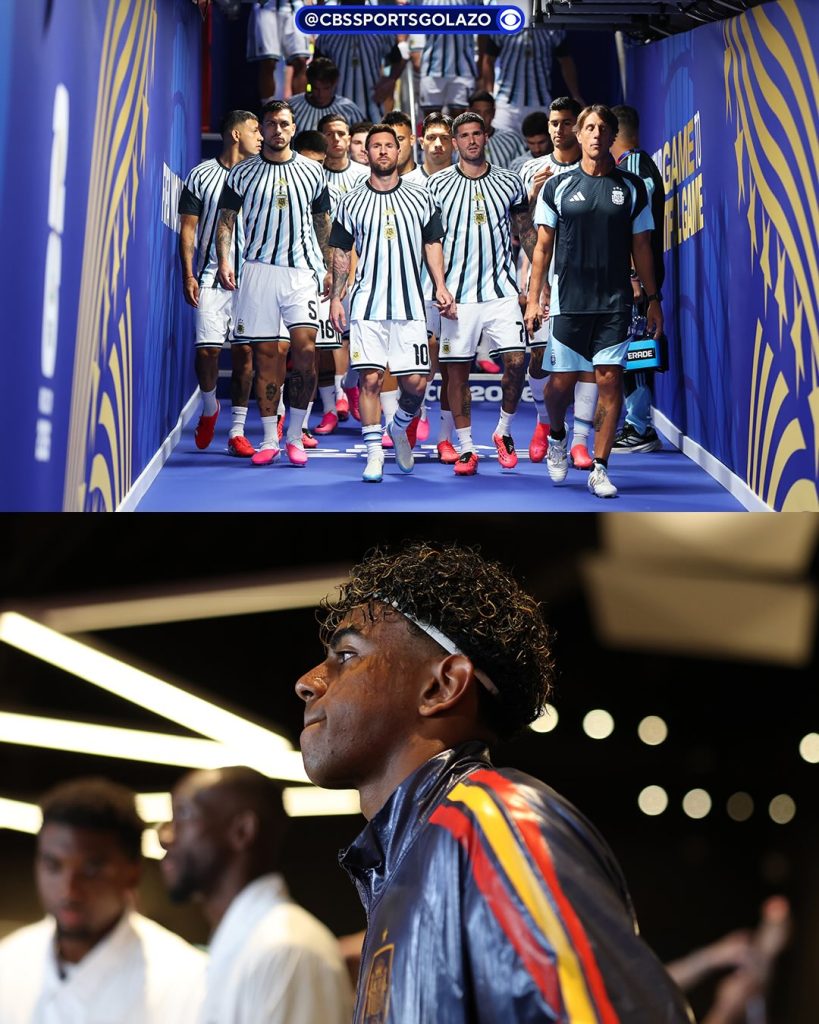
Inside the media accreditation zone was an area actually named “the catwalk” — imported from America, where players walk in dressed like they’re headed to war and also the Met Gala. Imported from America’s NBA and NFL, obviously, because only America looks at a tunnel — a corridor, a hallway, a glorified hyphen between the bus and the pitch — and sees a runway. America invented the tunnel fit the way it invented the drive-thru: with zero shame.
FIFA said no. Correctly. Footballers dress two ways off the pitch: club tracksuit, or an oversized tee and bucket hat, the standard uniform of a man who has clearly just left a Dubai nightclub at 4 a.m. and has strong opinions about the bouncer — nobody needed Zizo and Emam Ashour discovering personal style live, unsupervised, with a bro stylist on retainer and absolutely nothing to lose.
7. The Las Vegas Contract
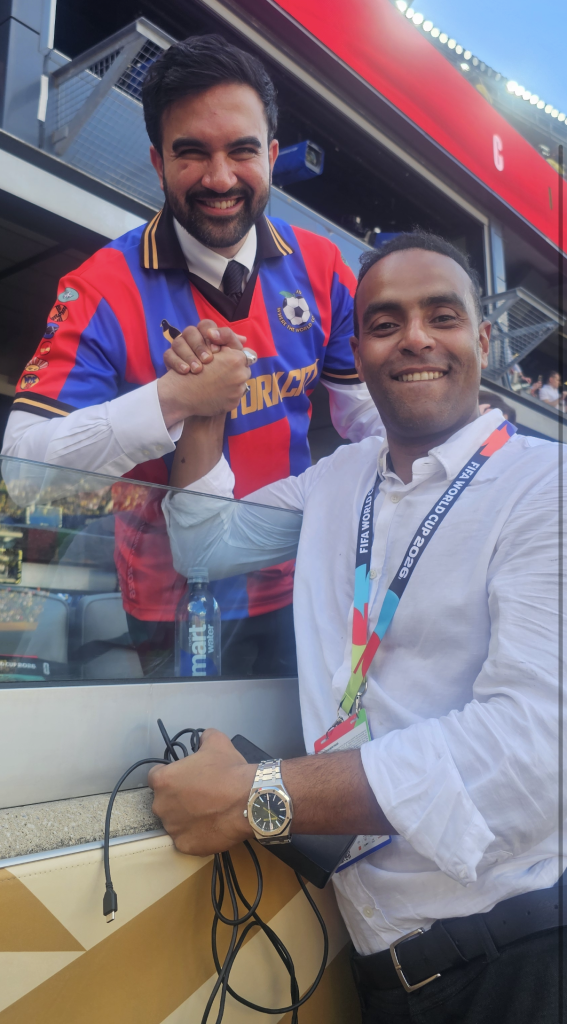
The US federal government cannot force a city to host anything. Not a summit, not a wedding, not a World Cup. Cities decide for themselves, independently; no override available.
So FIFA asked nicely. Then FIFA sent the paperwork: security demands, infrastructure guarantees, financial guarantees, private-jet lanes for officials with the logistics of minor royalty. Harsh. Deliberately harsh. Harsh like a landlord who’s read one seminar’s worth of law.
Vegas — built on hotels, one fake volcano, indoor canals, and the ancient art of convincing adults that losing money is a fun weekend — read it and said no. Politely. Firmly. A city that sells fantasy for a living took one look at FIFA’s fantasy and declined.
Chicago said no. Colorado said no.
Kansas City read the exact same document and said yes immediately, no notes, sign here, delighted.
8. The Chinese Billboard That Refused to Explain Itself
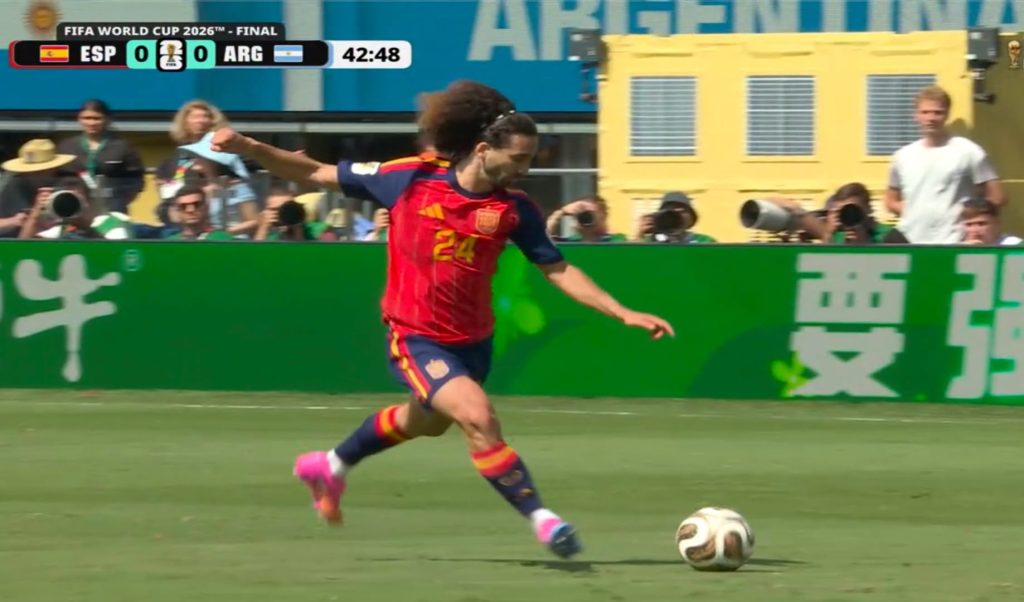
All tournament, one Chinese company advertised pitchside in Mandarin only. No English, no logo you could Google, no hint whether they sold electric cars, insurance, or the concrete holding up the stadium. Reportedly somewhere between $70 and $90 million for the privilege — which for that money should come with a translator, a mascot, and possibly a seat on the board, but instead came with four characters and total silence.
Then Cucurella strikes it in the final. The ball’s arcing, it’s almost in, the whole stadium’s rising — and right behind him, filling the frame, is this board. Millions of dollars, about to become the backdrop to the goal of the tournament, and still nobody in the stands could tell you what they’re selling.
It’s the corporate version of a man showing up to a blind date, not saying a word for two hours, and somehow getting a second date anyway.
That’s the whole business, really. Sponsorship is a lottery ticket with a five-year contract attached. Every brand on every hoarding around that pitch is quietly praying for the same thing: stand behind the right player at the right second and get frozen into football history for free. Most of them get a throw-in and a center-back’s backside. This one almost got Cucurella scoring a World Cup final goal.
Ask Camel cigarettes. Maradona scored against England in 1986, and there they are, glowing behind him — tobacco banned from the sport for decades, and yet that pack is still working harder than most active sponsors today.
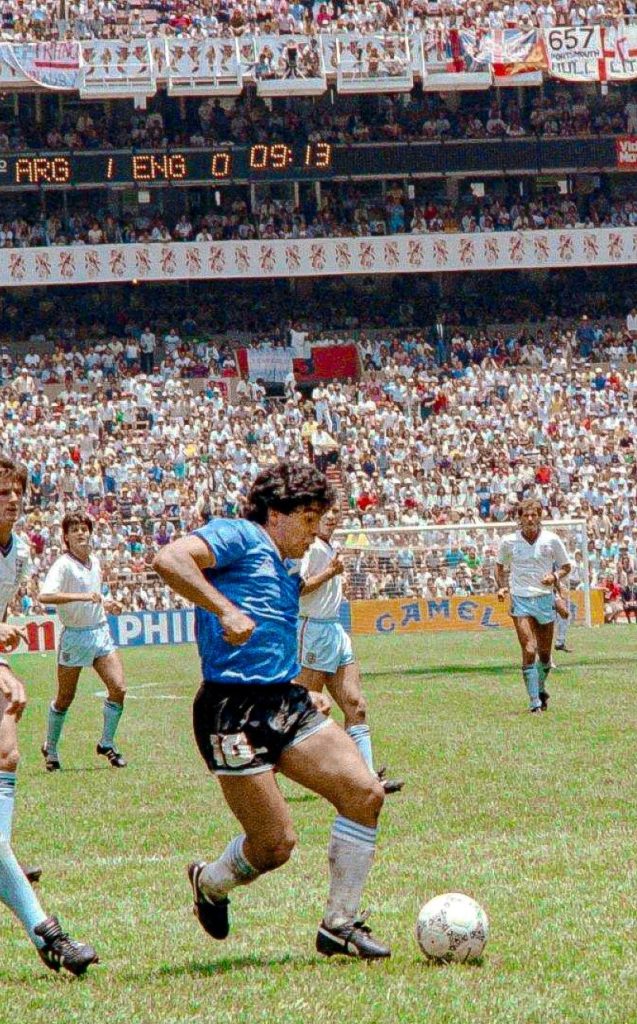
For me, this is the most mysterious sponsorship strategy I’ve ever seen: spend enough to buy the background of history, and not spend one more dollar telling anyone what you actually do.
9. This Labubu Missed Its Own Trend Cycle and Nobody Told It
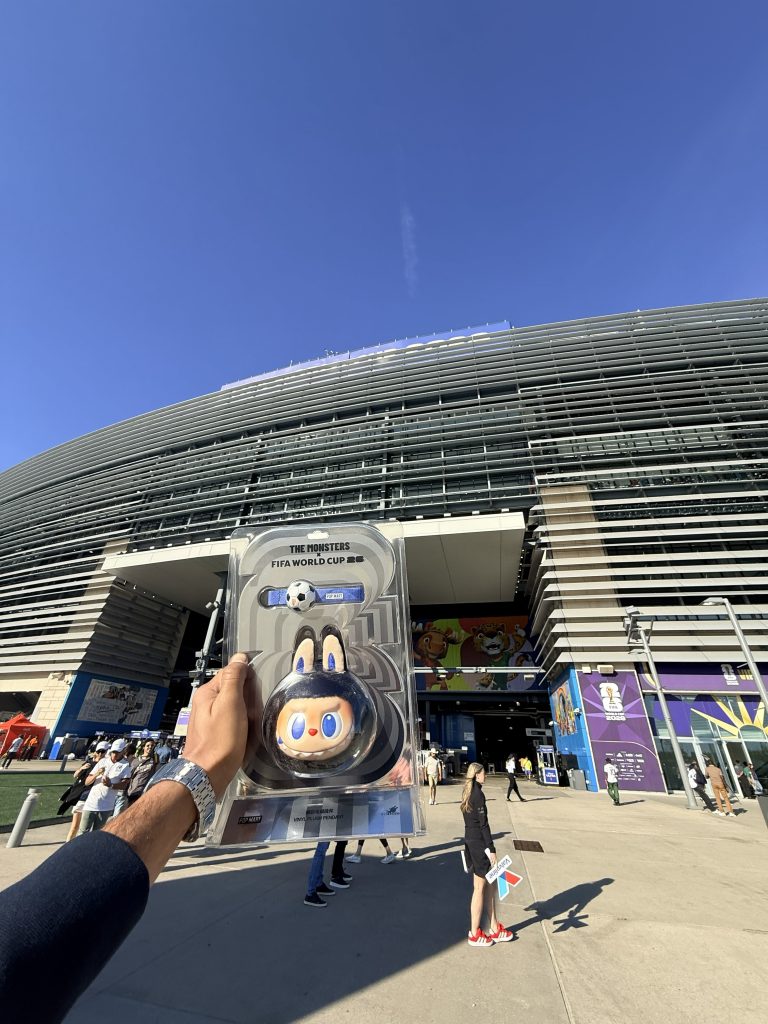
If you bought the single most expensive ticket to the World Cup final — the tier with no price on the website, only a phone number — you got a gift bag. Inside the gift bag: a special-edition Labubu commissioned for the occasion, presumably approved by several committees who were, at the time, extremely confident it was a coup.
Greenlit when Labubu was everywhere. Handbags, desks, disposable income on full public display.
By kickoff, the internet had found it, wanted it, queued for it, got bored of it, and moved on to something with slightly more unsettling eyes.
A World Cup takes years to plan: committees, samples, revised samples, a meeting specifically about the revised samples. A trend lives and dies in a fortnight, sometimes less, sometimes over a long weekend if the algorithm’s feeling ruthless.
Not merchandise.
They planned it at the top of the hype. They handed it over at the bottom. Somewhere in between, the lesson sat there for anyone paying attention: never plan for a trend, because a trend, by definition, won’t wait for you to finish planning.
We Said This: Don’t Miss… It May Be Four Years Away, but Here’s What We Know About the 2030 FIFA World Cup