


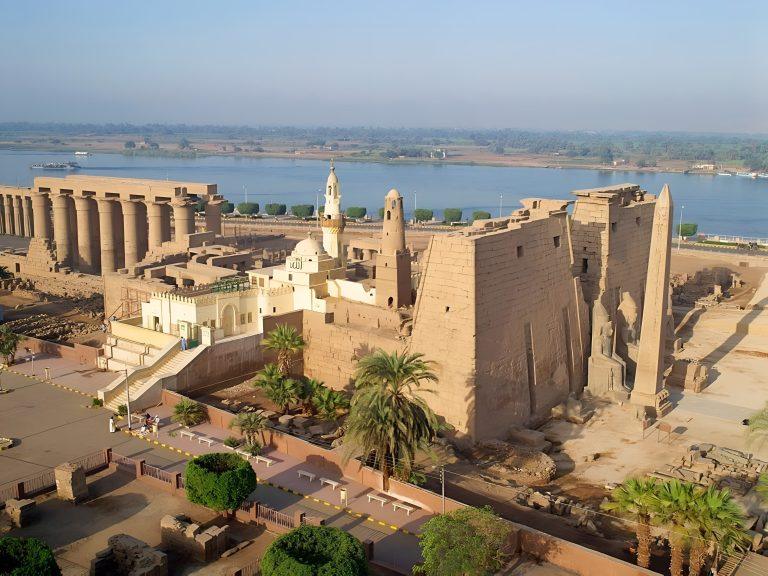
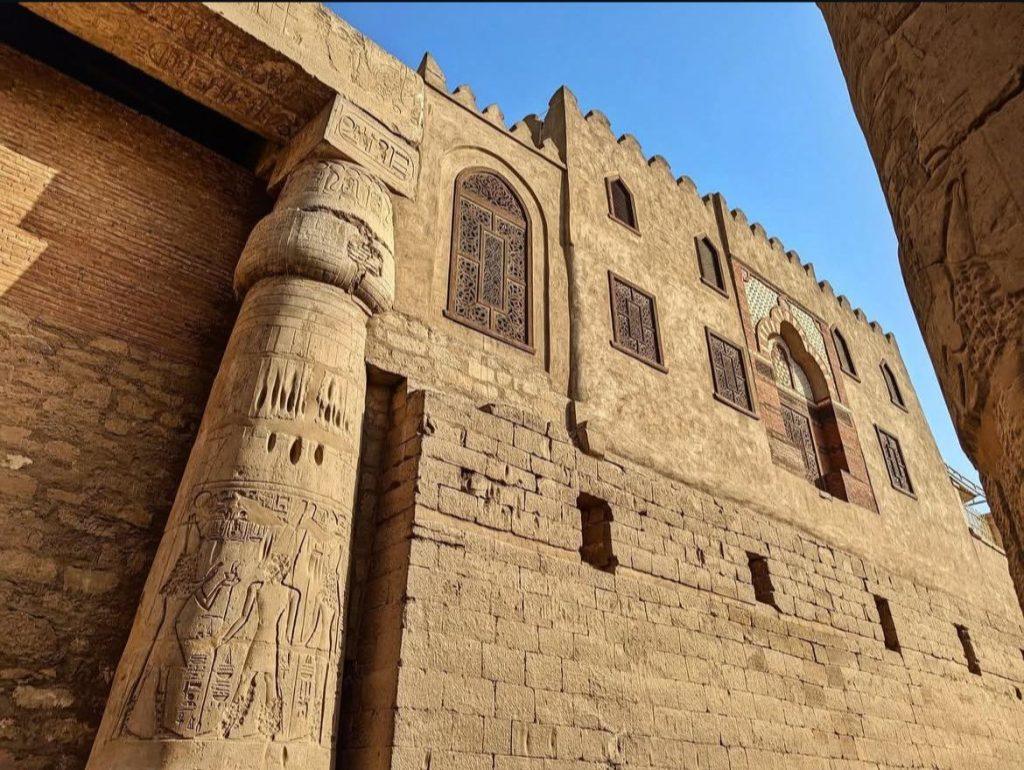
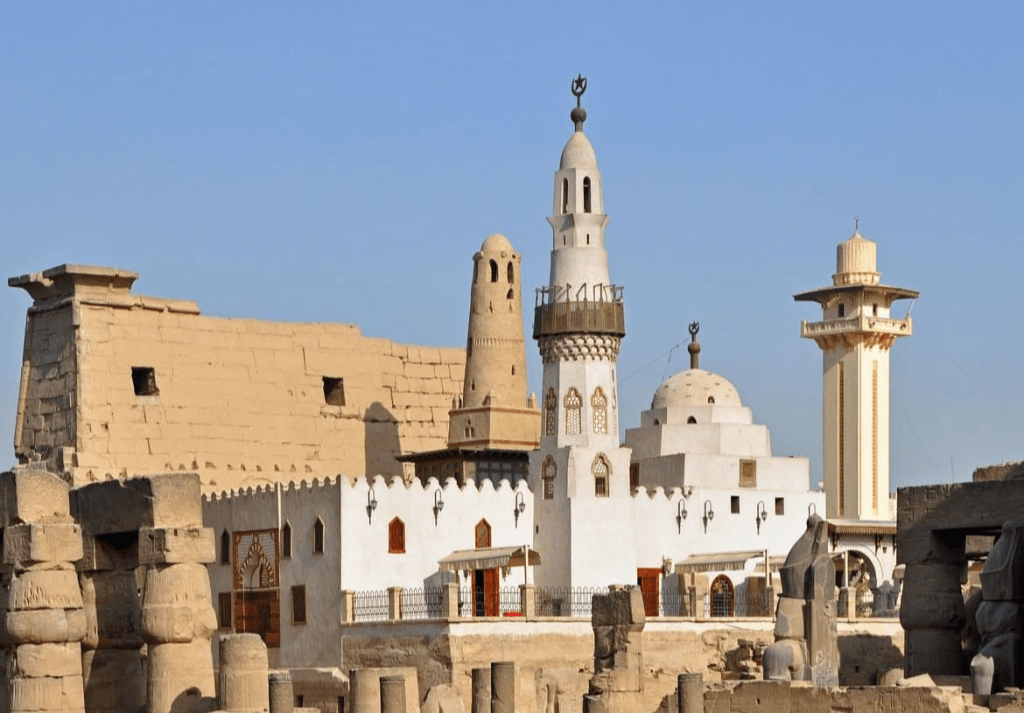
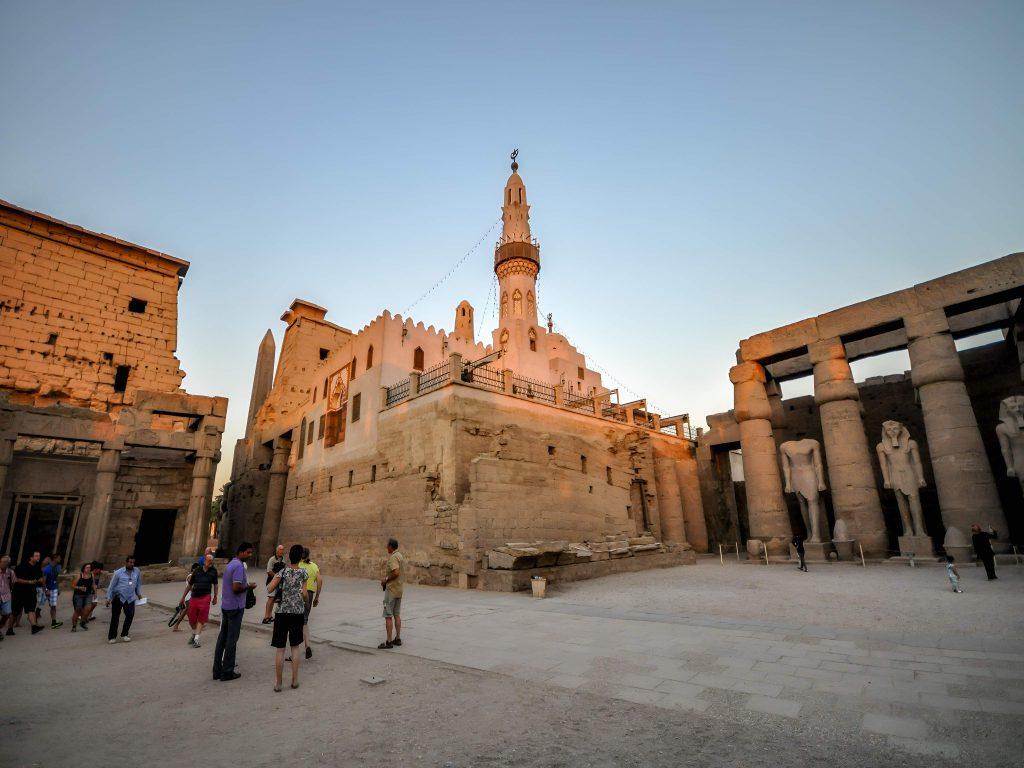
Perched nearly 9 meters above ground on the northeastern corner of Luxor Temple, the Sidi Abu Hajjaj Uqsuri Mosque is a striking visual and historical marvel. This “Hanging Mosque” is more than a place of worship—it is a living testament to the layers of Egypt’s history, standing atop Pharaonic ruins and the remains of a Coptic church.
The Age of Pharaohs
Luxor Temple, one of Egypt’s most iconic monuments, was originally built during the reign of Ramses II. Its grand courts, towering statues, and intricately carved columns celebrated the glory of ancient Egypt, serving as a sacred space for worshiping the gods Amun, Mut, and Khonsu.
Roman Fortress
In the 4th century CE, the temple underwent a dramatic transformation. The Romans converted it into a military base, fortifying its walls and using its courts for strategic purposes. This Roman presence continued well into the 6th century, leaving behind traces of a period when divine halls were repurposed for earthly power.
Coptic Churches
After the Romans, Christian communities built several churches within the temple’s walls. One of these churches occupied the same site where the mosque would later be constructed. Over time, natural accumulation of debris and the growth of Luxor’s settlement partially buried the temple, hiding layers of Pharaonic and Christian history beneath the streets of the town.
Arrival of Abu Al-Hajjaj Al-Luxor
In the 13th century, Sheikh Abu Al-Hajjaj Al-Luxor, a Sufi scholar from Baghdad, migrated to Luxor. Living on the temple grounds, he taught and inspired a devoted following. When he died in 1244 at over 90 years old, his tomb was placed on the roof of the buried Coptic church, which by this point was buried below ground level. And that marked the sacred spot for future generations.
First Mosque Construction
Around a decade after his death, Abu Al-Hajjaj’s son erected the first mosque at the site, honoring his father’s legacy. Interestingly, the older of the mosque’s two remaining minarets may have already existed, dating back to the Fatimid period, centuries before Abu Al-Hajjaj’s time. This suggests that a mosque may have already existed on the site before Abu Al-Hajjaj’s son built the new structure.
Rediscovery After Fire
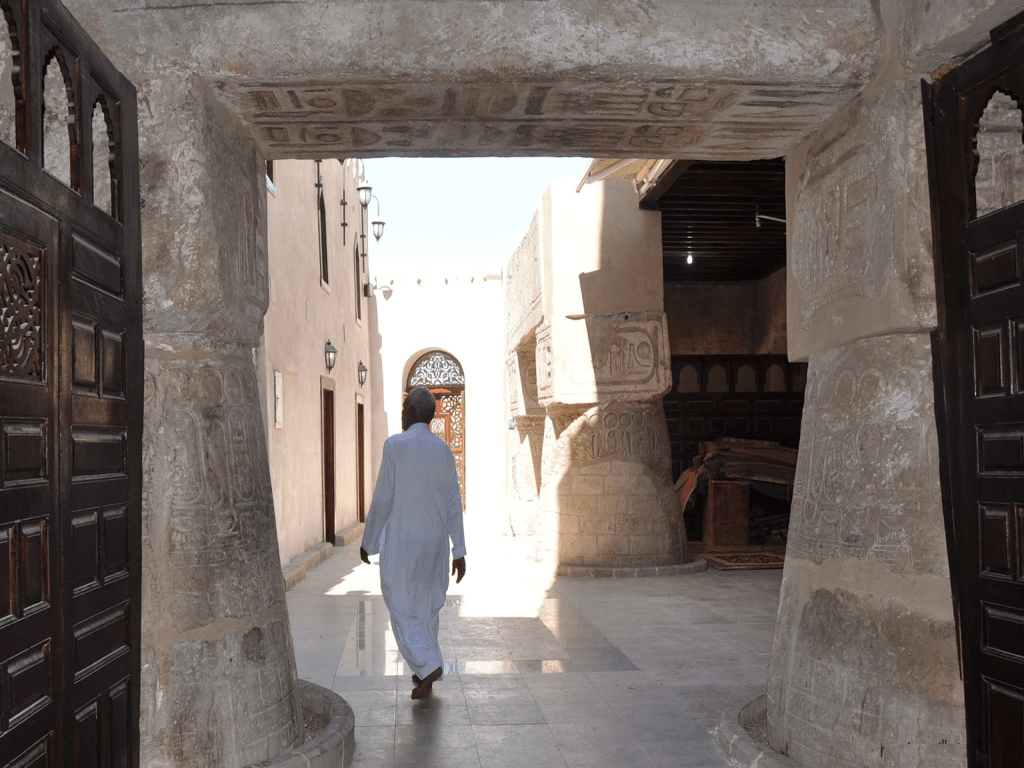
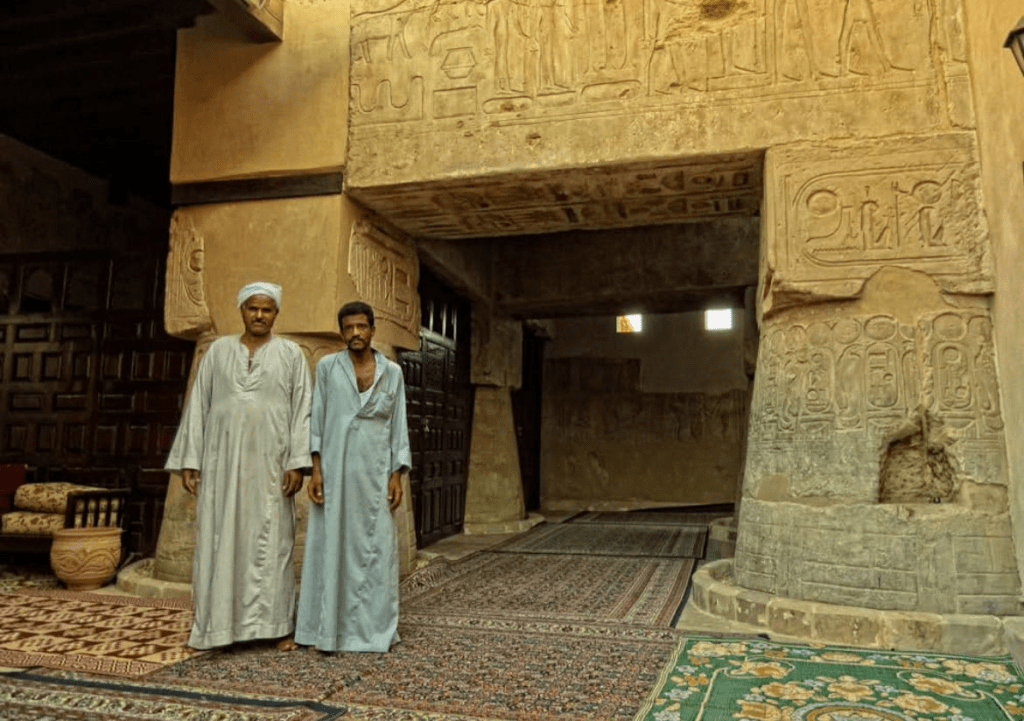
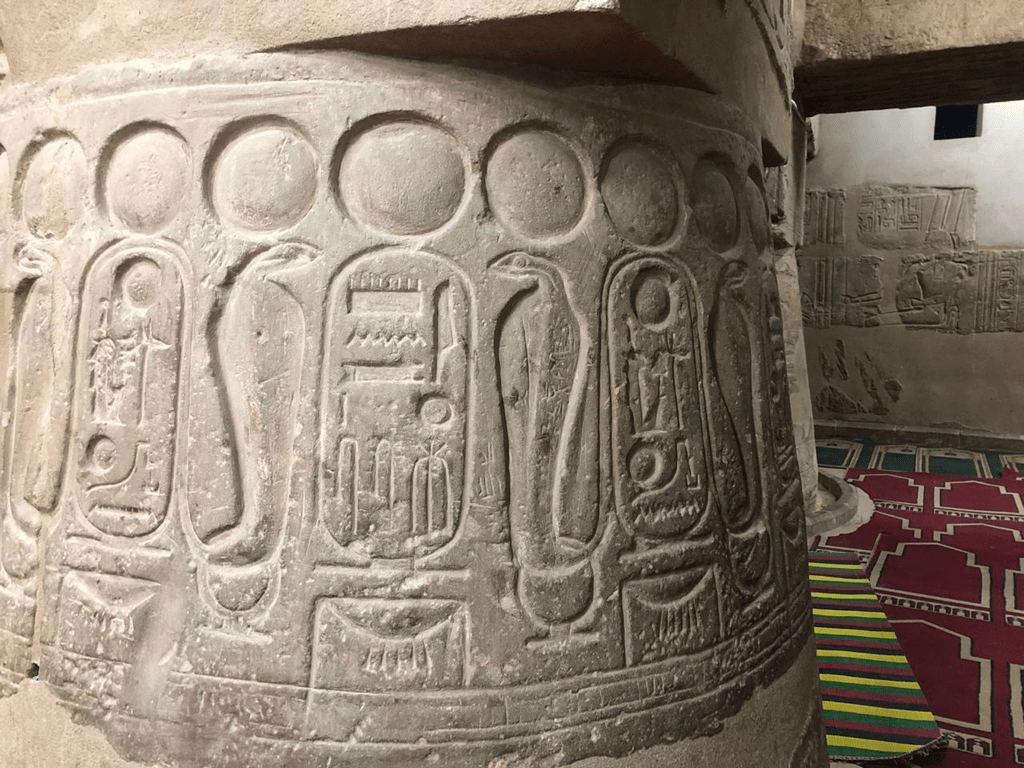
The mosque we see today took on its current form in the 1820s, with a second minaret added in 1851-52. During later restorations, a fire accidentally revealed the hidden Pharaonic columns and inscriptions buried within the mosque walls and floors. Archaeologists documented these ancient features along with medieval inscriptions, unveiling a surprising historical treasure that had been concealed for centuries.
A Living Spiritual Center
Today, the mosque remains active as a place of worship and Sufi center, especially during the annual Mawlid of Abu Al-Hajjaj, held 15 days before Ramadan. Pilgrims from across Egypt celebrate with a colorful boat procession, echoing the ancient festival of Opet that once carried sacred images between Karnak and Luxor Temples.
A Symbol of Coexistence
Perched more than 10 meters above the temple grounds, the Sidi Abu Hajjaj Uqsuri Mosque embodies centuries of Egyptian history. Built atop Pharaonic ruins and a Coptic church, it reflects Pharaonic, Christian, and Islamic heritage in one place. Visitors experience a rare connection to three civilizations, where the whispers of the past meet the devotion of the present.
WE ALSO SAID: Don’t Miss…Abu Mandour Mosque: Where History Meets Mystery on the Nile