


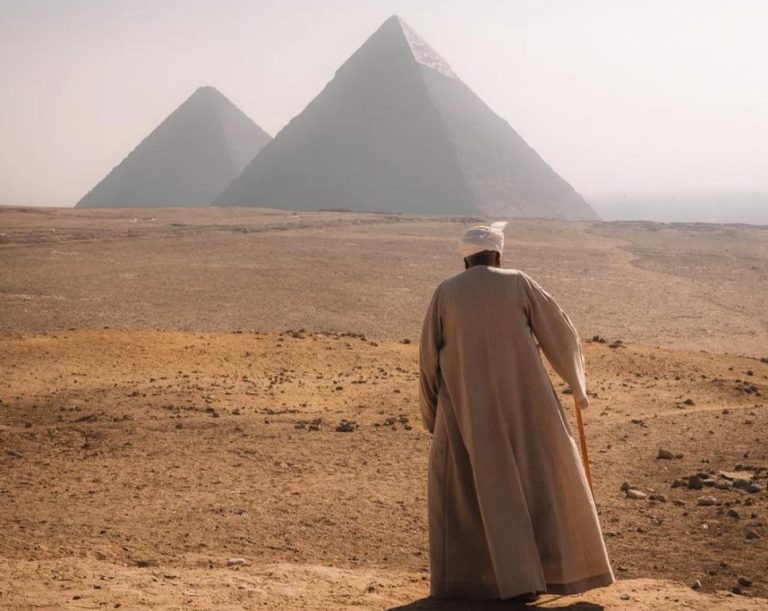
Cairo has just been named Africa’s most attractive city for 2025, climbing seven places from eighth in 2024, according to a report by the French magazine Jeune Afrique, as cited by the Cabinet Media Centre.
For some cities, that title comes from order, silence, or polished perfection. For Cairo, it comes from something else entirely.
If Cairo could be described in one word, it would be chaos. Not the kind that repels, but the kind that pulls you in. A chaos made of sound, smell, texture, taste, and sight—layered on top of each other, constantly moving, never neutral. Cairo doesn’t just exist around you; it engages you. It stimulates every sense at once, unapologetically. That is where its attraction lies.
Sound: A City That Never Whispers
Cairo is loud, but never empty. The soundscape is dense and familiar: car horns arguing without anger, vendors calling out what they sell before you even see them, footsteps echoing through narrow alleys. The call to prayer doesn’t arrive from one direction, it overlaps, different voices and timings creating a chorus that belongs only to this city.
There’s music leaking from microbuses, radios playing Umm Kulthum in old cafés, laughter from balconies, children shouting in side streets as they play football. Even at night, Cairo doesn’t fall silent, it softens. The city hums. And for those who belong to it, that sound is comfort, not noise.
Smell: A City in Layers
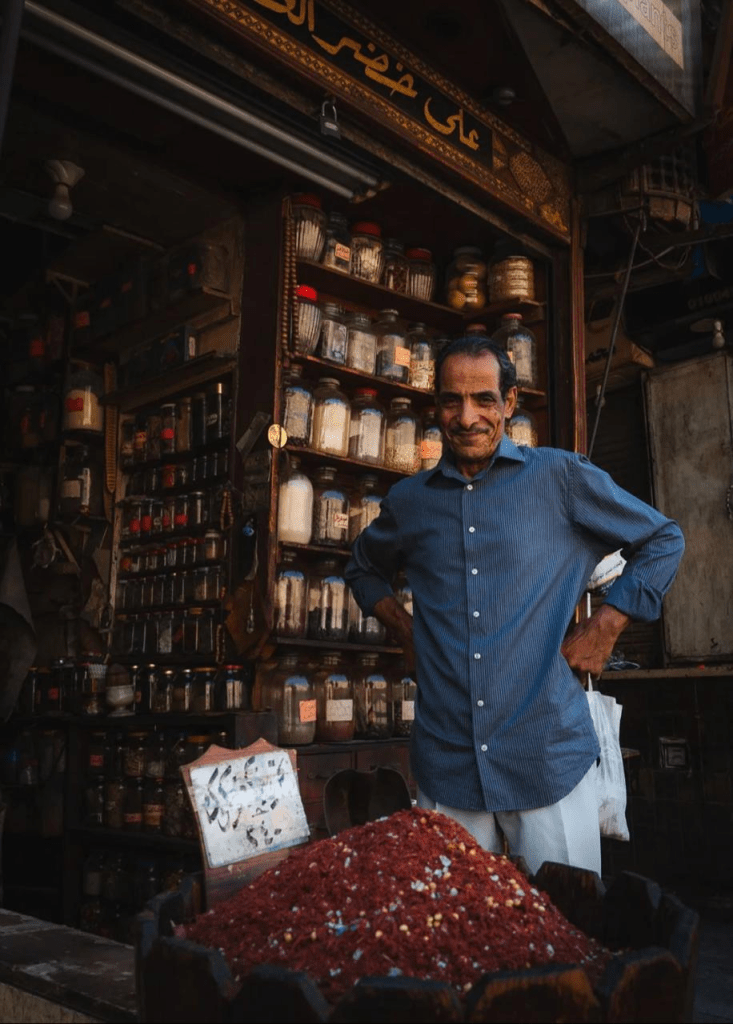
Cairo’s smells change every few steps. Hot bread in the morning. Strong coffee and sweet tea. Garlic and onions frying before you see the food cart. Spices spilling out of open sacks in markets—cumin, coriander, cinnamon. Then suddenly, exhaust fumes, dust warmed by the sun, charcoal smoke from a grill.
There’s also the smell of laundry drying on balconies, cheap cologne lingering in stairwells, incense burning in small shops. Sometimes it’s beautiful, sometimes harsh, often both at once. Cairo never offers one clean scent, it offers layers. And with time, you stop noticing the chaos and start recognizing each one like an old friend.
Sight: Full, Crowded, Alive
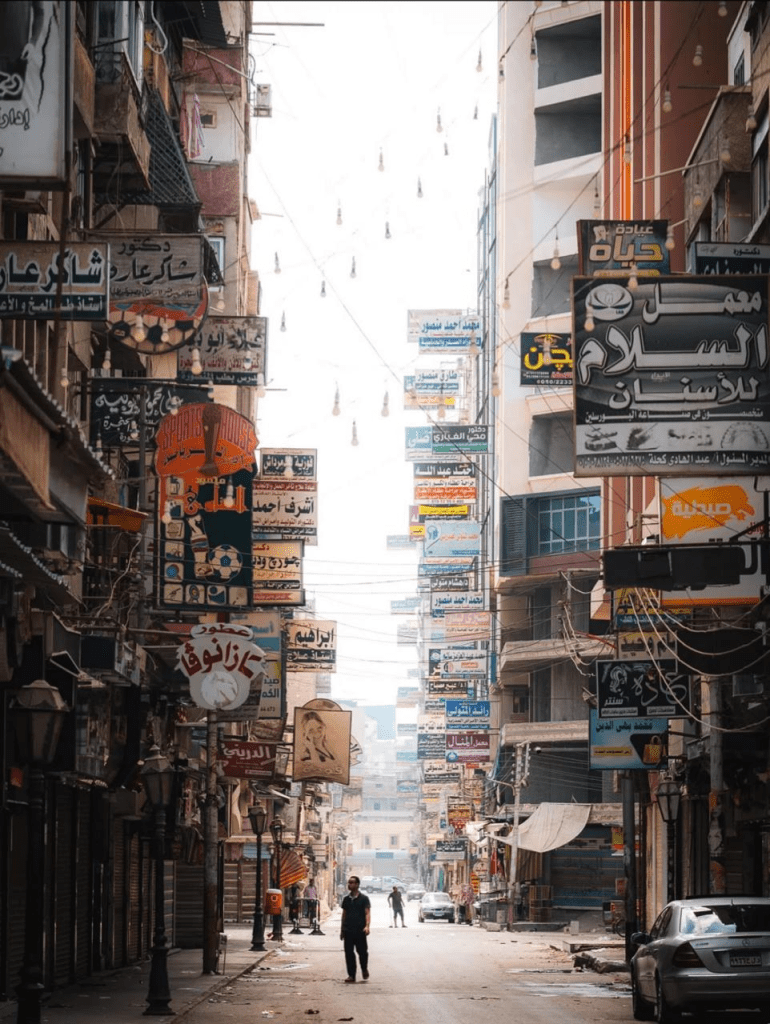
Cairo does not believe in minimalism. The streets are full of people, signs, colors, movement. Old stone mosques stand beside modern buildings. Neon lights flicker above traditional lanterns. Fruit is stacked high, spices glow, fabrics hang in every color imaginable.
The Nile cuts through it all, calm in contrast, reflecting the city back at itself. At sunset, Cairo softens visually—the dust in the air catching the light, turning everything gold. It’s messy, crowded, overwhelming. And yet, it’s alive. Cairo’s beauty isn’t found in symmetry, but in accumulation.
Taste: Bold and Spicy
Cairo’s food mirrors its personality: filling, flavorful, and direct. Koshari eaten standing up. Ful from a cart you’ve trusted for years. Falafel hot enough to burn your fingers. Pickles sharp and unapologetic. Sugarcane juice pressed in front of you, sweet and cold.
Meals here aren’t performances—they’re habits, routines, memories. The taste of Cairo is tied to place and time: late-night sandwiches, Ramadan desserts, morning tea. And somehow, that’s what makes it unforgettable.
Touch: A City You Can Feel
Cairo is physical. You feel the heat on your skin, the dust in the air, the worn stone under your hand as you walk past buildings older than memory. You feel the press of crowds, the warmth of tea glasses, the roughness of old walls and the smoothness of brass and wood in shops.
Nothing here is distant or sterile. The city touches you as much as you touch it. Even the chaos is tangible—it lives in your body as much as your mind.
Conclusion: Why Cairo Attracts
Cairo’s attraction doesn’t come from being easy. It comes from being full. Full of life, contradiction, history, noise, warmth, and movement. The chaos is not a flaw, it’s the system. It’s how the city breathes.
To call Cairo Africa’s most attractive city is to say that people are drawn to places that feel alive. And Cairo, in all its sensory overload, is undeniably alive.
WE SAID THIS: Don’t Miss…Alexandria’s Tram: What Keeps It at the Heart of the City