


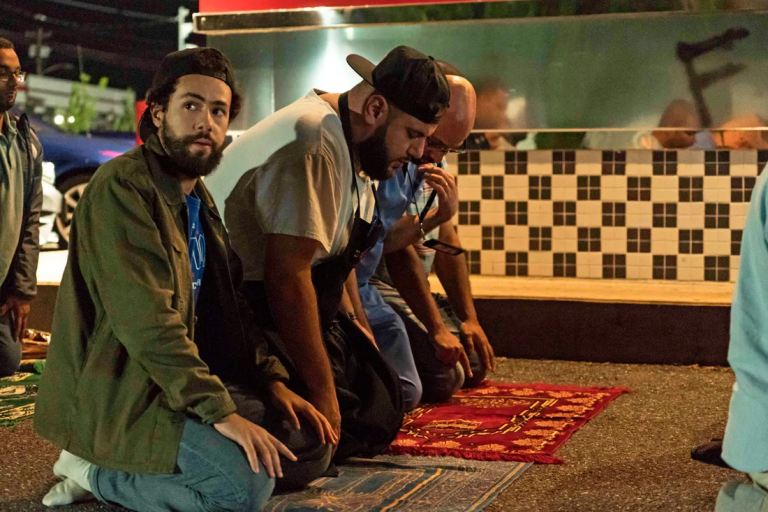
April is Arab American Heritage Month, a moment that naturally invites reflection on stories that don’t always fit neatly into one place or one identity. For many Arab Americans, there’s this quiet in-between space—where the idea of the “American Dream” sits right next to memories of elsewhere, and neither ever fully feels like home. You grow up translating yourself in different directions: what you are here, what you are there, and what gets lost somewhere in the middle.
The films and series below sit inside that tension in different ways. Some lean into comedy, others into family drama or satire, but they all circle the same emotional truth: what it means to build a life while constantly being asked—directly or indirectly—where you really belong.
#1 Happy Family USA (2025)
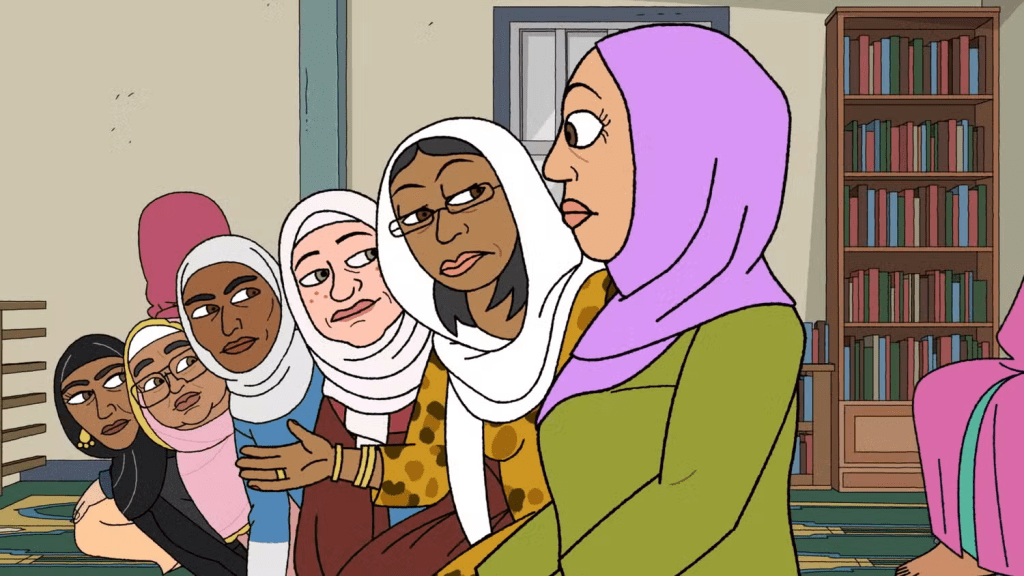
Created by Ramy Youssef and Pam Brady, this animated series follows the Hussein family—an Egyptian American household trying to live an “all-American” suburban life in early 2000s New Jersey right after 9/11.
What makes it sharp is how ordinary moments get twisted by suspicion: neighbors watching too closely, school interactions that feel suddenly tense, and the family constantly overperforming “normalcy” just to avoid attention. The comedy comes from exaggeration, but it’s rooted in a very real shift—when being Arab or Muslim in America suddenly becomes something you have to explain, soften, or hide.
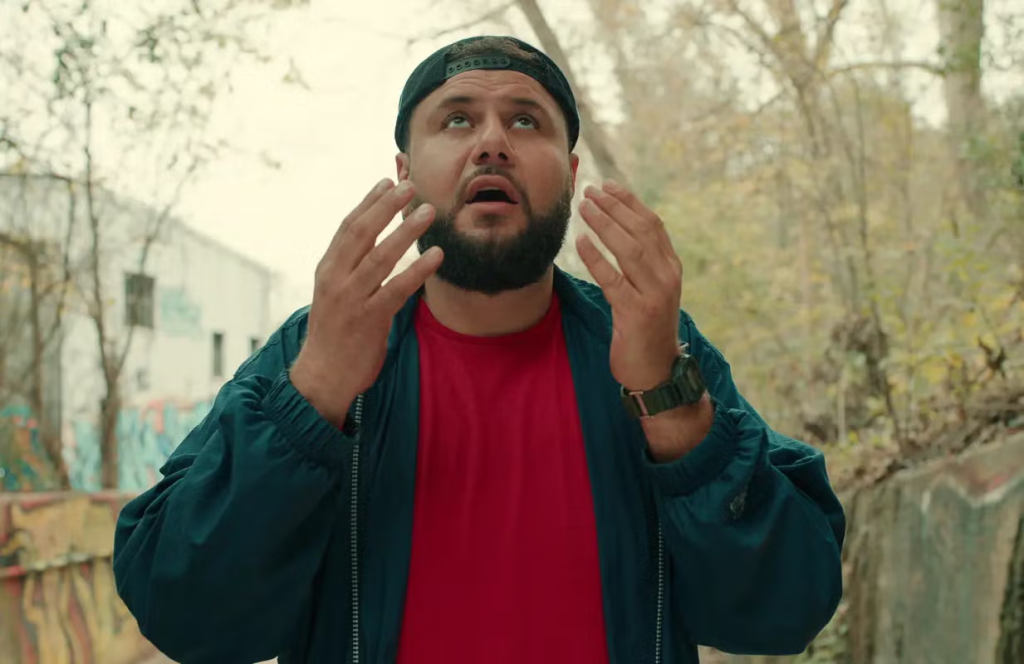
Mo (2022, 2025)
Mo Najjar, played by Mo Amer, is a Palestinian refugee in Texas who’s stuck in long-term asylum limbo while trying to build a life from unstable ground. One moment, he’s working odd jobs to help his family survive, the next, he’s dealing with immigration interviews that feel endless and opaque.
A key part of the show is how “waiting” becomes its own condition of life—waiting for papers, waiting for stability, waiting to be seen as permanent. Even simple things like dating or car repairs are shaped by the fact that he’s always one document away from uncertainty.
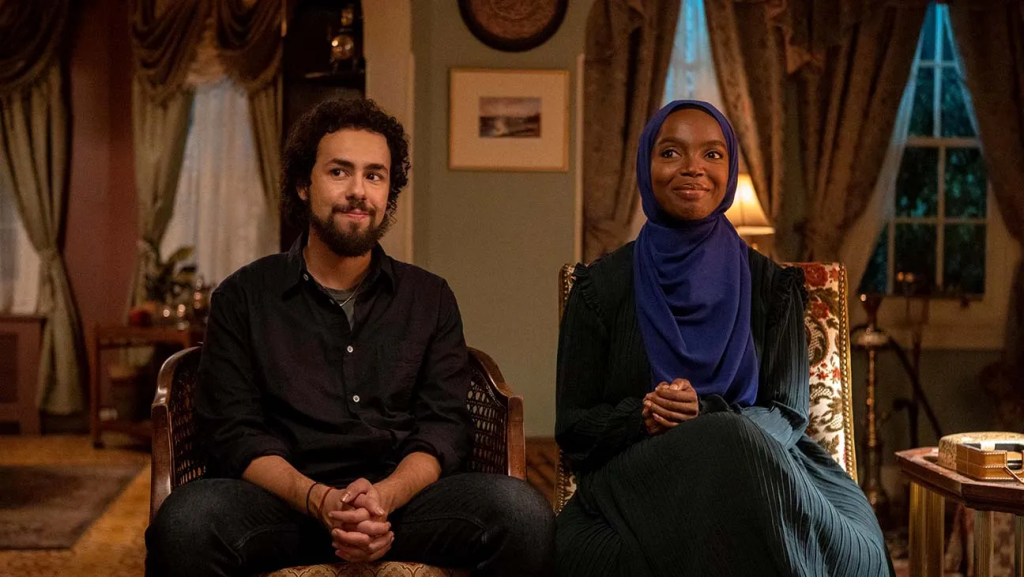
Ramy (2019–Present)
Ramy Hassan is an Egyptian American in New Jersey trying to reconcile his religious upbringing with a very unstructured millennial life. He goes to mosque, tries to pray consistently, and wants to be “good,” but he also drifts into relationships, confusion, and self-indulgence that pull him in the opposite direction.
The show doesn’t frame this as failure—it frames it as constant negotiation between faith, desire, and the pressure to represent both his family and his generation at once.
Amreeka (2009)
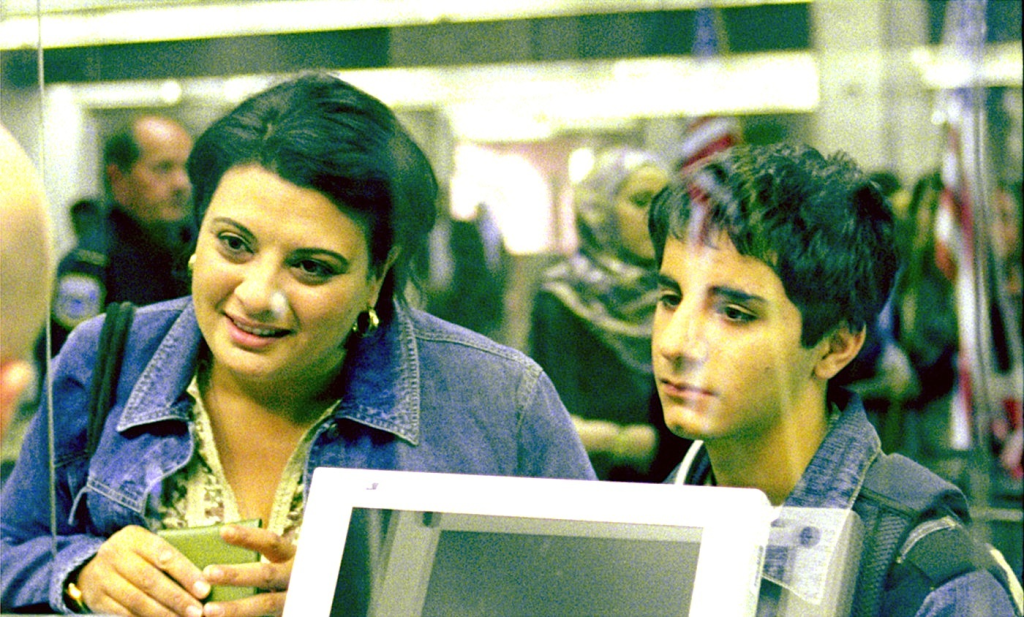
Muna, a Palestinian mother, arrives in the U.S. with her teenage son Fadi after receiving a green card, hoping for stability and opportunity. At the airport, customs agents confiscate the $2,500 she has hidden in a cookie tin, instantly undercutting their financial safety net.
They move in with her sister in suburban Illinois, where life quickly becomes more complicated with 9/11 tension in the air. At school, Fadi is mocked and nicknamed “Osama”. The film builds its emotional weight through small but constant degradations and the way they are met with persistence, humor, and optimism nonetheless.
Driving to Zigzigland (2006)
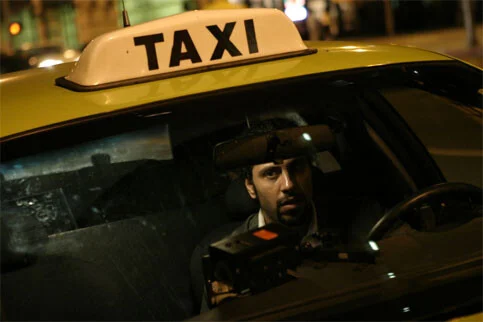
Bashar, a Palestinian actor in Los Angeles, arrives expecting opportunity but quickly finds himself typecast in auditions—most notably being asked to play terrorists. In one audition, he is literally told to perform a hostage scene, and he responds with absurdity, shouting about falafel and hunger in Arabic, exposing how stereotype replaces real character.
Refusing these roles on principle, he ends up driving a taxi at night while chasing acting work during the day. Each passenger asks him the same question—“Where are you from?”—and instead of answering Palestine, he invents “Zigzigland,” which is a place with “no tanks, no refugee camps, no Bush.”
Through conversations with passengers and his daily grind, the film gently explores identity, prejudice, and having to explain pain on demand.
Conclusion
Taken together, these stories show just how varied the Arab American experience is on screen—funny, painful, surreal, and deeply human all at once. Whether through satire, family drama, or quiet realism, they all circle the same core question in different ways: how do you stay fully yourself while constantly being asked to explain yourself?
WE SAID THIS: Don’t Miss…‘Ramy’ Just Became the First Muslim American Sitcom to Receive an Emmy Nomination