


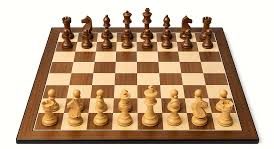
Picking out a new chess set is a milestone for any player who has moved beyond the casual “click-and-play” of mobile apps. It’s a tactile rite of passage. Whether you’re a club regular grinding out tactics or a collector with an eye for heritage, the “feel” of your board and pieces fundamentally changes how you engage with the royal game. In today’s world, where chess has exploded into a global spectator sport, the hunt for a truly professional chess set is about more than just having 32 pieces—it’s about finding a precision instrument for the mind.
What Actually Makes a Set “Tournament Grade”?
To someone just starting out, most sets look roughly the same. But the devil, as usual, is in the details. The gap between a cheap souvenir and a genuine tournament chess set is massive, and it’s found in the math of the proportions.
Take it from the FIDE handbook: picking out gear isn’t just a matter of looking “fancy.” It’s really about what they call “visual comfort.” If you try to cram oversized pieces onto small squares, the whole board starts to feel claustrophobic and messy. On the flip side, if the pieces are too puny, the entire position looks hollow and weirdly disconnected. You want that perfect, intuitive balance where the board feels “full” but still has enough breathing room to let you calculate clearly.
The Logic of Proportions
A professional chess board usually demands squares between 50mm and 60mm. There’s a sweet spot here: the King’s base should take up about 75% to 80% of the square’s width. Why? Because in a time scramble, you need to be able to slide a Rook or jump a Knight without causing a “domino effect” of falling wood.
Weighting: The “Thud” Factor
One of the most immediate signs of quality is the weight. High-end chess pieces are almost always triple-weighted with lead or steel inserts hidden in the base. There is a psychological edge to making a move that lands with a solid, satisfying “thud” on the board. It signals intent. Plus, high-quality billiard cloth or felt on the bottom ensures that even your most aggressive moves won’t scuff a premium finish.
The Staunton Legacy: Why These Shapes Won
Go back before the mid-1800s, and sitting down for a game in a new city was a total nightmare of misidentification. You’d think you were finally capturing a Bishop, only to have your opponent point out that, in this town, that specific shape actually counts as a Rook. It was pure guesswork until the industry finally standardized.
It was absolute chaos until 1849, when the Staunton design effectively hit the “reset” button. As highlighted in the History of Chess, this style aggressively ditched the fragile, “wedding cake” carvings that broke if you breathed on them, replacing them with the rugged, iconic silhouettes we recognize today. The Knight remains the star of the show; modeled after the ancient steeds of the Elgin Marbles, it’s easily the most difficult part of a professional chess set to get right. If you’re looking for a setup that treats this 170-year-old profile with respect, finding the right chess set store is key to getting those dense, sustainable woods that feel substantial in the hand.
Setting Up Your Space: A Reality Check
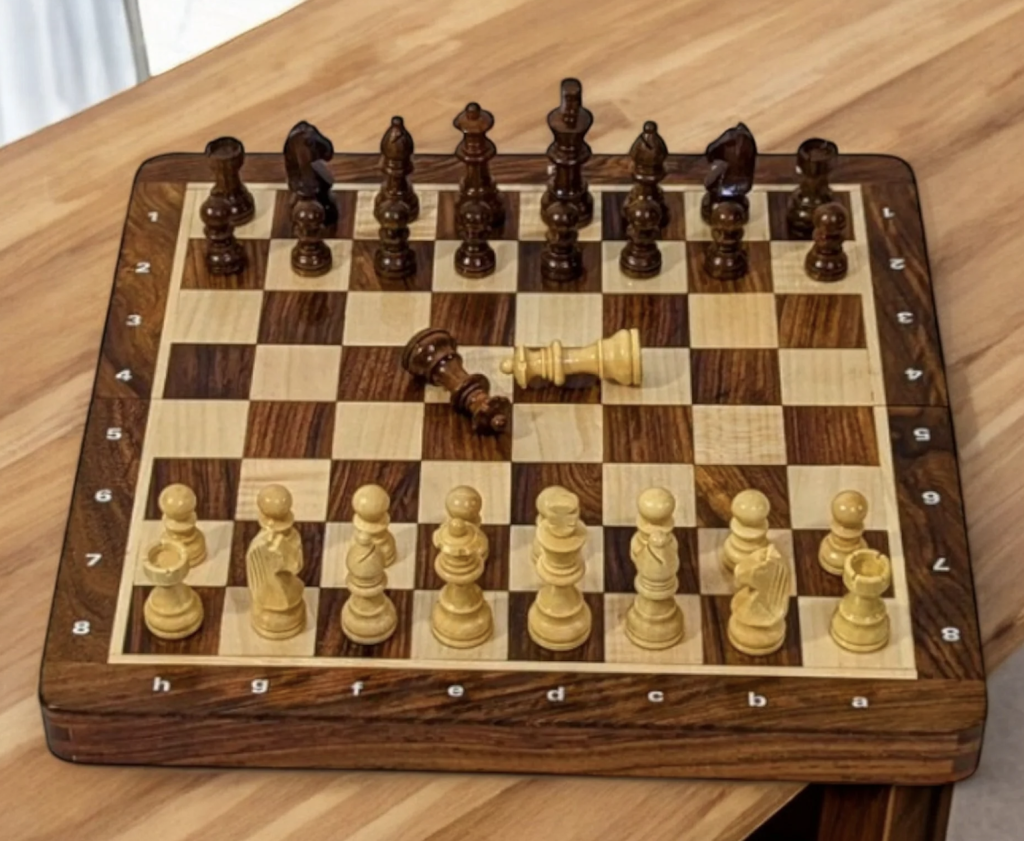
To truly perform at an elite level, your practice environment should mirror that of an elite player. There is a large, usually undervalued gap cognitively between viewing the flat 2D representation of the board and working on a physical 3D board representing the International Chess Association (ICA) standards. Your brain actually maps the “geometry of the attack” differently when there’s real depth involved.
But when you’re picking out your gear, don’t just grab whatever looks “fancy” in a catalog. Here’s the truth about what actually works:
- Why Matte Trumps Gloss: Look, high-gloss boards are absolute glare magnets in real life. If you’re playing under a desk lamp, that polished finish creates “dead zones” that can literally camouflage a long-range Bishop move from your peripheral vision. Stick to a satin or matte finish—your eyes (and your ELO) will thank you after a grueling four-hour session.
- The “Neon” Contrast Trap: Look, you obviously need to tell the light squares from the dark ones, but don’t go overboard here. Picking a board with hyper-white and jet-black squares is a classic rookie mistake—it’s basically a recipe for a migraine. That kind of aggressive contrast will fry your retinas before you’ve even reached the middlegame. You’re much better off with natural wood pairings, like Walnut and Maple or the classic Ebony and Boxwood.
- The Source Matters: Finding a dedicated chess store is harder than it used to be. For those who want the actual gear used at the highest level, the search for the best chess sets often leads straight to the World Chess platform. As the official designers for the World Championship cycles, their world chess championship chess set isn’t just a replica—it’s the actual standard used by the elite. This design is built specifically for the ergonomics of high-stakes play and maximum visibility.
Deconstructing the Chess Set Price
When you browse a chess online store, the price tags can be shocking. A plastic tournament chess board is twenty bucks; a handcrafted wooden set can be five hundred. What are you actually paying for?
- The Knight’s Mane: Since Knights can’t be turned on a lathe, they have to be hand-carved. A master carver can spend an entire afternoon on just four Knights to make sure they are identical.
- Material Scarcity: Genuine Ebony is dense, difficult to work with, and increasingly rare. These materials drive up the chess set price but offer a durability that plastic can’t touch.
- The Finish: A natural wax polish, applied by hand over several days, gives the wood a “living” feel that chemical sprays just can’t mimic.
Ultimately, a professional chess set isn’t a “purchase”—it’s an investment. Unlike a smartphone that’s obsolete in three years, a well-balanced chess table set is a legacy item that will only look better as the wood develops a patina over the decades.
Final Thoughts: It’s About the Ritual
Sure, a Grandmaster could probably crush most of us using rusty bottle caps on a scrap of cardboard. But that’s missing the point entirely. Chess is an experience, a ritual. Playing on a high-quality international chess board with properly weighted pieces turns a simple puzzle into a heavy, tactical struggle.
There’s a psychological shift that happens when you sit down at a board built to professional standards; you suddenly play with more intent. You value your own time more. Whether you’re chasing a vintage vibe or a crisp, modern professional chess board, do yourself a favor and find a legit chess set store. Buy a real instrument once, and you’ll never have to look at a cheap plastic set again.
WE SAID THIS: Don’t Miss…Witty & Creative: Exploring The Best of Arab Chess Players