


Some writers give you stories. Ahmed Khaled Tawfik gave an entire generation a new way to read. The Egyptian physician, professor, writer, and translator became one of the most influential Arab writers in horror, fantasy, science fiction, and young adult literature. Affectionately known as “The Godfather,” he wrote about everything from haunted hotel rooms and impossible futures to loneliness, knowledge, class, and the things people would rather not confront.
It makes sense, then, that he is the honoree of this year’s Zayed Book Fair, taking place from October 1 to 11 in Sheikh Zayed City. With this year’s theme, “A Generation… Reading,” the fair is putting young readers at the center — and few writers have shaped generations of young Egyptian readers quite like Tawfik. He was more than a bestselling author; for many readers, he was the person who made books feel like they were written for them.
If you’re wondering where to start, here are six of our favorites.

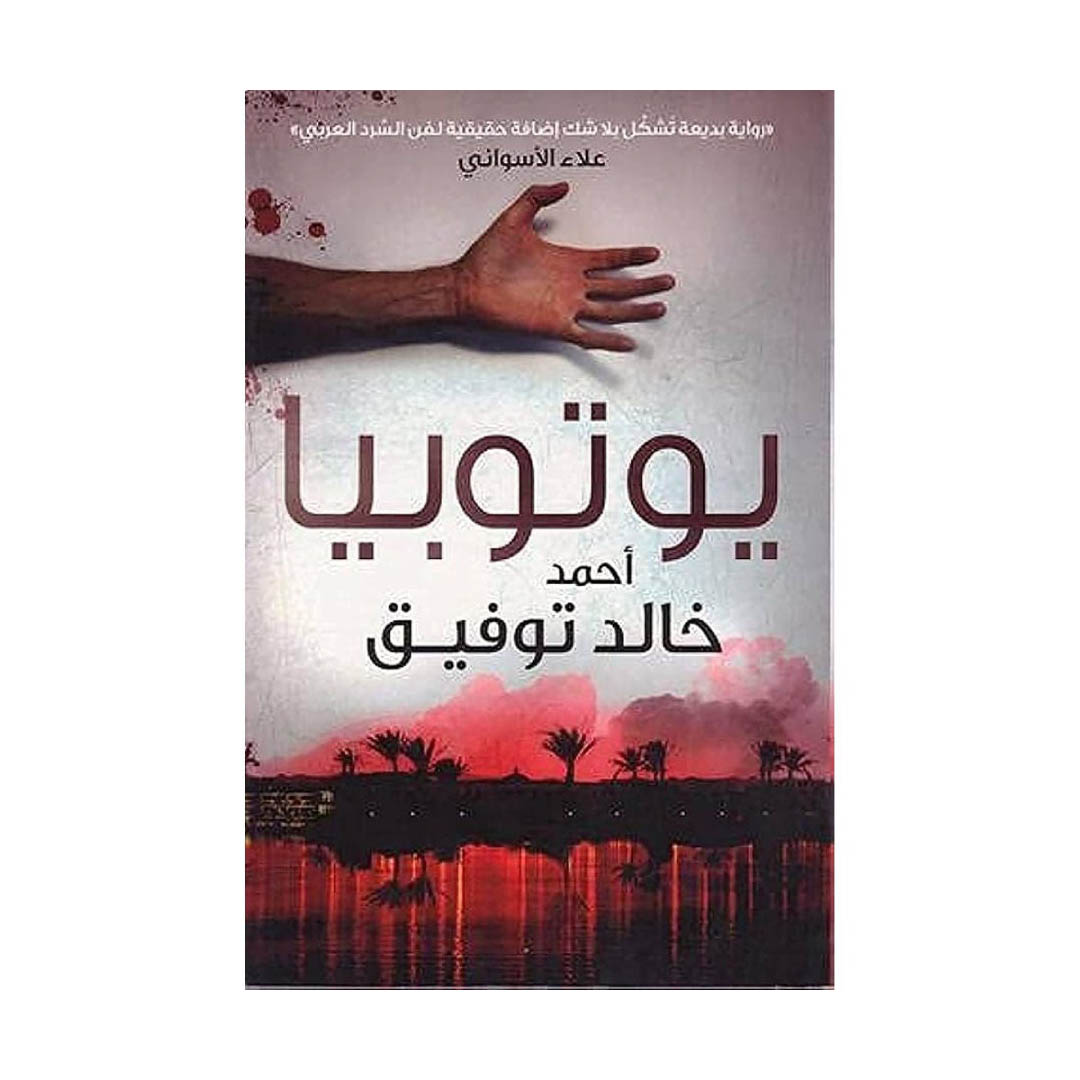
Utopia — When Egypt Becomes a Dystopia
What if the Egypt of the future looked less like flying cars and more like an extreme version of everything already happening around us?
That is the unsettling premise of Utopia, Tawfik’s dystopian novel set in Egypt in 2023. On one side are the ultra-wealthy, living behind the walls of gated North Coast communities, completely insulated from the poverty and violence outside. On the other is a society where survival has become a daily struggle.
Two young people from the privileged side decide to cross that boundary and see the other Egypt for themselves. What they encounter is far worse than they expected.
The scary part of Utopia isn’t really its imagined future. It’s how familiar parts of it can feel.

Al-Sinja — The Mystery of a Writer Nobody Has Read
A novelist disappears. His name is Essam El-Sharkawy, and apparently, he’s famous.
There’s just one problem: no one seems to have actually read anything he wrote.
From there, Al-Sinja turns into a strange literary mystery built around one very suspicious question: who exactly was this man, and what happened to him?
Tawfik plays with detectives, writers, disappearances, and the rather dramatic idea that writers are destined for tragic endings. But beneath the mystery is something more interesting — a story about identity, reputation, and how easily a person can become the version of themselves that they invented.
And yes, you’re going to want to know what happened to Essam.

In the Rat Alley — When Light Becomes a Privilege
Imagine a world where darkness isn’t just something you experience at night. It’s the reality of everyday life.
In the Rat Alley takes that idea and turns it into a dystopian nightmare. In this world, light has become something controlled by the privileged, while ordinary people struggle through dark, rat-infested corridors without even fully understanding what has been taken from them.
Tawfik takes a simple idea — what happens when something everyone needs becomes something only a few can control? — and turns it into a story about inequality, oppression, ignorance, and hope.
It’s dark, literally and otherwise.

A Mind Without a Body — Brains vs. Brawn
What happens when you put two very different friends together: one with extraordinary physical strength and the other with an extraordinary mind?
That’s the basic thread connecting the 22 short stories in A Mind Without a Body. One friend has the muscles; the other has the brainpower to solve problems that would leave everyone else completely stumped.
The result is a collection that moves through different mysteries, adventures, and strange situations while keeping the same central duo at its heart.
It’s classic Tawfik: clever, fast-moving, a little weird, and very easy to get pulled into.

Room 207 — Don’t Open That Door
Hotel rooms are already creepy enough. They’re temporary spaces filled with other people’s traces, strange noises, unfamiliar hallways, and the knowledge that countless strangers have slept in the exact same bed before you.
Now imagine one room where your worst fears come to life.
That’s Room 207.
In Tawfik’s famous horror novel, reality and illusion begin to blur inside a hotel room where everyone’s deepest fears seem to have a way of finding them. The room becomes a place where the boundaries between past and future, memory and reality, and fear and fact start falling apart.
The only question is whether you’d actually be brave enough to turn the handle.

Like Icarus — How Much Truth Can You Handle?
Mahmoud El-Samnoudi has always been different. As a child, he’s rejected for being an eccentric outsider. As an adult, he discovers something that makes his isolation even worse: he can see the past and the future.
Like Icarus moves between different points in time before bringing its scattered threads together in a psychiatric clinic, where Mahmoud has been forced into silence.
But this isn’t simply a story about having a supernatural ability. It’s about what happens when you know something that other people aren’t ready to hear — and whether knowing the truth is always worth the price.
The title says it all. Like Icarus, Mahmoud gets too close to something powerful, and the consequences are devastating.

Why The Godfather Still Matters
The choice of Ahmed Khaled Tawfik as this year’s honoree feels particularly fitting. The Zayed Book Fair is focusing on young people and the future, and Tawfik spent much of his career speaking directly to young readers — giving them horror, fantasy, science fiction, and stories that didn’t talk down to them.
Years after his death, his books still manage to do what good books are supposed to do: make you curious, make you uncomfortable, and occasionally make you look at the world around you a little differently.
For a generation that grew up with “The Godfather,” this year’s fair is a pretty fitting tribute.
WE SAID THIS: Don’t Miss…One Year After His Death, Egypt Still Mourns the Loss of Ahmed Khaled Tawfik