


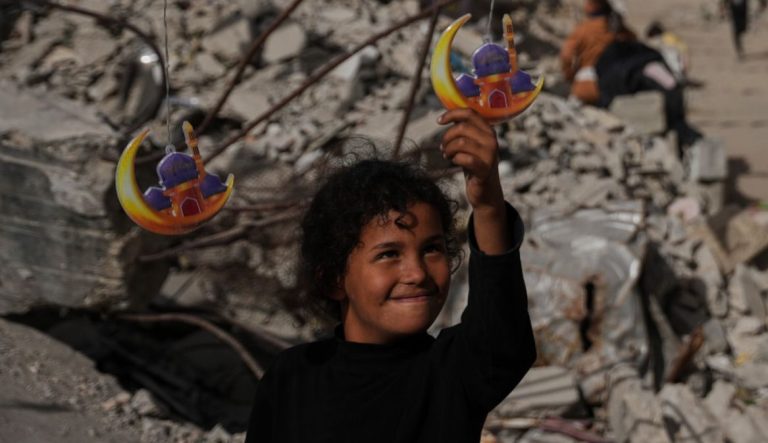
Ramadan has come to Palestine carrying grief in one hand and memory in the other. It arrives in tents and ruins, under curfews and permits, amid hunger and cold. And still, it is welcomed.
Not loudly. Not fully. But carefully, with light made from scraps, prayers whispered in damaged mosques, and greetings written where possible.
Making Light From What’s Left
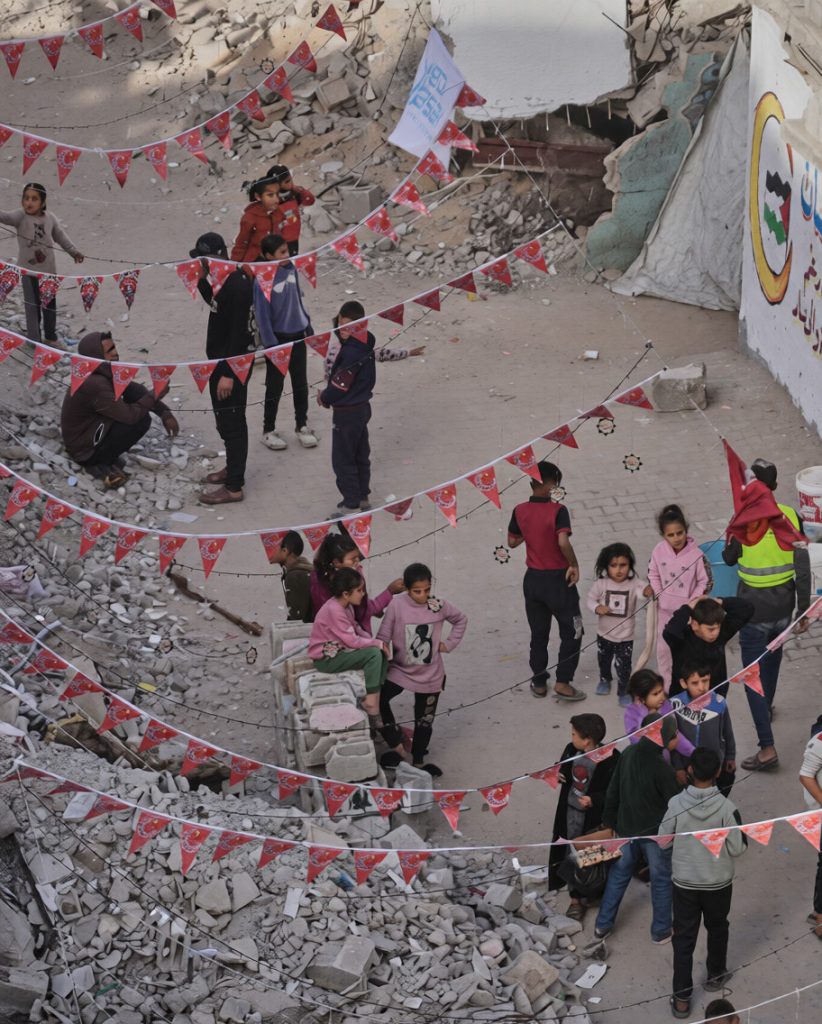
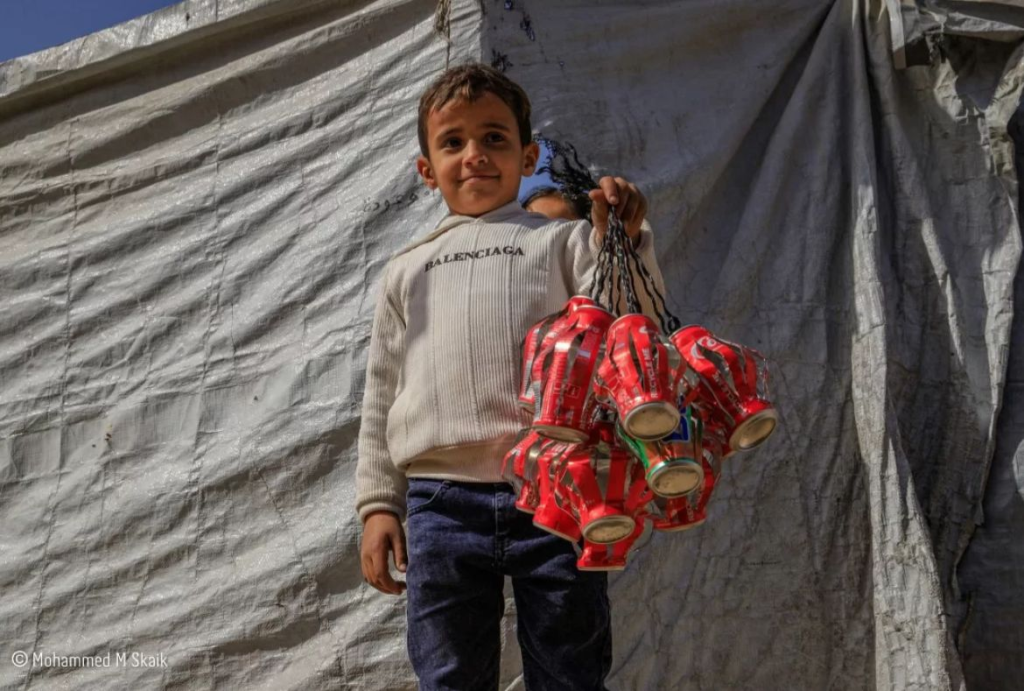
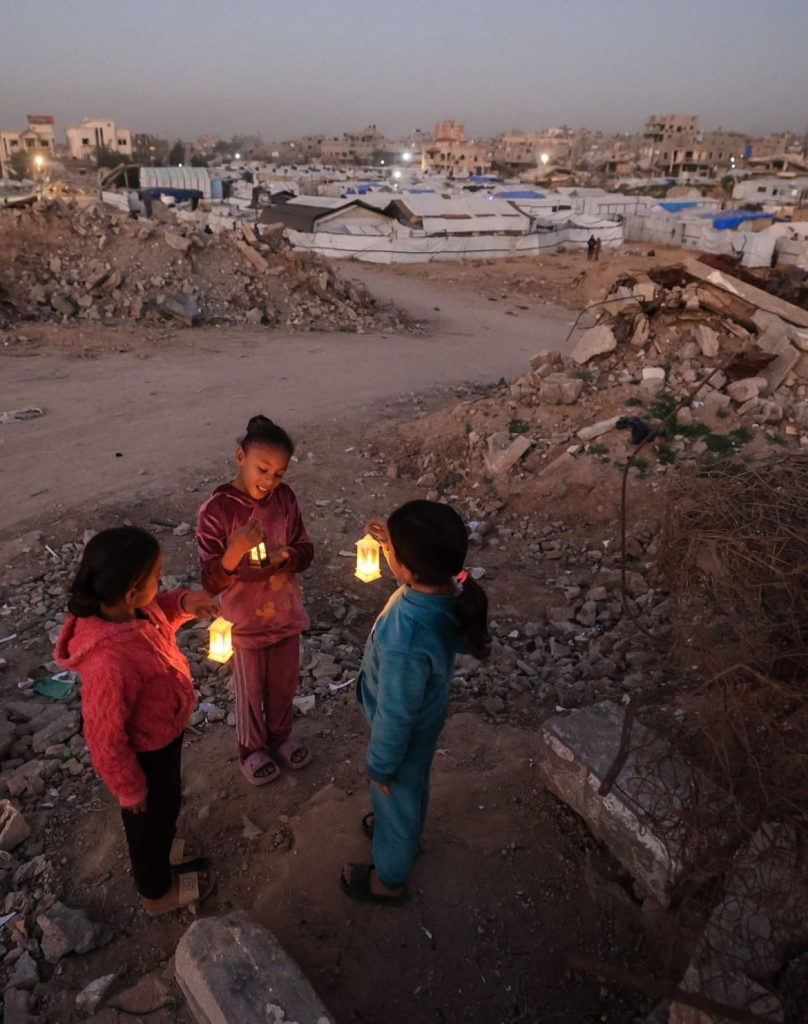
In Gaza, Ramadan decorations are being made from whatever materials people can find. Old cola cans are cut into lanterns. Scraps of metal become crescents. Strings of lights are repaired and reused. With Israel’s restrictions on materials, creativity has become a form of resistance.
These decorations are simple, fragile, and deeply intentional. They are not meant to deny reality, only to survive it.
Art, Children, and the Refusal to Let Joy Die
In the ruins of Khan Younis, calligrapher and artist Hani Dahman painted “Welcome, Ramadan” on damaged walls as children gathered around him.
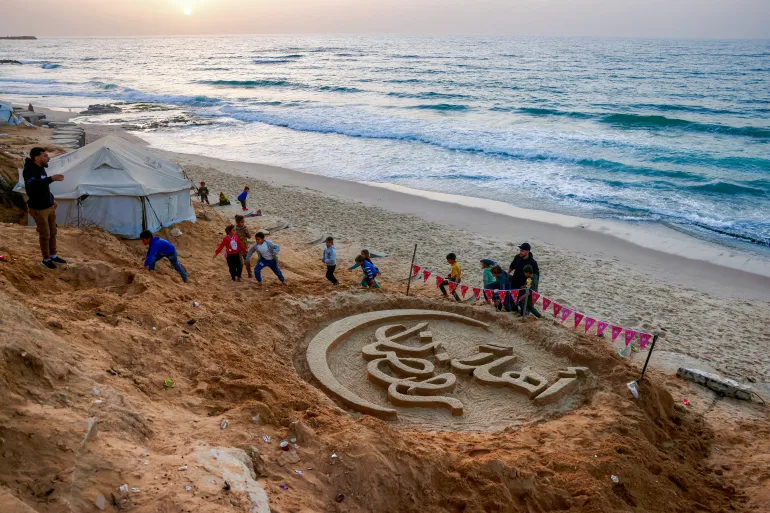
Nearby, a sand sculpture bearing the message “Welcome, Ramadan” stood along a beach in Khan Younis. The artwork was created by Palestinian artist Yazeed Abu Jarad, a simple, open invitation welcoming Ramadan to Gaza’s shore.
Between the walls and the sea, the greetings carried a sense of sincere happiness and meant to be shared.
Faith Under Fire: Prayers in Broken and Restricted Spaces
In Gaza City, worshippers performed their first tarawih prayers at the Great Omari Mosque, which was damaged during the genocide. Prayer mats lined a wounded sanctuary, faith continuing inside fractured walls.
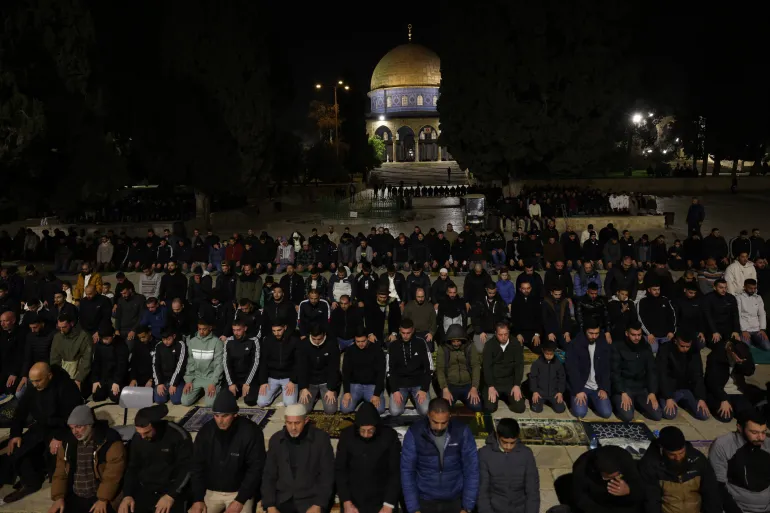
In Jerusalem, Palestinians gathered near the Dome of the Rock at the Al-Aqsa Mosque. According to the Jerusalem governorate, more than 250 orders barring Palestinians from entering Al-Aqsa have been issued since the beginning of 2026, turning access to a sacred site into a daily struggle.
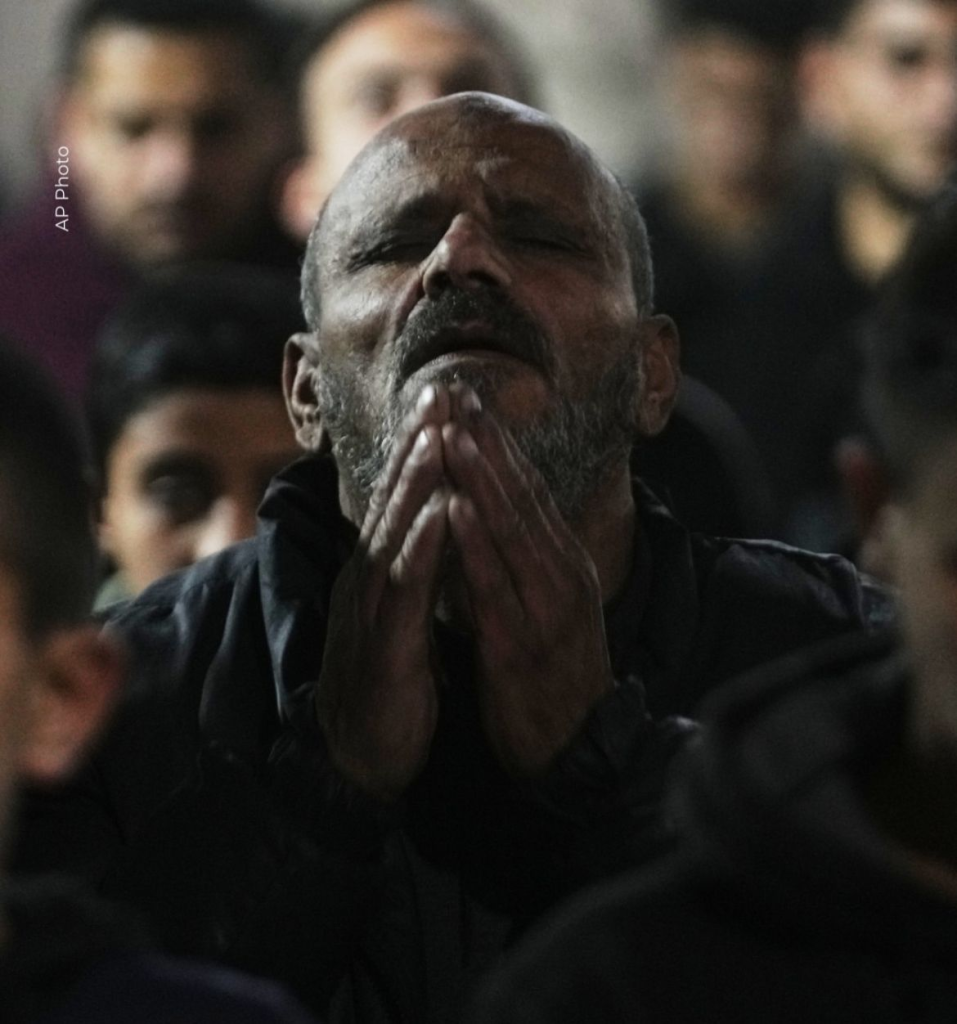
Yet, for many, Ramadan is defined not by the obstacles, but by the resilience of faith, the strength of shared prayer, and the determination to honor the month in spite of everything.
The Other Reality: A Month Shaped by Loss
But the light does not cancel out the weight. Ramadan has arrived under a fragile ceasefire, and many say the losses of the genocide has drained the month of its usual spirit.
“There is no joy after we lost our family and loved ones,” said Gaza City resident Fedaa Ayyad.
Israel’s military offensive has killed more than 72,000 Palestinians, according to Gaza’s Health Ministry, displaced most of the population, and left entire neighborhoods in ruins. For many families, Ramadan now begins in tents or damaged homes, shaped more by survival than tradition.
Hunger, Poverty, and a Fragile Ceasefire
Economic collapse has deepened the hardship. Markets are open, but money is scarce and work is rare.
Although a ceasefire is officially in place, Israeli fire and airstrikes continue almost daily, particularly near military-held zones. Since the ceasefire, more than 600 Palestinians have been killed, according to Gaza health officials.
Winter has made conditions worse. Cold temperatures have caused child deaths, while heavy rain has flooded displacement camps and collapsed already-damaged buildings.
Where the Two Truths Meet
Ramadan in Palestine this year exists in two realities at once.
There are lanterns made from cola cans, sand sculptures on the shore, and children smiling at painted walls. And there is hunger, grief, and the quiet weight of loss.
This is not celebration as it once was. It is something more fragile and more honest. A month welcomed gently, held carefully, and observed by people who insist on marking life, even while surrounded by its ruins.
We Said This: Don’t Miss…20 Beautiful Photos of Ramadan From Around the World