


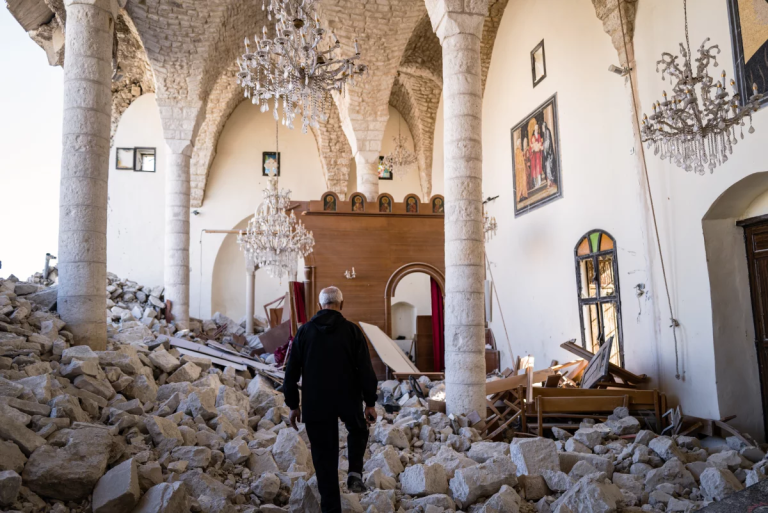
Across Lebanon, the destruction of cultural and historical sites by Israeli airstrikes hasn’t happened in a single moment—it has unfolded over years of repeated bombardment. What makes this especially damaging is that many of these places are centuries old, carrying layers of history that can’t simply be rebuilt. With each strike, parts of Lebanon’s cultural fabric are not just damaged, but permanently diminished.
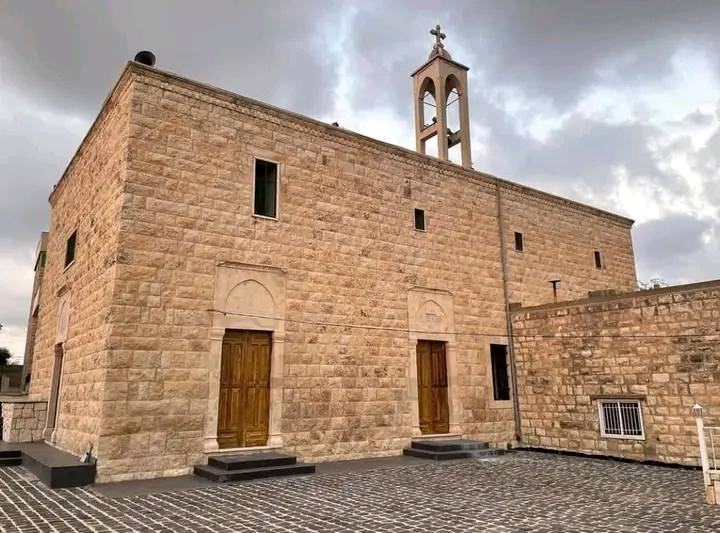
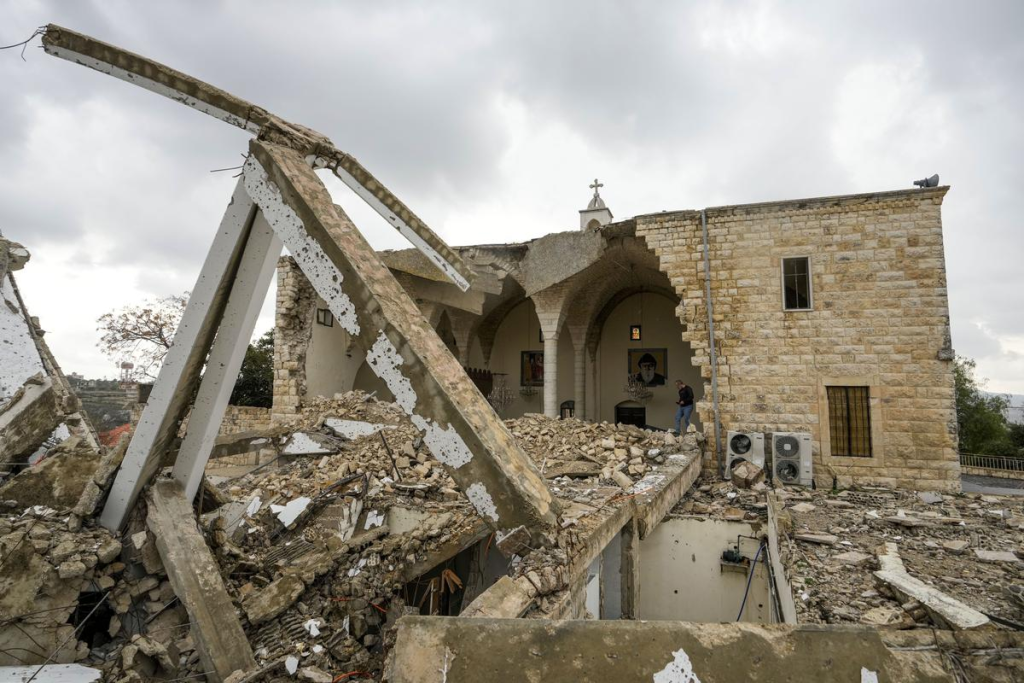
Saint George Melkite Greek Catholic Church (Derdghaya)
Estimated to date back to the 18th century, this church had long served as the religious and social center of Derdghaya. It had already been damaged multiple times before being struck again, leaving much of the main structure in ruins.
At one point, with the church no longer usable, worship was moved to a small underground room that had originally been used to host visiting clergy. Even that space was damaged and had to be repaired just to allow services to continue. The shift from a historic main sanctuary to a dim, improvised space reflects not only physical destruction, but the disruption of long-standing religious life tied to the building.
Before:
After:
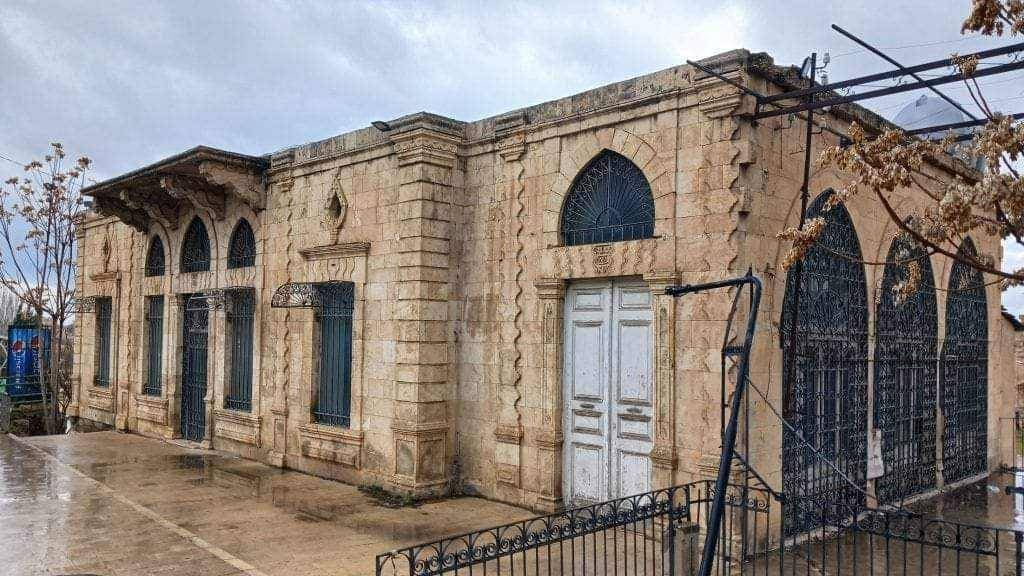
Al-Manshieh / Beit Asila (Baalbek)
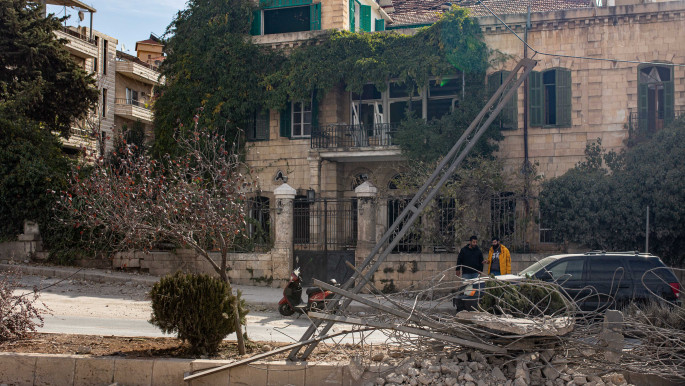
Located adjacent to the ancient Baalbek Citadel and opposite the Palmyra Hotel, this 19th-century Ottoman-era building was deeply embedded in the city’s history. In the 1920s, it became one of Baalbek’s first cafés, a social hub that later evolved into a workshop for folkloric designs, known locally as Beit Asila.
Its destruction represents more than the loss of a building—it is the deliberate erasure of layers of living culture. Beit Asila connected Baalbek’s ancient heritage to its modern social life, linking the citadel, the historic Palmyra Hotel, and the city’s ongoing cultural practices. Removing it disrupts that connection, fragmenting the story of the city itself.
Before:
After:
Palmyra Hotel (Baalbek)
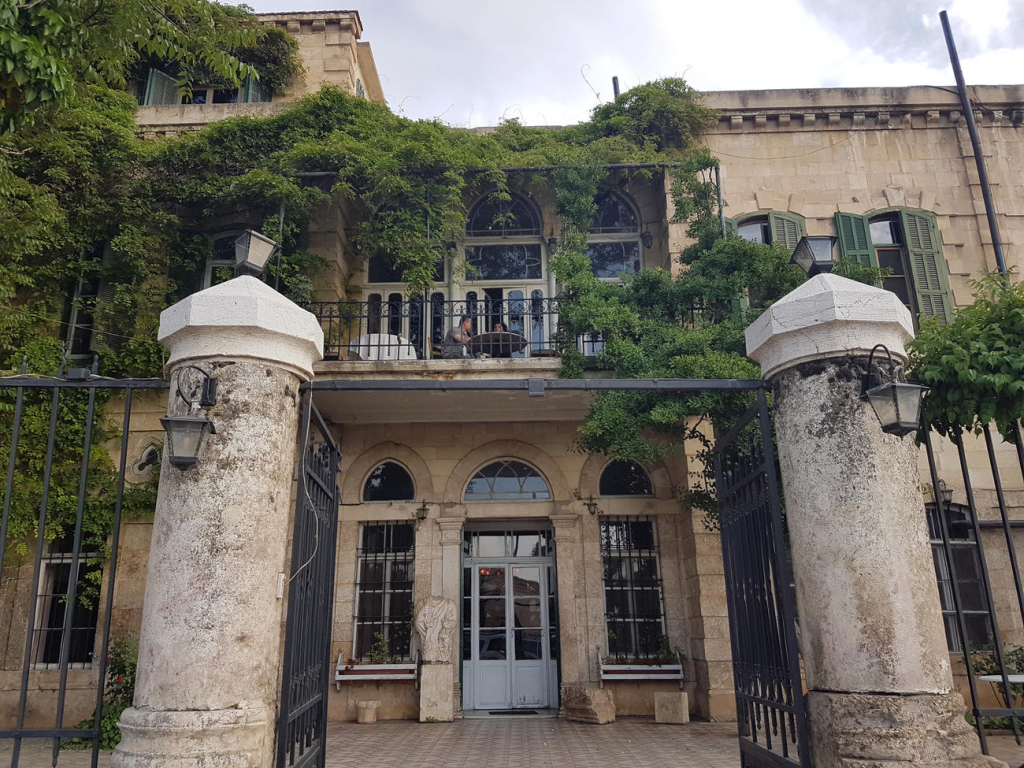
For 150 years, the Palmyra Hotel welcomed guests without ever closing its doors, even during Lebanon’s 15-year civil war. Princes, poets, and politicians passed through its doors. Its walls housed classical artifacts from nearby ruins, from Roman busts to ancient torsos. Among its famous guests were Fairouz, Sabah, Nina Simone, Ella Fitzgerald, Albert Einstein, and George Bernard Shaw.
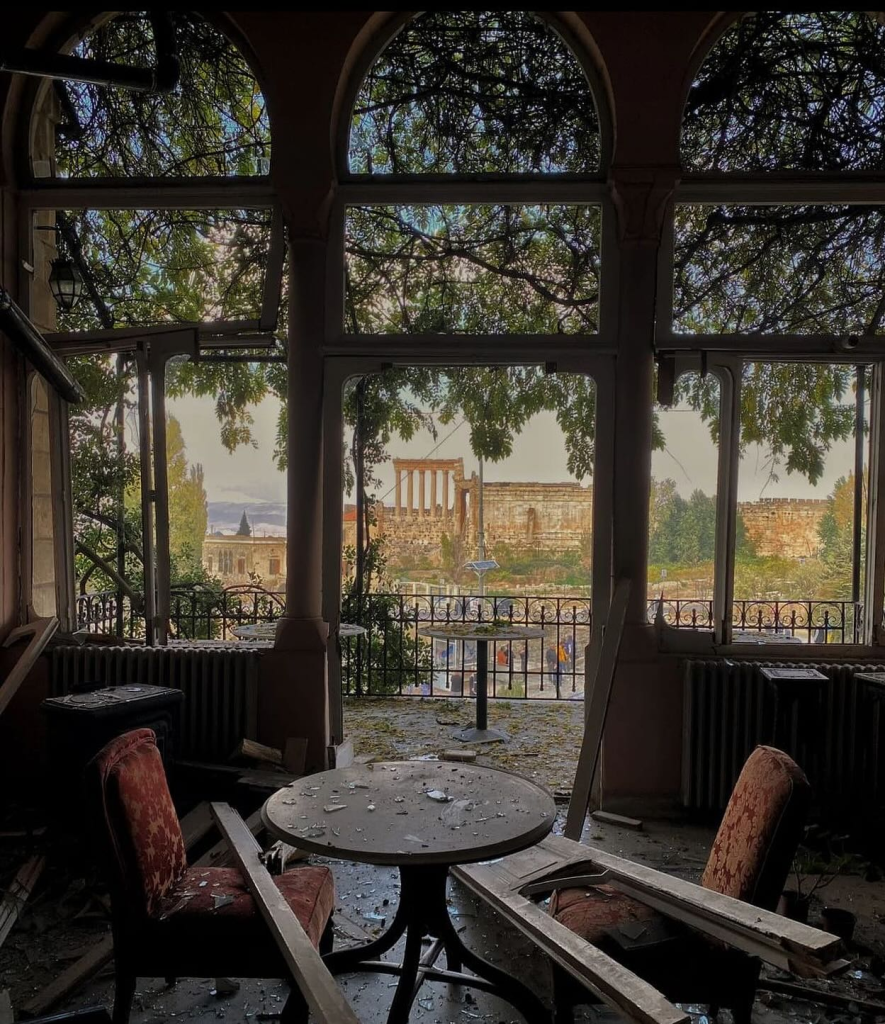
Even a place with such a long history of resilience was not untouched. In 2024, an airstrike blew out its doors and sent shards of glass into the air, showing that historic and cultural spaces remain vulnerable in the midst of ongoing conflict.
Before:
After:
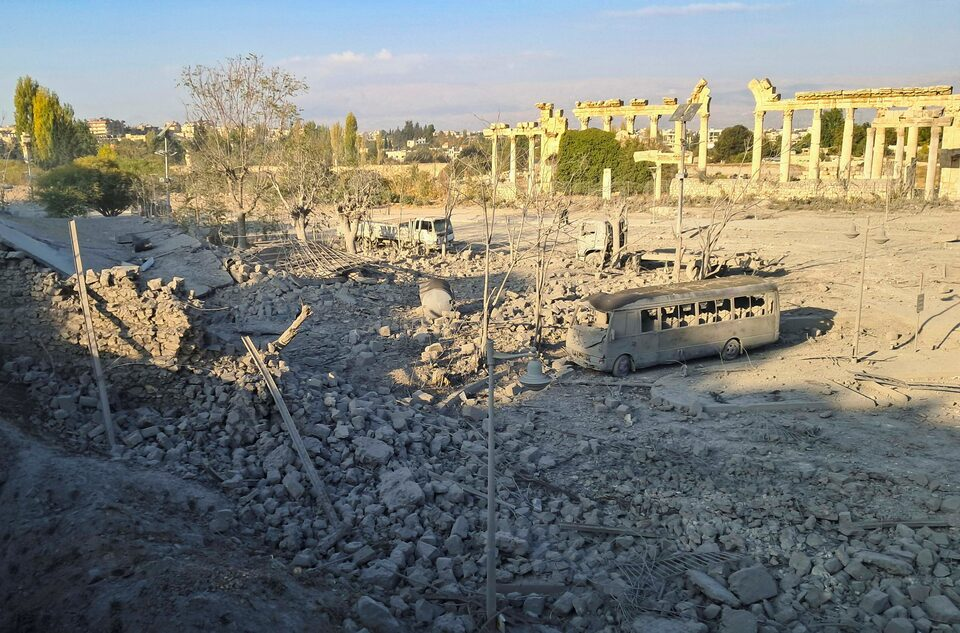
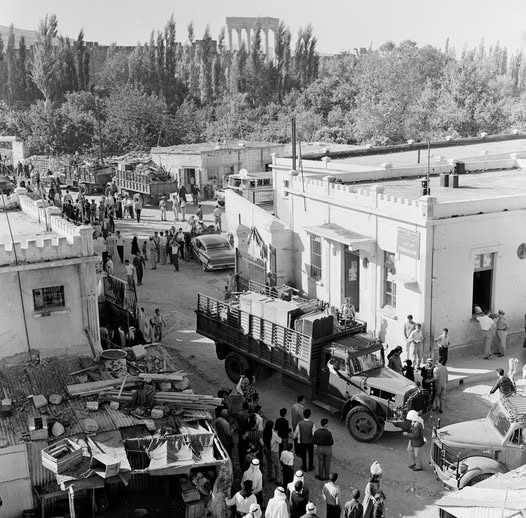
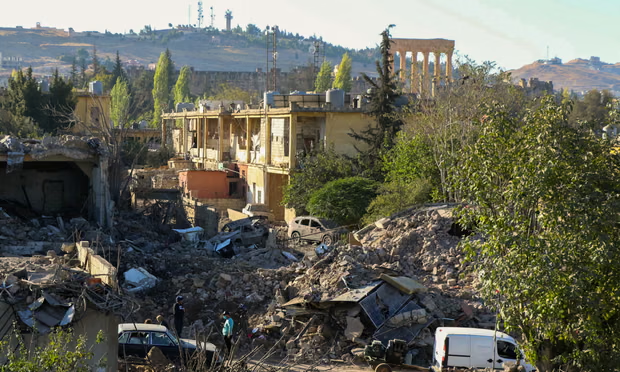
Gouraud Barracks (Baalbek)
Built in 1920 during the French mandate, the Gouraud Barracks stood along Baalbek’s ancient walls, bridging modern history with millennia of civilization. An airstrike has scattered its stones and shattered its structure, erasing evidence of 20th-century history layered over ancient ruins.
Its destruction is part of a broader pattern: not just the loss of architecture, but the systematic erasure of the historical context that gives meaning to Baalbek as a city layered with centuries of civilization.
Before:
After:
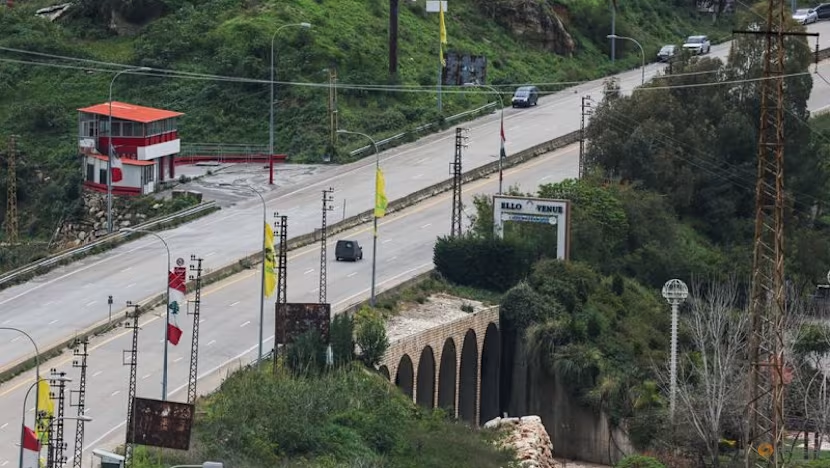
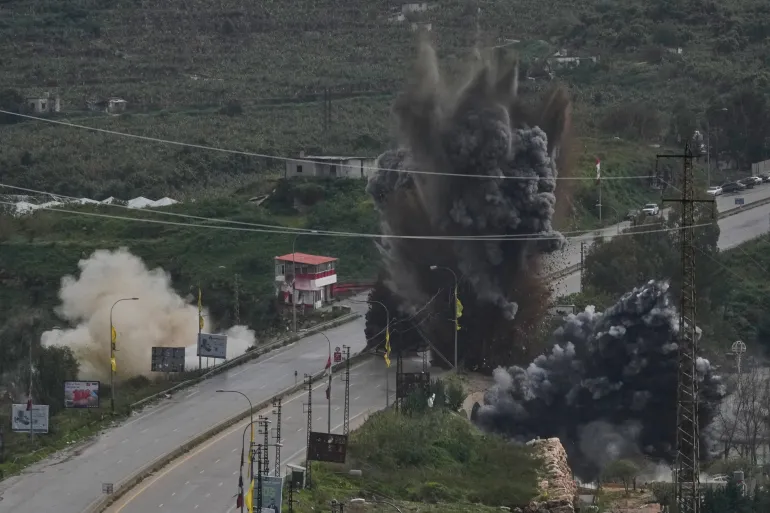
Qasmiyeh Bridge (Litani River)
The Qasmiyeh Bridge has long been vital for connecting southern Lebanon to the rest of the country. It enables trade, travel, and access to essential services, making it a lifeline for communities in the south.
In March 2026, the bridge was struck , leaving only a single access route between Beirut and the city of Tyre, just 20 kilometers from the border with Israel.
Before:
After:
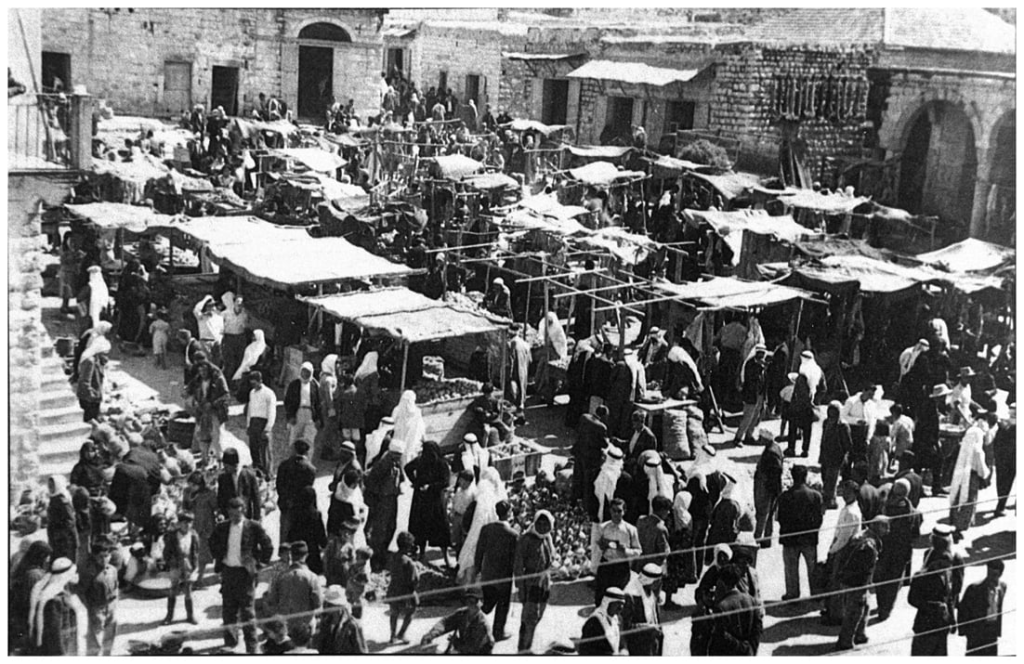
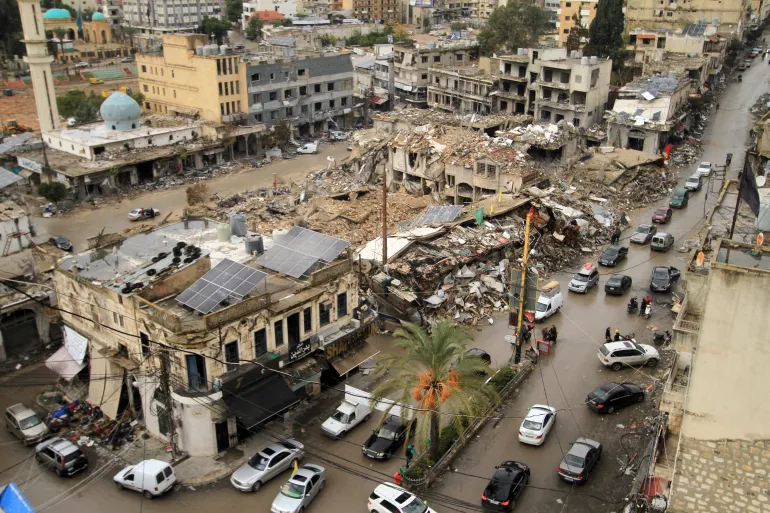
Monday Market (Nabatieh)
Tracing its origins to the Mamluk era (1250–1517) and continuing under Ottoman rule, the Monday Market was centuries old and still a living tradition. Merchants and villagers gathered here for trade and social exchange—a cycle of activity passed down for generations.
The destruction of the market does more than damage buildings: it interrupts continuity, dismantles communal memory, and erases spaces where history is experienced as lived reality.
Before:
After:
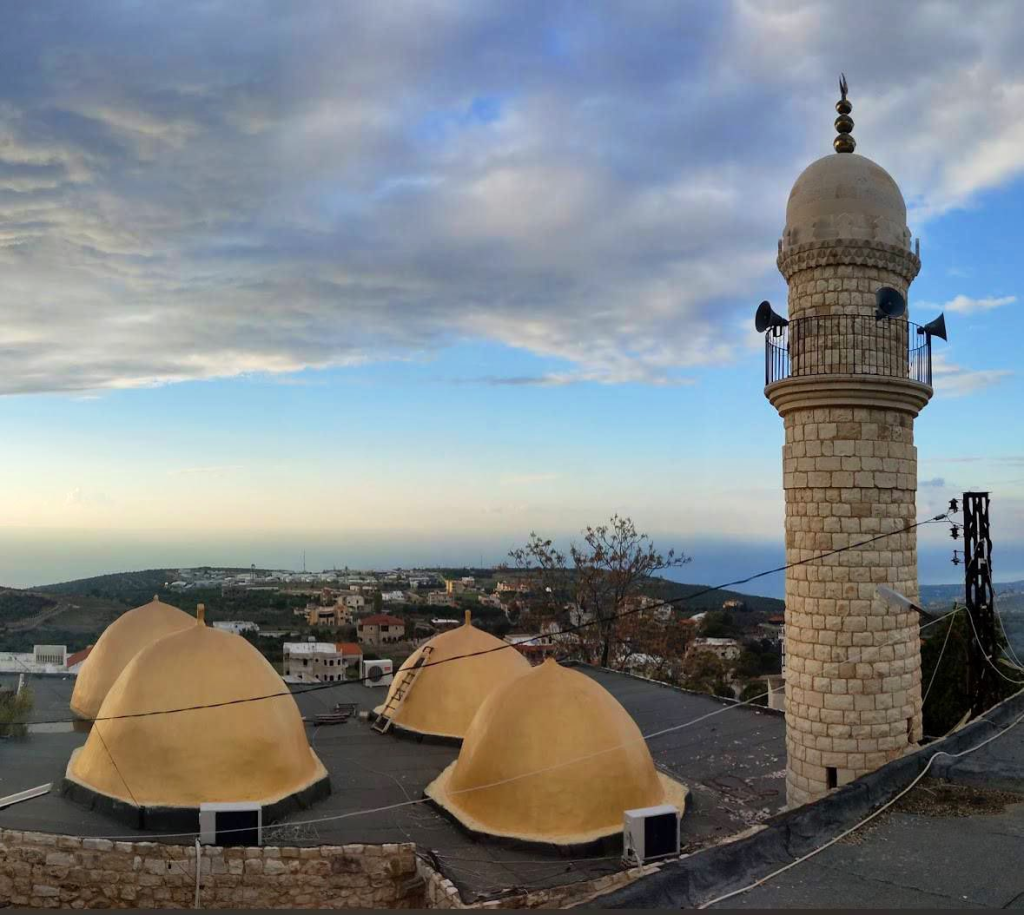
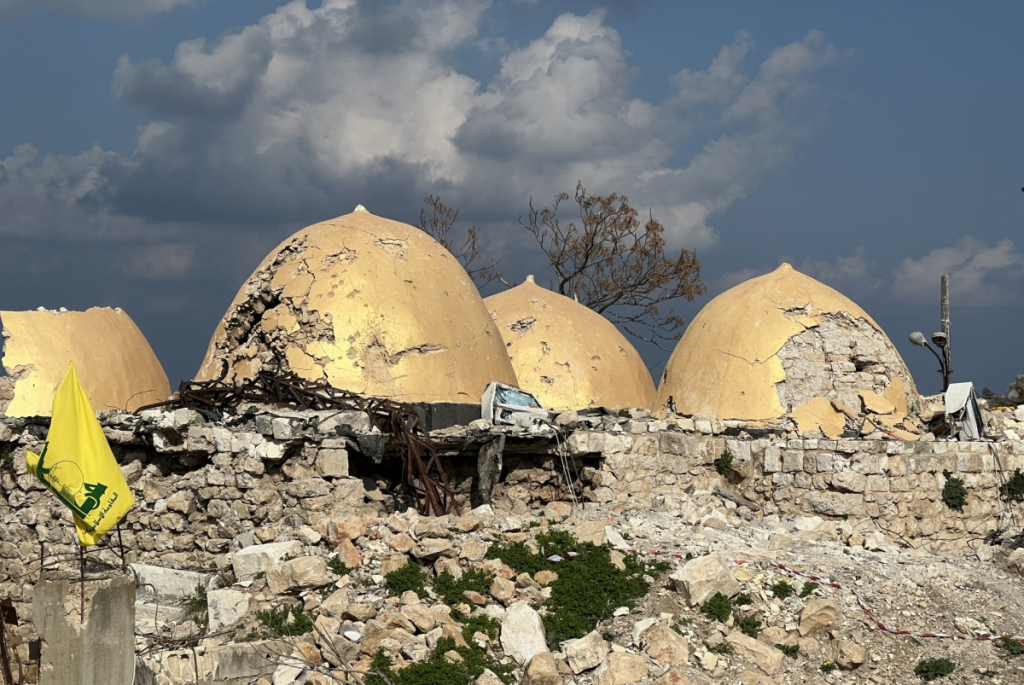
Shrine of Shimon
The Shrine of Shimon is tied to early Christian history, associated by tradition with Saint Peter (Shimon), one of the disciples of Jesus. This gives the site deep historical and religious roots, extending back nearly two millennia in belief and significance, even if the physical structure itself is more recent.
The area itself garners reverence from both Christian and Shia Muslim communities. Its destruction represents the loss of a place that held layered religious meaning, and over time, such losses reduce the number of spaces where shared cultural and spiritual practices can exist.
Before:
After:
Taken together, these sites span centuries—from ancient traditions and medieval markets to Ottoman buildings and modern-era structures. What connects them is not just their age, but their role as living witnesses to Lebanon’s layered history.
While they have been damaged by Israeli bombs, many have risen again, adapted, or found new ways to continue their purpose. This shows the resilience of Lebanese heritage: even in the face of destruction, history persists through people, communities, and memory. Each site, whether restored, partially rebuilt, or still standing, continues to tell the story of a nation that holds its past close, even as it navigates the challenges of the present.
WE SAID THIS: Don’t Miss…From Silver Screen to Survival: The Story of Lebanon’s Old Cinemas