


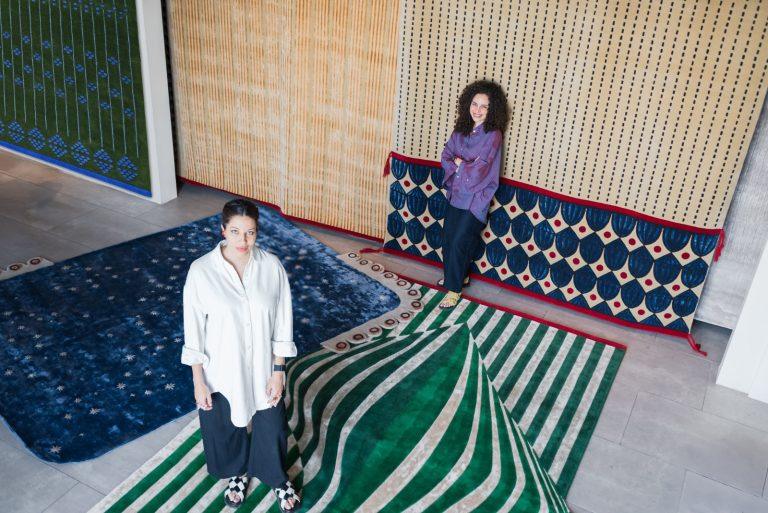
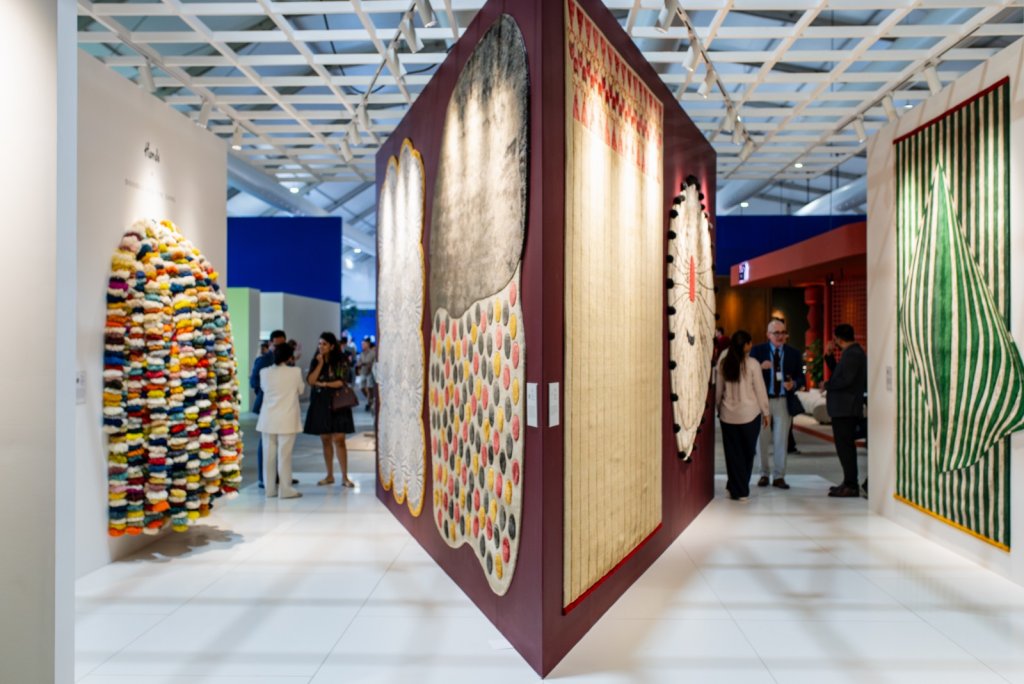
Memory doesn’t always arrive as a grand moment. Sometimes it’s a juice box crushed underfoot, the quiet twirl of a dancer’s skirt, or a suitcase unzipped to reveal packets of tea carefully carried across borders. Postcards, the latest collection by sisters Asmaa and Mentalla, founders of Doodle and the Gang, is built from these fragments, everyday rituals transformed into rugs that hold emotion, texture, and time.
Developed in collaboration with HANDS, whose carpet-making heritage dates back to the 1800s, Postcards bridges generations of craft with contemporary storytelling. Each city in the collection inspired two pieces, together forming what the sisters describe as their “emotional map” of the places that shaped them.
From Family Memory to Collective Nostalgia
The idea for Postcards emerged right after the sisters completed their debut collection, which was deeply rooted in family and childhood. “Once that chapter was finished, the natural impulse was to look outward,” they explain. At the same time, HANDS approached them about a collaboration connected to the Middle East, an alignment that felt instinctive.
What followed was a realisation: many of their most powerful memories weren’t tied only to people, but to places. Beirut, Cairo, Dubai, Riyadh. These weren’t just personal recollections; they were moments shared by countless others who had lived in or loved these cities.
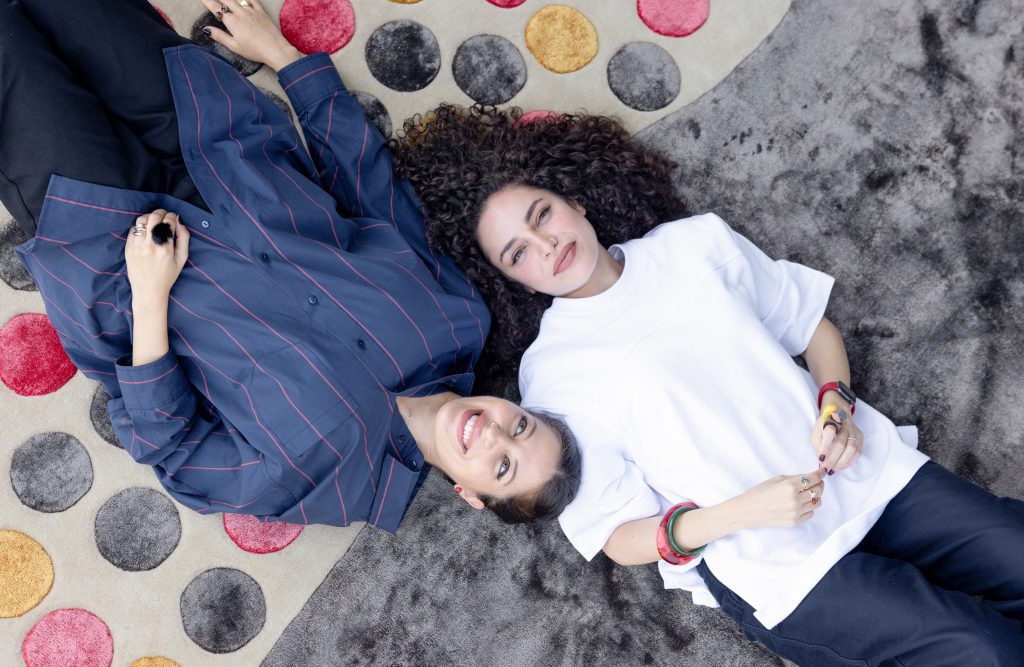
Why Postcards? Archiving Feeling, Not Just Place
The name Postcards came naturally. Their grandfather was an avid photographer who documented his travels obsessively. He photographed everything in black and white, then carefully wrote dates and names on the back of each image. Years later, he would sit with them and tell the stories behind every photograph.
“Without realising it at the time, this taught us the emotional power of archiving moments and the beauty of storytelling through simple, honest fragments of life,” they say.
Each rug in the collection works the same way: rooted in a specific place, yet open enough for the viewer to make it their own.
In many ways, Postcards is the sisters’ continuation of their Grandfather’s practice, only now, memories are archived in wool and silk rather than paper.
Cities as Emotional Landscapes
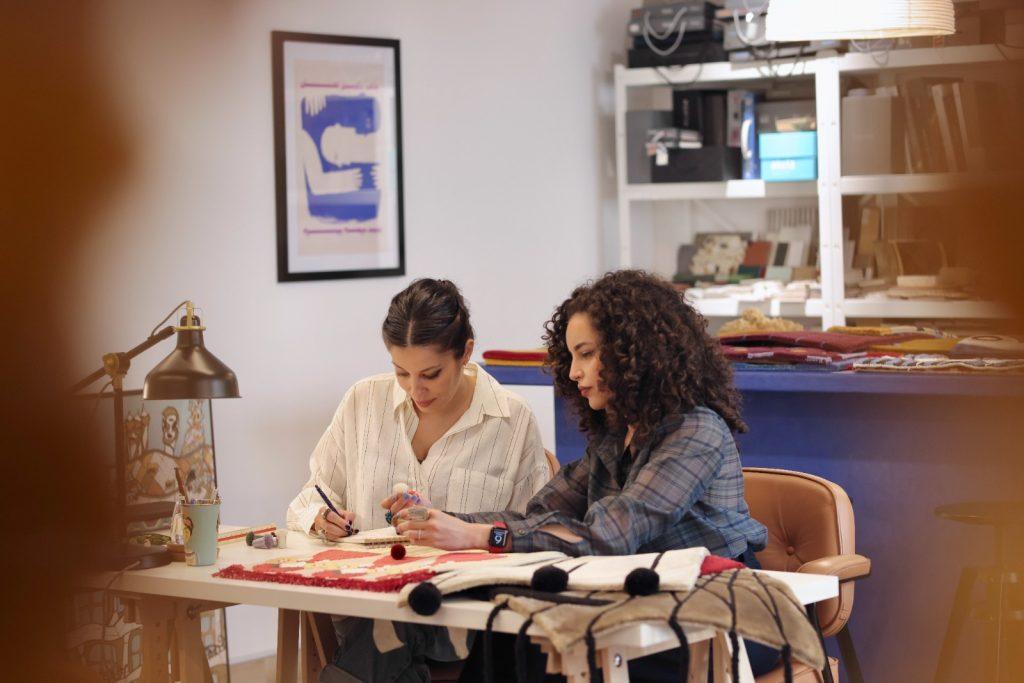
Each city in Postcards inspired two pieces. Rather than approaching these places through landmarks or clichés, the sisters focused on everyday life from rituals to objects and moments that quietly shape memory. Together, the cities form a clear rhythm and structure across the collection.
Cairo — Twirl & Aroosa
Cairo appears through movement and ritual.
Twirl
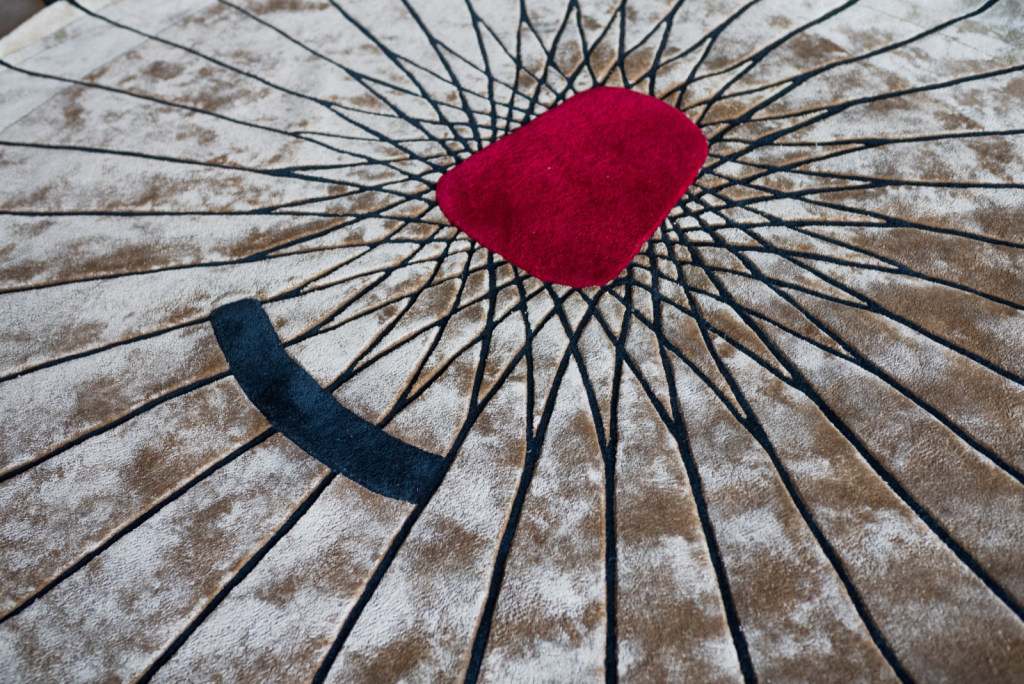
Twirl was inspired by watching Tanoura dancers spin in hypnotic circles, their layered skirts capturing devotion and rhythm. While rooted in Cairo, the form resonates far beyond Egypt, with people across the Middle East relating to it through their own cultural lens.
Aroosa
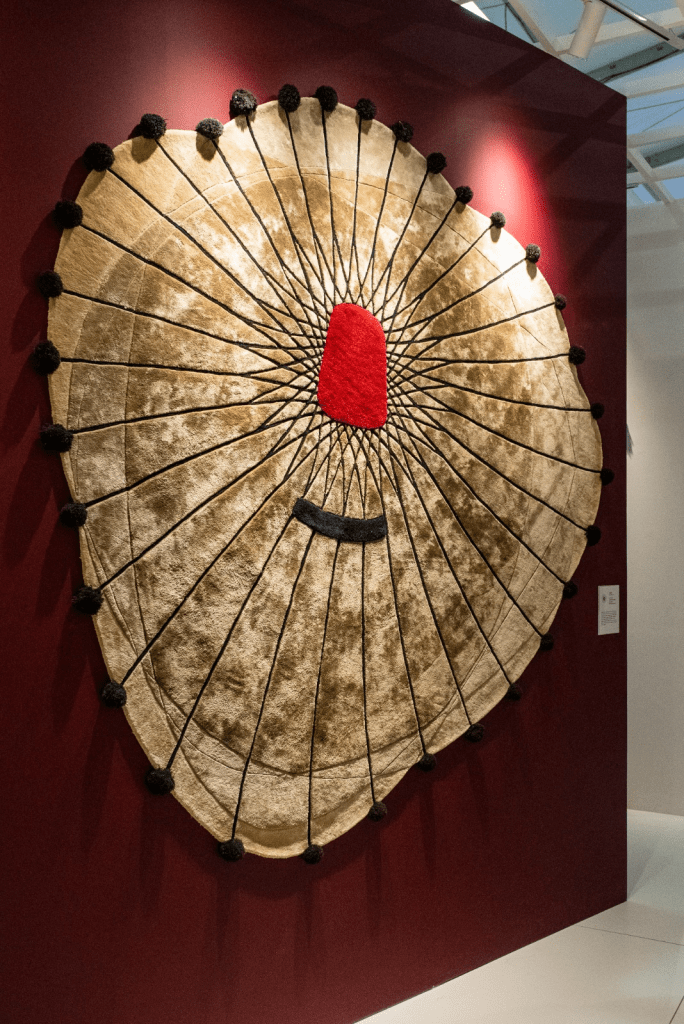
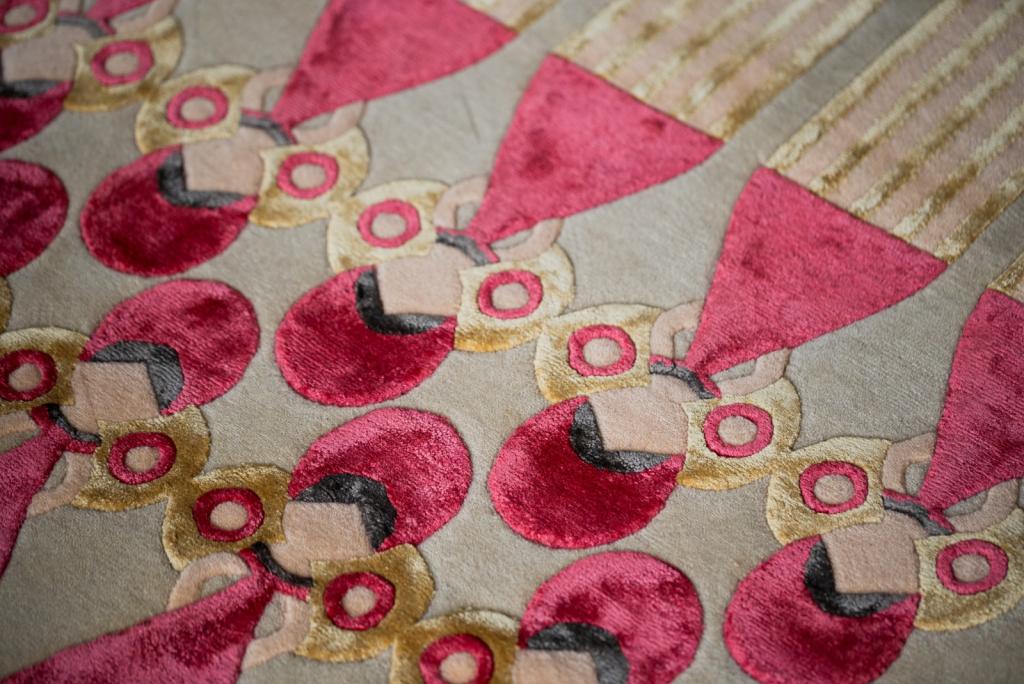
Aroosa sits at the emotional heart of the collection. Inspired by Shay el Arosa and also Arouset el-Moulid, it reflects a daily ritual shared with the sisters’ grandparents: every morning and after meals, tea was prepared, and the little doll on the box became a symbol of home and comfort.
Many shared with the sisters that “when their parents come to visit they would have a luggage bag full of Shay el Arosa”. That’s how sacred it is. Designing this piece was about preserving a memory they never wanted to lose: “If we could, we would gift it to our late grandmother.”
Beirut — Bonjuseh & Kaak
Beirut is captured through childhood rituals and the rhythm of the street.
Bonjuseh
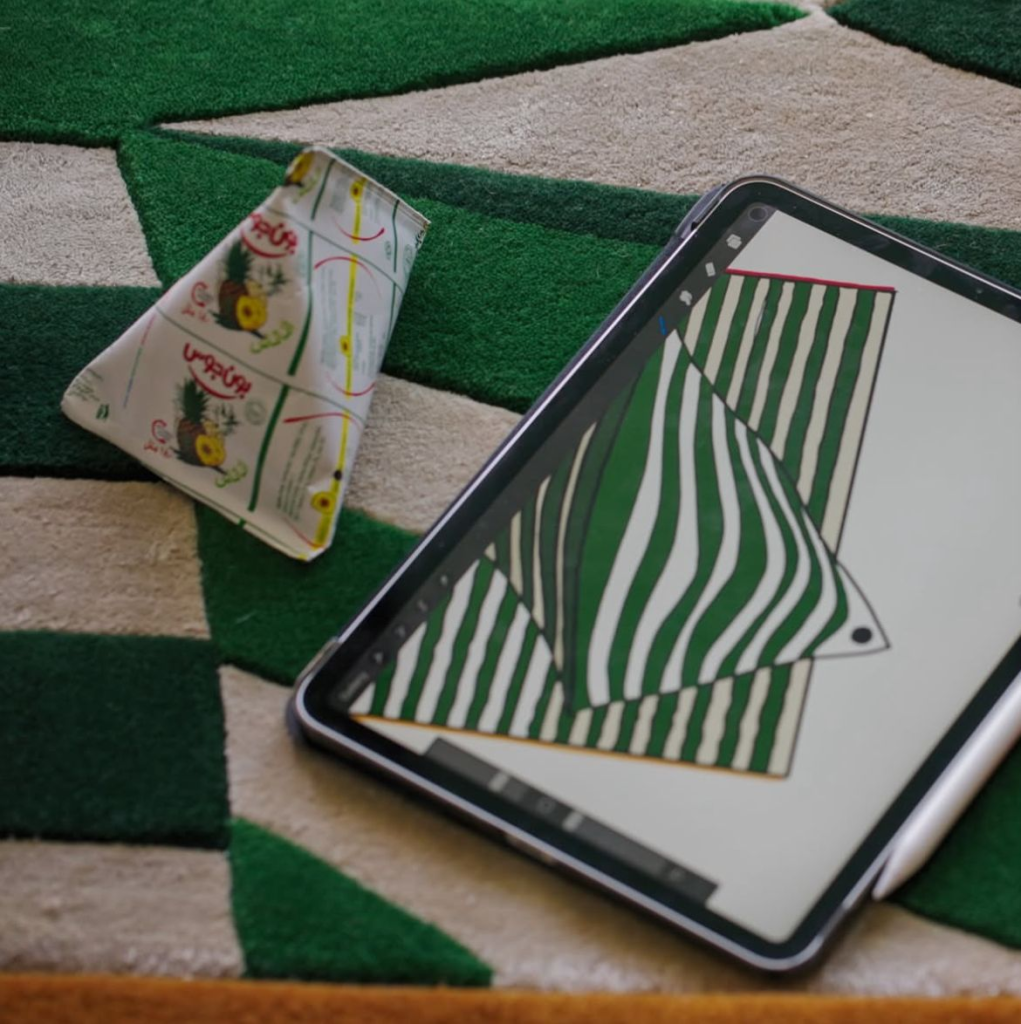
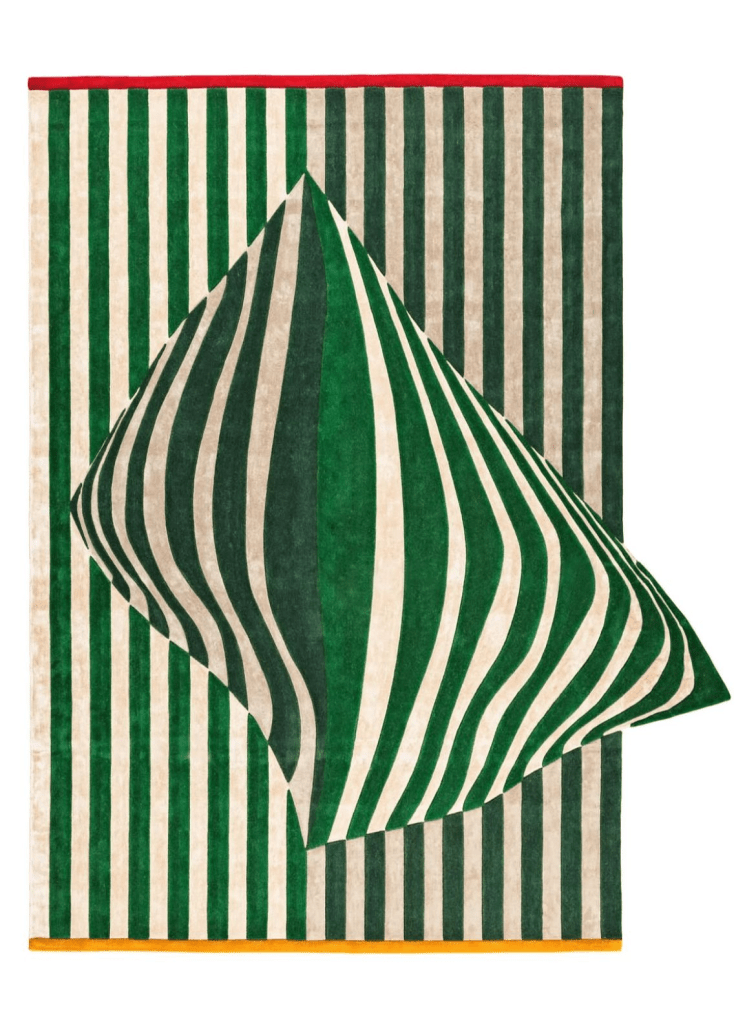
Bonjuseh recalls school lunch breaks and the instant nostalgia of a juice box, finished, thrown to the ground, and stepped on until it bursts. It’s a fleeting moment of joy shared by so many who grew up in the city.
Kaak
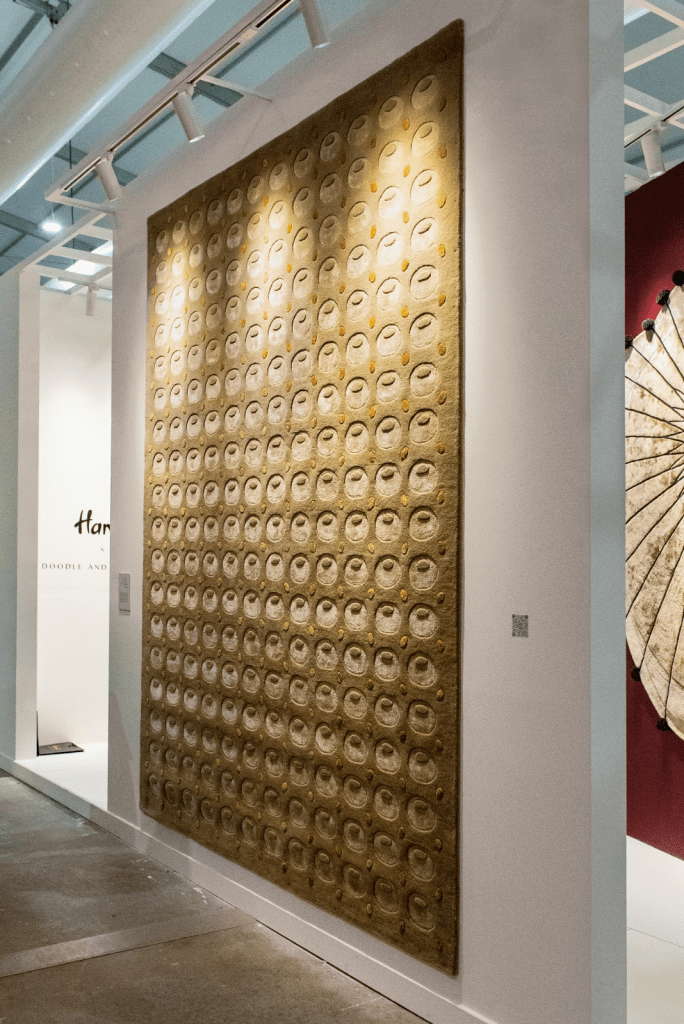
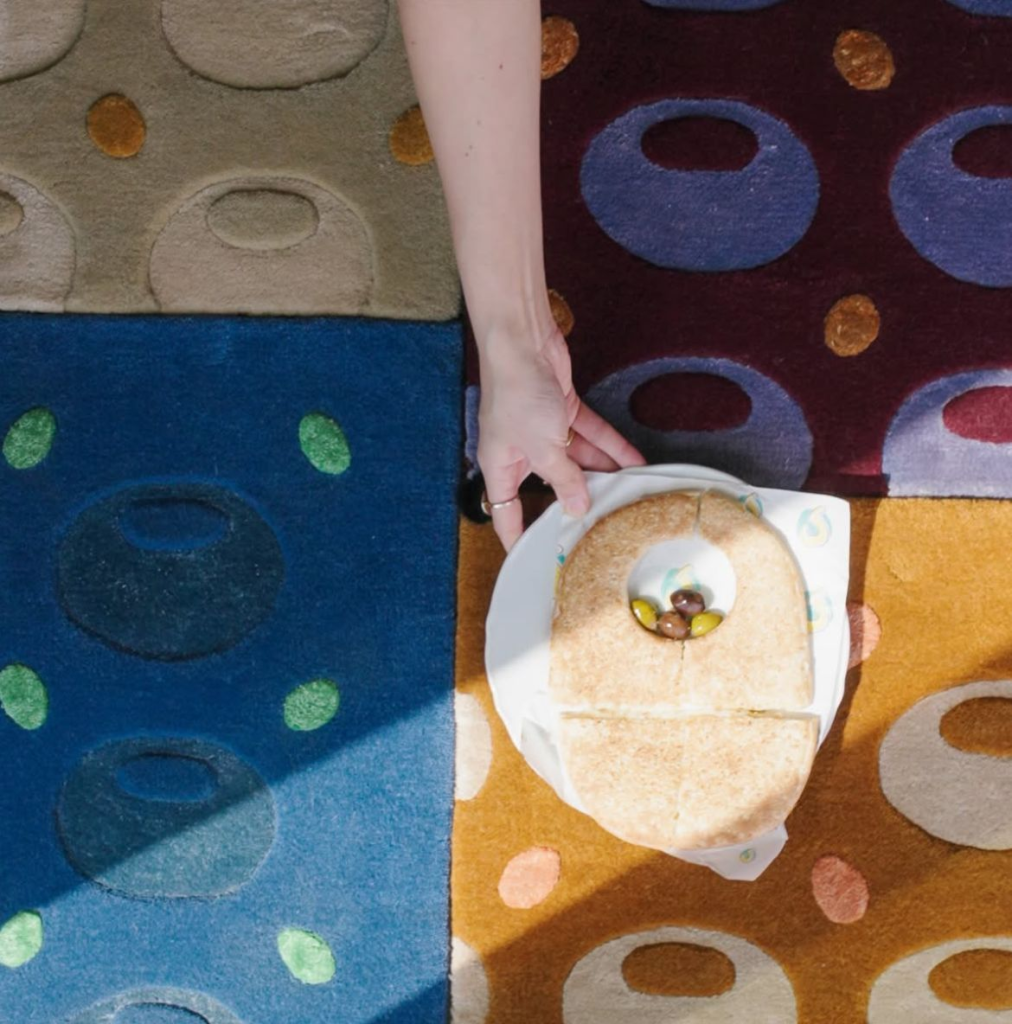
Kaak draws from Beirut’s everyday architecture and street life. Much like roasted corn in Egypt, kaak is inseparable from Beirut’s corniche and daily rhythm. The piece translates this familiarity into pattern and texture, echoing the pulse of the city.
Riyadh — Starry Night & Najd
Riyadh is expressed through stillness, hospitality, and quiet geometry.
Starry Night
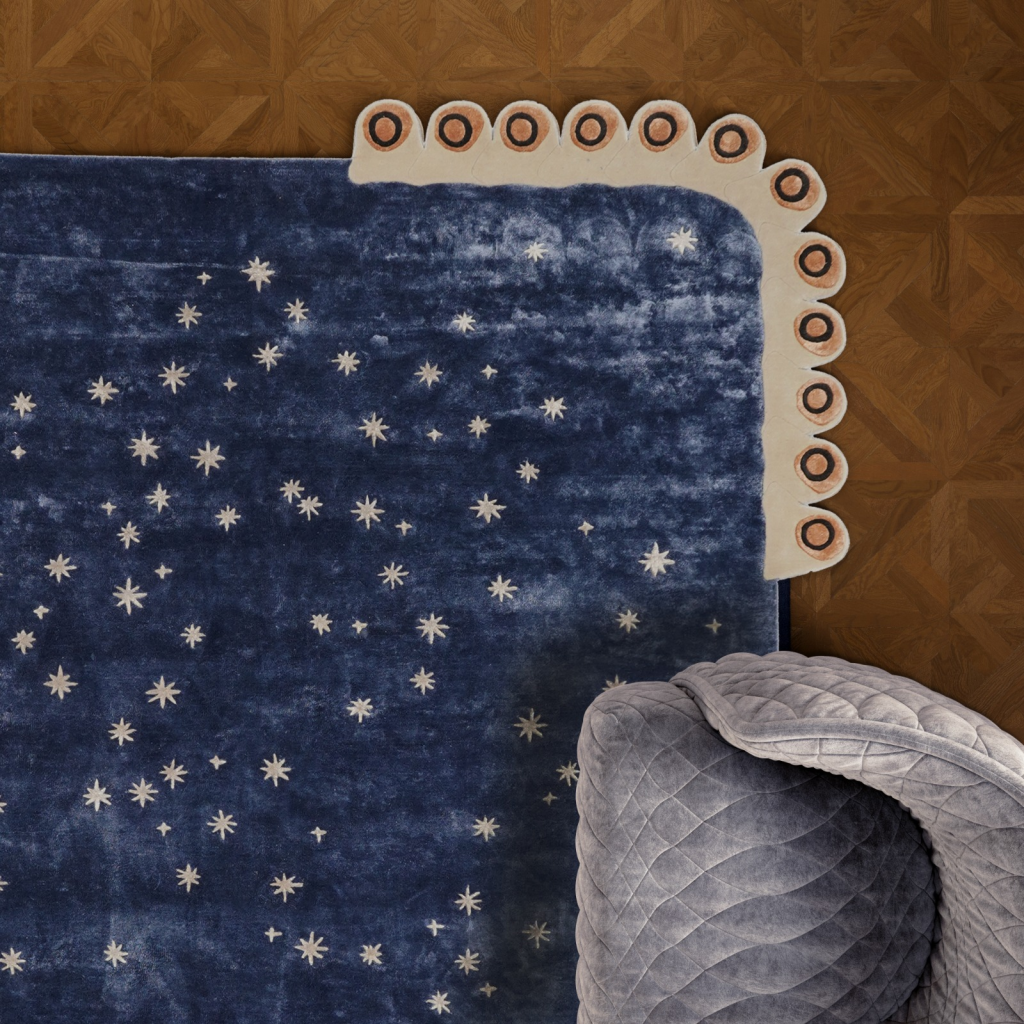
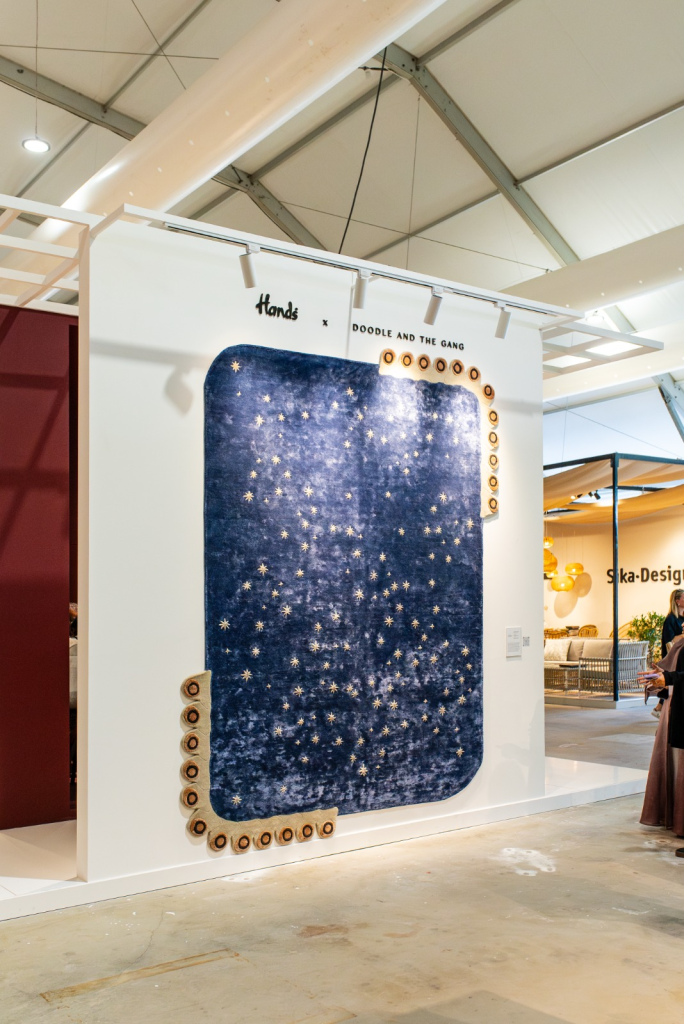
Starry Night reflects the calm of winter evenings, endless skies, and the warmth of gathering. Its textures were also informed by the folds and rhythm of a man’s ghutra, subtly woven into the composition.
Najd
Najd offers a contemporary interpretation of traditional Saudi geometry and architecture, softened through colour and material. Together, the two pieces speak to restraint, balance, and atmosphere rather than spectacle.
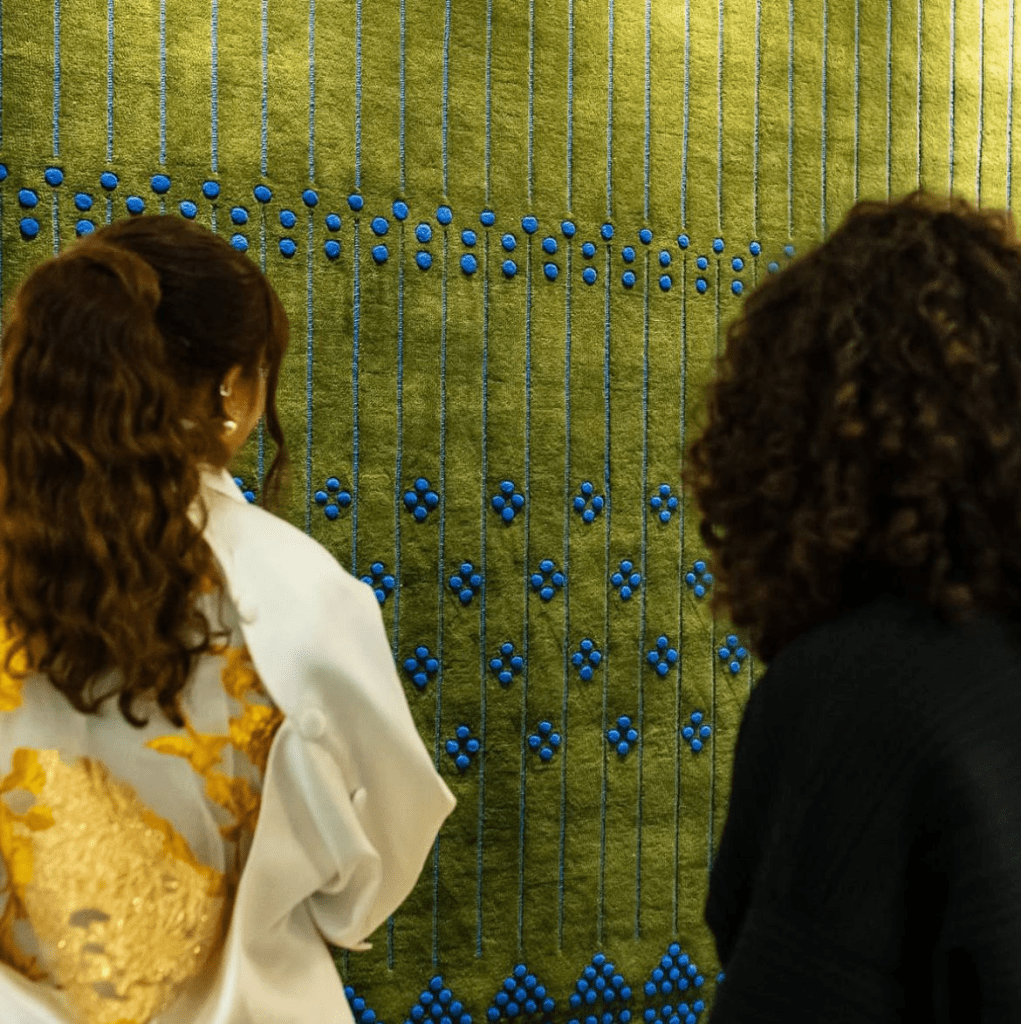
Dubai — A-Bae-A & Khazzanz
Dubai was the most challenging city to translate. Defined by constant reinvention, it resists static memory. The sisters were intentional about avoiding mainstream connotations, instead focusing on the spirit of old Dubai, before the glitz and glamour.
Khazzanz
Khazzanz was inspired by the Al Wasl water tank, once one of the tallest and most iconic structures in its area. Now amid the towering buildings of Dubai, it is not extraordinary, it is simply familiar, a marker of childhood memory seen from below.
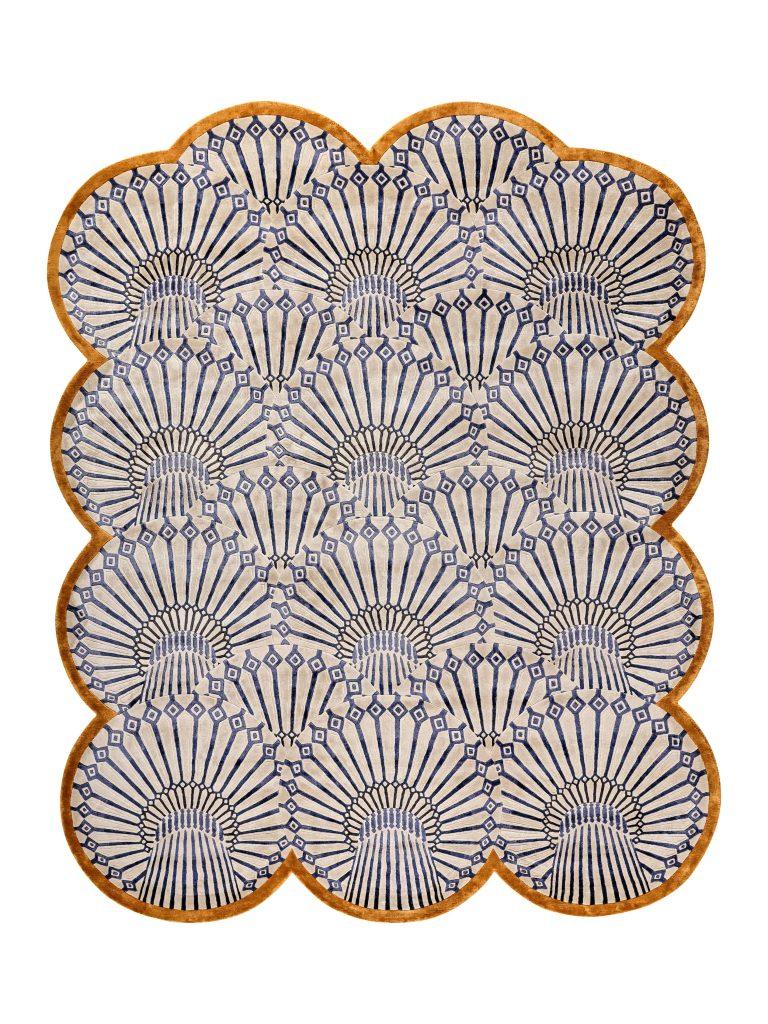
A-Bae-A
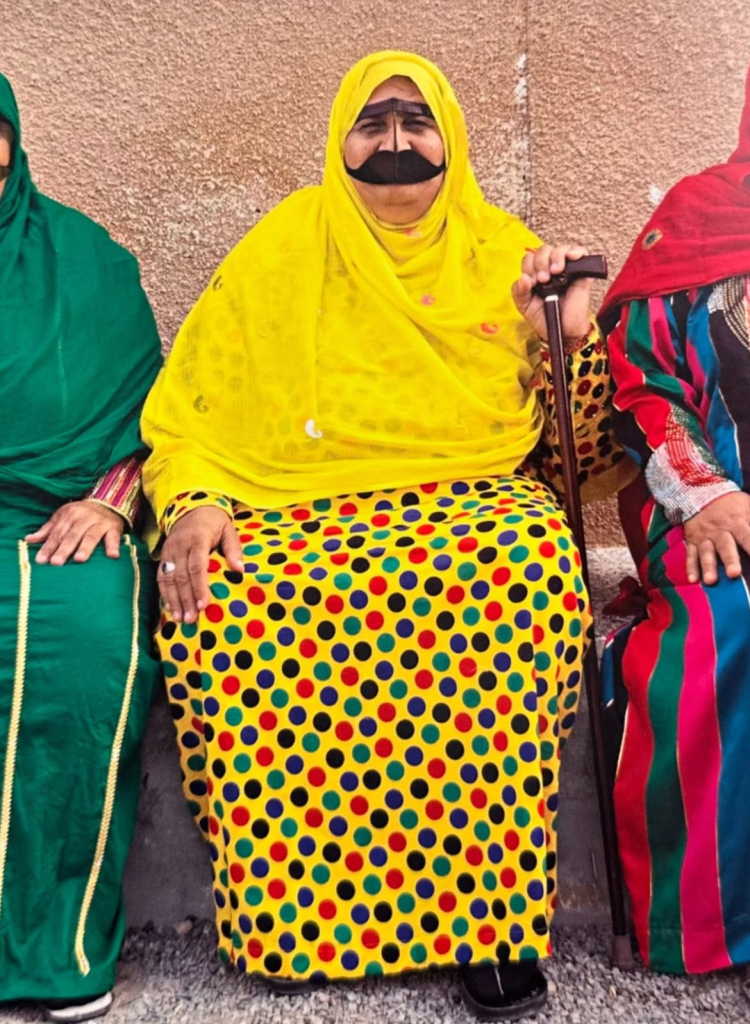
A-Bae-A draws from the silhouettes of older Emirati women and the colourful dresses worn beneath black abayas and sheilas. Playful and cultural, the form invites multiple interpretations. The openness allows each person to form their own connection, even without knowing the story behind it.
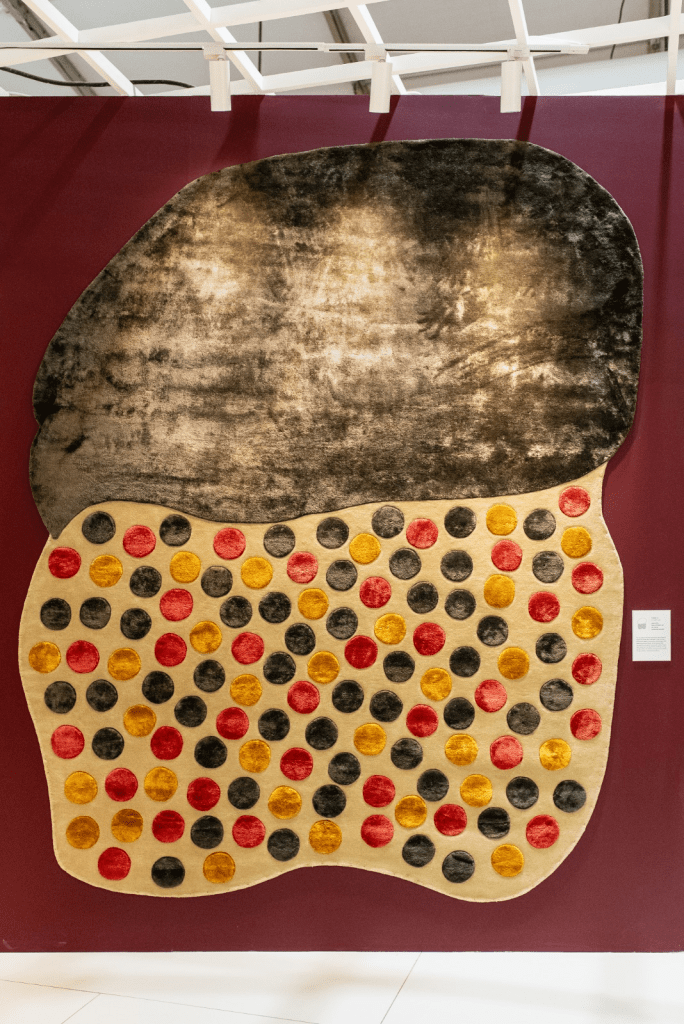
Varanasi — Butter / Butter & Marigold
Varanasi closes the collection as a tribute to craft and process. The city, along with Bhadohi’s weaving village, was chosen because it is where the sisters’ stories truly transformed into craft—a place where memory, design, and skilled hands meet.
Butter / Butter
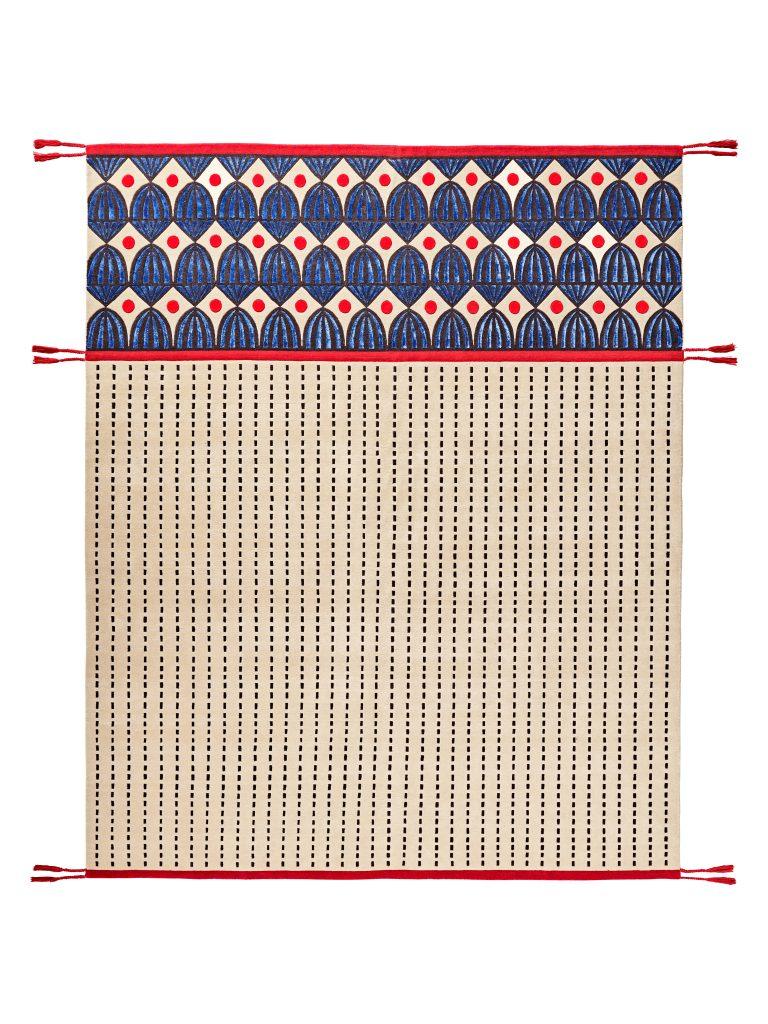
Butter / Butter was inspired by the tufting mesh used as the underlay for rugs, with its distinct black-and-white dashed pattern, combined with the nostalgia of the foil-wrapped butter block found in countless Indian households. The piece helped clarify the emotional direction of the entire collection.
Marigold
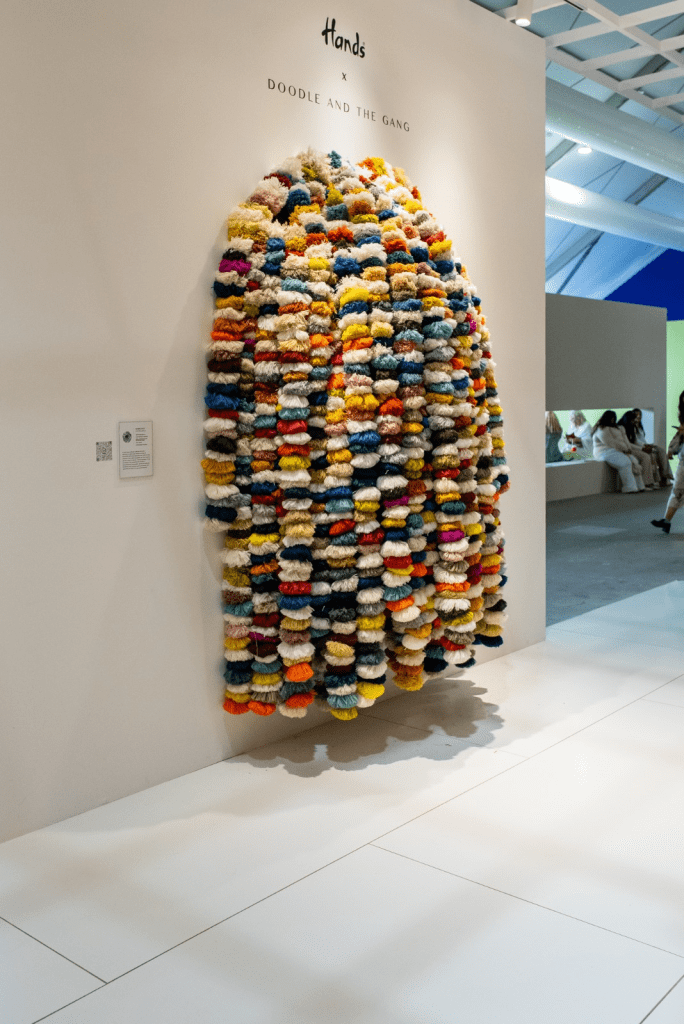
Marigold emerged from piles of leftover yarn scraps found on the atelier floor in Bhadohi. These discarded threads were transformed into over a thousand handwoven flowers, forming a sculptural, life-sized wall piece that celebrates renewal, ritual, and the patience of the artisans.
Texture as Storytelling
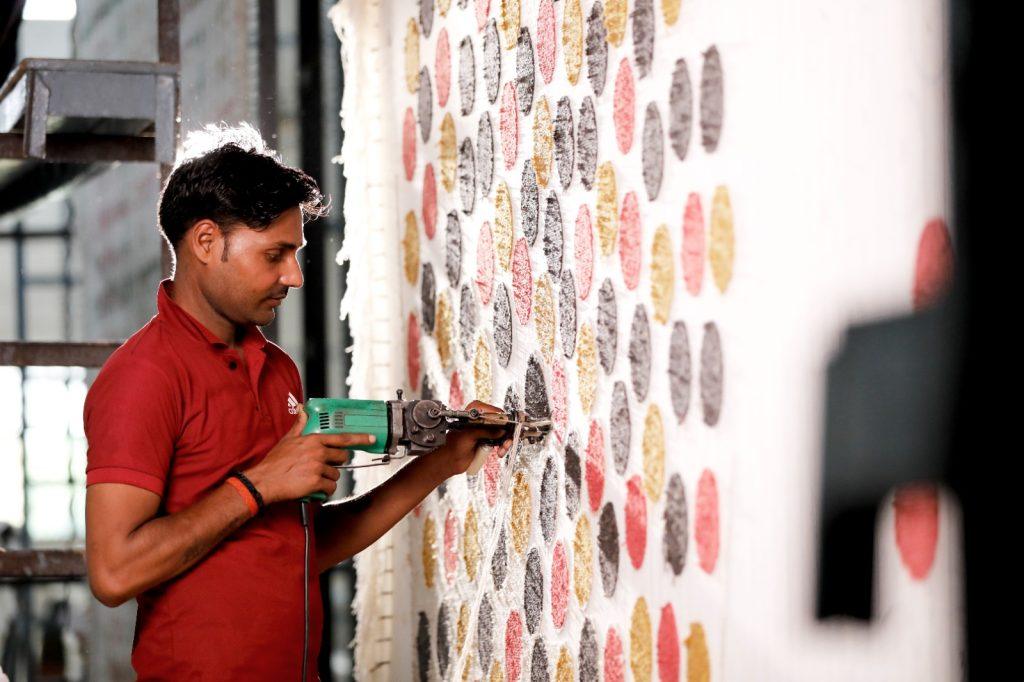
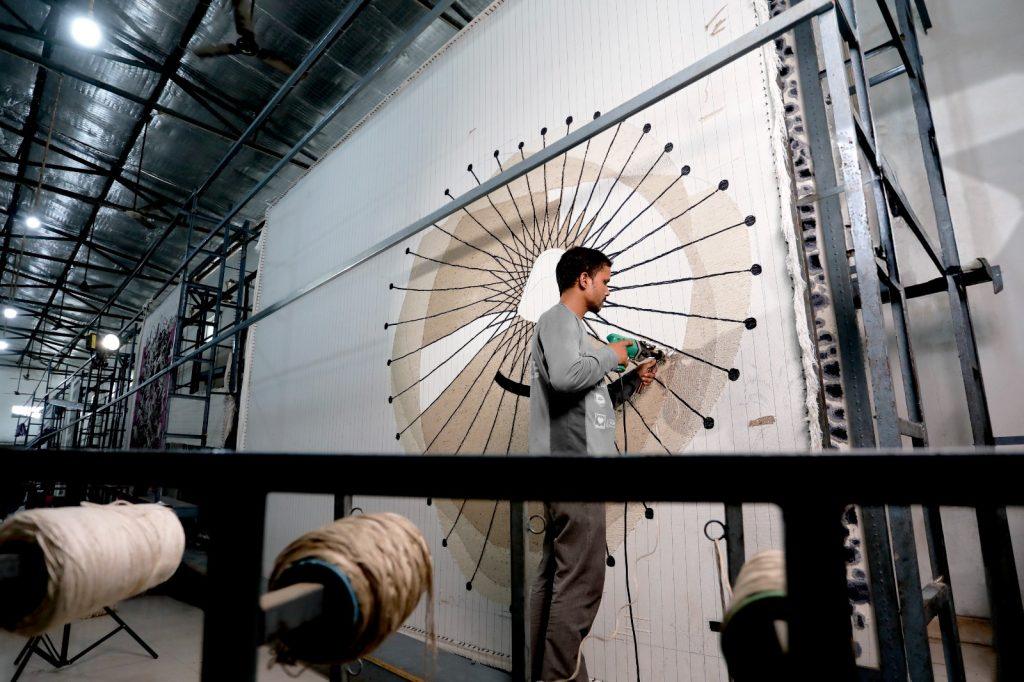
Technique played a central role throughout the collection. Varied pile heights, bevelled edges, recessed motifs, and the contrast between wool’s warmth and silk’s sheen allowed emotion to surface through texture alone. Often, it was the technique itself that revealed the most honest way to tell a story.
What Comes After Postcards?
Looking ahead, the sisters are drawn to cities with layers, places where everyday rituals hold as much poetry as landmarks. Tokyo, Havana, and Beijing sit high on their list. One day, creating a postcard for Al Quds would be especially meaningful.
At the same time, they feel increasingly drawn inward. Egypt alone contains countless worlds—from Aswan to Alexandria—each deserving of its own translation.
Wherever they go next, one thing remains constant: Postcards follows emotion more than geography. It’s about the memory a place leaves behind and how that memory can live on, woven into form.
WE ALSO SAID: Don’t Miss…The GEM Effect: Egyptian Brands Turning Heritage into Design