


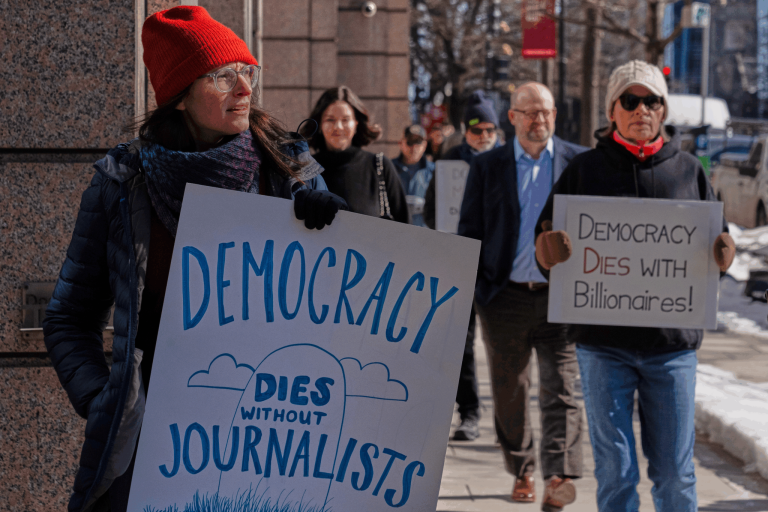
On February 4th, The Washington Post sent an internal statement announcing the laying off of over 300 employees. While the decision has rattled major news departments like sports, daily podcasts, and data visualization, the biggest shake-up was in the Middle East section—the entire staff there were let go.
It reflects a broader change in global media priorities, where a permanent on-ground presence in MENA is no longer treated as fundamental in international reporting.
The Post and Jeffrey Bezos
After Jeffrey Bezos took the throne as the newspaper’s owner with a $250 million deal in 2013, tensions came in rounds. During the first Trump period, the Post thrived, with Bezos’ money giving Washington Post journalists room to innovate, with enough freedom to escape his interventions.
However, in 2024, Bezos blocked the editorial board from running a Kamala Harris endorsement. That decision cost them $100m and 250,000 digital subscribers.
But what can’t be measured in numbers, essentially, is the loss of independent, democratic journalism The Post once stood for. This was the tipping point.
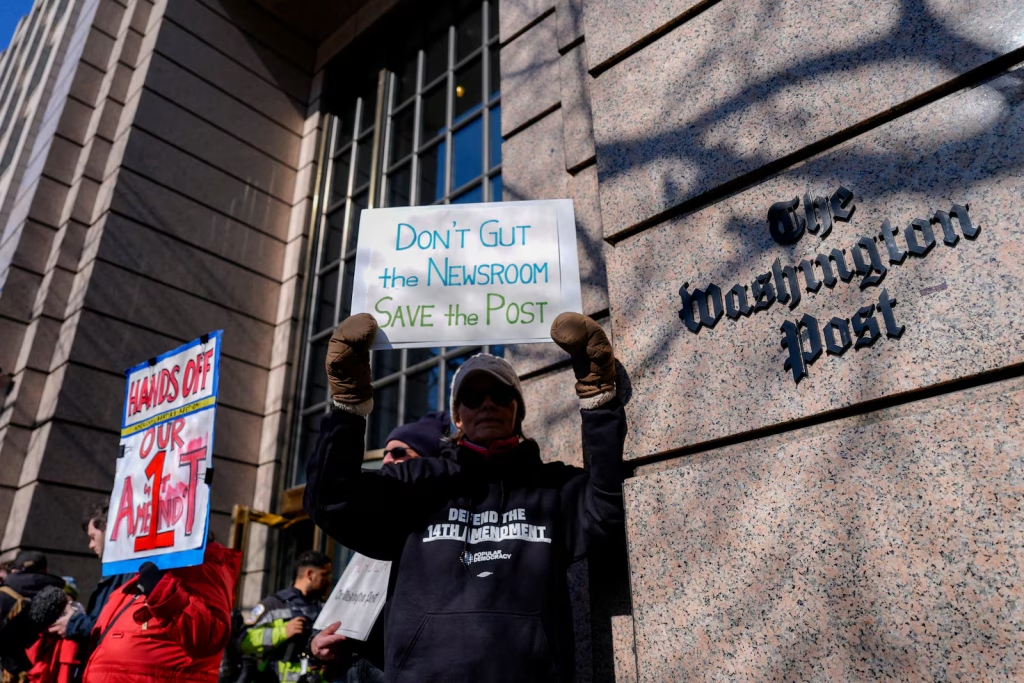
When Billionaires Write the News
Now, in 2026, readers and the entire journalism community are questioning whether this is the inevitable fate of newspapers when billionaires come into the picture.
“It’s just devastating news for anyone who cares about journalism in America and, in fact, the world,” Margaret Sullivan, former media columnist at the Post and The New York Times, told the Associated Press.
Former Editor-in-Chief, Marty Baron, however, was more critical, citing the decision as an attempt from Bezos to “curry favor with President Trump.”
When personal interests interfere with editorial policies, it raises questions regarding ownership of the narratives. Editorial choices then become less about journalistic standards and more about money and political dynamics.
This comes in line with The Post’s Current Executive Editor, Mat Murray, who, while attempting to rectify the situation, stated how The Post “too often writes from one perspective, for one slice of the audience.”
A Questionable Timing
In times where more intrusive on-ground reporting is needed, particularly in areas like Yemen, Sudan and Palestine, it is questionable to settle for a major withdrawal of your journalistic forces.
In a AlJazeera Media Institute paper published in 2021, author Farah Al Hashem discusses how the Middle East is drowning in many humanitarian emergencies simultaneously, making its coverage more prone to misinformation.
She further writes how the complexity of the region makes reporting on a catastrophe, like that of Yemen, require a “nuanced understanding of the cultures and the political currents of a whole region,”
With no Middle East desk, how will MENA stories be reported? There are endless stories waiting to be unraveled, yet they simply no longer became a priority for The Post.
Instead, Murray stated that The Post will be prioritizing stories of “impact”, including politics, national affairs and security.
What Does it Mean for MENA
While the incident is being framed as a mere measure of budget cuts, the complete alienation of MENA voices becomes less of a decision that occurred in a vacuum, and more of a pattern— broader reflection of which stories matter and which don’t, a dilemma the MENA region is long familiar with.
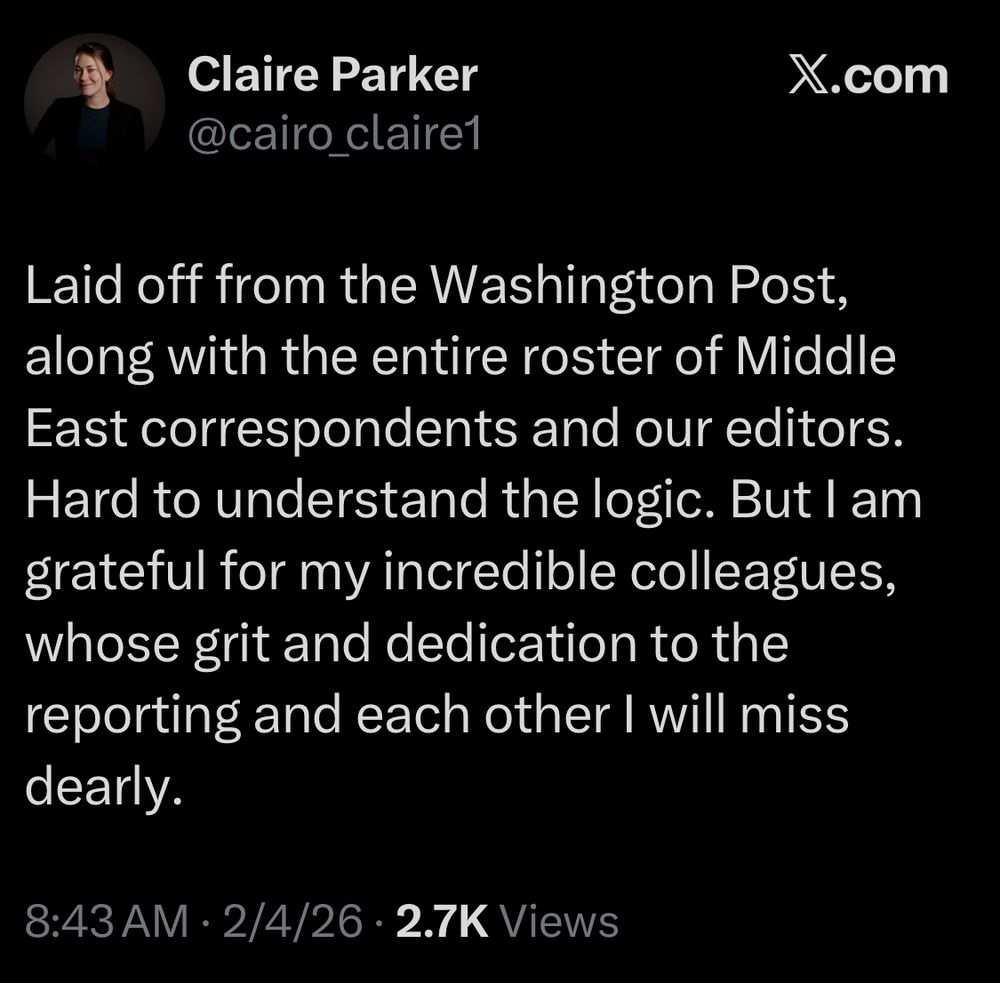
The Post’s Former Cairo Bureau Chief, Claire Parker, took to X, stating that it was “hard to understand the logic” behind the laying off of all the Middle East correspondents and editors.
In a world where media shapes public opinion, this deliberate choice of removing the MENA region from the picture poses a risk and could be reflective of the larger agenda in place by Western administrations.
As international newsrooms continue to downsize, the question is no longer whether coverage will decline, but what kind of coverage will replace it. Is the world still invested in understanding MENA beyond moments of crisis, or is this the beginning of it gradually fading out of view?
We Said This: Don’t Miss… Trump Sets $1 Billion Requirement for Permanent Membership on Gaza Peace Board