


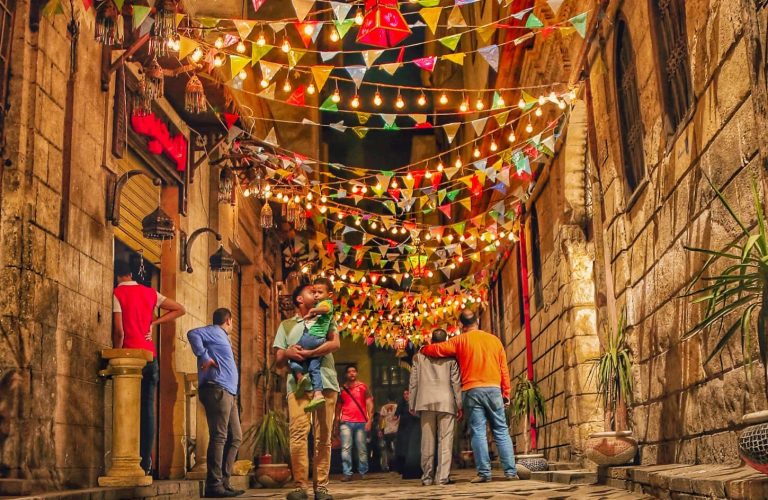
There was a time when Ramadan sounded, smelled, and even felt different. Before group chats replaced family gatherings and delivery apps replaced homemade cooking, the holy month unfolded through rituals that stitched Egypt’s communities together in more intimate ways. From the familiar beat of the Mesaharati’s drum to the Kunafa plate that makes its way across the neighborhood, many of these traditions once defined the rhythm of Ramadan.
Kunafa from the Traditional Oven
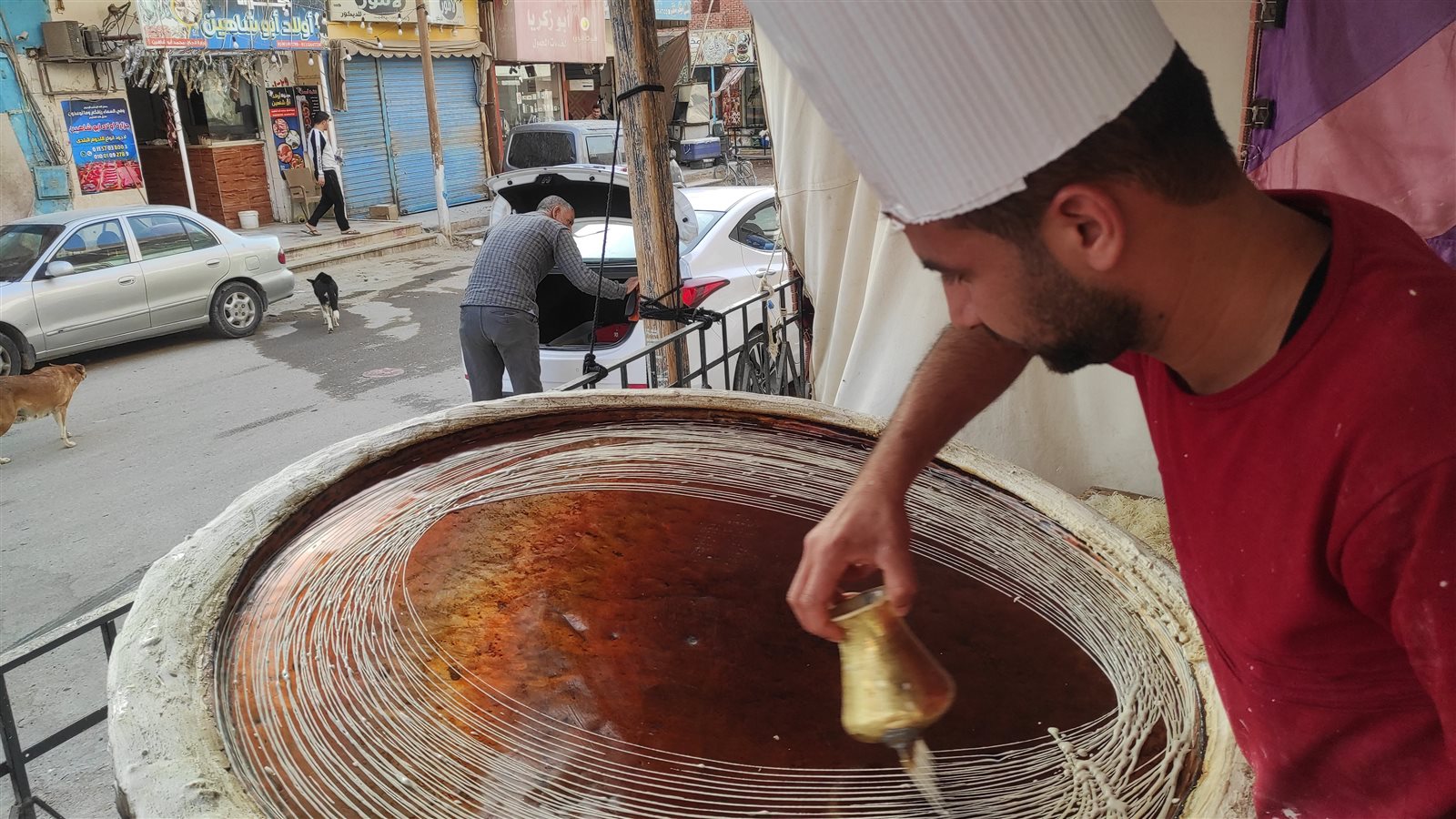
Back then, kunafa was simple: crisp, golden, drenched in syrup. Long before pistachio creams and all kinds of fillings took over, it was made in traditional brick-and-clay ovens, where the heat carried the scent down the entire street. Neighbors would gather around the baker as he skillfully poured the thin batter onto a wide, sizzling griddle, watching it transform into delicate golden threads. There was no trend, no endless variations, just a dessert enjoyed by generations.
Passing Dessert Plates to Neighbors
This ritual didn’t just fill our stomachs; it filled our hearts. Whenever a dessert was made, a plate was carefully arranged and sent to the next door neighbors. It was an unspoken rule, a quiet sign of generosity that captured the true spirit of Egyptian hospitality. More than a sweet gesture, it was a tradition that strengthened relationships, turning neighbors into extended family.
Fawazeer Ramadan
These were the shows that shaped our childhoods, the ones that had us racing to the TV screen just so we wouldn’t miss a thing. We’d be glued to the TV, waiting for the next riddle from Nelly W Sherihan, or laughing along with Fatouta as we shout out our guesses at the TV screen. This Ramadan ritual brought the whole family together in front of one glowing screen.
The Handmade Paper Decorations
In the past, Ramadan decorations weren’t simply picked off store shelves; they were crafted with heart at every home. Armed with colored paper, thread, and a trusty pair of scissors, children would carefully cut crescents, stars, and lanterns, linking them together into long, cheerful chains that stretched across streets and brightened every room.
.jpeg)
The Mesaharati Who Knew You By Name
Back then, the Mesaharati wasn’t a rare sight limited to certain neighborhoods; he was part of every community. A beloved figure who appeared every Ramadan and would call on every child by name. As he walked through the quiet streets beating his drum and calling out to families one by one, windows would light up before dawn and the entire neighborhood would bond like one big family.

Some traditions may have faded, softened by the change of times, but their spirit still lingers in our memories. They remind us that Ramadan was never just about the rituals; it was about the people, the togetherness, and the small moments that made the holy month feel like home.
We Said This: Don’t Miss… Ramadan Period Pieces We Still Think About