


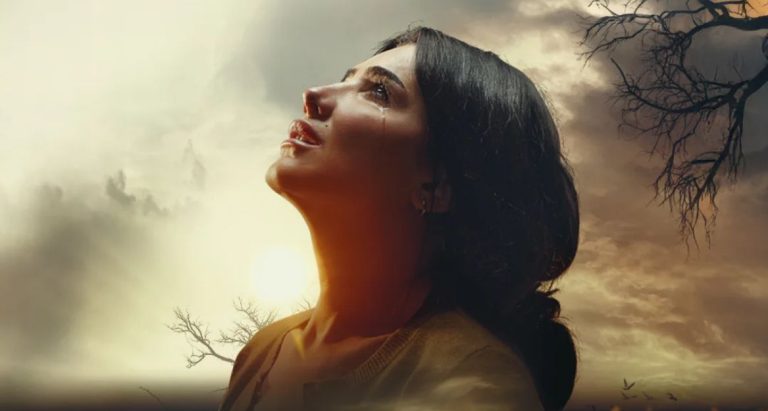
Every Ramadan, opening credits quietly do a lot of work. They set the mood, introduce the story, and sometimes sneak into our collective memory for years to come.
In 2026, something new happened. The credits didn’t pass quietly. Some viewers were frustrated, others were intrigued, and many simply confused by what they were seeing. Much of the conversation centered on AI-assisted production, how it was used to generate visuals, speed up creation, and sometimes replace traditional processes.
The 2026 Moment: A New Look, A New Feeling
This year’s credits shared a noticeable shift in style with the use of AI. They were highly polished, concept-driven, and visually confident. For some viewers, this felt fresh. For others, it created a sense of distance because the human presence felt harder to locate.
El Set Mona Lisa
El Set Mona Lisa credits has a solid idea behind it. The shifts are intentional, a bride moving from happiness to confinement, still wearing the wedding dress but now trapped as a chess piece. You immediately understand the themes: power, control, and identity. Conceptually, it’s doing real narrative work.
Where some viewers hesitated was the characters themselves. The faces feel smoothed and idealized, almost standardized. The meaning is there, but the people inside the image start to feel symbolic rather than human, which many saw as distancing.
Fan El Harb
This credit sequence commits fully to a single visual metaphor: a machete from which everything is formed, including the characters. It’s cohesive, bold, and visually controlled. You can tell a lot of planning went into making everything come from one source.
What some viewers responded to was the lack of human art. When everything feels digitally generated, the “how” disappears, and that absence becomes noticeable when set against older approaches where creation itself was part of the experience.
Etneen Gherna
This one clearly wants to be romantic and emotionally soft. The intention is tenderness. But for many, the result felt emotionally muted. It’s polished, but the warmth that comes from physical performance or handcrafted work is less evident.
It highlights a broader tension: AI can deliver efficiency and concept clarity, but subtle human cues are harder to capture.
Looking Back: Why Older Credits Keep Coming Up
As people talked about the 2026 credits, many instinctively started looking backward, not out of nostalgia alone. But also what were those older credits doing differently?
Ma’a Sabq El Esrar
This is often brought up not just as a “good old example,” but as a reminder of how credits once doubled as talent spotlights. The opening was created by Shaima Al-Mughairi, known to many from Arab’s Got Talent.
You could literally see the hand shaping the sand. The fragility, the timing, the fact that one wrong move could ruin a frame, all of that became part of the tension. It wasn’t just beautiful; it was vulnerable the way art is meant to be.
Nelly & Sherihan
These credits were loud in the best way. Color everywhere, constant costume changes, shifting sets, and choreography that felt alive. Nothing was hidden. You could feel the performers enjoying themselves — and that joy translated directly to the viewer.
It’s a reminder that credits don’t always need symbolism. Sometimes they just need presence.
El Kebeer Awy
Its animated credits became iconic precisely because they were created frame by frame. Over time, the El Kebeer Awy’s credits, not just the show, became part of the Ramadan ritual.
It’s also a reminder that credits like these supported entire teams of animators and illustrators, year after year. Consistency wasn’t just aesthetic; it was economic.
Layaly Eugenie
Another romance, but handled differently. The credits move between symbolic moments of love and direct shots of the actors themselves. That balance grounds the emotion, keeping it poetic without drifting into abstraction.
Lahfa
Dance is central here too, but the tone is different. The movement feels homey, familiar, almost casual. There is a sense of comfort that is hard to manufacture, and even harder to automate, a reason why the credits remain a favorite years after the show ends.
So Why the Discomfort Now?
It’s important to say this clearly: not everyone disapproves of AI-assisted credits. Many see them as efficient, cost-effective, and inclusive, opening doors for creators who might not otherwise have access to the industry.
At the same time, animators, illustrators, and designers are openly talking about shrinking teams and disappearing roles. When production becomes seamless, labor becomes invisible and that invisibility is what many viewers are responding to, even subconsciously.
A Conversation
This isn’t about attacking new tools or idealizing the past. It’s about noticing and acknowledging the shift.
Ramadan credits were never just packaging. They were a ritual, built on creativity, effort, and the feeling that someone made this for you.
AI may very well be part of that future. The question people seem to be asking in 2026 isn’t whether it belongs but how much of the human process we’re willing to let fade quietly out of sight.
We Said This: Don’t Miss…These Ramadan 2026 Theme Songs Are Already Earning a Spot on Our Playlist