


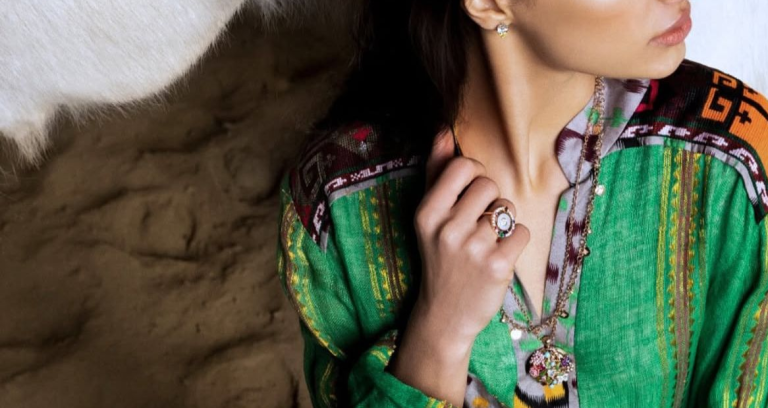
There’s something about Saudi Founding Day that feels less like a date on the calendar and more like a mood. It’s history, yes, but it’s also identity, architecture, desert tones, palm trees, old coins tucked into dowries, and stories passed down quietly.
So we looked at Saudi jewellery houses that don’t just nod to heritage, they interpret it. Not costume. Not cliché. Just thoughtful design that happens to carry a nation inside it.
Yataghan Jewellery – Inspired by the Saudi Emblem
Founded in 2008 by Saudi designer Sarah Abudawood, Yataghan has always balanced heritage and minimalism. The name itself — inspired by the curve of the Ottoman yataghan sword — hints at strength and protection, but in a controlled, elegant way.
For Founding Day, they reimagined their “Key of Love” — originally a Valentine’s piece — into something distinctly Saudi. The polished heart and elongated key silhouette remain sleek and modern, but the details shift the narrative. A touch of green stone embedded in the heart subtly echoes the Saudi flag, while diamond accents keep it refined.
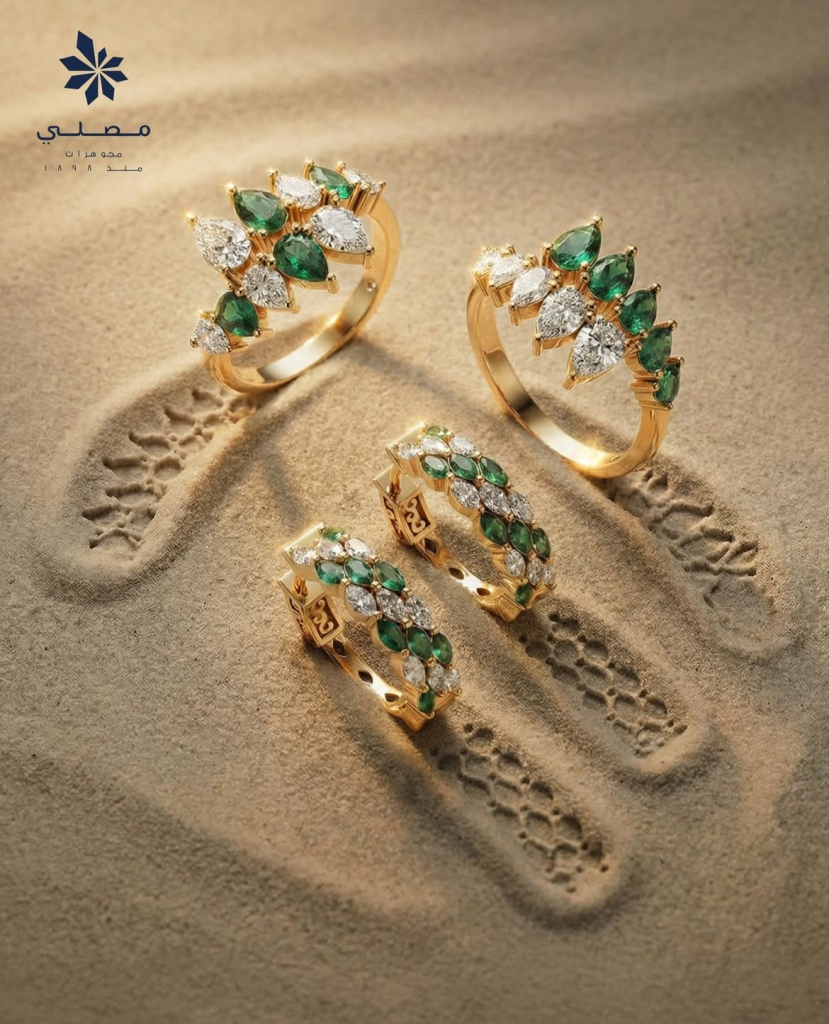
Musalli Jewellery – Inspired by the Colors of the Saudi Flag
Musalli’s story goes all the way back to 1898 in Makkah, from silver beginnings to a gold legacy that’s now over a century strong.
The diamond ring in green and white tones feels like the most understated tribute to the Kingdom. Pear-cut emeralds sit between bright white diamonds, set in warm gold. It doesn’t feature a palm tree or a map. Instead, it leans into color psychology, that specific Saudi green against luminous white stones.
Luda Jewelry – Inspired by the Saudi Emblem
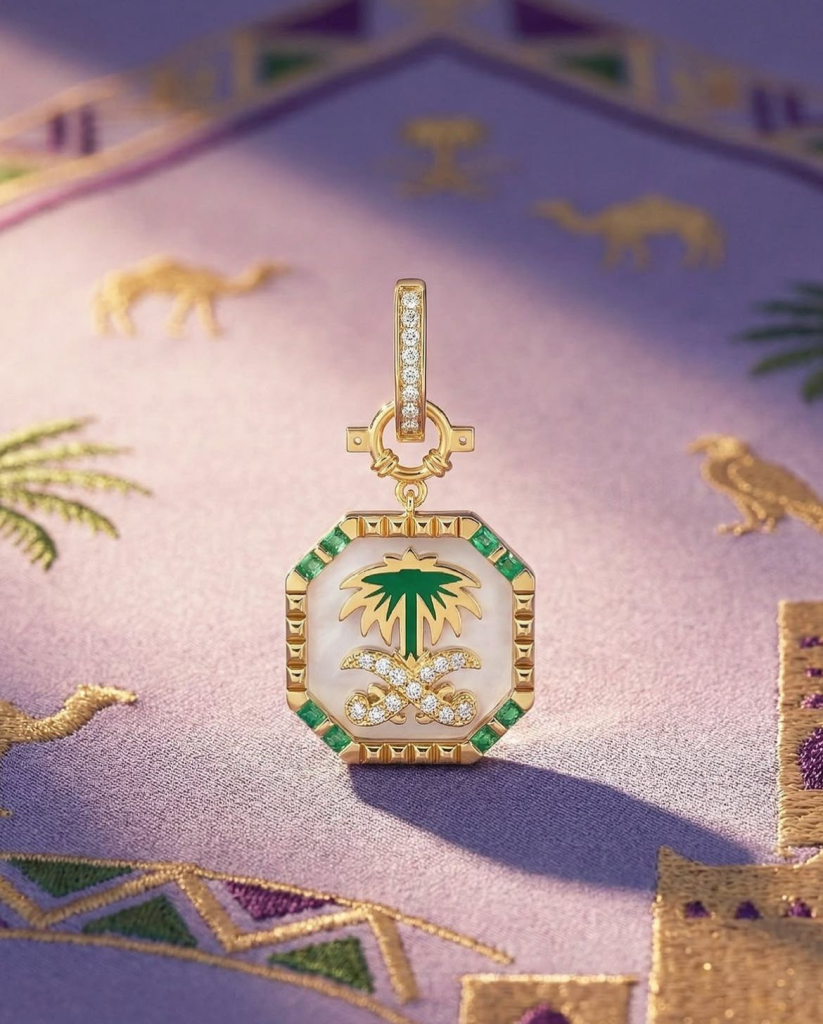
Dr. Khlood Arab — dentist turned jewellery designer — built Luda around the language of flowers. But for Founding Day, the symbolism becomes more direct.
The octagonal pendant featuring the Saudi palm tree and crossed swords is framed in gold with green accents along the border. It sits somewhere between a talisman and a keepsake. The palm stands tall at the center — prosperity and resilience — while the swords beneath it are softened with diamond detailing.
Lillian Ismail – Revives the Saudi Tradition of Gifting Gold Coins
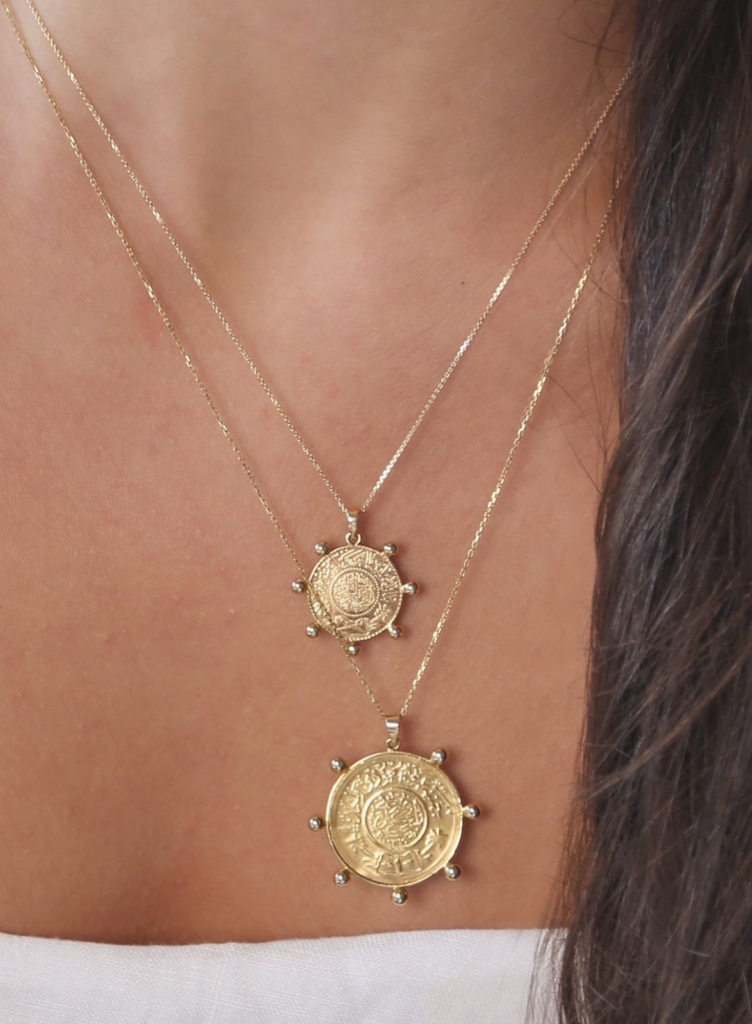
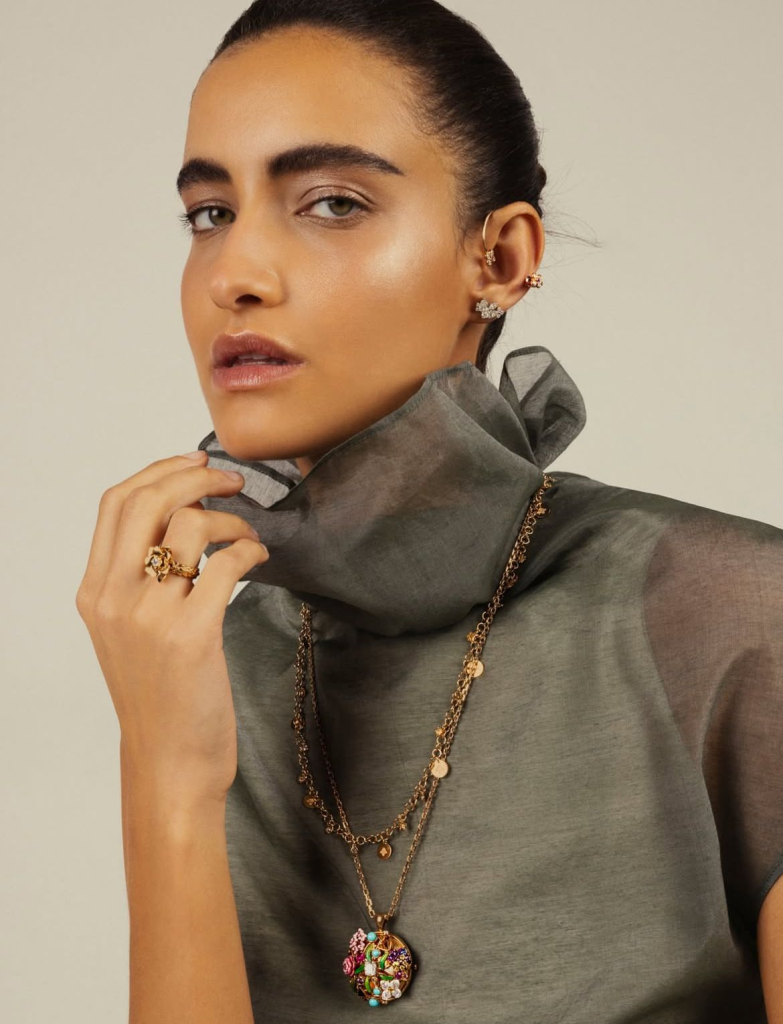
Lillian Ismail started designing at 17, and you can feel that youthful boldness in her work, especially in how she reinterprets traditional Saudi gold.
The Jeneh collection revives the tradition of gifting gold coins, transforming them into modern pendants and necklaces. Worn layered over a green thobe, the coin discs feel both nostalgic and current. They reference dowries, family celebrations, heirlooms, but styled in a way that feels very now.
Then there’s Roshan, inspired by the wooden balconies of historic Al-Balad in Jeddah. Architectural, structured, deeply Saudi. She’s not just referencing heritage, she’s rebuilding it in 18k gold.
Nadine Jewellery – Rawda Locket Inspired by the Saudi Desert
Nadine Attar approaches jewellery like storytelling. A former banker turned certified gemologist, she leans into symbolism without losing playfulness.
The Abjad collection, engraved with Thamudi letters (dating back to 2500 BC), feels like wearing a fragment of ancient Arabia. Not decorative script, but linguistic heritage cast in gold.
And then Rawda, described as an ode to desert flowers, palms, and jasmine. The lockets and pendants bloom with Saudi identity through natural motifs rather than national emblems with a subtle engraving of the five regions of the Kingdom. It’s less about the state, more about the land.
Which, on Founding Day, feels equally meaningful.
Charmaleena Jewellery – Inspired by the Kaaba
Founded in 2012 by sisters Leena and Hala, Charmaleena merges global training (GIA diplomas, London and New York influence) with unapologetic Saudi pride.
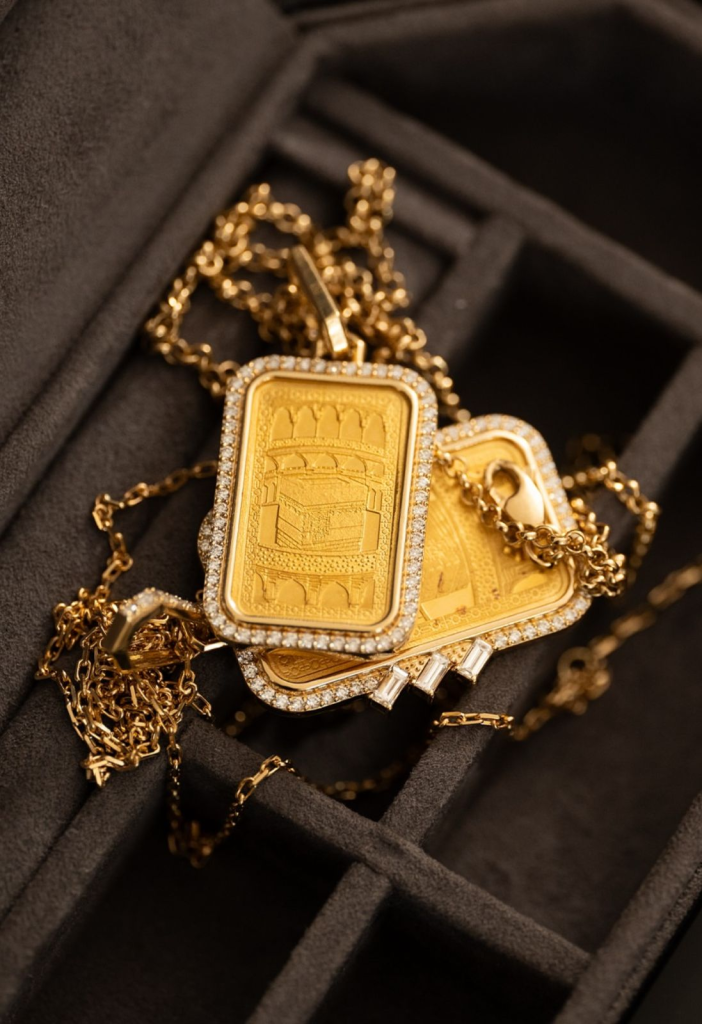
The Kaaba gold bar pendant is direct in its inspiration: crafted in 24k gold, framed in 18k gold and diamonds, the rectangular form mirrors a gold bullion bar — but engraved with the Kaaba. It’s devotional and luxurious at once.
Unlike abstract references, this one leans fully into sacred geography. And yet, framed in diamonds and baguettes, it feels less like a souvenir and more like a generational heirloom.
A Final Thought
What stood out across all these brands isn’t just the symbols — it’s the spectrum. Some choose literal emblems. Others choose color. Some resurrect coins. Others revive ancient alphabets or architectural details.
And maybe that’s the point. Founding Day isn’t one image. It’s many.
From emerald-toned rings to Thamudi scripts, from palm trees to roshan balconies — Saudi heritage isn’t stuck in the past. It’s being redesigned, polished, and worn forward.
WE ALSO SAID: Don’t Miss…7 Things You Probably Didn’t Know About Saudi Arabia