


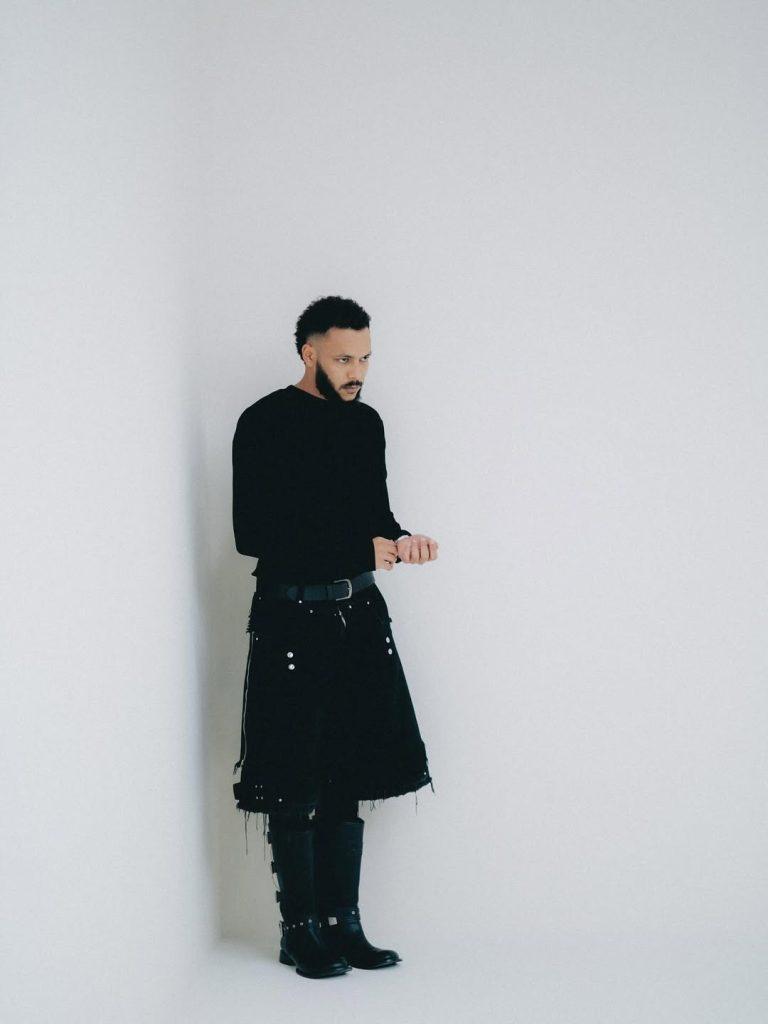
For a little under a decade now, Wegz has been one of Egypt’s most experimental rap stars in the MENA region. Undeniably, he’s been bringing Egyptian rap from a niche subculture into the mainstream, a move that hasn’t always been praised by rap culture, with many questioning the blurry lines of the movement and the intentions behind it.
His undeniable commercial success, topping streaming charts and becoming the most-streamed Arab artist on Spotify two years ago, speaks for itself. Wegz managed to cater to most people’s ears, coming from rap roots while also tapping into pop and experimental genres. He carved out a niche from within, as a rapper whose authoritative voice and delivery can shift to fit different genres and personas, spanning EDM, Afrobeats, and Amapiano.
His early years touched on themes of ego trips, hustle, and ambition, proving himself and climbing to the top on tracks like “Dorak Gai.” With sharp, aggressive rapping and complex rhyme schemes, that era felt intense and direct, helping spark a whole movement that pushed people to take a previously undermined genre more seriously.
Up until Aqareb, Wegz makes a surprising shift, with his flow becoming more melodic, more sing-songy, and more accessible to a broader fan base and not just rap listeners. This shift fueled criticism from parts of rap culture who feel he’s sacrificing lyrical complexity for mass appeal. Yet Aqareb still holds onto that bravado, just in a more introspective and melancholic way, exploring the cost of fame, personal sacrifices, and the pressure of success at a young age in a short amount of time.
Rap has always been about street language, small communities, grit, and proximity to the artist, but Wegz clearly disagrees with keeping it boxed that way. What can hardly be defined as a straight-up rap album becomes a showcase for his experimental sound and don’t shoot me, but it’s working. Maybe not intentionally, but he’s found a lane that somehow caters to a wider fanbase, and that’s exactly what we hear on this side of the album.
Working with international and regional producers, most notably British-Romanian producer Tudor Munroe, gives the album a cohesive, highly mixed, studio-polished sound. That same polish has been criticized for abandoning the raw, rebellious nature of the genre that brought Wegz up in the first place. Critics always bring up the “old Wegz” argument, but personally, I think his success is owed to his different ways of delivery, watching him evolve, not necessarily in a “better” way, but in a more experimental one, tapping in and out of rap. We’ve seen plenty of examples where artists’ careers fell apart once they drifted too far from what they did best. Taking that kind of risk isn’t easy yet Wegz somehow makes it work.
On this side of the album, he proves just how little he cares and almost rubs it in people’s faces, with side B leaning fully into experimentation of different genres, sounds, unexpected collaborations, and sometimes even bilingual moments collabing with Hussein Gamal, Tudor Munroe, Wezza Montasser, Rashed, L5VAV, with additional appearances by Teymour Radwan and Azzouni on production yet it comes together as a cohesive body of work that fits perfectly alongside the first side of the album.
With some tracks already released, some previously premiered by Wegz himself, and some even leaked, we still hear distinct new sounds from him. The diverse 12-track Side B features a globe-trotting cast of artists, including Egyptian legend Mohamed Mounir, Nasser, Yunyo, Morocco’s Raste, Nigeria’s Tiwa Savage, KSA’s Dahoum El Talasy, Palestinian MC Sammy Shiblaq, and Yemen’s Hammoud El Sammah.
Side B ties together years of Wegz’s trajectory as he plots an overview of his career trajectory, bouncing between mahraganat anthems, R&B ballads, cross-continent Amapiano collaborations, slow-burning trap heaters, and more, trading the summer, dancefloor-focused energy of the dark side of fame we heard on Side A for a more introspective and exploratory winter soundtrack.
Although Aqareb has made it clear since Side A that it isn’t meant for people missing the old Wegz, it still feels like an important part of his story and experimental agenda. From his singing on “Mafish Waat” featuring Raste, to the melancholic “Dawama,” to the flexing on “Switch,” this side of the album shows how comfortable he’s become moving between sounds.
On “B.B. King” featuring Dahoum El Talasy, we hear a new style of flow from Wegz and his ambition to push beyond regional ceilings. That global reach shows up again on the Amapiano-leaning “Salkana” with Nigerian singer-songwriter Tiwa Savage. The closing track takes us back to 3afareet El Asphalt, though this time it’s more melodic than rage-driven. The flow and production feel familiar, but the attitude is different, completely unbothered by the rules of the game, and not shy at all about leaning into more commercial sounds.
Wegz has obviously changed over the years. From a 2017 post saying he was about to drop a song that would blow up, to now dropping the B side of his long-awaited debut album, he’s in a completely different headspace, dealing with new stages of life and new experiences.
WE SAID THIS: Don’t Miss…Bu Kolthoum Sees Himself in ‘MHD Mounir’ on His New EP