


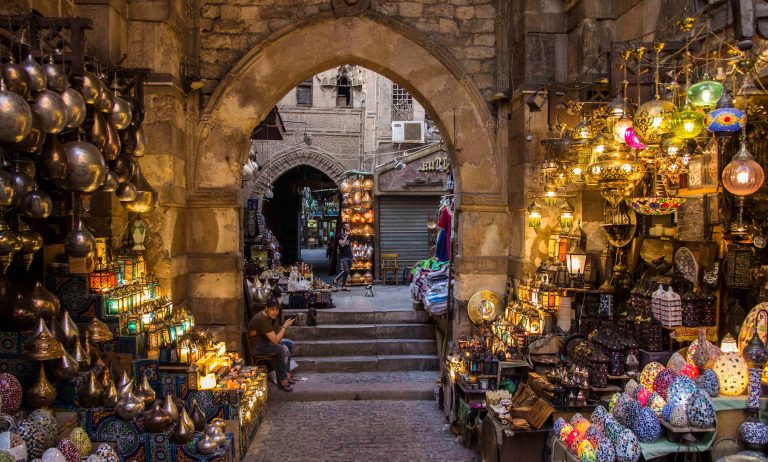
Every visit to Khan El Khalili is a journey through time. From its labyrinth of colorful shops to its winding, centuries-old streets, the market hums with life. During Ramadan, the air is especially electric, filled with the aroma of street food, the chatter of shoppers, and the festive spirit that has been passed down for generations. But behind the sights and sounds lies a deeper story. Here’s the rich history that shaped Khan El Khalili as we know it.
The Origins of The Khan
Cairo’s legendary market was founded in the 14th century, around 1382, as a bustling hub for merchants traveling through the city. During the reign of Sultan Barquq (1382–1389), it quickly became the center of Cairo’s economic life.
The market owes its name and creation to Emir Jaharkas al-Khalili, a Circassian Mamluk who demolished a Fatimid mausoleum to build the khan at the heart of the city. “Khan” refers to a caravanserai or marketplace, while “El Khalili” is believed to honor the emir himself.

The Golden Age of Trade
During the Mamluk period, Khan El Khalili was buzzing with merchants from all over the Middle East and North Africa, trading everything from exotic spices and luxurious textiles to jewelry and perfumes. In the early 16th century, Sultan al-Ghuri, Egypt’s last effective Mamluk ruler (r. 1501–1516), tore down the original khan built by al-Khalili and rebuilt it in 1511, adding his own religious complex.
When the Ottomans took over in 1517, the market didn’t skip a beat, turning into a hub not just for trade but for social life too as cafes and artisan workshops popped up.
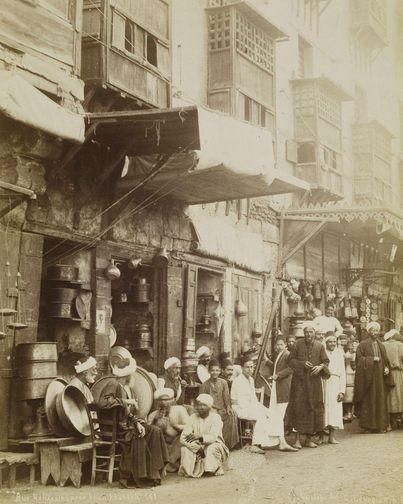
El-Fishawy Café: A Hub for Cairo’s Thinkers
Established in 1710, El Fishawy Cafe takes its name from its first owner, Fahmy El Fishawy, and has been lovingly run by seven generations of the same family. By the 20th century, it had become a magnet for politicians, writers, and intellectuals, drawing luminaries such as Naguib Mahfouz and Ahmed Zewail.
Today, the cafe continues to charm visitors and locals alike, who gather amid its traditional wooden chairs and vintage chandeliers, savoring the rich flavors of classic coffee and tea while soaking in centuries of history and atmosphere.

The Movie Khan El Khalili
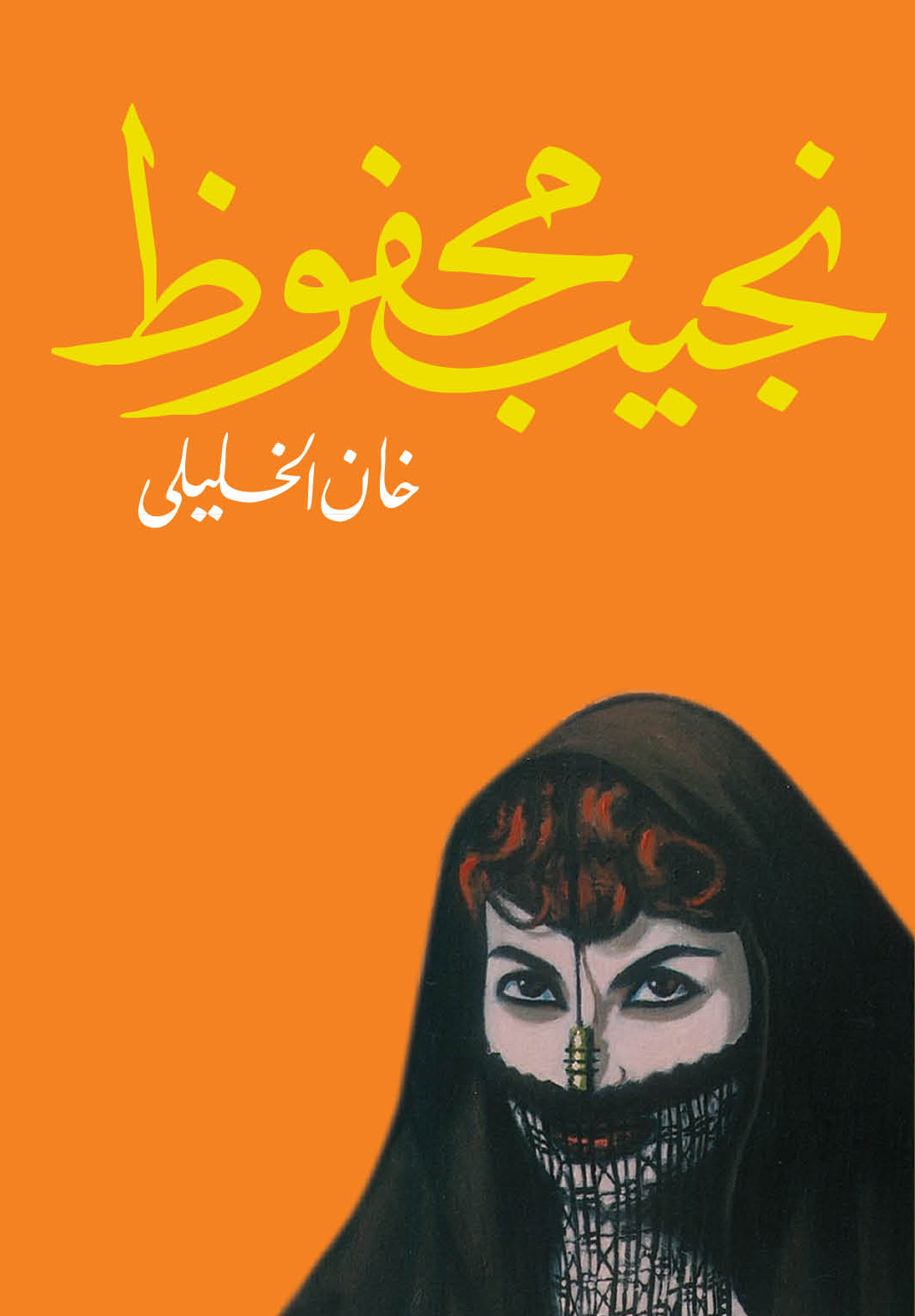
In 1945, Nobel laureate Naguib Mahfouz wrote his novel Khan El Khalili, telling the story of a middle-class family during World War II who move to the bustling heart of Cairo.
The book was later adapted into a 1967 film starring Samira Ahmed, Emad Hamdy, Hassan Youssef, and Taheyya Kariokka where the lively streets of the neighborhood come alive on screen, adding depth and color to the story and capturing the vibrant spirit of Khan El Khalili itself.

The Market Lives On
Today, Khan El Khalili buzzes with life, drawing both locals and tourists from around the world with its dazzling lights and irresistible street food, especially during Ramadan.
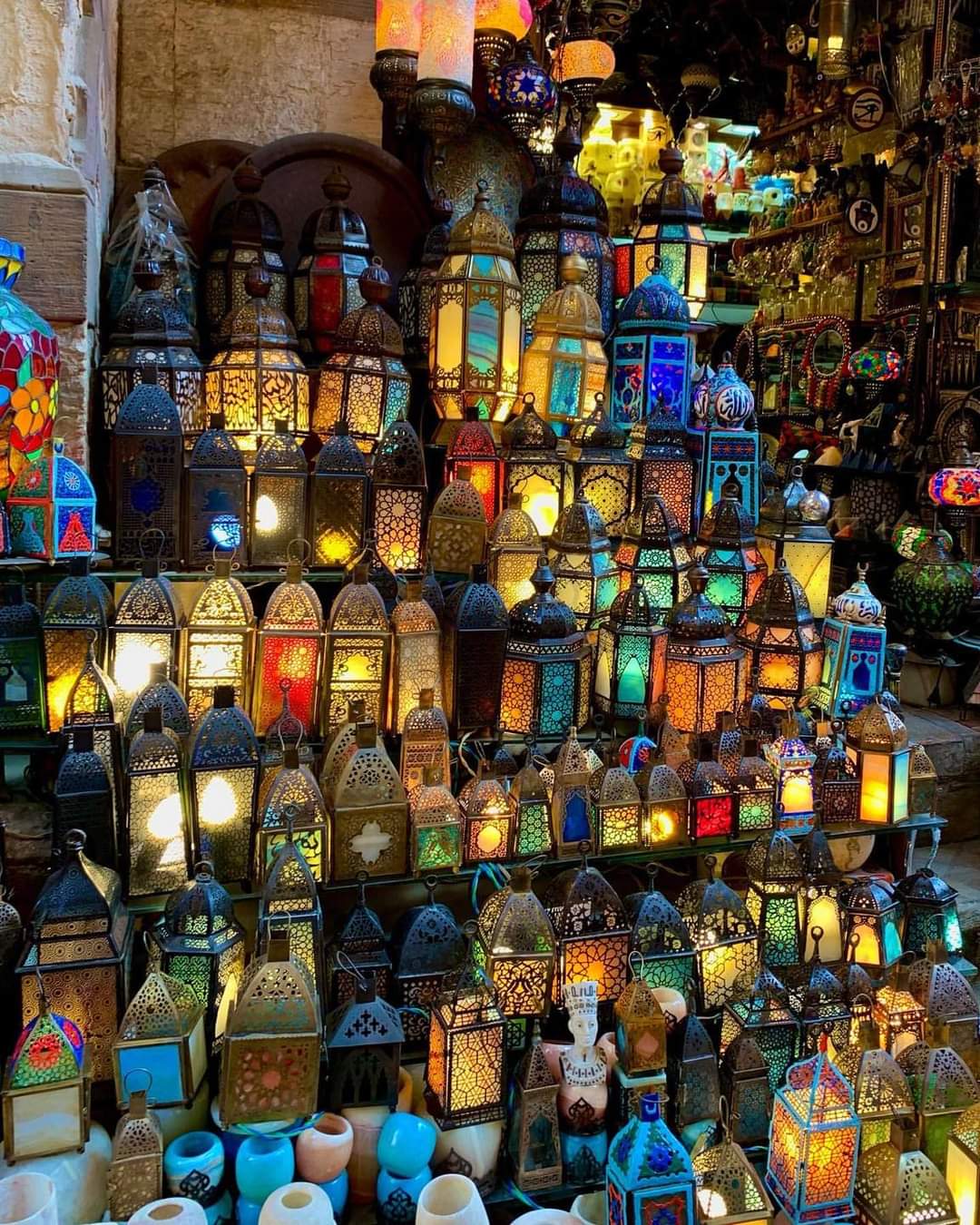
As you wander through its winding alleys, you’ll encounter the vibrant tapestry of Egyptian life: mascots dressed as beloved cartoon characters, mesmerizing tanoura dance shows, colorful decorations designing the sky, and stalls brimming with handmade crafts, copper lanterns, and ancient souvenirs that tell stories of centuries past.
As Ramadan settles in and Khan El Khalili comes alive with lights, music, and bustling crowds, it’s important to remember that the market has lived many lives beyond the celebrations. With centuries of history etched into its alleys and walls, Khan El Khalili is more than just a street market; it’s a living testament to Egypt’s enduring heritage.
We Said This: Don’t Miss… The Story Behind Tanoura: Tracing Culture With Every Turn