



Hekayet Narges shaped the Ramadan narrative with a deeply personal story inspired by real events. The series tackled the struggles of women under the weight of societal expectations, with Riham Abdel Ghafour perfectly portraying a working-class woman grappling with these challenges.
Beyond the drama, the story ignited the age-old nature vs. nurture debate through its main character, Narges. Some viewers harshly judged her actions, while others argued that society left her with little choice.
A Master Manipulator
We first see Narges as she skillfully manipulates Awni into marrying her, using the union as a quick way to recover her image after the first divorce. It’s clear that Awni has long been in love with her, and Narges knows it.
She then deceives him into believing he is infertile, convincing him to play along with her scheme as she fakes a pregnant belly in front of everyone. These moments highlight a manipulative side of Narges: someone determined to get what she wants, regardless of who gets hurt in the process.

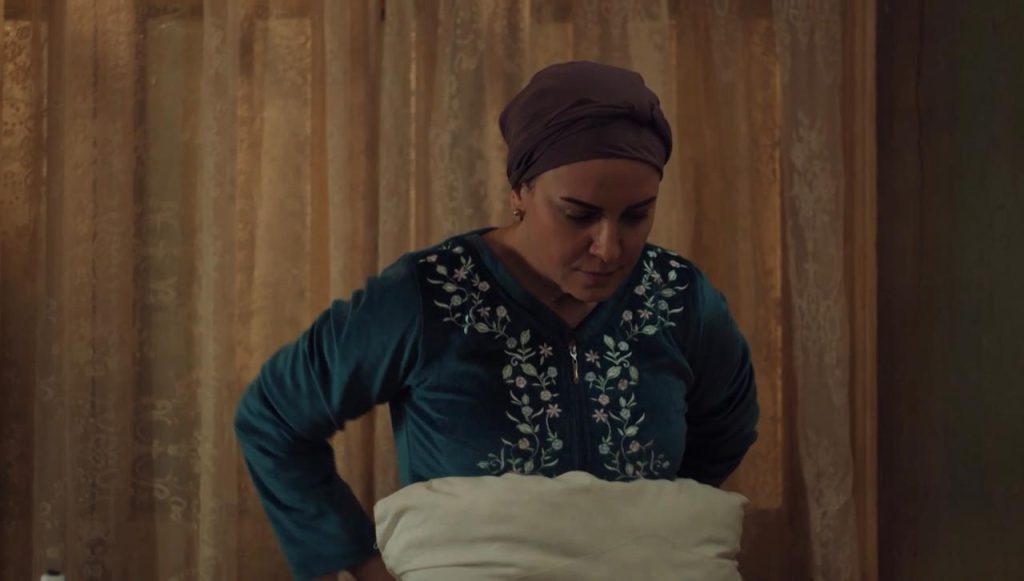
Fueled By Revenge
Narges’ actions are caused by an intense need to prove herself to everyone who has ever wronged her. This drive pushes her to commit heinous acts: kidnapping a child from his mother and abandoning her mother-in-law to die to avoid being exposed. These choices reveal just how far Narges will go to protect her image, even if innocent people are hurt along the way.


The Human Side of Narges
We see a more human side of Narges: one that turns to God for help and forgiveness, and one that sells a piece of her jewelry to give to a woman she feels pity for. We also get to see the origin behind her actions as she first tries to adopt a child, but gets rejected because of her financial status. These moments suggest that Narges may not be inherently evil, and that her actions, while unjustifiable, stem more from desperation than true malice.


Alienated By Her Closest Ones
As an infertile woman in a society where a woman’s value is measured by her ability to be a good wife and mother, Narges became almost invisible to those around her. The shift is stark: once her “pregnancy” is announced, even her mother and sister, who once treated her like a burden, suddenly show affection. This reveals that Narges’ actions weren’t driven by a desire for admiration, but by a desperate need simply to be seen.


A Blurry Line
In the end, there’s no clear answer as to whether Narges is truly good or evil. We may never know how she would have acted if life had dealt her different circumstances. Ultimately, it’s up to the viewer to judge her actions. So, which side are you on: inherently evil, or shaped by her surroundings?
We Said This: Don’t Miss… How ‘Kan Ya Makan’ Sheds Light on the Signs of a Midlife Crisis