


In an effort to preserve Palestinian arts and uplift creatives at a time when much of Palestinian culture continues to be appropriated, the role of cultural institutions has never felt more urgent. The 2048 Foundation emerges within this context as a focused intervention, one designed not only to fund artists but also to help build the infrastructure many Palestinian creatives have historically been denied.
Founded by part-Palestinian musician Saint Levant alongside Lebanese social activist Stephani Moukhaiber, the foundation takes its name from the year 2048, marking a century since the Nakba (the catastrophe), the mass displacement and dispossession of Palestinians from their homeland in 1948.
Positioned as an artist-led initiative, the foundation is designed to fund, support, and grow Palestinian musicians and music-adjacent creatives through micro- to mid-sized grants, mentorship, and access to networks that remain out of reach for many artists on the ground.
The foundation has previously supported and helped grow projects such as the independent label Manjam Records, providing Palestinian artists with a platform to record, develop, and share their voices globally. It has also backed Askadr, a summer school in Nablus dedicated to creating space for youth experimentation and creative learning.
As Saint Levant’s music often signals, much of what he builds is in service of Palestine. He launched the 2048 Foundation in 2023 to help fund Palestinian creatives and entrepreneurs and bring their ideas to life. Operating from a clear premise, the foundation offers mentorship and long-term connections, building spaces that nurture ideas while encouraging collaboration across borders and disciplines.
At a time when many local economies lean heavily on humanitarian aid, the foundation is intentionally investing in something more durable, ideas that foster self-reliance, strengthen creative ecosystems, and enable artists to shape their own futures. Its grant model reflects this philosophy, with support designed to meet artists where they are, whether that means finishing a project, accessing equipment, covering studio time, or simply creating room to think.
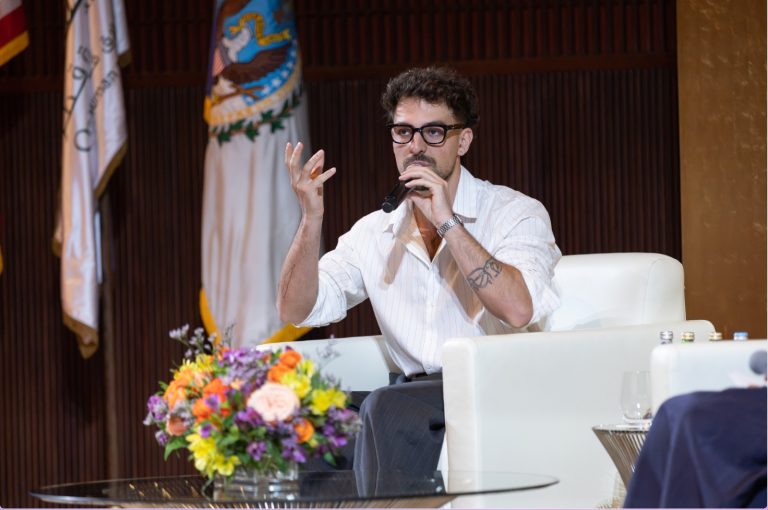
I sat down with Stephani Moukhaiber, Executive Director of the 2048 Foundation, to discuss the next open call for its music-focused funding stream, the Loubani Grants.
First off, who is the foundation targeting, and on what basis are grants awarded?
The Foundation provides direct monetary grants ranging from micro to medium-sized amounts, designed to support Palestinian talent at different stages of their creative journeys. The full selection framework, including criteria, evaluation rubric, and application form, has been reviewed and strengthened with the expertise of the Arab Fund for Arts and Culture (AFAC). Applications are evaluated by a specialized pool of music experts who support the selection process alongside Marwan to ensure artistic quality and sector relevance.
Could you share more about the nature of the grants?
The micro-grant program, known as the Loubani Grants, consists of direct, project-based funding specifically dedicated to music and sound-related initiatives. While the grants offer flexibility in how funds are allocated, they are awarded against a clearly defined proposal, budget, and timeline submitted during the application process. Selected grantees receive $5,000 in seed funding and enter a structured 10-month grant cycle that includes regular check-ins, progress reporting, and collective mentorship.
How do you adapt resources to the needs of different projects?
The Foundation’s primary form of support is direct financial funding, enabling grantees to independently access the resources most relevant to their work. Funds typically go toward clearly defined expenses such as studio time, recording and mixing, production costs, distribution, or other technical services.
Aside from monetary support, what else does the foundation offer?
Loubani grantees receive mentorship throughout the grant cycle from a diverse range of music professionals. While guidance from Saint Levant may occur occasionally, the mentorship model is primarily collective and exchange-driven rather than one-on-one. The focus is on practical guidance, creative development, and industry navigation.
How can Palestinian creatives apply?
The open call will launch at the end of February and remain open on a rolling basis throughout the year. There will be two primary selection cycles: the first two weeks of May and the first two weeks of August.
WE ALSO SAID: Don’t Miss…AI in Music: Are Musicians Being Replaced One Prompt at a Time?