


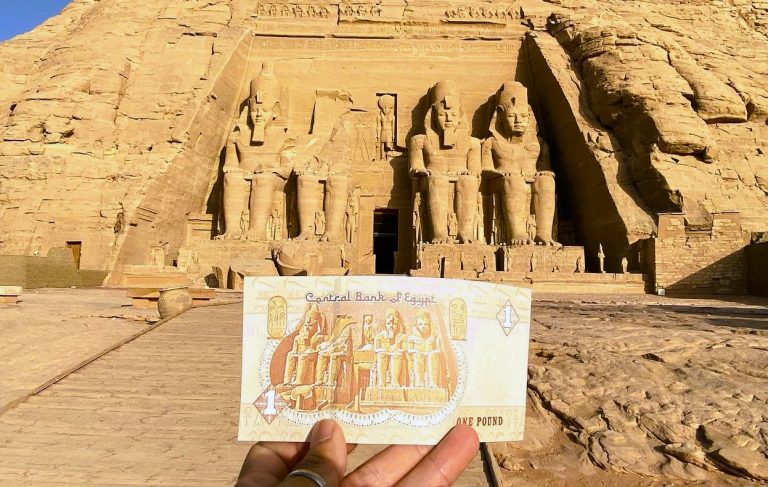
After the announcement of the new 2-pound coin, it’s impossible not to pause and admire how Egyptian currency carries the weight of its pharaonic past. From towering sites to timeless statues, every note and coin tells a story of Ancient Egypt, bringing its heritage straight into our pockets. Here’s a closer look at the monuments, figures, and symbols of the ancients that we encounter in our wallets every day.
Nefertiti
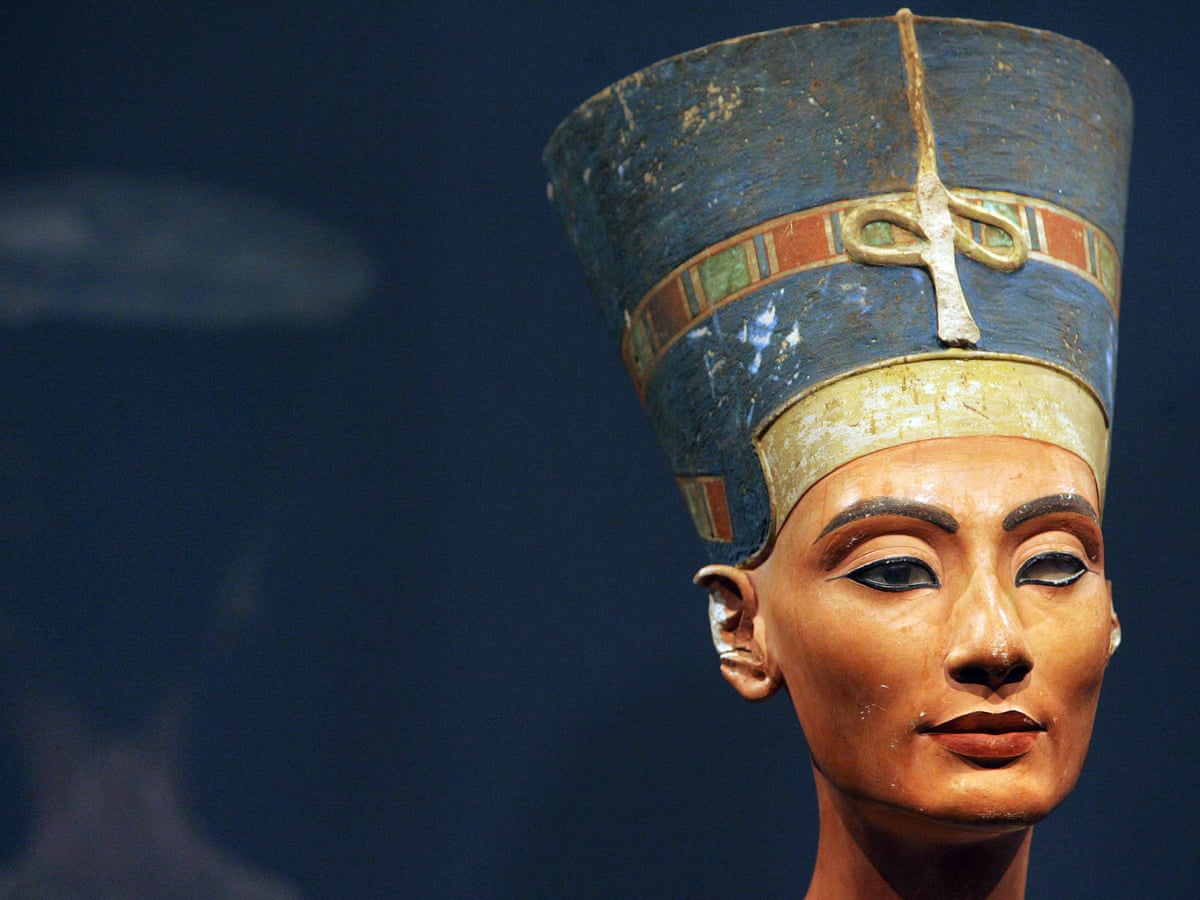
Egypt’s newest 2-pound coin celebrates Nefertiti, the legendary queen of the 18th Dynasty and the great royal wife of Pharaoh Akhenaten. Together, they ruled during one of Ancient Egypt’s most prosperous and transformative eras. After Akhenaten’s death, some scholars believe Nefertiti may have briefly ascended the throne as the female pharaoh Neferneferuaten, just before Tutankhamun’s rise.
The coin’s design draws inspiration from the famous Nefertiti Bust, a painted stucco-coated limestone masterpiece believed to have been crafted around 1345 BC by the sculptor Thutmose. Today, this iconic work is housed in the Egyptian Museum of Berlin, despite Egypt’s efforts to reclaim it.

Tutankhamun
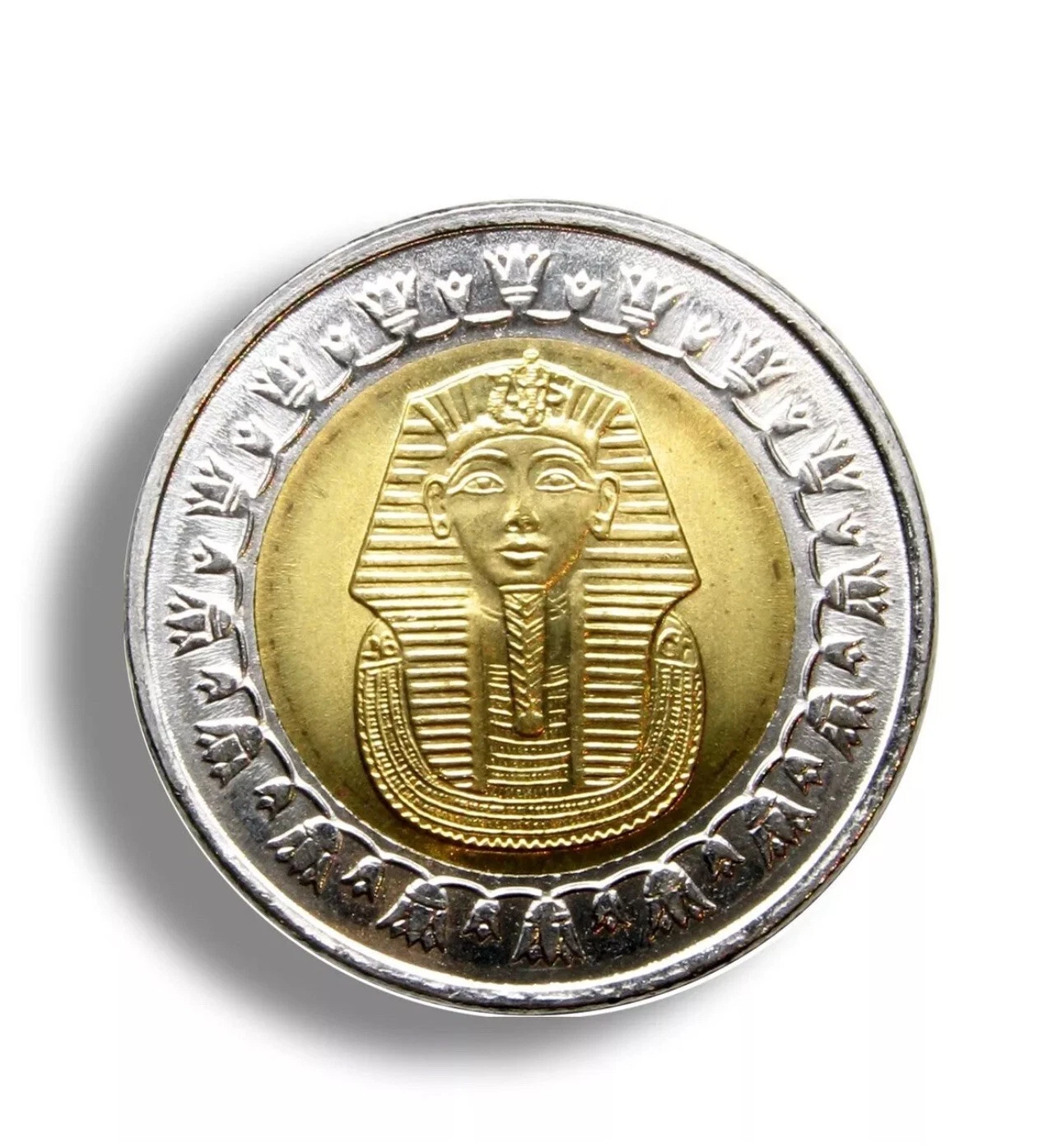
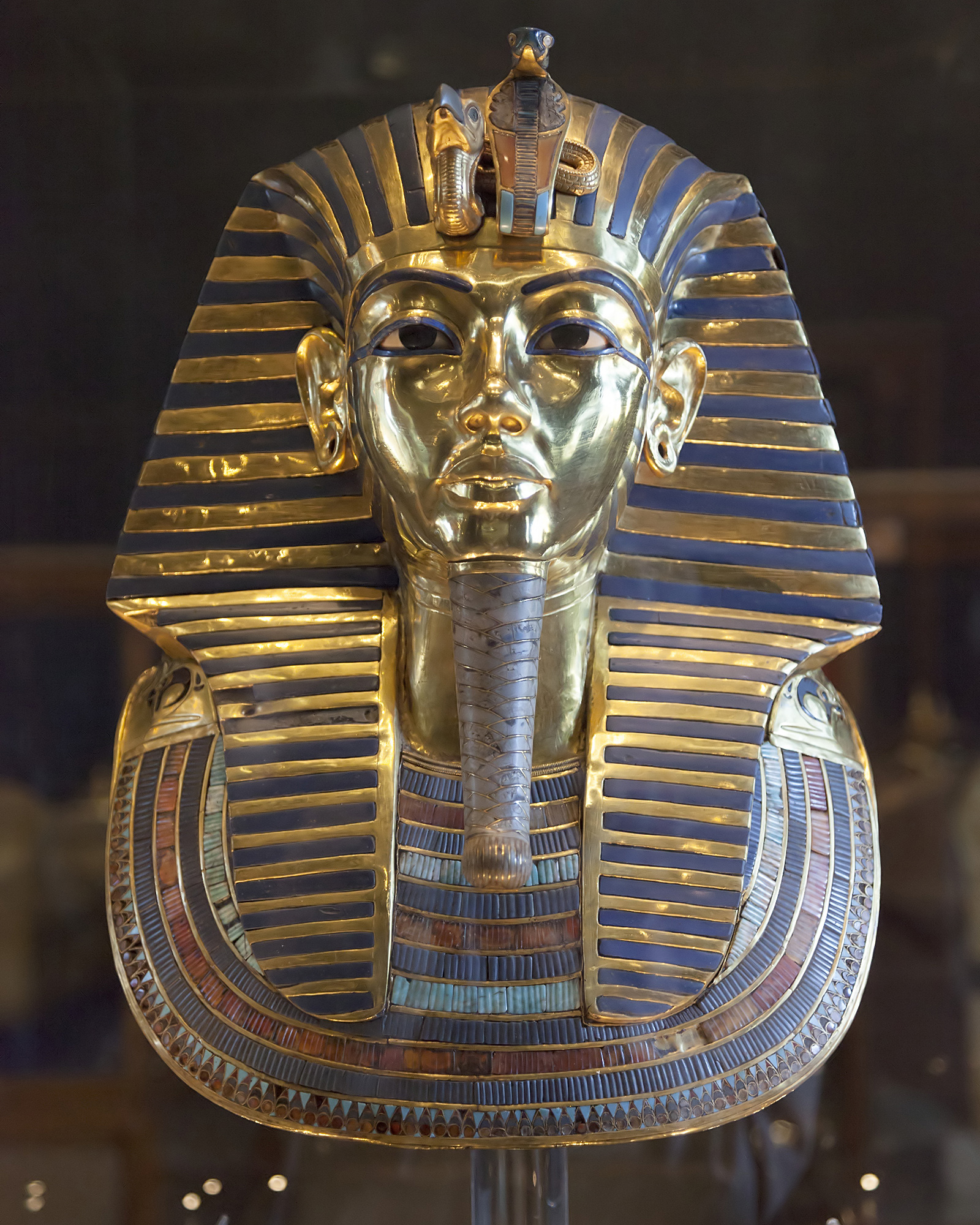
Egypt’s 1-pound coin honors the legendary King Tutankhamun, famously known as King Tut or the “Boy King,” who ascended to the throne at just eight or nine years old. Though much of his life and reign remains shrouded in mystery, his story continues to captivate people around the world.
Tutankhamun’s treasures remain a source of fascination, from his iconic gold funerary mask to his tomb, the most intact royal burial ever discovered. With over 5,000 artifacts, it offers an unparalleled glimpse into the wealth, artistry, and opulence of Ancient Egypt’s pharaonic legacy.
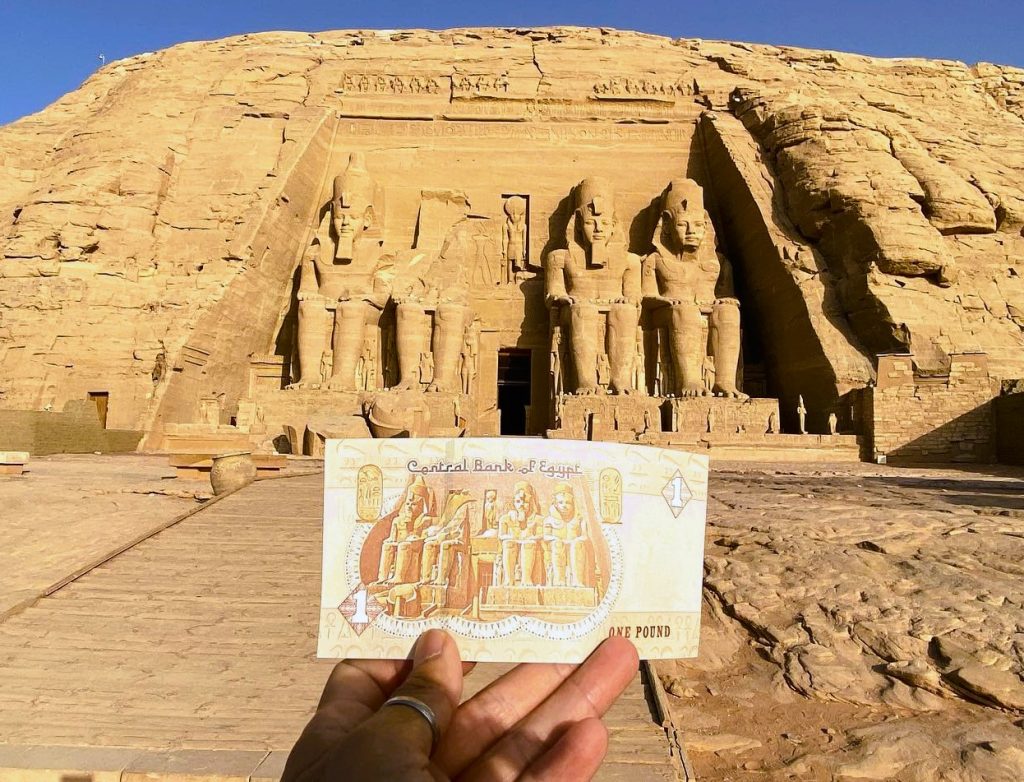
Abu Simbel
Egypt’s 1-pound banknote features the Temple of Abu Simbel, a monumental complex of two rock-cut temples located in the village of Abu Simbel, Aswan Governorate, Upper Egypt. The main hall is flanked by colossal statues of Pharaoh Ramesses II, leading to a sanctuary where four deities, Amun Ra, Ra Horakhty, Ptah, and a deified Ramesses II, sit in eternal watch.
The depiction celebrates the grandeur of Ancient Egyptian civilization, highlighting the artistry, scale, and enduring legacy of the rock-cut temples of Nubia.
Hatshepsut
Egypt’s new 10-pound banknote features Hatshepsut, the elder of two daughters born to Pharaoh Thutmose I and Queen Ahmes. After her father’s death, 12-year-old Hatshepsut became queen by marrying her half-brother Thutmose II. Following tradition, she later acted as regent for her stepson, Thutmose III, managing the affairs of state until he came of age.
Hatshepsut is recognized as Egypt’s second confirmed female pharaoh, ruling in her own right and leaving a lasting legacy of monumental architecture and trade expeditions. A statue of Hatshepsut is currently housed at the Metropolitan Museum of Art in New York, showcasing her enduring presence in both history and art.


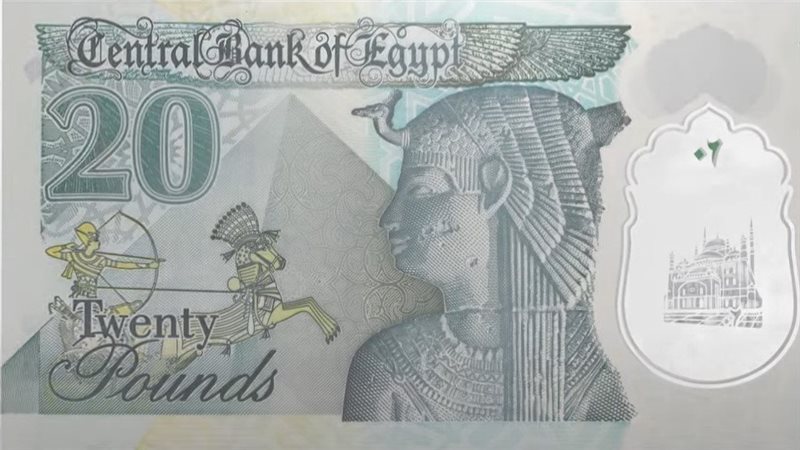
Nefertari
Featured on the 20-pound banknote, Nefertari was a renowned Egyptian queen and the first of the Great Royal Wives of Pharaoh Ramesses the Great. Highly educated, she was one of the few women of her time who could read and write hieroglyphs, a skill she used in her diplomatic correspondence with other royal courts.
Her tomb, QV66, located in the Valley of the Queens, was built to honor her and once held her mummified body along with symbolic artifacts representing her status and life. It was discovered in 1904 by Ernesto Schiaparelli, revealing one of the most beautifully decorated tombs of Ancient Egypt.

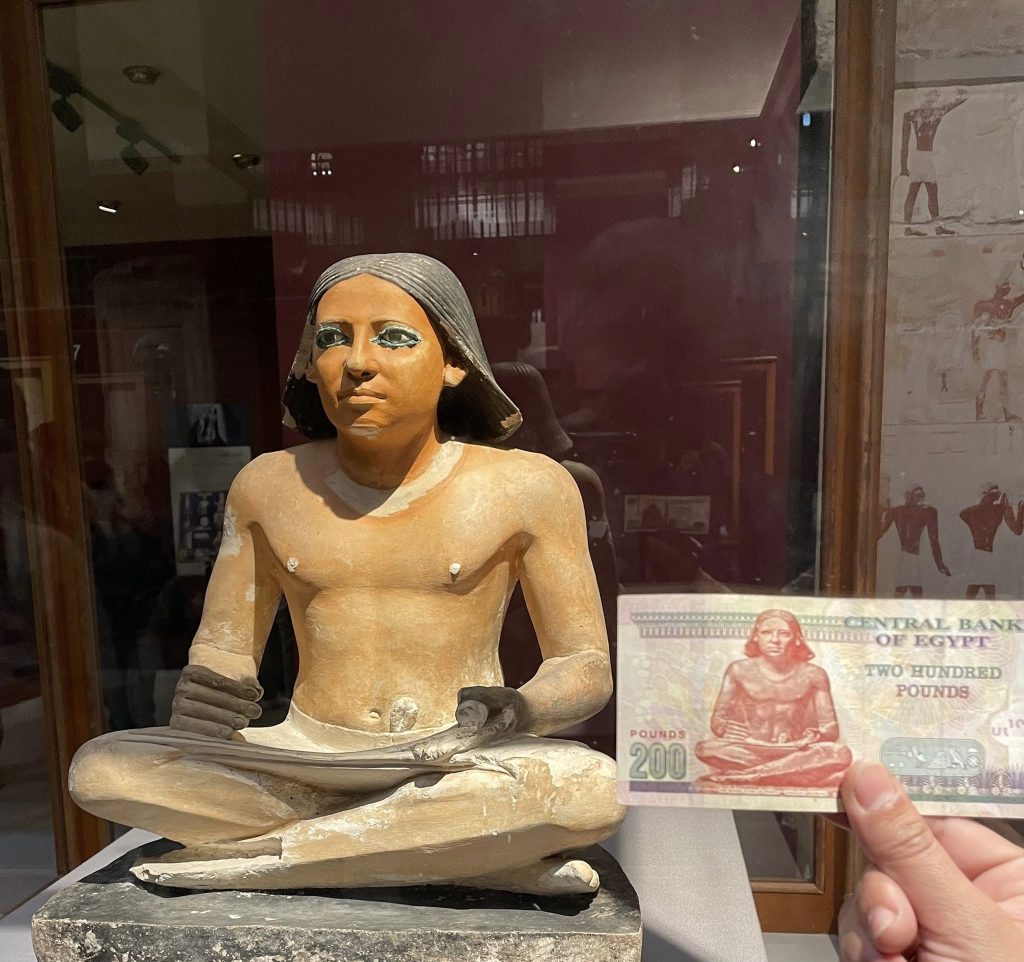
The Seated Scribe
Egypt’s highest-denomination 200-pound banknote features the Seated Scribe, one of Ancient Egypt’s most celebrated masterpieces, currently housed in the Egyptian Museum. This cross-legged figure, depicted in the act of writing, dates back to Dynasty 5 (circa 2465–2323 BC) and was discovered in Saqqara.
The statue reflects the prestige of literacy in Ancient Egypt, as only a small portion of the population could read and write. Those who possessed this skill enjoyed unique opportunities for economic, administrative, and social advancement, making the Seated Scribe both an artistic and cultural icon.
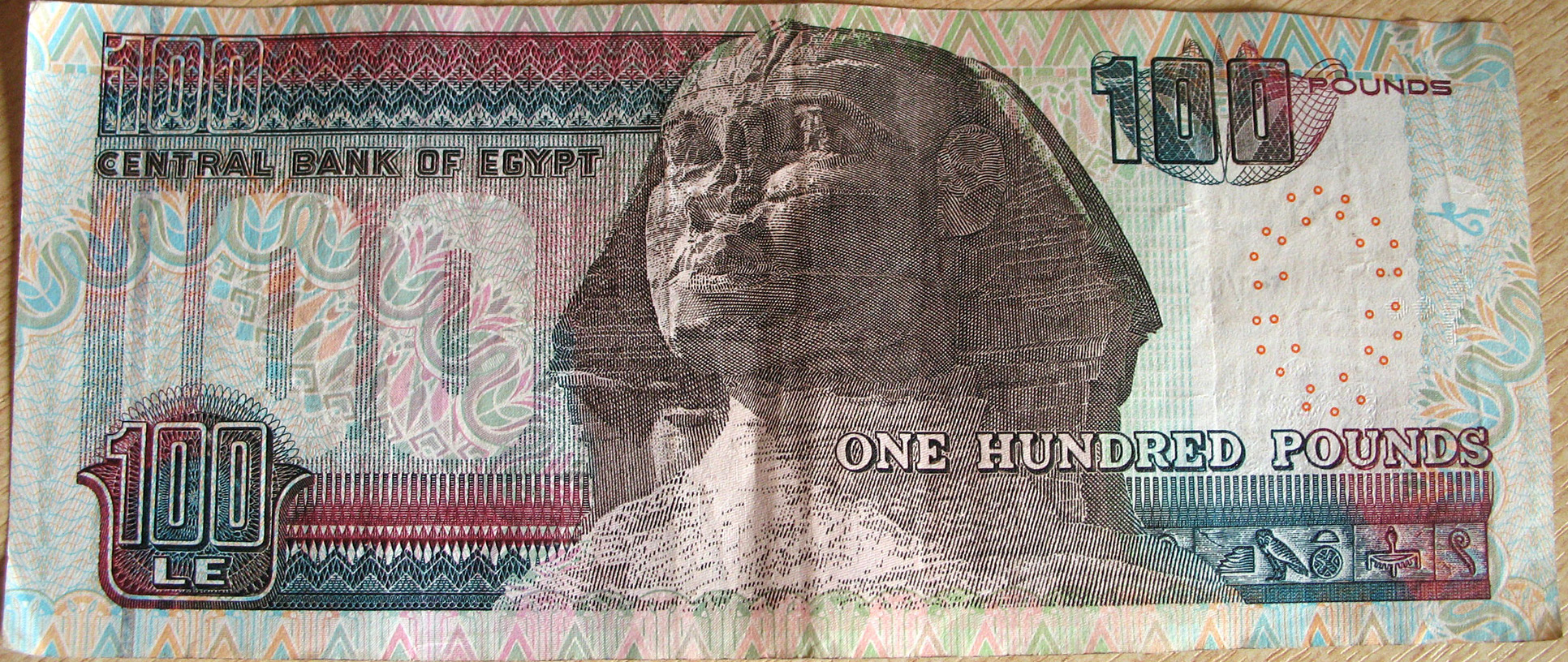
The Great Sphinx of Giza
Egypt’s 100-pound banknote features the Great Sphinx of Giza, a legendary monument featuring the body of a lion and the head of a human, embodying strength and wisdom. Carved directly from the limestone bedrock, it gazes eastward across the Giza Plateau on the west bank of the Nile in Giza, Egypt.
Archaeological evidence suggests that the Sphinx was sculpted during the 4th Dynasty, likely under the reign of Pharaoh Khafre, the builder of the second pyramid at Giza, making it one of the most enduring symbols of Ancient Egyptian civilization.

Temple of Edfu
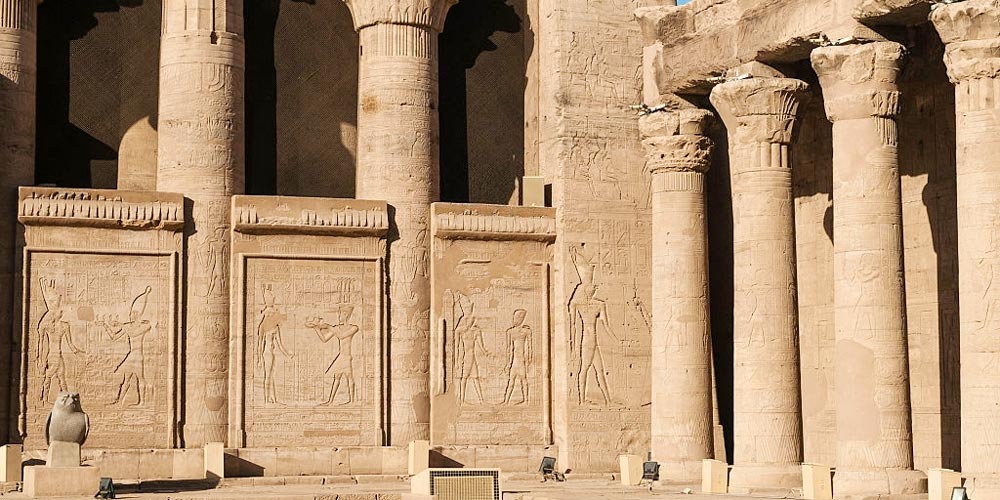
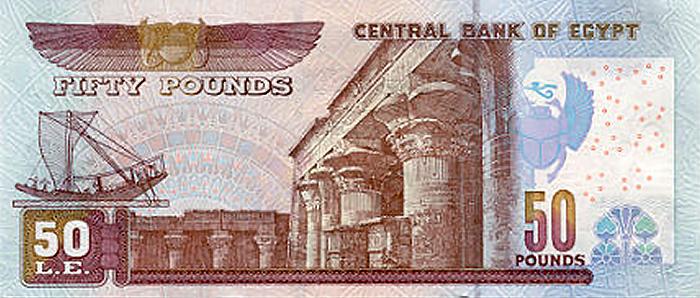
The Temple of Edfu, featured on Egypt’s 50-pound banknote, is one of the most remarkably preserved temples of Ancient Egypt, dedicated to the worship of the falcon god Horus. Constructed during the Ptolemaic Kingdom between 237 and 57 BC, the temple remained buried under layers of settlement debris for centuries, which helped preserve its intricate architecture and decorative elements.
In 1860, the French archaeologist Auguste Mariette began uncovering and restoring the temple, revealing one of the finest examples of ancient Egyptian religious architecture.
Egypt’s currency is more than just art; it’s a living reminder of the culture and history our ancestors left behind. Every note and coin reflects their achievements in science, architecture, and artistry, celebrating advancements that continue to inspire and amaze us today.
We Said This: Don’t Miss… A Look at Tutankhamun Exhibitions Around the World