


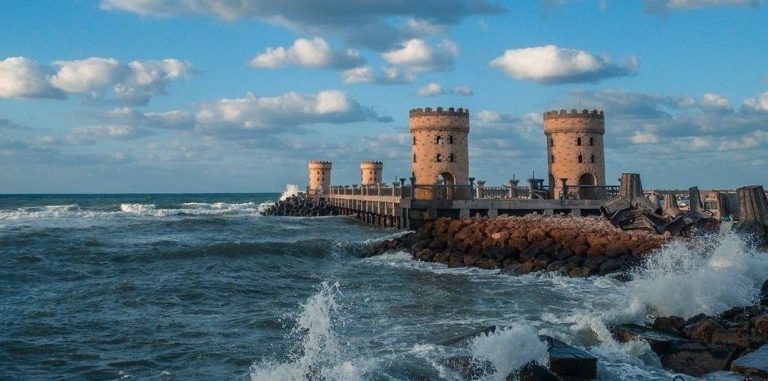
On April 7, 332 BCE, at least according to later tradition, a young conqueror stood on a ragged stretch of Egyptian coastline and imagined something outrageous. Not a fort. Not a port. A city that would outlive him. That man, of course, was Alexander the Great. And the city was Alexandria.
Alexander Makes His Way to Egypt
Alexander arrived as a conqueror in the middle of a much bigger campaign. After defeating the Persian forces in the eastern Mediterranean, he swept into Egypt, which had been under Persian control, and was seen by some as a liberator.
But Alexander wasn’t just collecting territories. He was building legitimacy. In Egypt, he traveled deep into the western desert to the oracle at Siwa, where, according to tradition, he was declared the son of Zeus-Ammon. Not a bad endorsement if you’re trying to rule an ancient civilization.
By the time he stood on the shores of Pharos, Alexander wasn’t just a general anymore. He was something closer to a myth in motion, and Alexandria would become part of that story.
A Dream, a Poem, and a Patch of Coast
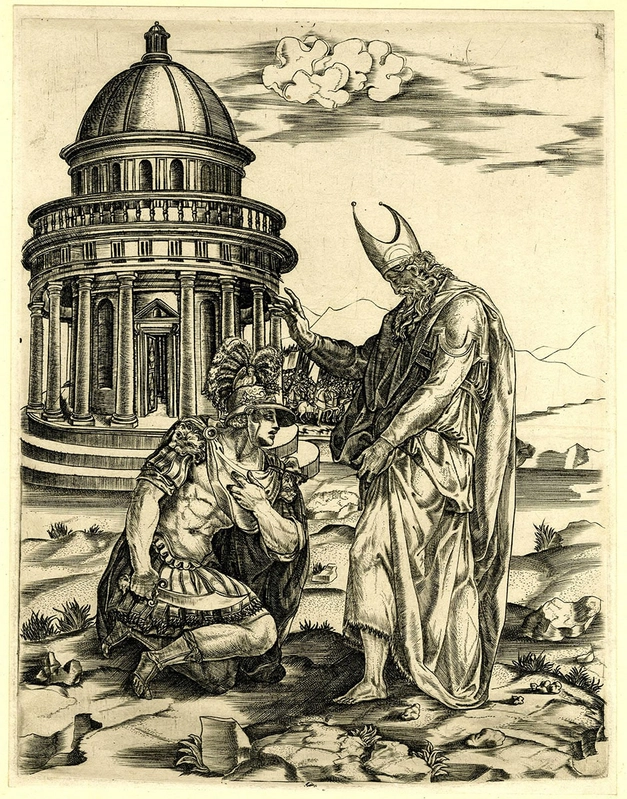
The story goes that Alexander didn’t choose the site by chance, or even strategy alone. He chose it because of a dream. One night, as he slept, an old man, whom he will come to realize is Homer the poet, appeared before him and recited lines from The Odyssey. The lines spoke of an island off Egypt’s coast: Pharos. When Alexander woke, he didn’t dismiss it. He went straight to the island.
Standing there, looking out across the sea and back toward the Nile Delta, he saw it: a narrow strip of land between water and water, a natural meeting point of worlds—Egyptian, Greek, African, Mediterranean. And he knew he found the right place, where the city that bears his name would be born.
Drawing a City… with Food
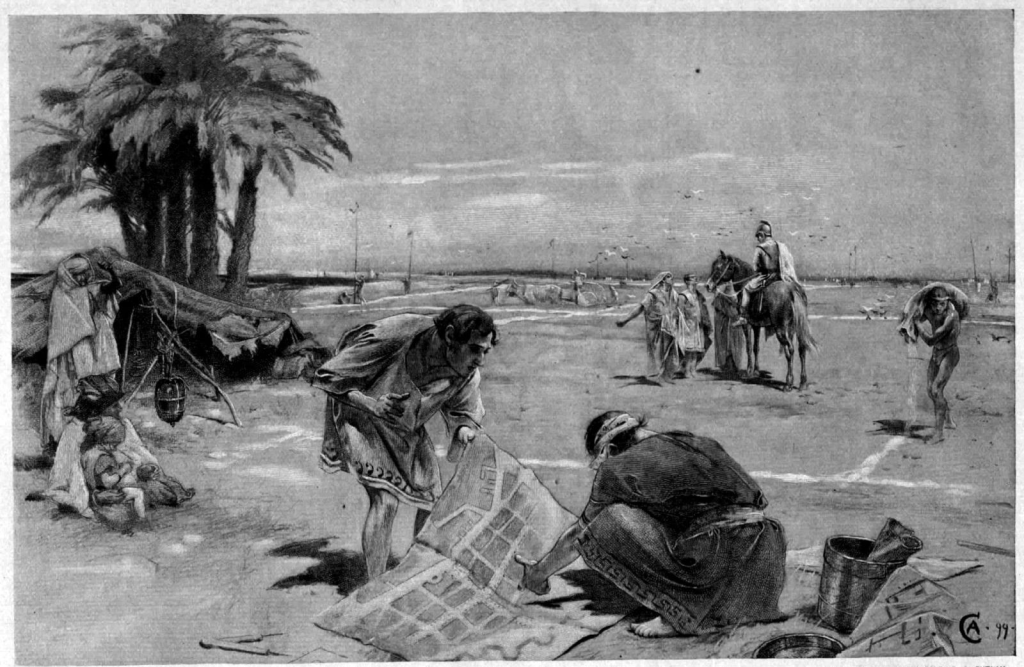
Here’s where the story gets wonderfully strange. Alexander ordered his architect, Dinocrates, to lay out the city plan. But there was a problem: no chalk to mark the ground. So they used barley flour. Yes—an entire city blueprint sketched in grain across the sand.
And then… disaster. Or miracle. Flocks of birds descended and devoured the whole thing. The markings vanished. The workers panicked. Surely this was a terrible omen? A city erased before it even began? But Alexander’s seer had a different take: this wasn’t destruction—it was prophecy. The birds feeding, he said, meant the city would one day feed the world. Alexander liked that interpretation. Construction continued.
A City Designed to Breathe
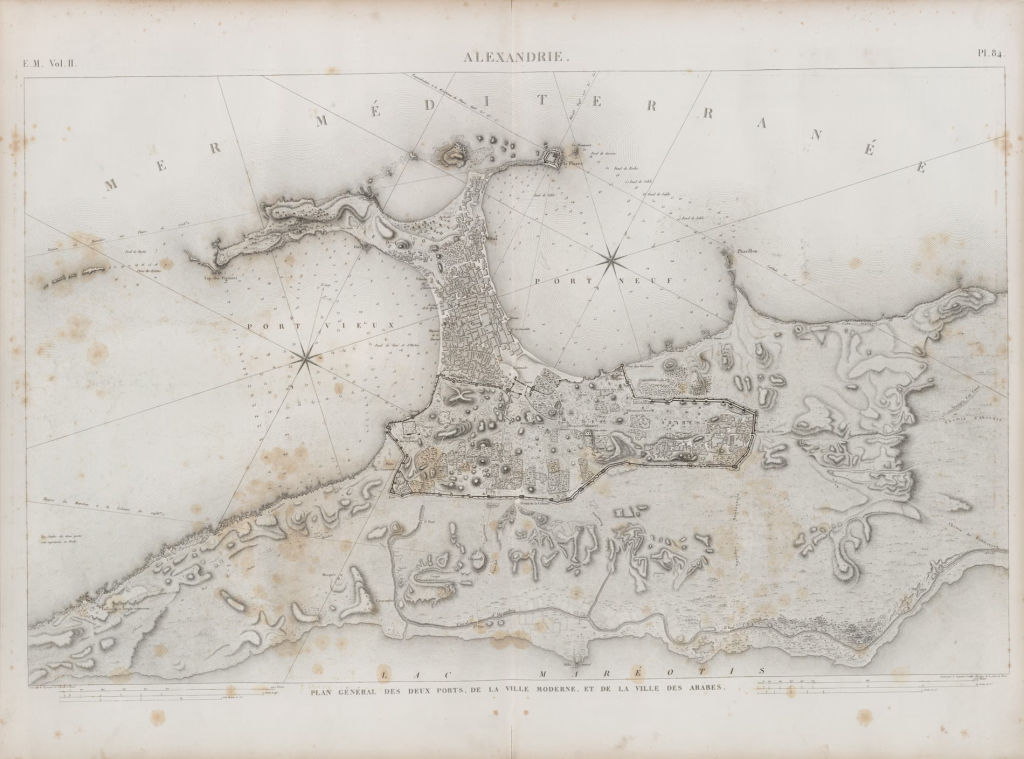
Alexandria wasn’t just built, it was designed. Dinocrates planned it as a grid: wide avenues crossing at right angles, organizing life into something both practical and grand. But this wasn’t just borrowed Greek urbanism—it was adapted.
He meticulously drew the streets angled to take advantage of the natural breezes and wide enough to allow eight lanes of horses to pass through. Canals carried Nile water beneath the city. The layout connected land and sea, trade and culture, spectacle and everyday life.
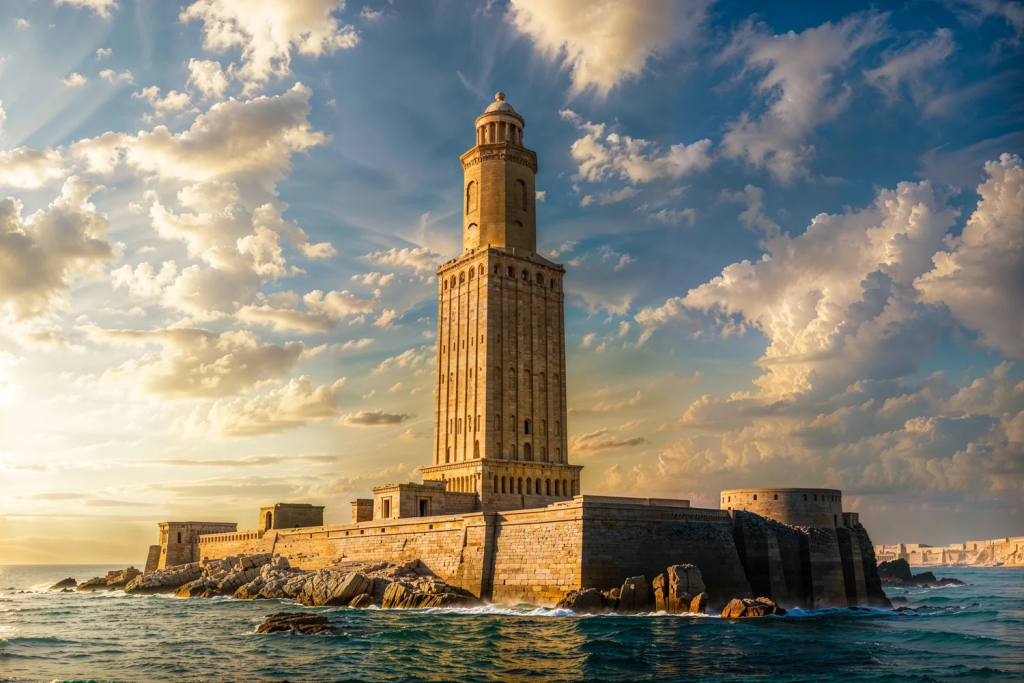
Temples rose for both Greek and Egyptian gods, markets buzzed, palaces loomed, and just offshore, plans would soon begin for a lighthouse that would become one of the wonders of the ancient world. It was, in every sense, a fusion city.
The City He Never Saw
Here’s the twist: Alexander never saw any of it finished. Soon after marking out Alexandria, he left Egypt—heading east toward new campaigns, new ambitions. Within a decade, he was dead in Babylon. He never walked its streets. Never saw its lighthouse burn against the night. Never visited the library that would gather the knowledge of the known world. And yet, in a way, he never left. His body was eventually brought back and entombed in the city. Alexandria became his monument.
Myth, Power, and a Bit of Truth
Was it really a dream that chose Alexandria’s location? Probably not entirely. The site was strategically brilliant: close to the Nile, open to the Mediterranean, perfectly placed for trade and control. Local knowledge and practical thinking almost certainly played a major role. But the myth matters. Because Alexandria was built to mean something. A city inspired by poetry, shaped by vision, and justified by omens .
Why Alexandria Still Matters
Centuries later, the original Alexandria lies buried beneath the modern one, scattered across continents, or resting beneath the sea. But its idea survives. A place where cultures meet, where knowledge is collected, where design shapes how people live, move, and think. On that April day, whether guided by Homer or by instinct, Alexander didn’t just found a city. He imagined a world and gave it streets.
WE SAID THIS: Don’t Miss…The Curious Case of Alexandria’s Mashrou’