


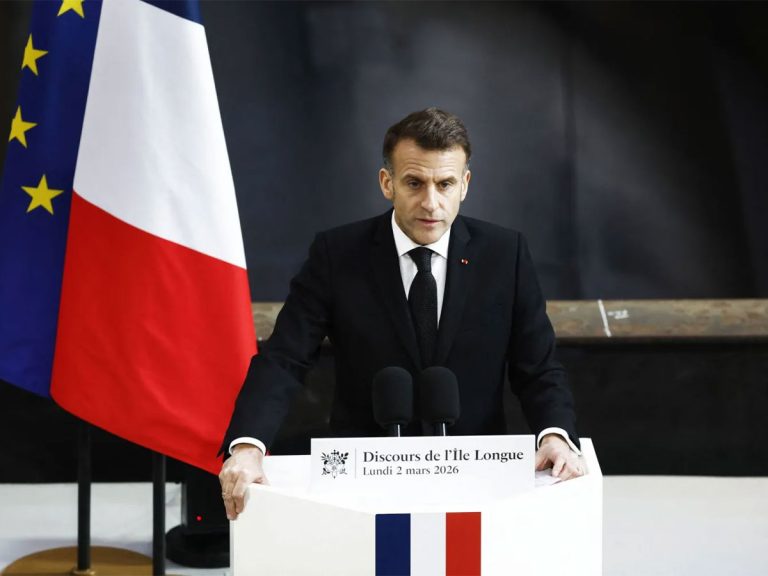
French President Emmanuel Macron, speaking in a televised address on Tuesday, said that France is sending its Charles de Gaulle aircraft carrier battle group to the Mediterranean as part of a French military buildup in the region in response to Iranian missile and drone attacks.
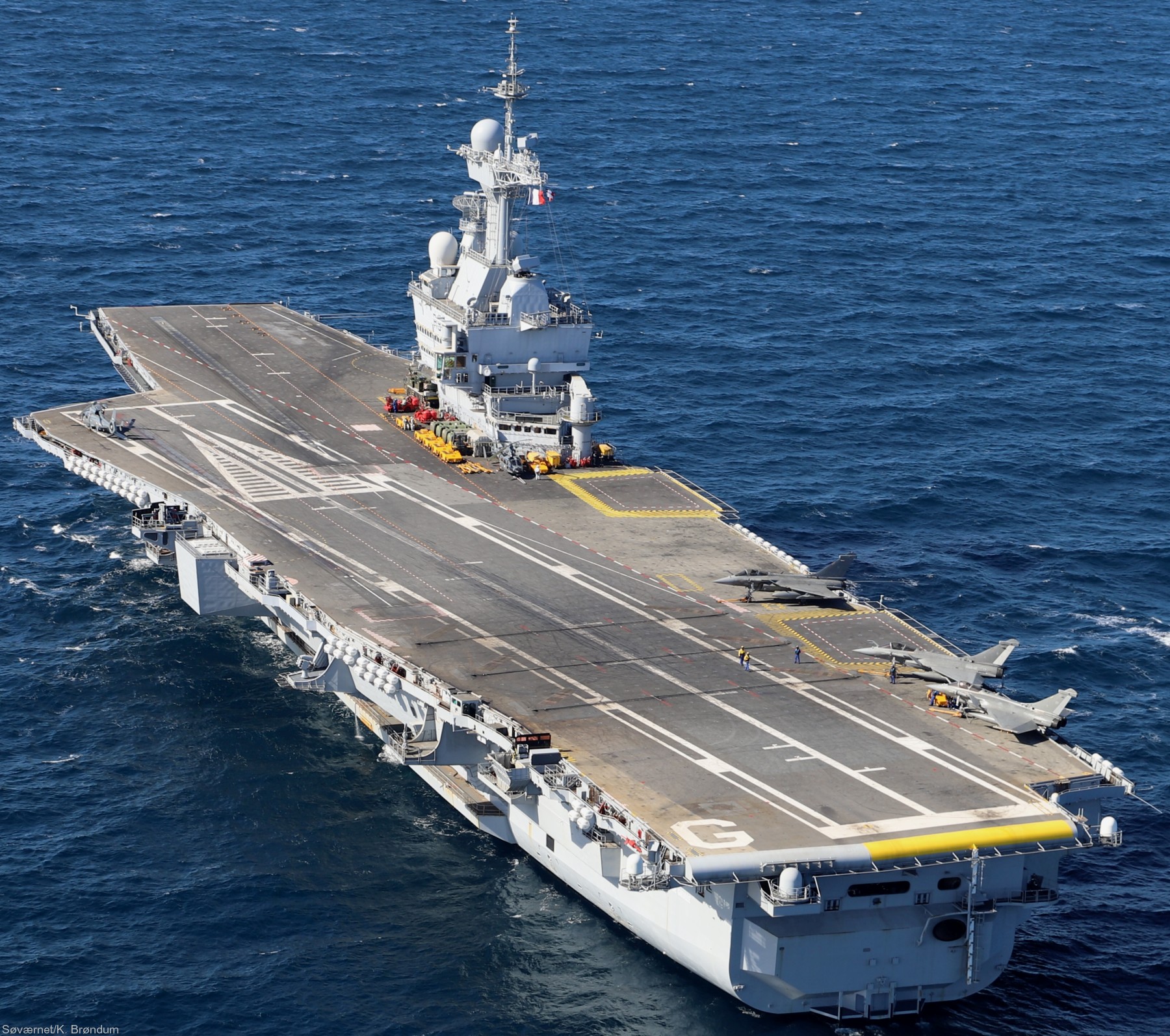
The nuclear-powered aircraft carrier Charles de Gaulle and its accompanying ships have been redirected out of a deployment in the North Atlantic to head for the eastern Mediterranean. The Charles De Gaulle is expected to take 10 days to reach the eastern Mediterranean. Once there, the 20 Rafale fighter jets on board, along with two Hawkeye radar aircraft, will contribute to securing the airspace.
France’s Naval Powerhouse
The Charles de Gaulle is France’s flagship aircraft carrier and the centerpiece of its naval power. It is the only nuclear-powered carrier outside the US navy’s fleet, allowing it to operate for long periods without refueling, and it can carry around 40 aircrafts, including Rafale fighter jets and E-2C Hawkeye surveillance planes.
Efforts to Secure the Strait of Hormuz
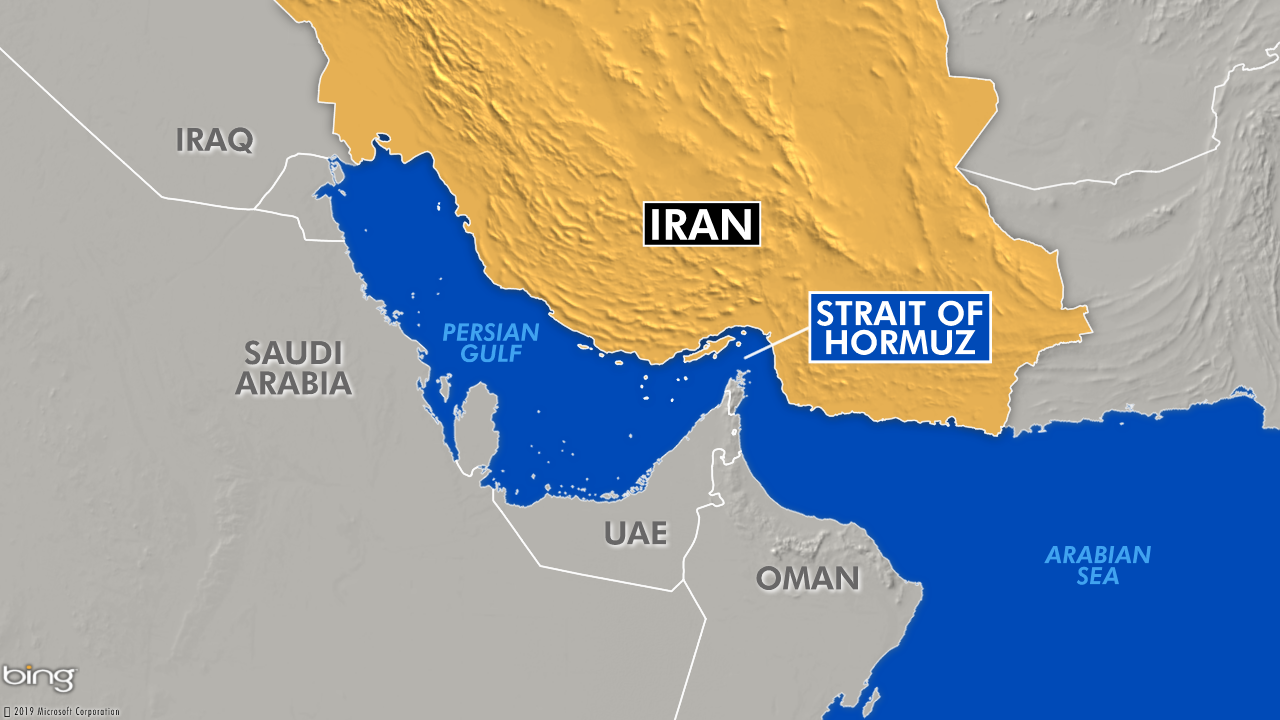
Macron said France has taken initiative to build a coalition to pool resources, including military assets, to resume traffic in the Strait of Hormuz.
He described the move as an economic effort aimed at protecting global stability, as oil prices, gas prices, and international trade have been profoundly disrupted by the war.
Defense Agreements With Gulf Countries
Macron, referring to defense agreements with Qatar, Kuwait and the United Arab Emirates, said that France reacted immediately in the early hour of the conflict and shot down drones in the airspace of its allies.
After a facility in Abu Dhabi, where France has an airbase and a naval base, was struck by Iran, Foreign Minister Jean-Noel Barrot said France had deployed Rafale fighter jets over the UAE to protect naval and air bases.
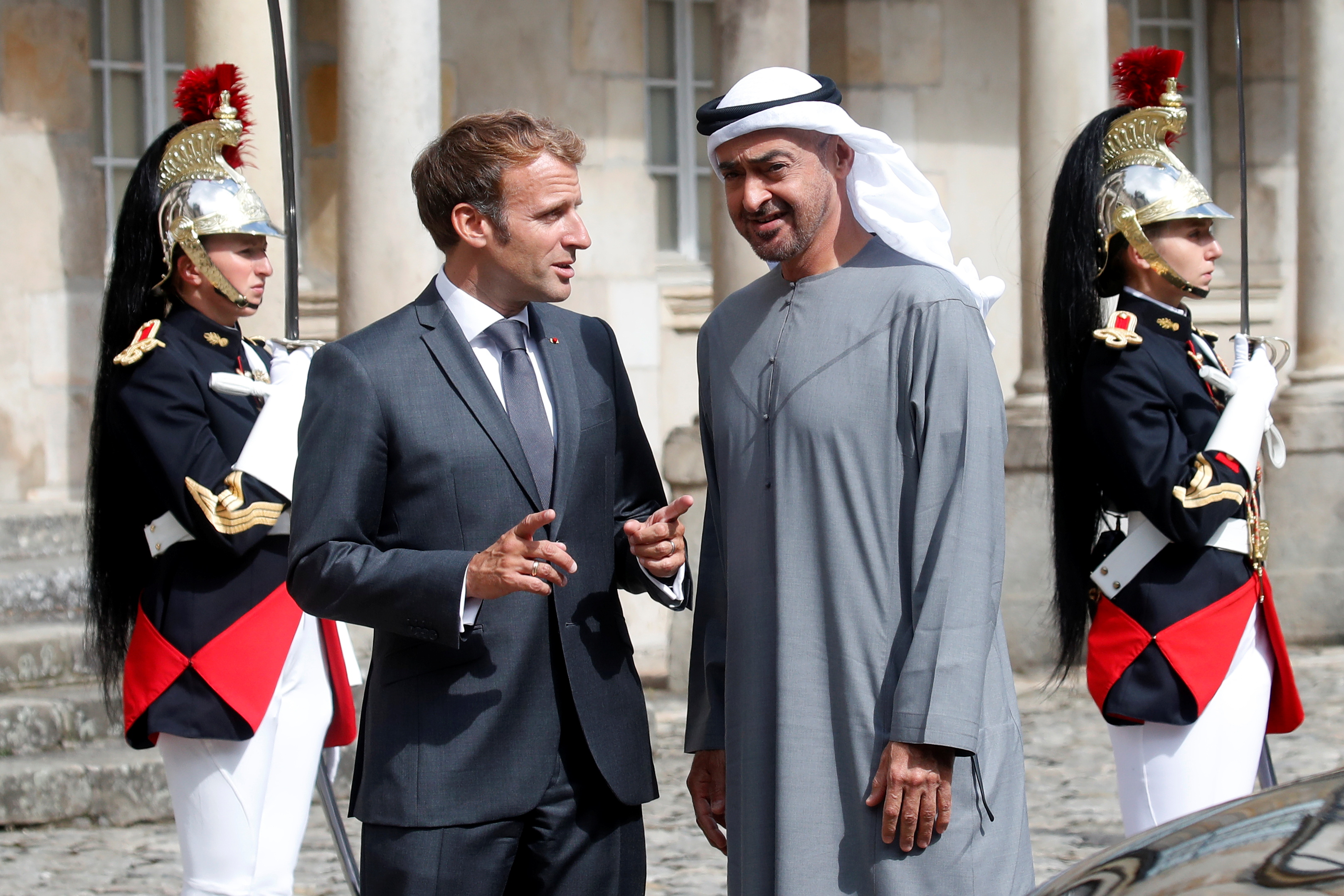
France maintains hundreds of military personnel at air, naval and land bases in the UAE, and Rafale aircrafts stationed at Al-Dhafra base near Abu Dhabi.
We Said This: Don’t Miss… How Middle East Energy Infrastructure Was Impacted by Iranian Retaliation