


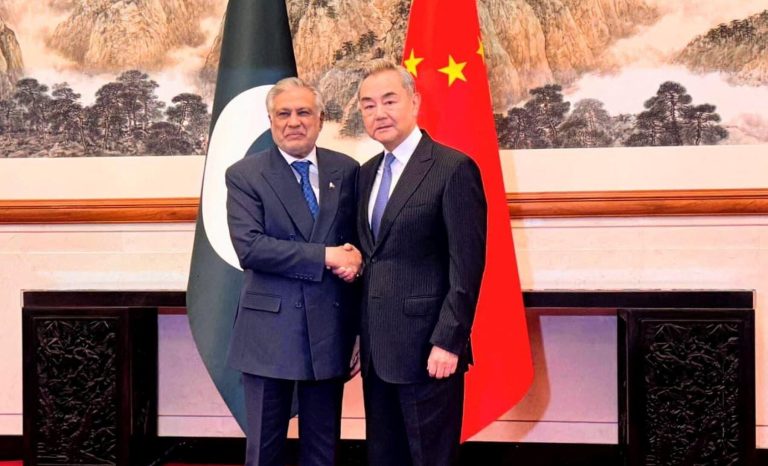
A renewed diplomatic push to de-escalate the Middle East war emerged this week as Senior Minister of Pakistan, Ishaq Dar, traveled to Beijing for high-level talks. Pakistan, which has quietly been relaying messages between the United States and Iran, joined China in proposing a five-point plan aimed at ending the conflict and stabilizing the region.
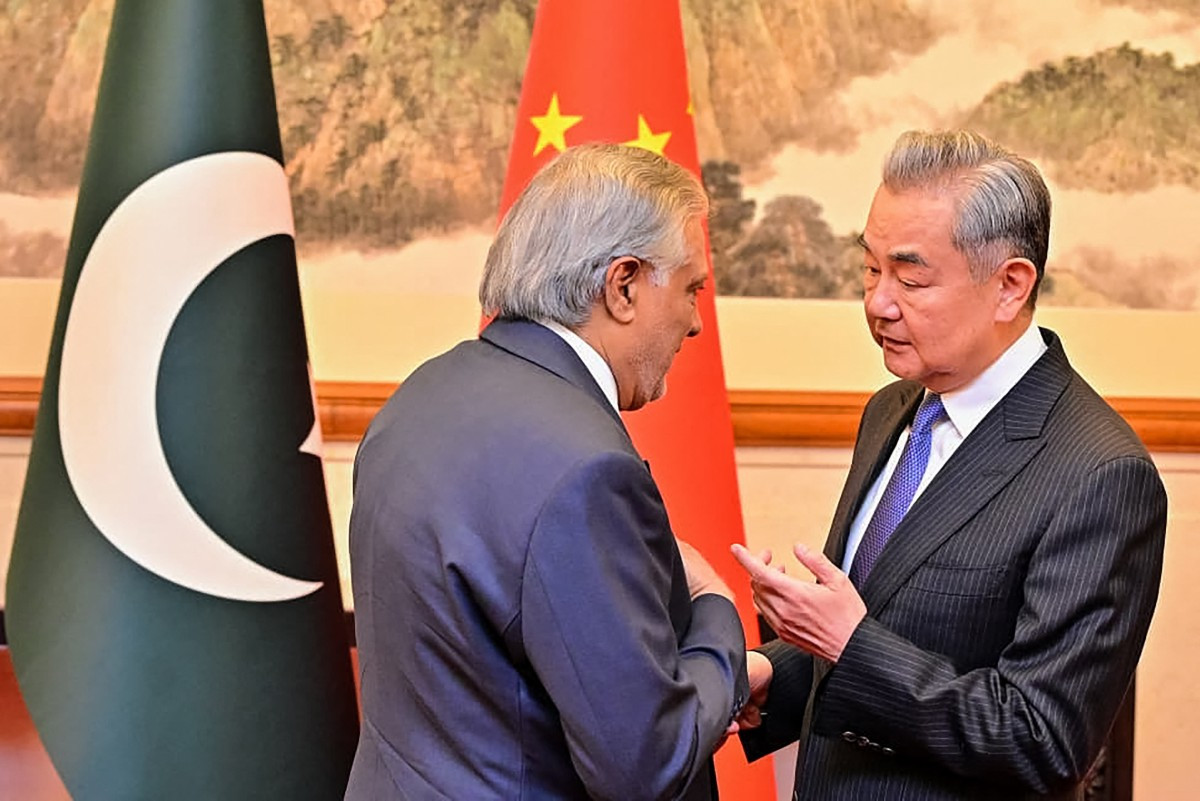
The initiative was announced following Dar’s meeting with Chinese Foreign Minister Wang Yi, with both sides calling for urgent dialogue and coordinated international efforts to contain the crisis.
Beijing Talks Signal Coordinated Diplomacy
The meeting underscored growing coordination between Beijing and Islamabad as the war continues. According to China’s foreign ministry, the visit was intended to strengthen bilateral cooperation on the conflict and make new efforts toward advocating for peace.
For Pakistan, the talks also reinforced its emerging role as a mediator. Islamabad has positioned itself as a key diplomatic bridge, maintaining open lines of communication with both Washington and Tehran.
A Five-Point Framework for De-escalation
At the conclusion of the meeting, China and Pakistan unveiled a joint peace framework focused on immediate de-escalation and long-term stability. The proposal includes:
- Immediate cessation of hostilities, alongside full humanitarian access to affected areas.
- The start of peace talks, grounded in respect for the sovereignty and security of Iran and the Gulf states. All parties must refrain from threats or the use of force during negotiations.
- Protection of critical infrastructure, including energy facilities, desalination plants, power grids, and civilian nuclear sites.
- Restoration of maritime security, ensuring the safe passage of civilian and commercial vessels, and restoring normal passage through the Strait of Hormuz as soon as possible.
- A comprehensive peace agreement, based on the principles of the UN Charter and international law.
Pakistan Positions Itself as Mediator
In recent weeks, Pakistan has intensified efforts to broker a ceasefire, even proposing Islamabad as a potential venue for peace talks. Prime Minister Shehbaz Sharif and army chief Syed Asim Munir have engaged in active diplomacy, communicating with Donald Trump and Masoud Pezeshkian, as well as other global leaders.
Through these efforts, Pakistan has facilitated indirect communication between Washington and Tehran, reinforcing its role as a go-between at a critical moment.

Regional Risks Add Urgency
Pakistan’s involvement is also shaped by geography and security concerns. Sharing a 560-mile (900 km) border with Iran, Islamabad faces the real risk of the conflict spilling over into its own territory, particularly in the volatile province of Balochistan, where a long-running insurgency continues to pose challenges.

As tensions persist, the joint China-Pakistan initiative reflects both strategic diplomacy and an urgent attempt to prevent the war from expanding beyond its current frontlines.
We Said This: Don’t Miss…. Belgium Joins France-Led Coalition to Ensure Free Passage Through the Strait of Hormuz